
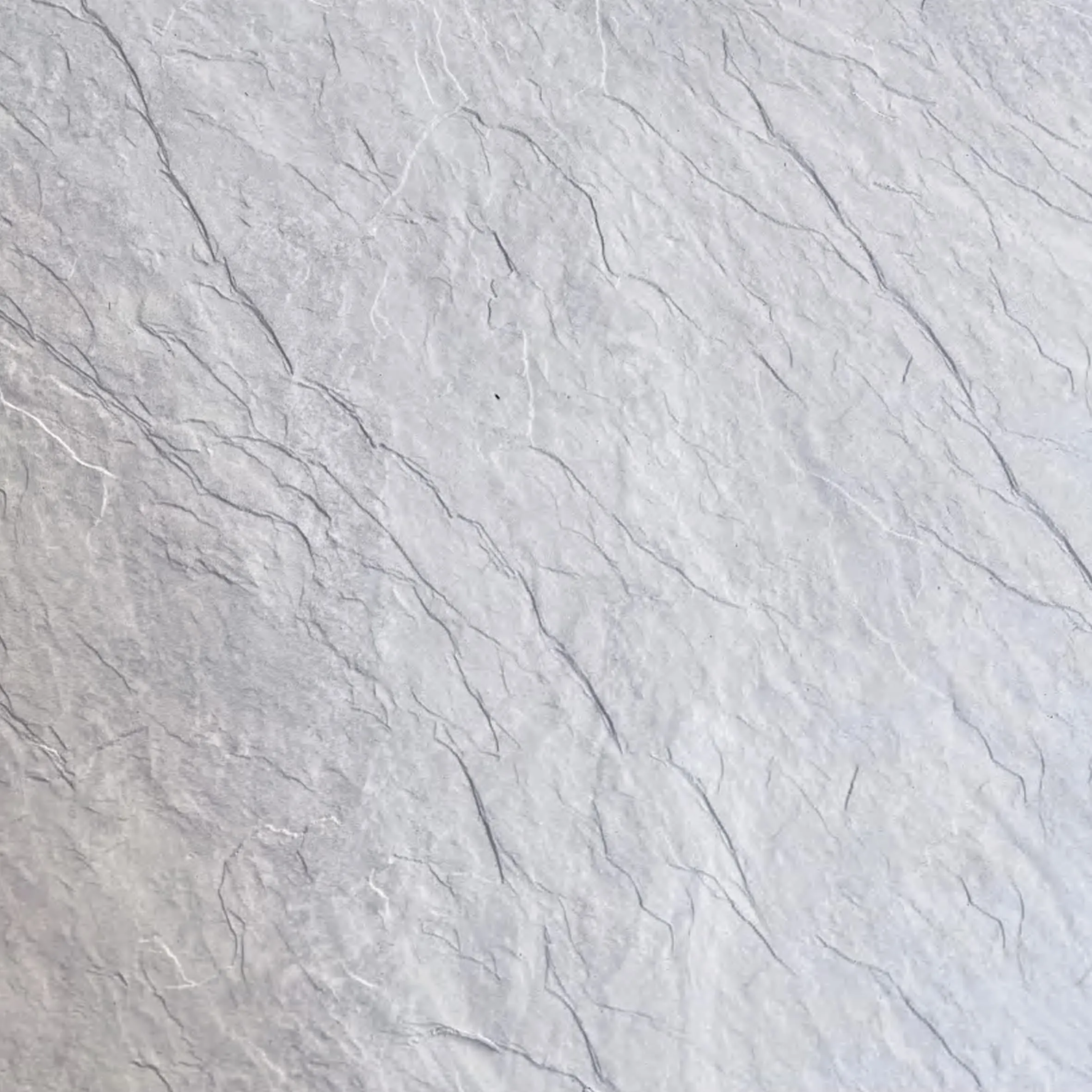
Before we dive into why Slate Veil White is turning heads, let's back up. MCM stands for Modified Composite Material, but don't let the technical name fool you—it's essentially the building material world's answer to "having it all." Think of it as nature and engineering shaking hands: MCM takes the best of natural stone, wood, and concrete, then supercharges it with flexibility, durability, and sustainability that traditional materials can only dream of. At the heart of this innovation is MCM flexible stone —a line of products designed to mimic the look and feel of natural stone but with the bonus of being lightweight, bendable, and easy to install. It's like if your favorite stone slab went to the gym and came back stronger, lighter, and more adaptable.
But MCM isn't just about stone. It comes in textures that evoke wood, concrete, even metal, making it a chameleon in the design world. And within that vast family, Slate Veil White is the quiet star—the one that doesn't scream for attention but commands it through subtlety. Let's talk about why.
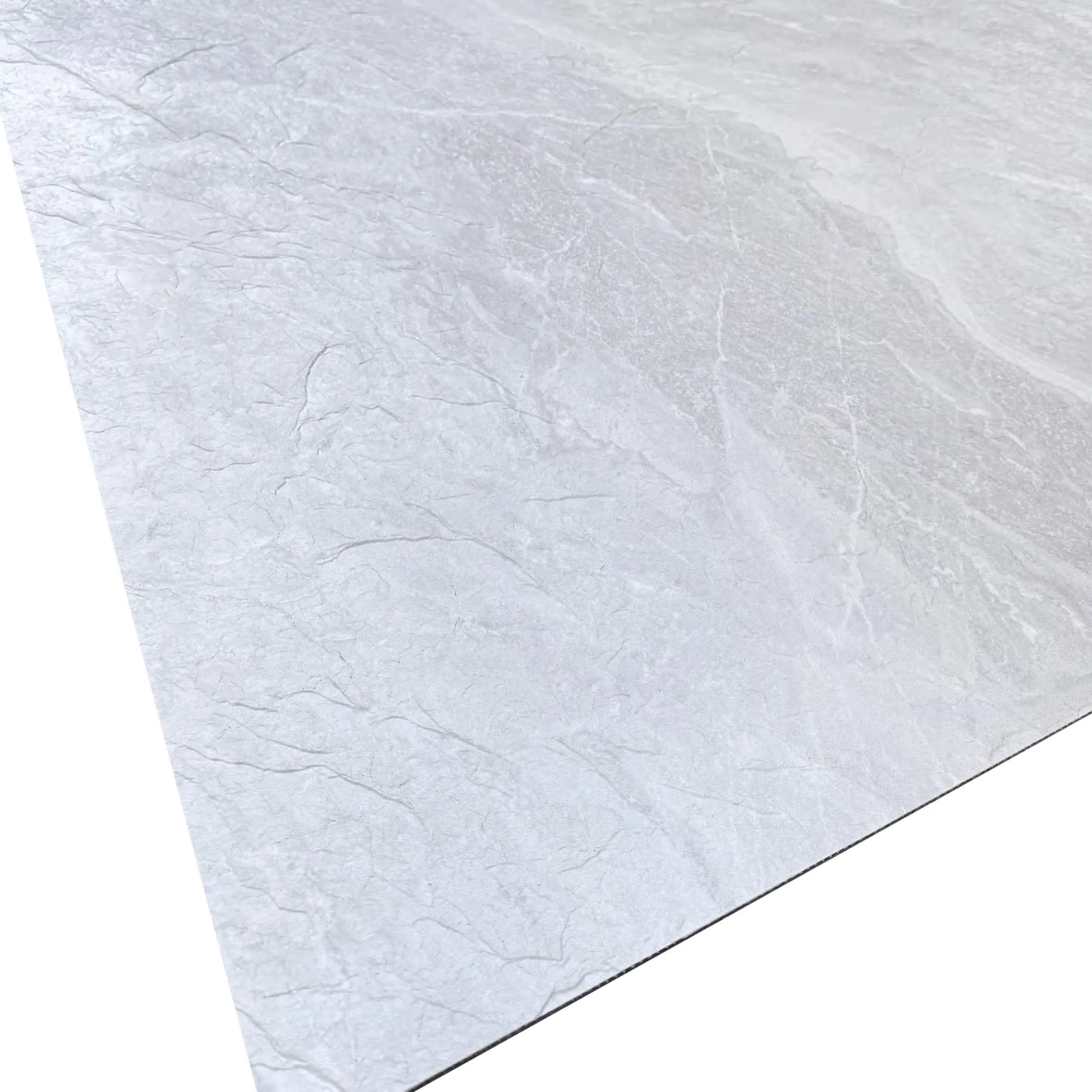
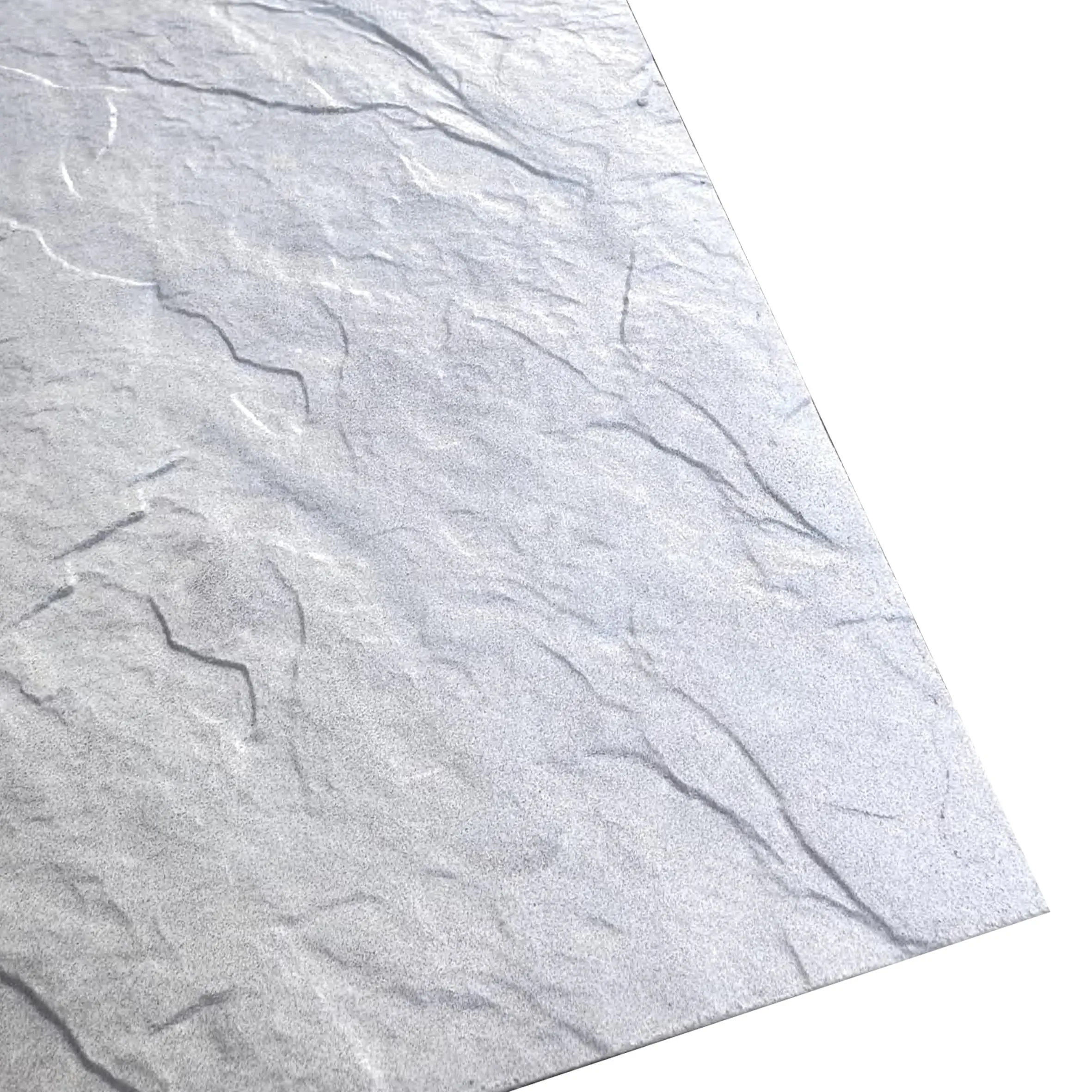
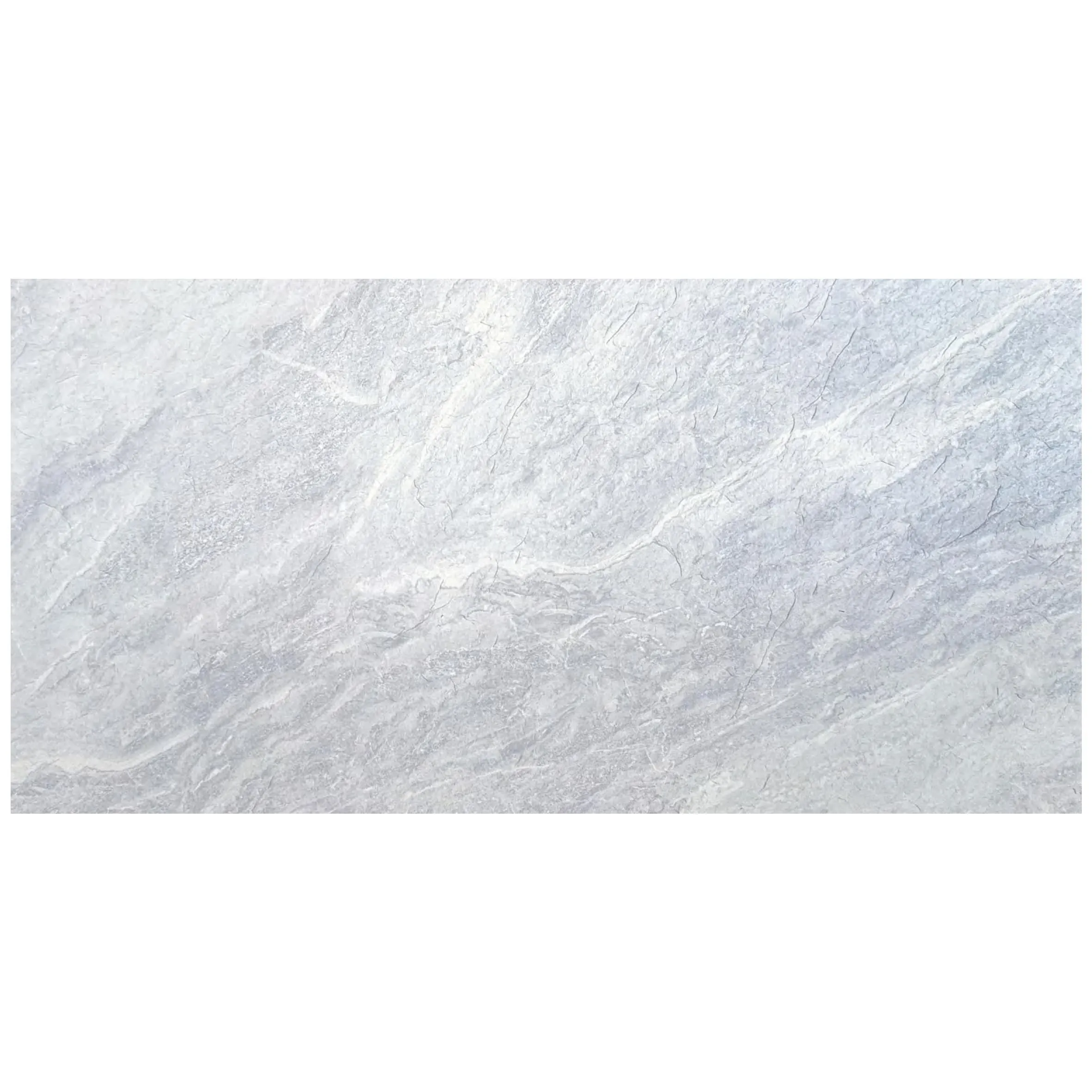
Close your eyes and picture "slate." You might imagine dark, moody gray slabs, maybe with a rough, uneven surface. Slate Veil White flips that script. It's soft, luminous, and surprisingly dynamic. The "veil" in its name isn't an accident—its surface is veined with delicate, almost ethereal lines that look like frost on a windowpane or the ghost of a riverbed frozen in stone. Run your hand over it, and you'll feel a texture that's smooth but not slippery, with just enough grip to feel natural, not manufactured.
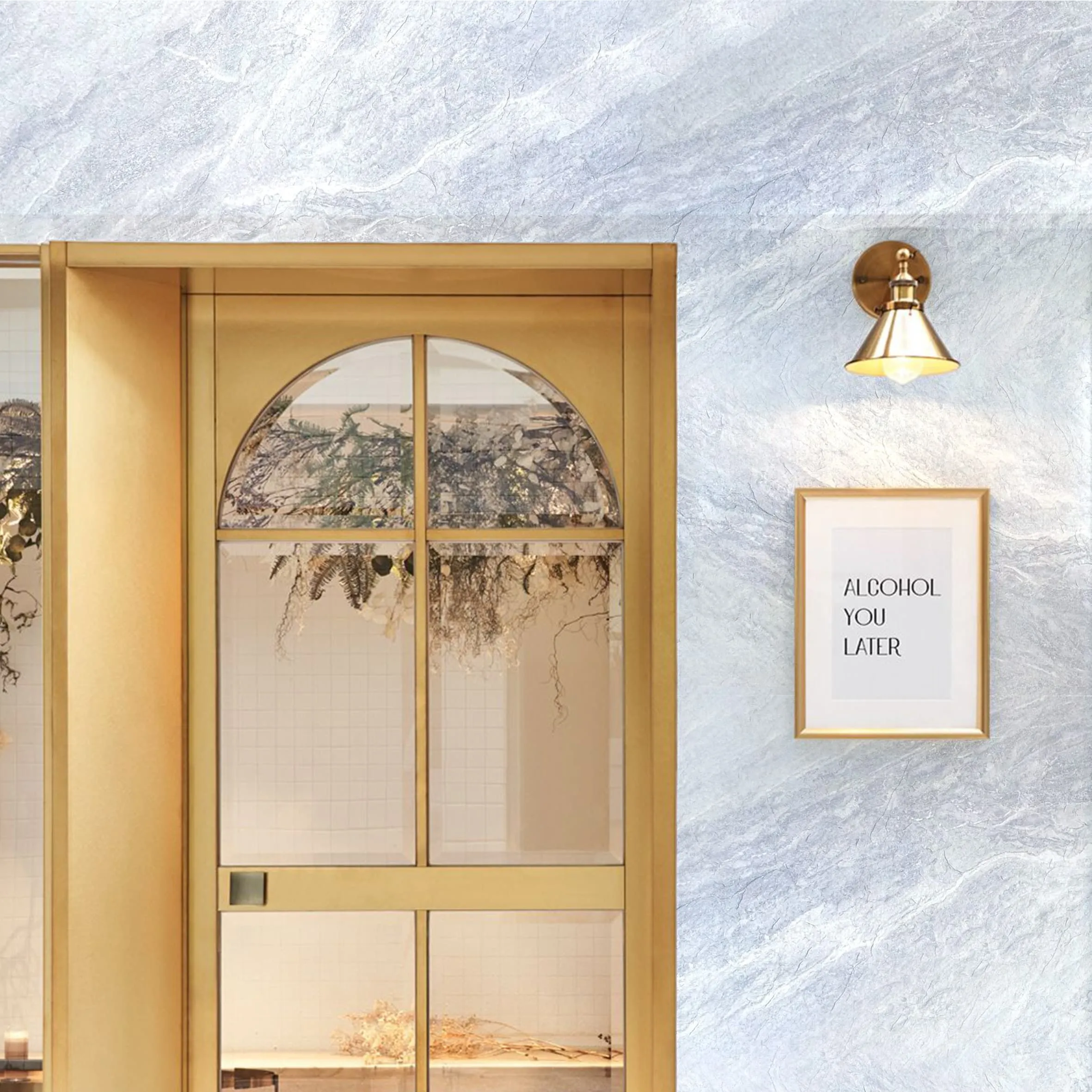
What really sets it apart, though, is how it interacts with light. On a cloudy day, it takes on a warm, creamy white hue that softens the sharp edges of a modern building. In direct sunlight, those subtle veins catch the light, creating depth that makes a wall feel less like a flat surface and more like a living, breathing part of the space. It's the kind of material that designers describe as "having personality"—not just a backdrop, but a collaborator in the design.
Compare that to, say, fair-faced concrete —a material loved for its raw, industrial vibe. Fair-faced concrete is bold, no-nonsense, and great for making a statement. But it's also heavy, prone to cracking over time, and let's be honest: it can feel cold, even unwelcoming, in the wrong setting. Slate Veil White, by contrast, brings warmth without sacrificing modernity. It's the difference between a stark concrete wall and a wall that feels like it's wrapping the building in a gentle hug.
Looks are great, but in the building world, performance is king. Here's where Slate Veil White really shines. Let's break it down:
Traditional natural stone is heavy. We're talking hundreds of pounds per square meter, which means structural support, cranes, and a whole lot of hassle during installation. Slate Veil White? It weighs in at a fraction of that—around 5-8 kg per square meter. That's light enough for two people to carry a large panel up a flight of stairs, no crane needed. But don't mistake lightness for weakness. It's engineered to withstand extreme weather: freezing temperatures, heavy rain, even the harsh UV rays of a desert sun. I spoke to a contractor in Arizona who used Slate Veil White on a restaurant patio, and he laughed when I asked about durability: "We had a monsoon come through last summer—100 mph winds, hail the size of golf balls. The panels didn't so much as chip. Meanwhile, the travertine tiles on the adjacent walkway? Cracked like eggshells."
Ever tried to wrap a stone slab around a curved wall? Spoiler: It doesn't work. Natural stone is rigid, which limits its use to flat surfaces. Slate Veil White, thanks to that MCM flexible stone technology, can bend up to 30 degrees without breaking. That opens up a world of design possibilities. Think curved facades, spiral staircases, even custom-shaped fireplaces. A residential architect in Chicago used it to clad a circular reading nook in a library, and the result? A space that feels like it's nested inside a giant seashell, with the stone flowing seamlessly around every curve. "It would have been impossible with real slate," she told me. "We would have had to cut tiny, jagged pieces and grout the gaps, which would have ruined the effect. Slate Veil White just… wrapped around the curve like fabric."
Let's be real: No one wants a beautiful material that turns into a maintenance nightmare. Slate Veil White is the opposite. Unlike natural stone, which often needs sealing every year to prevent staining, Slate Veil White is non-porous. That means coffee spills, rainwater, even the occasional graffiti (looking at you, urban areas) wipe right off with a damp cloth. A hotel in Lisbon used it for their outdoor pool deck, and the manager raved: "We used to spend hours scrubbing mildew off our old wood grain board decking. Now? A quick hose-down once a week, and it looks brand new. Our guests keep asking if we're replacing the panels—nope, it's just that durable."
Words are great, but sometimes you need to see the numbers. Let's put Slate Veil White head-to-head with three common alternatives: fair-faced concrete, natural travertine, and wood grain board. Here's how they measure up in key categories:
| Feature | Slate Veil White MCM | Fair-Faced Concrete | Natural Travertine | Wood Grain Board (Traditional) |
|---|---|---|---|---|
| Weight (per sqm) | 5-8 kg | 20-25 kg | 15-20 kg | 10-12 kg |
| Installation Ease | Easy (can be cut on-site, lightweight) | Difficult (requires formwork, heavy) | Moderate (heavy, prone to breakage during install) | Moderate (needs sealing, prone to warping) |
| Durability (Weather Resistance) | Excellent (UV, freeze-thaw, moisture-resistant) | Good (but cracks over time; stains easily) | Poor (porous, stains, etches with acid) | Poor (rots, fades, warps in moisture) |
| Design Flexibility | High (bendable, custom cuts, large panels) | Low (rigid, limited shapes) | Low (rigid, small slabs only) | Moderate (can be curved, but limited by material strength) |
| Maintenance Needs | Low (no sealing, wipe-clean surface) | High (sealing required, hard to repair cracks) | High (annual sealing, prone to staining) | High (annual sealing, sanding, refinishing) |
| Sustainability | High (recyclable, low carbon footprint, no quarrying) | Moderate (high embodied carbon, but durable) | Low (quarrying damages ecosystems, high transport emissions) | Low (deforestation, short lifespan) |
You might think a material this nice is reserved for luxury hotels or museums, but Slate Veil White is surprisingly versatile. Let's talk real-world applications:
Homeowners are falling for it, and it's easy to see why. Imagine a backyard patio clad in Slate Veil White—sunlight filtering through your favorite oak tree, casting dappled shadows on those delicate veins. It turns a simple outdoor space into something that feels like a retreat. Or a kitchen backsplash: sleek, easy to clean, and with enough texture to add depth without overwhelming the room. One homeowner in Portland told me she replaced her old tile backsplash with Slate Veil White and now "spends extra time washing dishes just to look at it."
Retail spaces, offices, restaurants—these places need materials that can handle foot traffic, spills, and the wear and tear of daily life. Slate Veil White delivers. A boutique clothing store in Seattle used it for their exterior facade, and the owner noted, "We get compliments every day. People stop to take photos because it looks so different from the gray concrete buildings around us. And when it rains? It glows. It's like the building is smiling." For offices, it's a favorite for accent walls—adding texture without clashing with modern furniture. One tech startup in Austin used it in their lobby, pairing it with green plants and warm lighting, and employees say it "feels calm, not corporate."
Museums, libraries, parks—these are spaces built to be enjoyed by hundreds, even thousands, of people. Slate Veil White holds up. A public library in Denver installed it in their children's section, and the head librarian was thrilled: "Kids run their hands along the walls, spill juice, even scribble with crayons sometimes. We just wipe it off, and it looks perfect. With traditional stone, we'd have permanent stains by now."
Let me share a story that stuck with me. Last year, a nonprofit in Detroit bought an old, run-down warehouse with a dream: turn it into a community center with a café, art studio, and after-school program. The budget was tight, and the exterior was a mess—cracked concrete, peeling paint, and a roof that leaked. The architect on the project, Maria, told me she was torn: "We wanted something that felt warm and inviting, but we couldn't afford marble or even high-end brick. And whatever we chose had to be durable enough to handle Detroit winters and kids climbing on it."
Maria considered fair-faced concrete first—it's cheap, right? But she hated how cold and industrial it felt. Then she looked at travertine, but the cost of installation (and the weight!) made it impossible. That's when a supplier suggested Slate Veil White MCM. "I was skeptical at first," Maria admitted. "It seemed too good to be true—lightweight, affordable, and it looked like stone." They ordered a sample panel, and when it arrived, the team fell in love. "The way the light hit it… it felt hopeful, you know? Like the building was ready to start fresh."
Today, that warehouse is unrecognizable. The exterior is clad in Slate Veil White, with large windows that let light flood in. The café uses it for their outdoor seating wall, and kids draw on it with chalk (which wipes off in seconds). "We saved so much money on installation because we didn't need heavy equipment," Maria said. "And now, people drive by and say, 'Is that a new museum?' No—it's a place for kids to learn and play. But thanks to Slate Veil White, it feels special. Like the community deserves something beautiful."
Let's talk about the elephant in the room: building materials and the environment. Traditional stone quarrying tears up landscapes, concrete production is a major carbon emitter, and wood… well, we all know deforestation is a crisis. Slate Veil White MCM? It's designed with sustainability in mind. Since it's a composite, it uses far less natural resources than mining stone or cutting down trees. The manufacturing process emits 60% less carbon than concrete production, and because it's lightweight, transporting it uses less fuel. Plus, it's 100% recyclable at the end of its life—no landfill-bound waste.
For LEED-certified projects, that's a big deal. A hotel chain in California used Slate Veil White for their new eco-resort and earned extra LEED points for using sustainable materials. The general manager told me, "Our guests care about the planet, and so do we. Choosing Slate Veil White wasn't just about looks—it was about walking the walk."
At the end of the day, building materials are about solving problems: How do we make spaces beautiful? How do we make them last? How do we do it without breaking the bank or harming the planet? Slate Veil White MCM checks all those boxes. It's not just a "pretty face"—it's a workhorse that adapts to the needs of modern design, whether you're building a tiny home or a skyscraper.
Maybe that's why architects keep coming back to it. It's reliable, it's versatile, and yes, it's stunning. But more than that, it's a material that makes people feel something. When you stand in front of a wall clad in Slate Veil White, you don't just see a building—you see potential. Potential for warmth, for creativity, for spaces that feel human.
So the next time you walk down that downtown street and pause at a building that feels different, take a closer look. Chances are, you're looking at Slate Veil White MCM. And who knows? Maybe it'll inspire you to rethink what's possible with your own space.
Recommend Products












