
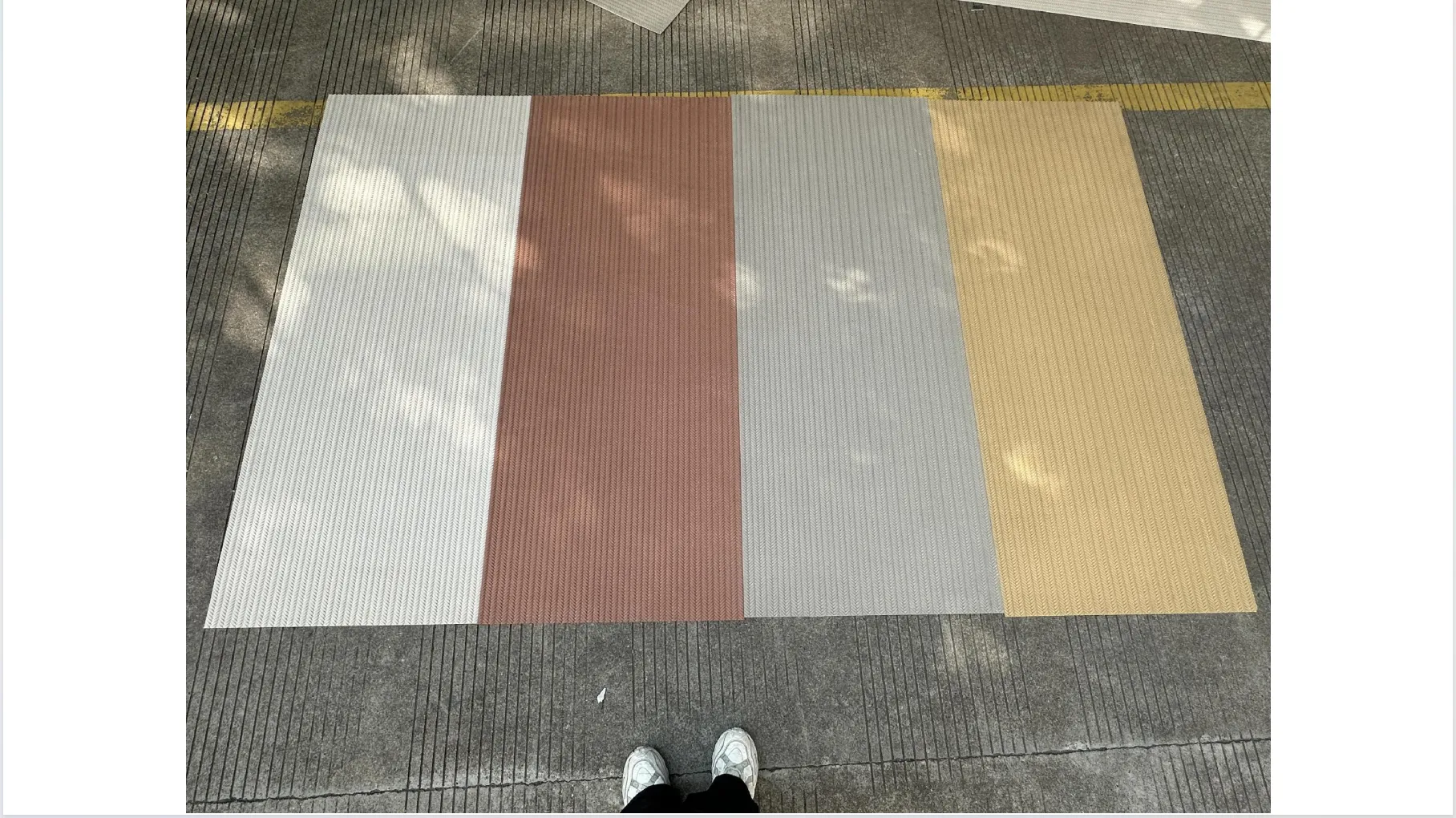
In the world of design, materials don't just fill spaces—they tell stories. They whisper about craftsmanship, evoke emotions, and shape how we experience the places we live, work, and gather. Today, as designers and architects lean into authenticity, the demand for materials that feel real —tactile, imperfect, and alive—has never been stronger. And in this quest for genuine connection, one detail often makes or breaks the vision: the photos that bring these materials to life. Enter COLORIA MCM's woven real photos—a game-changer that's redefining how we see, and trust, the materials that build our world.
Let's start with the obvious: We've all scrolled through material catalogs or websites, clicking on images that promise "natural texture" or "artisanal weave," only to be met with flat, oversaturated, or even digitally rendered photos. They look nice, sure—but they feel like a sales pitch, not a window into what the material actually is . That's where COLORIA MCM's woven real photos step in. These aren't just pictures; they're narratives captured in light and shadow, designed to bridge the gap between a screen and a physical space.
At their core, woven real photos by COLORIA MCM are a celebration of tactile authenticity. They focus on materials where "weave" is more than a pattern—it's a language: think the soft drape of mcm flexible stone woven into panels, the warm earthiness of weaving (khaki) that feels like a hug from nature, or the understated elegance of weaving (beige) that complements any design palette. But what truly makes these photos special isn't just the materials themselves—it's how COLORIA chooses to photograph them.
To understand COLORIA's edge, let's first talk about the status quo. Walk into any design studio, and you'll likely find binders filled with competitor samples—each paired with photos that check the boxes but miss the soul. Here's why:
In short, most material photos are designed to sell , not to inform . They prioritize aesthetics over accuracy, leaving designers and clients to cross their fingers and hope for the best.
COLORIA MCM doesn't just take photos—they curate experiences. Here's how their woven real photos stand head and shoulders above the rest:
Every woven real photo in COLORIA's library features actual materials from their inventory. No digital substitutes, no stock images, no "representative" samples. When you look at a photo of weaving (khaki) , you're seeing the exact weave pattern, thread thickness, and color variation that will arrive at your job site. This commitment to authenticity is game-changing for designers: It eliminates the "sample shock" when materials arrive, because what you see is quite literally what you get.
Take mcm flexible stone , for example. This innovative material bends and conforms like fabric, making it ideal for woven installations. Competitors might show it flat, stretched tight to hide its flexibility—but COLORIA's photos capture it in motion: draped over a curved surface, allowing the stone threads to settle naturally, revealing how it would behave in a real-world space. It's not just a photo; it's a preview of the material's personality.
Ever looked at a photo and thought, "I wish I could touch that"? That's the magic of COLORIA's tactile storytelling. Their photographers don't just point and shoot—they study how light interacts with every thread. Morning light softening the edges of weaving (beige) , afternoon shadows emphasizing the depth of a woven mcm flexible stone panel, or overhead lighting highlighting the subtle sheen of a thread in weaving (khaki) . These details aren't accidents; they're intentional choices to make the viewer experience the material, not just see it.
Compare that to a competitor's photo of a woven texture: often lit with a harsh flash that washes out shadows, turning a complex weave into a flat pattern. It's the difference between looking at a painting of a forest and standing in one—one feels distant, the other immersive.
Weaving isn't one-size-fits-all, and COLORIA's photos reflect that. Their library spans the spectrum of woven textures, from the warm, earthy tones of weaving (khaki) (perfect for cozy residential spaces) to the crisp, versatile weaving (beige) (a staple for commercial lobbies). But they don't stop at fabric-like weaves—they also showcase how woven textures interact with other materials, like pairing woven mcm flexible stone with wood grain board for a layered, organic look. These combinations aren't just visually striking; they're practical, showing designers how to mix and match materials to create unique spaces.
Competitors, by contrast, often stick to a narrow range of "popular" weaves, limiting creativity. A designer looking for something specific—say, a muted weaving (beige) with a slightly irregular thread pattern—might struggle to find a photo that matches, forcing them to guess how the material will look in their project.
Great storytelling needs great tools, and COLORIA spares no expense when it comes to technical quality. High-resolution cameras capture every detail: the twist of a thread in weaving (khaki) , the tiny variations in color that make weaving (beige) feel alive, the way mcm flexible stone threads interlock to create a sturdy yet flexible panel. They shoot from multiple angles—close-ups to highlight texture, wide shots to show scale, and even "in-situ" photos (materials installed in mock spaces) to help clients visualize the end result.
Worst of all? Competitors often resize or compress their photos to save bandwidth, turning high-quality images into pixelated messes. When a designer zooms in to check thread thickness, they're met with blurry edges—not helpful when precision matters.
Designers don't just need pretty photos—they need tools that help them solve problems. COLORIA's woven real photos are designed with this in mind. Need to see how weaving (khaki) looks at scale on a 20-foot wall? There's a photo for that. Curious if weaving (beige) pairs with fair-faced concrete? COLORIA's photos show the combination in a real room setting. They even include "imperfections" like slight color variations or thread misalignments—because designers know these are the details that make a space feel human, not sterile.
Competitors, by contrast, often present materials in isolation: a small swatch on a white background, with no context. It's like trying to imagine a meal from a single ingredient photo—possible, but far from inspiring.
Don't just take our word for it—ask the designers who've trusted COLORIA's woven real photos to bring their visions to life. Take Sarah, an interior designer working on a boutique hotel in Bali. She needed a woven material for the lobby walls that felt "earthy yet elevated." After scrolling through competitor sites with generic woven photos, she stumbled on COLORIA's weaving (khaki) real photos. "The photos showed the material draped over a curved wall, with light hitting it just right—I could see how the threads would catch the sun in the morning and warm up the space," she recalls. "I ordered samples, and they looked exactly like the photos. The hotel's lobby now feels like a cozy retreat, and the woven walls are the first thing guests comment on."
Or consider a commercial architect in Dubai, tasked with designing a tech office that balances modernity with warmth. He paired COLORIA's woven mcm flexible stone panels (featured in their real photos) with wood grain board, using the photos to pitch the concept to his client. "The client was hesitant about using stone in a woven format—they thought it would feel cold," he says. "But COLORIA's photos showed the stone threads' softness, how they draped and interacted with the wood. The client signed off immediately, and the finished space is now the envy of the industry."
COLORIA's woven real photos aren't just a marketing tactic—they're a reflection of their broader mission: to redefine what's possible with building materials. From mcm flexible stone to fair-faced concrete, wood grain board to lunar peak series, every material in their lineup is born from a desire to blend durability with beauty, innovation with authenticity. The woven real photos are simply the window into that world—a way to invite designers, architects, and dreamers to imagine what's possible.
And as design trends continue to lean into natural, tactile materials, this commitment to authenticity will only grow more important. Woven textures aren't going anywhere—they're a timeless way to add warmth and depth to spaces. But to truly harness their power, designers need to trust what they see. That's where COLORIA MCM's woven real photos shine: they don't just sell materials—they build trust, one thread, one shadow, one authentic moment at a time.
| Feature | COLORIA MCM Woven Real Photos | Competitor Material Photos |
|---|---|---|
| Material Source | Real, in-house materials (e.g., mcm flexible stone, weaving (khaki)) | Often digital renders or stock images |
| Texture Detail | Macro shots, light/shadow play, captures "imperfections" | Flat, over-edited, lacks depth |
| Weave Diversity | Wide range (weaving (khaki), weaving (beige), mcm flexible stone weaves) | Limited to "trendy" or generic weaves |
| Contextual Shots | Shows materials in real-world settings (scale, pairing with other materials) | Isolated swatches on white backgrounds |
| Color Accuracy | Calibrated to match real-world hues | Often oversaturated or filtered |
At the end of the day, design is about connection—between a space and the people who inhabit it. Materials are the medium, but photos are the bridge that turns a concept into a shared vision. COLORIA MCM's woven real photos don't just document materials—they celebrate them, warts and all, because that's where the beauty lies. Whether it's the warm embrace of weaving (khaki) , the quiet elegance of weaving (beige) , or the innovative flexibility of mcm flexible stone , these photos invite us to imagine, create, and build spaces that feel less like designs and more like home.
In a world of digital noise, authenticity is the ultimate differentiator. And when it comes to woven materials, COLORIA MCM's real photos aren't just a step ahead—they're rewriting the rulebook. Because great design deserves great storytelling, and great storytelling starts with seeing the truth in every thread.
Recommend Products












