
Walk into any space—a sunlit kitchen, a bustling hotel lobby, a quiet garden patio—and the first thing that whispers to you isn't just the layout or the light. It's the surfaces. The cool touch of a countertop, the subtle texture of a wall, the way light dances on a floor—these materials don't just fill a room; they tell a story. And few materials tell a story as timeless as White Travertino. But in a world where design demands both beauty and practicality, where sustainability tugs at our choices, and where every space craves a unique voice, the story of stone is evolving. Today, we're diving into the journey of White Travertino—from its ancient, earth-born roots to the innovative engineered solutions that let us reimagine its beauty for the modern age.
To understand White Travertino, we have to start where all great stories begin: in the heart of the earth. Travertine, in general, is a form of limestone, but not just any limestone. It's born in the slow, patient embrace of mineral-rich hot springs. As water flows from the earth, it carries dissolved calcium carbonate, and when it meets the air, that mineral crystallizes, layer by layer, building up into rock. Think of it as nature's own sculpture—each deposit a brushstroke, each pore a memory of the water that once flowed through.
White Travertino, specifically, is the lightest and most ethereal of this family. Its base is a soft, creamy white, sometimes veering into ivory or pale gold, and running through it are delicate veins—swirls of beige, gray, or even faint pink—that look like rivers frozen mid-flow. These veins aren't just pretty; they're a map of the stone's formation, a record of the earth's slow, steady breath over millennia. Then there are the pores, those tiny, honeycomb-like indentations that give travertine its signature texture. They're not flaws; they're character. Run your hand over a slab of natural White Travertino, and you can almost feel the warmth of the springs that created it, the passage of time in every bump and divot.
Historically, this stone has been a favorite of architects and artists who sought to blend grandeur with approachability. The ancient Romans used travertine to build the Colosseum, its porous structure lightening the load of those massive arches while adding a soft, luminous quality to the amphitheater's walls. In more recent times, it's graced the floors of luxury hotels, the backsplashes of high-end kitchens, and the facades of modern homes, where its natural variation ensures no two spaces feel the same. There's a reason it's called the "stone of timelessness"—it bridges eras, making a space feel both rooted in history and fresh.
But for all its beauty, natural White Travertino isn't without challenges. Its porosity, while charming, means it's prone to staining—spill a glass of red wine, and that mark might linger unless sealed religiously. It's also heavy; a single slab can weigh hundreds of pounds, limiting where it can be used (think: upper floors of a building, or walls that can't support the load). And then there's the environmental cost: quarrying natural stone requires heavy machinery, disrupts ecosystems, and often involves long-distance transportation, leaving a sizable carbon footprint. For designers and homeowners who love travertine's look but need something more practical, more sustainable, or more versatile, the question becomes: How do we keep the soul of White Travertino while reimagining its form?
Enter engineered materials—solutions born from the marriage of nature's inspiration and human innovation. These aren't replacements for natural stone; they're reimaginings. They take the aesthetic essence of materials like White Travertino—the veining, the texture, the warmth—and wrap them in a package that's lighter, stronger, easier to care for, and kinder to the planet. And leading the charge in this revolution is MCM, or Modified Composite Material, a technology that's changing how we think about surfaces.
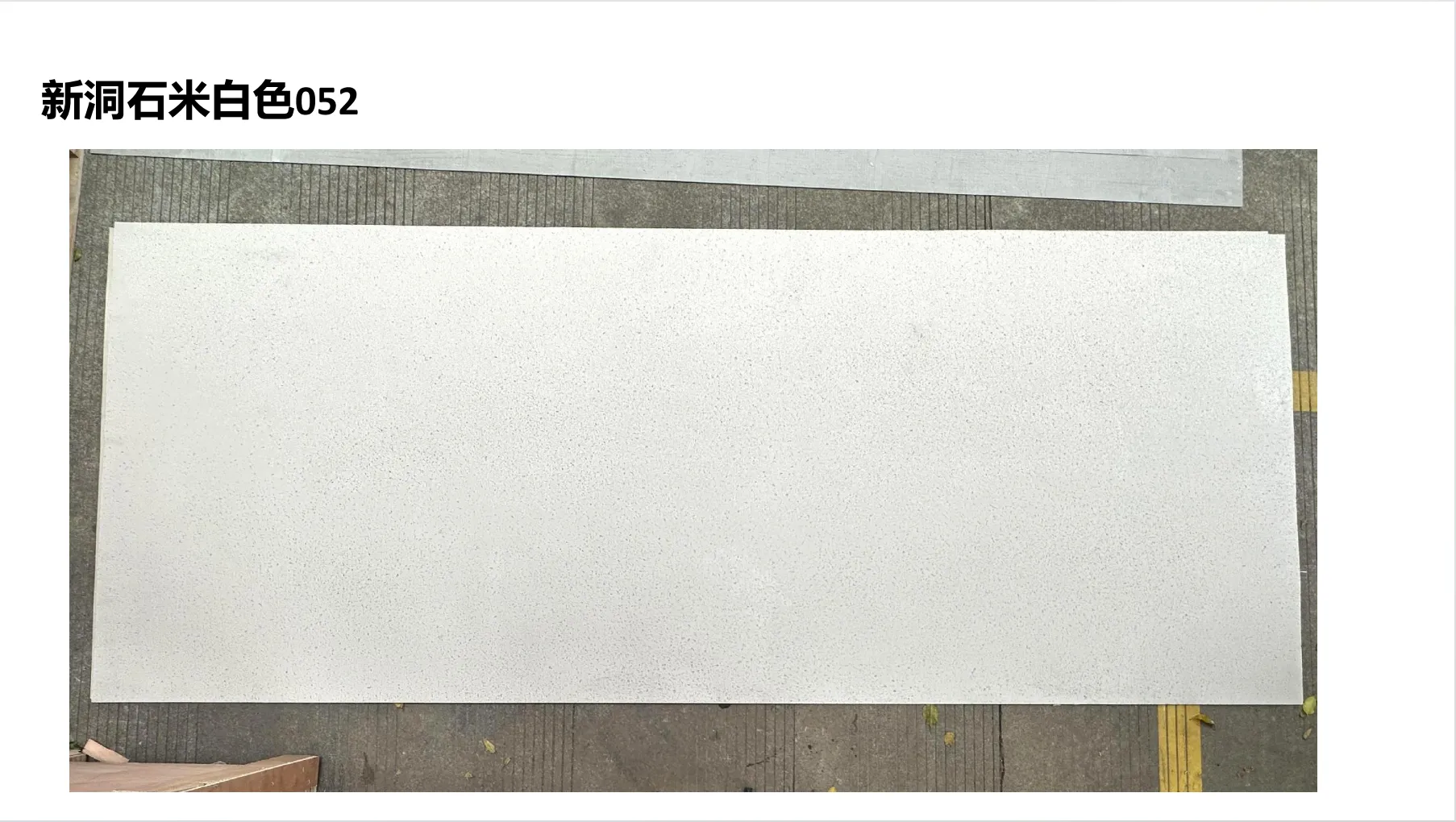
At the forefront of engineered travertine alternatives is MCM flexible stone . Imagine taking the look of White Travertino—the soft white base, the flowing veins, even the subtle porosity—and compressing it into a sheet so thin and light it can bend. That's MCM flexible stone in a nutshell. It's made by combining natural stone aggregates (often recycled from quarry waste) with a polymer resin binder, then pressing and curing the mixture into thin, flexible panels. The result? A material that looks and feels like natural travertine but weighs up to 70% less, resists stains, and can be installed in places natural stone would never dare go—like curved walls, ceilings, or even furniture.
What's exciting about MCM flexible stone is how it expands the creative possibilities of travertine. For example, while natural White Travertino is stunning, it's limited to the colors and patterns nature provides. MCM, though, can mimic not just the classic white, but also bold variations like travertine (starry green) —a take on travertine that adds a celestial twist, with tiny, iridescent flecks that catch the light like stars in a dark forest. Suddenly, a material once associated with "traditional" or "rustic" design can lean into modern, even futuristic aesthetics, all while keeping that core travertine charm.
MCM flexible stone is just the beginning. The world of engineered surfaces is rich with options that complement or reimagine the look of White Travertino, each with its own personality. Let's explore a few that are making waves in today's design scene:
Lunar Peak Silvery : If White Travertino is the stone of warmth, lunar peak silvery is the stone of cool, modern elegance. Imagine a surface that looks like moonlight frozen in stone—pale, silvery gray with subtle, linear veining that's more structured than travertine's organic swirls. It's sleek, it's minimalist, and it pairs beautifully with White Travertino in spaces that want to balance tradition and contemporary edge. Think of a kitchen where White Travertino countertops warm up the room, while Lunar Peak Silvery backsplash adds a touch of sophistication, like a modern art piece behind the stove.
Foamed Aluminium Alloy Board (Vintage Silver) : For those who crave industrial chic with a touch of nostalgia, foamed aluminium alloy board (vintage silver) is a game-changer. Unlike stone, this material is lightweight (thanks to its foam core) and has a metallic sheen that's been treated to look "vintage"—think of an old silver coin, worn smooth by time, with a soft, brushed finish that catches the light without being flashy. It's unexpected, it's tactile (run your fingers over it, and you'll feel the subtle texture of the foam), and it adds a raw, urban energy to spaces. Pair it with White Travertino, and you've got a contrast that's electric: the stone's organic warmth against the metal's cool, structured edge.
Fair-Faced Concrete : Sometimes, the most beautiful materials are the ones that wear their "rawness" proudly. Fair-faced concrete —also called "architectural concrete"—is exactly that. It's concrete left unfinished, its surface showing the marks of the formwork, the tiny bubbles, the subtle variations in color that come from the mix of cement, sand, and aggregate. It's gray, it's industrial, it's unapologetically simple—and yet, when paired with White Travertino, it creates a space that feels grounded and alive. Imagine a living room with fair-faced concrete walls (cool, smooth, and slightly rough to the touch) and a White Travertino fireplace surround (warm, veined, and inviting). It's a dialogue between the modern and the timeless, the man-made and the natural.
Choosing between natural White Travertino and engineered alternatives like MCM flexible stone, Lunar Peak Silvery, or Foamed Aluminium isn't about "better" or "worse"—it's about what your space needs, what story you want to tell, and how you live. To help visualize the differences, let's break down the key factors:
| Material | Weight (per sq. ft) | Durability | Maintenance | Sustainability | Aesthetic Vibe |
|---|---|---|---|---|---|
| Natural White Travertino | 15–20 lbs | High (but porous; prone to scratches/stains) | Requires sealing every 1–2 years; avoid harsh cleaners | Requires quarrying; high carbon footprint from transportation | Warm, organic, timeless; natural veining and pores |
| MCM Flexible Stone (Travertine Finish) | 3–5 lbs | Very high (stain-resistant, scratch-resistant, weatherproof) | Low; wipe clean with mild soap and water | Uses recycled stone aggregates; lightweight = lower transport emissions | Versatile; mimics natural travertine's look with added options (e.g., starry green) |
| Lunar Peak Silvery | 4–6 lbs | High (dense, non-porous) | Low; resistant to moisture and stains | Engineered with minimal waste; often contains recycled materials | Cool, sleek, modern; linear veining for a contemporary edge |
| Foamed Aluminium Alloy Board (Vintage Silver) | 2–3 lbs | Extremely high (corrosion-resistant, impact-resistant) | Very low; dust or wipe with a damp cloth | Aluminium is 100% recyclable; foam core reduces material use | Industrial, nostalgic, tactile; metallic sheen with a vintage patina |
| Fair-Faced Concrete | 8–10 lbs | High (durable, fire-resistant, weather-resistant) | Low; occasional sealing (optional for indoor use) | Can use recycled aggregates; low-maintenance = long lifespan | Raw, minimalist, earthy; shows formwork marks and subtle color variations |
The beauty of these materials lies not just in their looks, but in how they adapt to the stories we want our spaces to tell. Let's paint a few pictures:
Residential Spaces: Cozy Meets Practical Imagine a bathroom where the walls are clad in MCM flexible stone with a White Travertino finish. The light streams in through a frosted window, highlighting the stone's soft veining, and because it's moisture-resistant, you don't have to panic when water splashes. The shower floor? Maybe a small section of travertine (starry green) —a pop of color that feels like stepping into a hidden garden every time you bathe. Down the hall, the kitchen features Lunar Peak Silvery countertops: sleek, non-porous, and perfect for rolling out dough or setting down hot pans, while the backsplash is a mix of White Travertino MCM and fair-faced concrete panels, blending warmth and edge.
Commercial Spaces: Making a Statement A boutique hotel lobby wants to feel both luxurious and approachable. The reception desk is wrapped in natural White Travertino, its porous texture inviting guests to touch, to connect with something real. Behind the desk, a feature wall rises—curved, because why not?—clad in MCM flexible stone in a custom starry pattern, catching the light and drawing the eye upward. The floors? Foamed Aluminium Alloy Board (Vintage Silver) in large, seamless panels, adding an industrial-chic vibe that contrasts with the travertine's softness. It's a space that says, "We honor tradition, but we're not afraid to innovate."
Outdoor Spaces: Beauty That Breathes Patios and facades have their own set of challenges—weather, UV rays, temperature swings. Natural White Travertino can work here, but it needs constant sealing and might get slippery when wet. MCM flexible stone, though, is designed for the outdoors: it won't fade in the sun, won't crack in the cold, and its lightweight nature means it can be installed on vertical facades without weighing down the building. Pair it with fair-faced concrete planters and a Lunar Peak Silvery outdoor kitchen counter, and you've got an outdoor oasis that looks as good in the rain as it does in the sunshine.
In 2025, "sustainable design" isn't a trend—it's a responsibility. And when it comes to materials, the choice between natural and engineered often comes down to how we can minimize our impact on the earth. Natural White Travertino, while beautiful, is a finite resource. Quarrying disrupts ecosystems, and transporting heavy slabs across the globe adds tons of CO2 to the atmosphere. Engineered materials, by contrast, are often born from a desire to do better.
MCM flexible stone, for example, uses recycled stone dust and aggregates left over from quarrying—materials that would otherwise end up in landfills. Its lightweight design also cuts down on transportation costs and emissions: a truck that can carry 10 slabs of natural travertine can carry 50 panels of MCM. Foamed aluminium alloy boards take it a step further: aluminium is one of the most recyclable materials on the planet, and the foam core reduces the amount of raw material needed, making each panel more eco-friendly.
Even fair-faced concrete, often seen as "industrial," is getting a sustainable makeover. Many manufacturers now use recycled concrete aggregates, fly ash (a byproduct of coal power plants), or even carbon-capturing technology to reduce the material's carbon footprint. When designed for durability, these materials also last longer, meaning fewer replacements and less waste over time.
At the end of the day, materials aren't just about function or sustainability—they're about feeling. A space clad in natural White Travertino feels warm, grounded, like a hug from the earth. A wall of foamed aluminium alloy feels edgy, alive, like a city skyline at dusk. MCM flexible stone, with its ability to mimic nature while bending to our whims, feels like a collaboration between human creativity and the planet's beauty.
Designers and homeowners today aren't just choosing materials—they're choosing how they want people to feel in a space. Do you want your kitchen to feel like a cozy, sunlit cottage? White Travertino (natural or MCM) might be the answer. Do you want your office lobby to feel like a forward-thinking hub of innovation? Lunar Peak Silvery or foamed aluminium could set the tone. Do you want your backyard patio to feel like a retreat where the line between indoors and out blurs? Fair-faced concrete and MCM stone panels might be the perfect pair.
White Travertino's story isn't ending—it's being rewritten. From its ancient origins in Roman quarries to the labs where engineers craft MCM flexible stone, from the porous slabs of yore to the starry, sustainable panels of today, this material (and its engineered cousins) continues to adapt, to inspire, to connect us to something bigger than ourselves.
As we move forward, we'll likely see even more innovations: materials that self-heal, that change color with the light, that store energy. But no matter how advanced they get, the best materials will always have one thing in common: they'll tell a story. A story of the earth, of human ingenuity, and of the spaces we create to live, work, and dream. And in that story, White Travertino—whether in its natural form or reimagined as MCM, paired with lunar silvers or vintage metals—will always have a starring role.
So the next time you run your hand over a surface, take a moment to listen. Is it telling you the story of ancient springs? Of recycled stone and modern science? Of a future where beauty and responsibility walk hand in hand? Whatever it is, it's a story worth telling—and worth living in.
Recommend Products












