
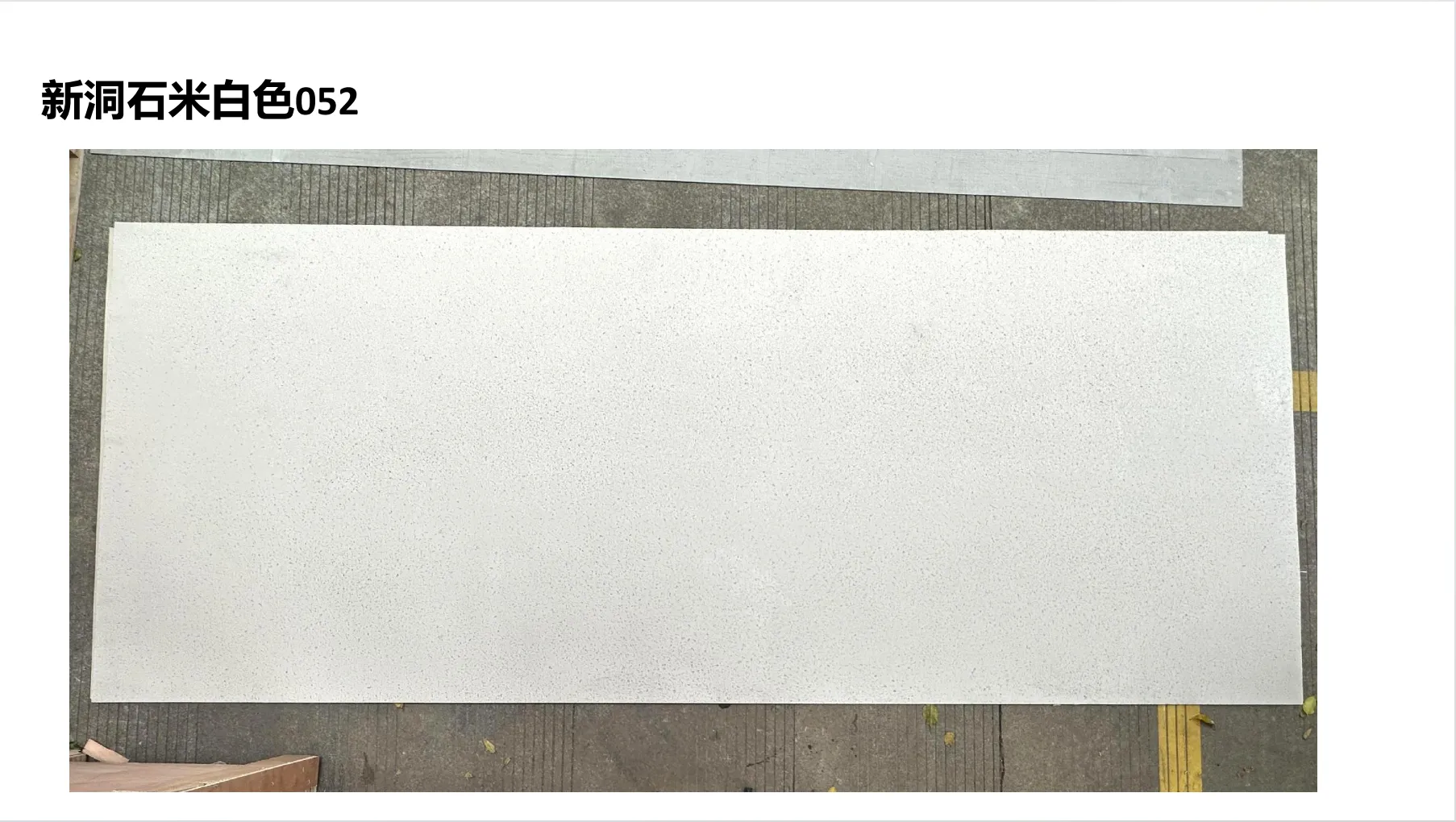
Where tradition meets innovation in architectural design
Stone has always been more than just a building material. It's a storyteller. From the ancient Roman Colosseum's travertine arches to the modern minimalism of a marble-clad skyscraper, stone carries the weight of history while shaping the future of design. But for all its beauty, traditional stone has long come with trade-offs: it's heavy, brittle, and often limits creative freedom. Enter White Travertino Flexible Stone —a material that bends, adapts, and redefines what stone can be.
Imagine walking into a space where the walls flow like fabric, yet retain the earthy texture of natural stone. That's the magic of flexible stone. Part of the broader MCM flexible stone family, White Travertino isn't just a product; it's a revolution in how we think about architectural surfaces. It marries the organic charm of travertine with the versatility of modern engineering, proving that strength and flexibility don't have to be opposites.
At first glance, White Travertino Flexible Stone looks like any high-quality travertine—with its characteristic porous texture and soft, ivory hue. But touch it, and you'll feel the difference. It bends gently under pressure, like a thin sheet of wood, without cracking or chipping. So, what's the secret?
The answer lies in its composition and manufacturing process. Unlike traditional stone, which is quarried as solid blocks, White Travertino is crafted using modified composite materials (MCM). Think of it as a stone "sandwich": a core of lightweight, flexible substrate is layered with real stone particles, then reinforced with advanced binders. This hybrid structure gives it the best of both worlds: the aesthetic of natural stone and the performance of a engineered material.
But the innovation doesn't stop there. Many variants of MCM flexible stone, including White Travertino, are produced using 3D printing series technology. This allows for precise control over texture, thickness, and flexibility, ensuring each panel meets exact design specifications. The result? A material that can be rolled, curved, or cut into intricate shapes—like the wave panel or semicircle board —without sacrificing durability.
To truly appreciate the impact of White Travertino, let's compare it to traditional stone. The difference is night and day, especially when it comes to practicality and design freedom.
| Feature | Traditional Stone | White Travertino Flexible Stone |
|---|---|---|
| Weight | Heavy (20-30 kg/m²) | Lightweight (4-6 kg/m²) |
| Flexibility | Brittle; cracks under bending | Bends up to 90° without damage |
| Installation | Requires heavy machinery and structural support | Can be installed by hand; no special support needed |
| Design Options | Limited to flat or slightly curved surfaces | Compatible with wave panels, semicircle boards, and custom shapes |
| Sustainability | High carbon footprint (quarrying, transportation) | Low waste production; recyclable materials |
The lightweight nature of White Travertino is a game-changer for architects. Imagine designing a curved facade that would have been impossible with traditional stone, or retrofitting an old building without reinforcing its structure. Suddenly, the sky's the limit.
One of the most exciting aspects of White Travertino Flexible Stone is its ability to adapt to bold, creative designs. Gone are the days when stone was confined to rigid rectangles. Today, designers are using it to craft everything from flowing wave panels that mimic ocean swells to geometric semicircle boards that add depth to walls.
Take, for example, a recent hotel lobby in Milan. The designer wanted to create a focal wall that felt both grand and organic. They chose White Travertino flexible stone in a wave pattern, installing it in overlapping layers to create a 3D effect. The result? A wall that seems to move as you walk by, with the travertine's natural texture catching the light in unexpected ways. It's stone, but not as we know it.
And it's not just about shapes. White Travertino pairs beautifully with other materials in the MCM lineup, like foamed aluminium alloy board (vintage silver) or fair-faced concrete . Imagine a kitchen backsplash where White Travertino's soft ivory meets the industrial edge of vintage silver aluminium, or a living room wall that blends flexible stone with warm wood grain board. The combinations are endless, limited only by imagination.
White Travertino Flexible Stone isn't just for high-end hotels or luxury homes. Its versatility makes it perfect for any space where aesthetics and functionality matter. Here are just a few ways it's being used:
One particularly innovative use? Staircases. Traditional stone stairs are heavy and require deep foundations, but White Travertino can be bent into sleek, floating stair treads that look like they're defying gravity. It's a small detail, but it transforms a functional element into a work of art.
In today's world, sustainability isn't just a buzzword—it's a necessity. White Travertino Flexible Stone delivers here, too. Traditional stone quarrying is resource-intensive, often leaving behind scars on the landscape. In contrast, MCM flexible stone production uses up to 70% less natural stone than traditional methods, and many manufacturers incorporate recycled materials into the substrate.
Its lightweight design also reduces transportation emissions. A single truck can carry 10 times more flexible stone panels than traditional stone slabs, cutting down on fuel use and carbon footprint. And because it's easy to install, it reduces labor time and costs, further lowering the project's environmental impact.
Plus, White Travertino is built to last. Its resistance to scratches, stains, and fading means it won't need to be replaced for decades, reducing waste in the long run. It's a material that looks good and does good—a rare combination in the construction world.
White Travertino Flexible Stone is just the beginning. As part of the MCM project board series and big slab board series , it's part of a larger movement toward smarter, more adaptable building materials. Architects and designers are no longer limited by the constraints of traditional stone, concrete, or wood—they can now choose materials that bend, flex, and transform to fit their vision.
Looking ahead, we can expect even more innovation. Imagine 3D-printed flexible stone panels with embedded lighting, or panels that change color based on temperature. The possibilities are thrilling, and White Travertino is leading the charge.
At the end of the day, architecture is about more than just buildings—it's about creating spaces that make us feel something. White Travertino Flexible Stone does exactly that. It takes the timeless beauty of stone and gives it a new lease on life, allowing designers to craft spaces that are both functional and emotionally resonant.
Whether you're building a home, a store, or a public monument, White Travertino isn't just a material choice—it's a statement. It says you value tradition but embrace innovation, that you believe in beauty without compromise. In a world where we're constantly seeking balance, White Travertino Flexible Stone is the perfect harmony of old and new, strength and flexibility, form and function.
So, the next time you walk into a space with a stunning stone feature, take a closer look. Maybe it's not just stone—it's the future, bending before your eyes.
Recommend Products












