
How MCM's innovative design is transforming spaces by erasing visual interruptions and elevating architectural harmony
There's a moment we've all experienced, even if we haven't put it into words: walking into a room and feeling an immediate sense of calm. Maybe it's a sunlit café with walls that seem to breathe, or a modern home where the boundaries between indoors and outdoors blur gently. More often than not, that feeling isn't just about light or layout—it's about the materials. They're the silent storytellers of a space, setting the mood before a single word is spoken.
But here's the thing: even the most beautiful materials can fall flat if they're broken by lines. Think of a marble bathroom where the tiles are stunning, but every 12 inches, a thin grout line cuts through the pattern. Or a concrete wall that feels industrial and bold, yet interrupted by expansion joints that disrupt the flow. These small gaps, known as "joints," might seem like minor details, but they have a way of chipping away at the coherence of a design. They collect dust, catch the eye for the wrong reasons, and over time, can even become points of weakness. For architects and designers, they've long been the invisible hurdle between a "good" space and a "transformative" one.
Enter MCM—Modified Composite Material—a category of building materials that's quietly rewriting those old rules. Part of the broader MCM project board series, these products blend the timeless appeal of natural materials with the innovation of modern engineering. Imagine (oops, scratch that—think of) traditional stone, wood, or concrete, but reimagined to be lighter, more flexible, and infinitely more adaptable. That's MCM in a nutshell: it takes the essence of what we love about natural textures and strips away the limitations.
At the heart of this revolution is a focus on solving the "joint problem." MCM panels are designed to be larger, more durable, and easier to install than their traditional counterparts, which means fewer seams and a smoother, more cohesive look. And among all the options in the MCM lineup, one product stands out for its ability to turn "almost perfect" spaces into "unforgettable" ones: White Travertino MCM Big Slabs.
Travertine has been a staple in architecture for centuries, and for good reason. With its soft, porous texture and delicate veining, it carries the warmth of ancient quarries and the elegance of classical design. Walk through the streets of Rome, and you'll see it on the Colosseum's arches; step into a historic villa in Tuscany, and it might line the floors. But for all its beauty, traditional travertine has a catch: size. Most natural travertine tiles max out at around 24x48 inches, which means even a small wall requires dozens of pieces—and dozens of joints.
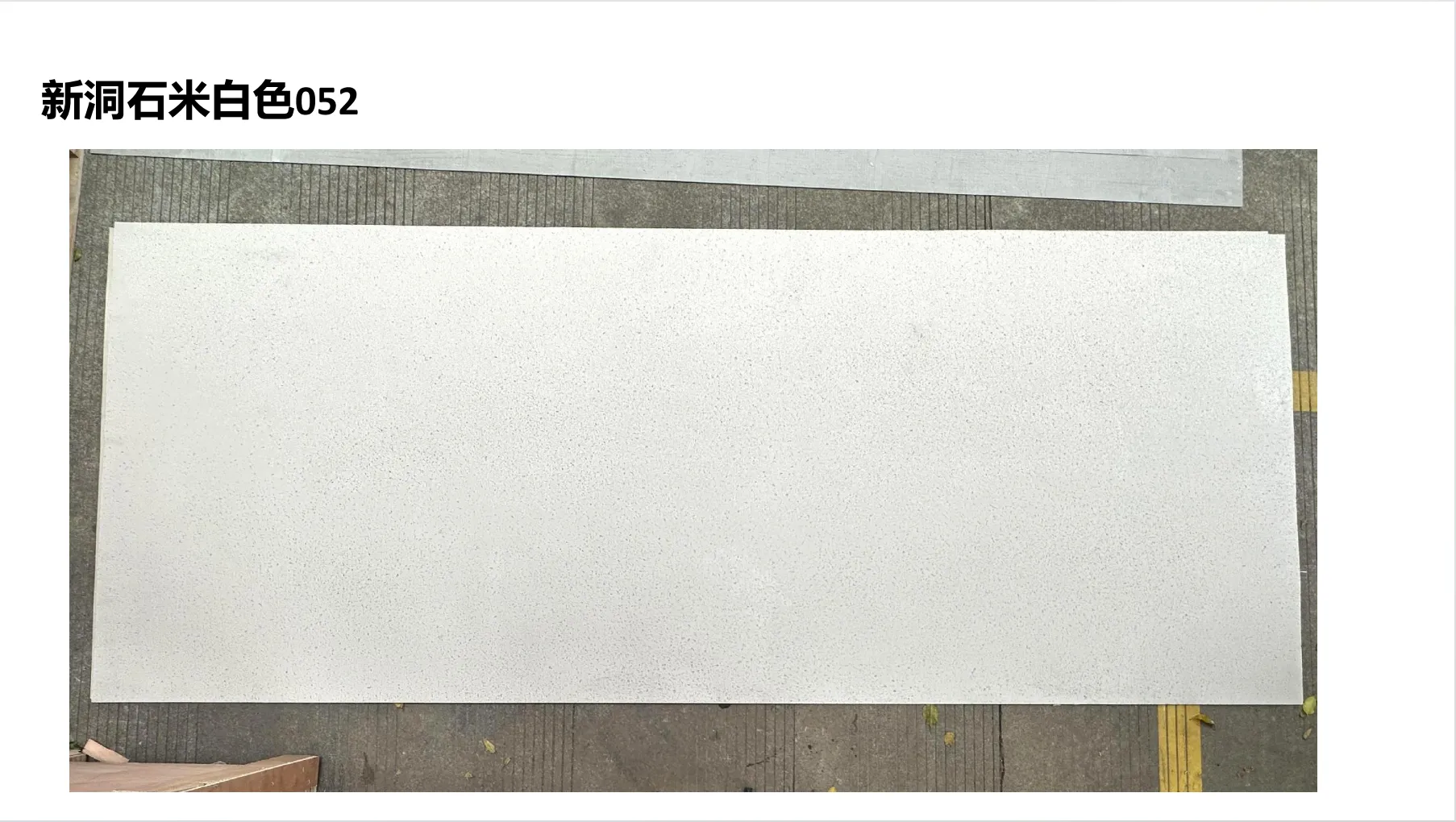
White Travertino MCM Big Slabs change that. These aren't just "big tiles"—they're architectural canvases. Ranging from 4x8 feet to custom sizes that can span entire walls, they transform travertine from a collection of pieces into a single, unbroken surface. Picture this: a hotel lobby where the walls rise 20 feet, clad in White Travertino that flows like a river, its subtle cream and ivory tones and gentle veining uninterrupted by a single seam. Or a home's master bathroom, where the shower walls feel like they've been carved from a single block of stone, the texture so consistent it's easy to lose yourself in the details.
But what makes these slabs possible? It's the magic of MCM's flexible stone technology. Unlike rigid natural stone slabs, which are heavy and prone to cracking, MCM panels are lightweight—about a third the weight of traditional travertine—yet incredibly strong. They're made by bonding natural travertine particles with eco-friendly resins, creating a material that's flexible enough to bend slightly during installation (no more stress cracks!) and durable enough to stand up to moisture, heat, and daily wear. That flexibility also means they can be installed over curved surfaces, opening up design possibilities that were once impossible with natural stone.
You might be wondering: Do joints really make that big a difference? Let's think about it. When we look at a surface, our brains are wired to seek patterns and continuity. A seamless wall feels "complete," like a finished story, while a wall with joints feels like a draft—close, but not quite there. That sense of completion isn't just visual; it's emotional. A room with seamless surfaces feels more spacious, calmer, and intentional. It's why minimalist design has stayed popular for decades: it removes distractions and lets the space itself take center stage.
Take healthcare spaces, for example. Hospitals and clinics are increasingly using MCM panels because the seamless surfaces reduce bacteria traps (no joints to harbor germs) and create a more reassuring environment for patients. A child nervous about a doctor's visit might feel a little calmer in a room where the walls don't "break" their focus. Similarly, in retail, seamless White Travertino walls can make a store feel more luxurious, guiding customers' eyes to the products instead of the seams between tiles.
Of course, White Travertino MCM Big Slabs aren't the only game in town. Designers often weigh them against other popular materials like fair-faced concrete, wood grain board, or even traditional natural stone. Let's break down how they compare, focusing on the features that matter most: joint visibility, installation ease, durability, and aesthetic impact.
| Material | Joint Visibility | Installation Time | Durability | Aesthetic Vibe |
|---|---|---|---|---|
| White Travertino MCM Big Slabs | Very low (large slabs = minimal seams) | Fast (lightweight, easy to handle) | High (resistant to moisture, stains, and impact) | Timeless, elegant, warm |
| Fair-Faced Concrete | Moderate (requires expansion joints) | Slow (heavy, needs specialized labor) | High (industrial strength) | Raw, modern, utilitarian |
| Wood Grain Board | Moderate (needs gaps to prevent warping) | Medium (vulnerable to moisture during install) | Medium (prone to scratches, fading) | Warm, organic, cozy |
| Traditional Travertine Tiles | High (many small tiles = many joints) | Slow (heavy, requires precise alignment) | Medium (porous, needs regular sealing) | Classic, natural, but fragmented |
What stands out here? White Travertino MCM Big Slabs bridge the best of both worlds: the warmth and tradition of natural travertine, with the practical benefits of modern materials. They're easier to install than fair-faced concrete, more durable than wood grain board, and infinitely more cohesive than traditional tiles. It's no wonder architects are calling them a "design game-changer."
The beauty of White Travertino MCM Big Slabs lies in their versatility. They're not just for "high-end" spaces—they work everywhere, from cozy homes to sprawling commercial projects. Let's walk through a few examples:
Residential Spaces: Imagine (again, no—think of) a home office where the back wall is clad in White Travertino Big Slabs. The soft, neutral tone keeps the space calm, while the seamless surface makes the room feel larger than it is. It's a backdrop that works with both modern furniture and vintage decor, and it's easy to clean when coffee spills or kids (or pets) decide to "help" with work.
Commercial Interiors: A boutique clothing store in the city could use these slabs on the walls and floors, creating a cohesive flow that guides customers from the entrance to the fitting rooms. The travertine's natural texture adds warmth, while the lack of joints keeps the focus on the clothes. And since MCM panels are resistant to stains and scratches, they'll stand up to the hustle and bustle of daily shoppers.
Public Spaces: Think of a library or community center, where the goal is to create a welcoming, low-stress environment. White Travertino Big Slabs on the walls would reflect light, making the space feel bright and open, while the seamless design would encourage people to linger. Plus, the material's durability means it can handle the wear and tear of hundreds of visitors a day.
Even exterior applications shine. Because MCM panels are weather-resistant, they're perfect for building facades, patios, or pool surrounds. A restaurant with an outdoor dining area clad in White Travertino Big Slabs would have a patio that feels like an extension of the indoor space, with no joints to collect rainwater or debris.
In today's design world, beauty isn't enough—materials need to be kind to the planet, too. White Travertino MCM Big Slabs deliver here, too. Traditional natural stone extraction often involves heavy machinery, large amounts of waste, and long transportation routes (since stone quarries are often far from construction sites). MCM panels, by contrast, use recycled stone particles and eco-friendly resins, reducing the need for fresh extraction. They're also lightweight, which means lower fuel consumption during shipping and easier installation (fewer workers, less energy used on-site).
And because these slabs are so durable, they last for decades without needing replacement. When a material doesn't have to be torn out and replaced every 10 years, that's less waste in landfills and fewer resources used in production. It's a small choice that adds up to a big impact.
At the end of the day, architecture is about people. It's about creating spaces that make us feel safe, inspired, and connected. White Travertino MCM Big Slabs do exactly that by removing the barriers—literally and figuratively—that get in the way of good design. They're not just a "material"; they're a tool for architects and designers to tell better stories, to create spaces that feel whole, and to build a future where beauty and practicality go hand in hand.
So the next time you walk into a space and feel that "magic" we talked about earlier, take a closer look at the walls. Chances are, they're seamless. And maybe, just maybe, they're clad in White Travertino MCM Big Slabs—proving that sometimes, the best innovations are the ones that let the materials speak for themselves.
Recommend Products












