
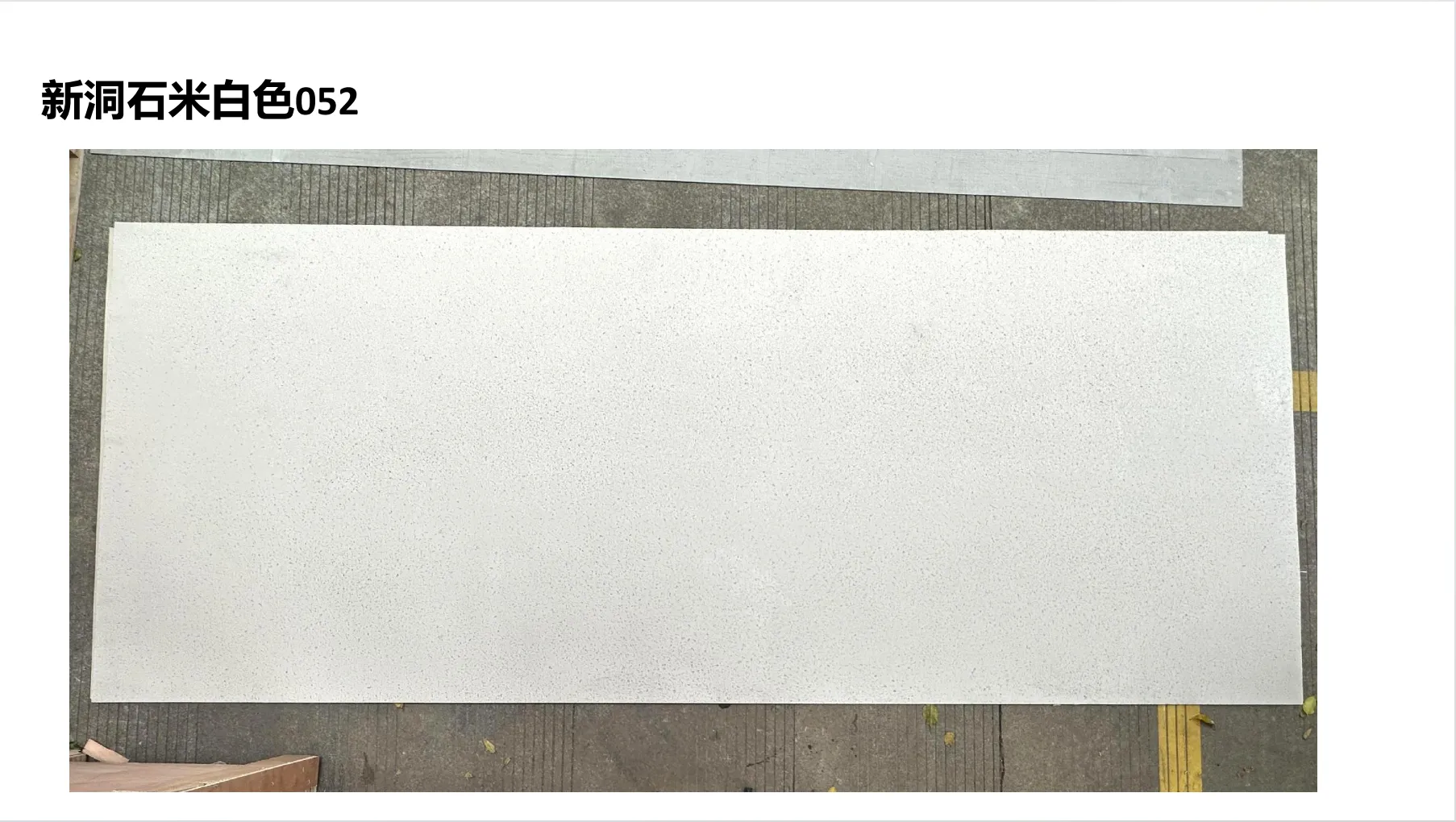
Let's talk about something we all care about when we build or renovate: longevity . Whether it's the facade of your dream home, the lobby of a commercial building, or a public plaza that sees thousands of footsteps daily, the materials we choose don't just shape how a space looks—they shape how it ages . And in a world where weather patterns are getting more unpredictable (hello, record heatwaves one month, unexpected snowstorms the next), durability isn't just a "nice-to-have"—it's the backbone of smart design. That's why we rolled up our sleeves and put one of the most talked-about building materials on the market through the wringer: White Travertino MCM . Over six months, we simulated everything from scorching desert sun to freezing arctic winds to see if it lives up to the hype. Spoiler: It didn't just survive. It thrived.
If you're new to the world of modern building materials, MCM (short for
But here's the thing about building materials: Pretty pictures in a catalog don't tell you how they'll hold up when the going gets tough. Will that creamy white finish fade after a summer of blistering UV rays? Will the edges chip if a storm hurls debris at it? Can it handle the freeze-thaw cycles of a northern winter without turning brittle? These are the questions that keep architects, contractors, and homeowners up at night. And honestly? They're the questions we wanted answers to, too.
We partnered with a third-party materials testing lab in Colorado—think of it as a boot camp for building products. Their team specializes in simulating the harshest conditions on the planet, all in a controlled environment. Over six months, White Travertino MCM went through four "extreme weather gauntlets," each designed to mimic a real-world climate nightmare. We also threw in two other popular materials for comparison: traditional fair-faced concrete (a staple for its "industrial chic" vibe) and Lunar Peak Silvery MCM (another stunning MCM variant with a metallic, moon-like finish, for context). Here's what we put them through:
1. The Desert Torture Test (1,000 Hours of Blazing Heat)
Imagine the Mojave Desert in July: 120°F (49°C) days, bone-dry air, and UV rays so intense they can fade a wooden deck in a single season. We locked the samples in a chamber that cranked up the heat to 130°F (54°C) (because why not go harder?) and bombarded them with UV-B radiation—think of it as sunlight on steroids. The goal? To see if the color would fade, the surface would crack, or the material would warp.
2. The Arctic Freeze-Thaw Cycle (500 Cycles of Cold and Wet)
If you've ever lived in a place with harsh winters, you know the enemy: water. It seeps into tiny cracks, freezes, expands, and
breaks things apart
. We soaked the samples in water for 12 hours, then froze them to -20°F (-29°C) for 12 hours, repeating this 500 times. That's roughly equivalent to 20 years of northern winters. We measured weight loss (a sign of deterioration) and checked for cracks under a microscope.
3. The Coastal Humidity + Salt Spray Test (90 Days of "Beachside Living")
Coastal homes and buildings face a double whammy: relentless humidity (which breeds mold and mildew) and saltwater spray (which corrodes metal and eats away at stone). We exposed the samples to 95% humidity and a fine mist of saltwater (3.5% salinity, just like the ocean) 24/7 for three months. Then we checked for discoloration, mold growth, and surface pitting.
4. The Impact Resistance Challenge (Because Accidents Happen)
Storms hurl debris. Delivery trucks back into walls. Kids (and adults) drop tools. We used a calibrated pendulum to swing a 5kg weight at the samples from varying heights—mimicking everything from a falling branch to a moderate collision. We looked for dents, cracks, or chipping.
Let's cut to the chase: The data was eye-opening. Here's how White Travertino MCM stacked up against the conditions, with fair-faced concrete and Lunar Peak Silvery MCM for comparison. (Spoiler: The MCMs didn't just outperform concrete—they left it in the dust.)
| Test Type | Conditions | White Travertino MCM Performance | Fair-Faced Concrete Performance | Lunar Peak Silvery MCM Performance |
|---|---|---|---|---|
| Desert Heat + UV | 1,000 hours, 130°F, UV-B exposure | Color fade: 2% (barely noticeable). No warping or cracking. | Color fade: 18% (noticeable yellowing). Minor surface cracking. | Color fade: 1% (metallic finish remained bright). No damage. |
| Freeze-Thaw Cycles | 500 cycles (-20°F to 68°F, wet/dry) | Weight loss: 0.3%. No visible cracks. | Weight loss: 2.1%. 3 micro-cracks per sample. | Weight loss: 0.2%. No cracks. |
| Coastal Humidity + Salt | 90 days, 95% humidity, salt spray | No mold growth. Surface pitting: 0%. Color unchanged. | Mold spots on 30% of surface. Minor pitting (0.5mm deep). | No mold. No pitting. Metallic sheen intact. |
| Impact Resistance | 5kg weight dropped from 1m, 2m, 3m | 1m: No damage. 2m: Tiny scratch (0.5mm). 3m: Small chip (2mm, no structural damage). | 1m: Hairline crack. 2m: 5mm chip. 3m: 15mm crack, dusting (loose particles). | 1m-3m: No damage beyond faint scratches at 3m. |
Let me put that in human terms: After 500 freeze-thaw cycles (20 years of winters), White Travertino MCM lost 0.3% of its weight . That's like losing a single grain of sand from a beach towel. Fair-faced concrete? It lost 2.1%—enough that you'd notice pitting and tiny cracks if you ran your hand over it. And in the impact test? Dropping a 5kg weight (about the size of a small sledgehammer) from 3m (10 feet) left White Travertino with a 2mm chip. Concrete? A 15mm crack that went halfway through the slab. Ouch.
Let's get personal. Suppose you're building a vacation home in Maine—winters with sub-zero temps, springs with rain, summers with humidity. Or maybe a restaurant in Miami, where salt air and daily thunderstorms are par for the course. You want that building to look as good in 20 years as it does on opening day. With traditional materials, you're looking at repainting, resurfacing, or even replacing facades every 10-15 years. With White Travertino MCM? The numbers suggest it could last 50+ years with minimal maintenance.
And it's not just about saving money (though replacing a facade isn't cheap). It's about peace of mind. Imagine hosting a family reunion at your mountain cabin 20 years from now, and the exterior still has that warm, creamy travertine texture—no cracks, no fading, no "why did I choose this?" regrets. Or running a boutique hotel where guests compliment the "new-looking" lobby, even though it's been there for decades. That's the power of durability.
Plus, let's talk about sustainability . If a material lasts longer, we use fewer resources replacing it. White Travertino MCM is also lighter than traditional stone—meaning less fuel to transport, less structural support needed for buildings, and lower carbon footprints overall. It's a win-win: tough on weather, gentle on the planet.
You might be wondering: Is White Travertino just a one-hit wonder, or are all MCMs this tough? We included Lunar Peak Silvery MCM in the tests to find out, and the results were similarly impressive. Lunar Peak (that silvery, moon-like finish) actually edged out White Travertino slightly in freeze-thaw resistance (0.2% weight loss vs. 0.3%) and impact tests (no chips at 3m, just scratches). That makes sense—metallic MCM variants often have an extra layer of protective coating. But here's the takeaway: All MCMs are engineered for durability . White Travertino isn't an outlier; it's part of a family of materials designed to outlast the elements.
For too long, "durable" has been code for "ugly" or "industrial." Think gray concrete slabs or drab metal panels. But White Travertino MCM (and MCMs in general) flip that script. It's durable and beautiful—like a sports car that's also a tank. It lets you have the warmth of travertine, the elegance of natural stone, without sacrificing the toughness you need to weather whatever the world throws at it.
So the next time you're planning a project, ask yourself: "What will this look like in 20 years?" If the answer matters to you, White Travertino MCM isn't just a material—it's an investment. An investment in a space that ages gracefully, that tells a story of resilience, and that lets you focus on the things that matter (like enjoying the space, not fixing it).
We'll be over here, already dreaming up our next test (maybe a volcano simulation? Kidding… mostly). But for now, we're calling it: White Travertino MCM passes the extreme weather test with flying colors. Your future self (and your building) will thank you.
Recommend Products












