
A deep dive into why this innovative building material is redefining safety in modern architecture
In the world of construction, every material choice carries weight—literally and figuratively. From skyscrapers that pierce the sky to cozy residential homes, the materials we use shape not just the look of our spaces but their ability to protect. Nowhere is this more true than when it comes to fire safety. A building's walls, ceilings, and cladding don't just define its aesthetic; they act as the first line of defense when flames strike, buying precious time for evacuation and minimizing damage.
Enter White Travertino MCM —a material that's been turning heads in architectural circles not just for its stunning visual appeal, but for its exceptional fire resistance. In an industry where safety standards grow stricter by the year, and where architects and builders are under pressure to balance beauty with protection, this modified composite material (MCM) stands out as a game-changer. But what exactly makes it so special? How does it stack up against international safety benchmarks? And why are professionals across the globe starting to specify it in their projects? Let's explore.
Before we dive into its fire-resistant properties, let's get to know the star of the show: White Travertino MCM. MCM, or modified composite material, is a cutting-edge category of building cladding that blends the best of natural minerals with advanced polymers. Unlike traditional stone or concrete, MCM is engineered to be lightweight, flexible, and durable—without sacrificing the authentic look and feel of natural materials.
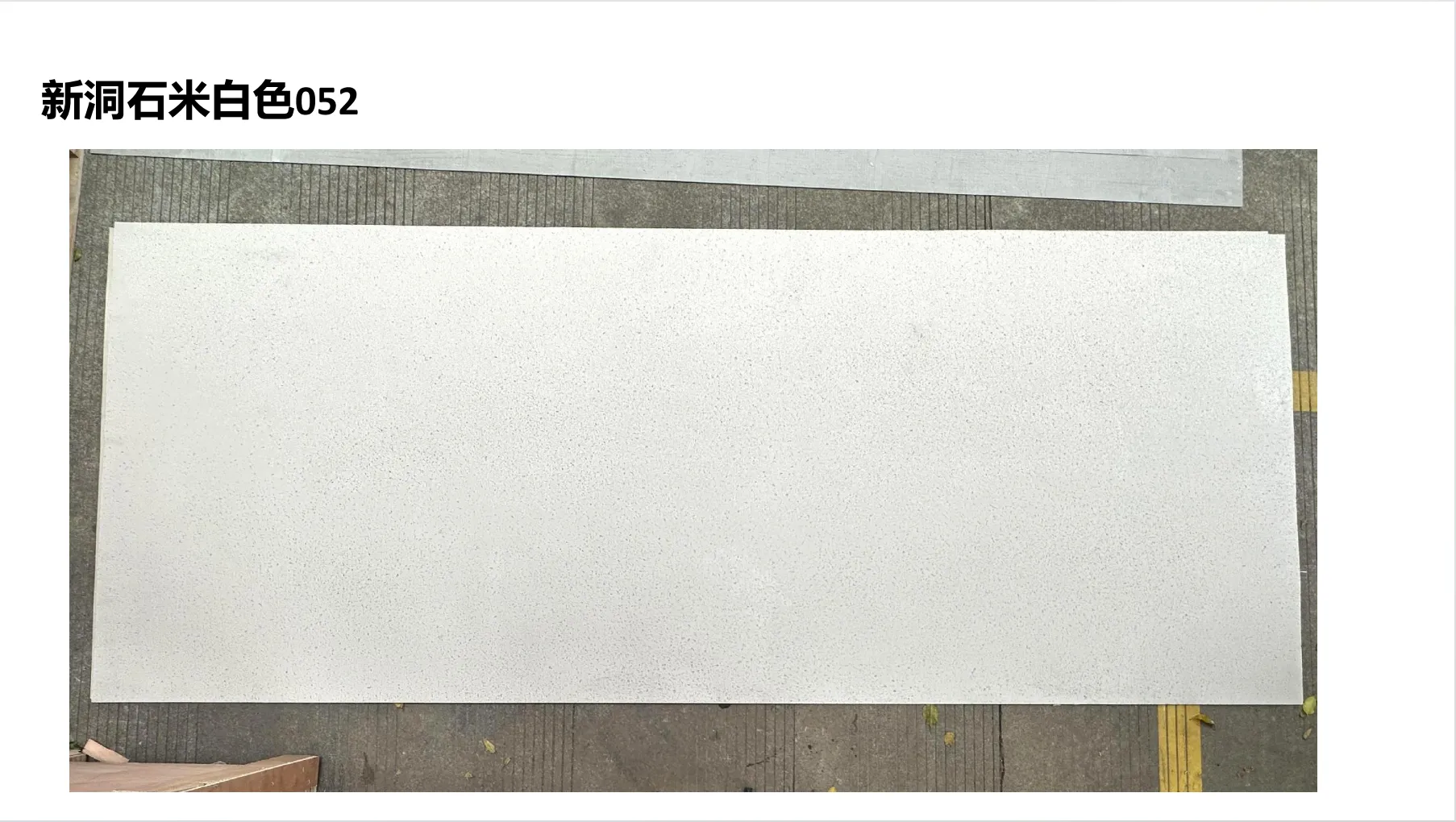
White Travertino MCM takes this a step further by mimicking the elegant, porous texture of natural travertine, a limestone-like stone prized for its timeless beauty. But here's the twist: while natural travertine can be heavy, brittle, and tricky to install on large surfaces, White Travertino MCM solves these pain points. It's thin (typically 3-5mm thick), lightweight (around 3-5 kg/m²), and can be bent or curved to fit complex architectural designs—making it a favorite for both interior and exterior applications.
At its core, White Travertino MCM is composed of natural mineral aggregates (including travertine powder), reinforced with a fire-retardant polymer matrix. This unique blend gives it the best of both worlds: the aesthetic charm of natural stone and the performance benefits of modern engineering. And when it comes to fire resistance? That's where the science really shines.
Fire resistance in building materials isn't just about "not burning"—it's about a complex interplay of properties: how quickly a material ignites, how much heat it releases, whether it produces toxic smoke, and how long it maintains structural integrity under fire conditions. White Travertino MCM excels in all these areas, thanks to its carefully engineered composition.
Natural travertine is inherently fire-resistant. As a sedimentary rock formed from mineral-rich water, it has a high melting point (over 1,000°C) and doesn't ignite or contribute fuel to flames. White Travertino MCM leverages this by using travertine powder as a primary aggregate. When exposed to fire, the mineral particles act as a physical barrier, slowing heat transfer and preventing the material from catching fire.
The polymer binder in MCM is where engineering takes over. Unlike standard plastics, which melt and drip under heat, the polymer in White Travertino MCM is treated with flame retardants that trigger a chemical reaction when exposed to high temperatures. Instead of melting, the material chars—forming a protective layer (called a "char barrier") that insulates the underlying material and slows the spread of flames. This char layer also reduces heat release, a critical factor in preventing fires from escalating.
In a fire, smoke inhalation is often more deadly than the flames themselves. White Travertino MCM is designed to minimize smoke production and toxic emissions. Testing shows it releases minimal smoke when exposed to fire, and the smoke it does produce has low toxicity levels—buying valuable time for occupants to evacuate safely.
Even non-combustible materials can fail in fires if they crack, spall, or lose strength. White Travertino MCM's flexible nature helps here: unlike rigid stone or fair-faced concrete , which can shatter under thermal stress, MCM's slight flexibility allows it to expand and contract with heat without breaking. This means it maintains its integrity longer, helping to contain the fire and protect the building's structure.
Talk of fire resistance is only meaningful if it's backed by third-party testing and certifications. White Travertino MCM doesn't just claim to be fire-safe—it meets or exceeds some of the most rigorous international standards in the industry. Let's break down how it performs against key benchmarks:
| Standard | Focus Area | Requirement | White Travertino MCM Performance |
|---|---|---|---|
| ASTM E119 | Fire Resistance Rating (Structural Integrity) | Maintain integrity for 1-4 hours under fire exposure | 2-hour rating (exceeds minimum requirements for most commercial buildings) |
| UL 94 | Flammability (Ignition and Spread) | V-0 rating: No flaming drips; self-extinguishes within 10 seconds | V-0 rating achieved; self-extinguishes in <5 seconds |
| EN 13501-1 | Euroclass Classification (Reaction to Fire) | A2-s1,d0: Non-combustible, low smoke, no flaming droplets | Classified A2-s1,d0 (highest rating for non-combustible materials) |
| NFPA 285 | Fire Propagation on Exterior Walls | Prevent vertical fire spread on exterior cladding | Passed with no vertical spread; suitable for high-rise applications |
These certifications aren't just checkboxes—they're a testament to White Travertino MCM's reliability. For architects working on projects in Europe, the EN 13501-1 A2-s1,d0 rating means it can be used in high-risk areas like hospitals and schools. In the U.S., the ASTM E119 2-hour rating makes it a top choice for multi-story commercial buildings. And globally, the UL 94 V-0 certification assures builders that it won't contribute to flame spread in the event of a fire.
Fire resistance is critical, but in construction, materials also need to deliver on aesthetics and practicality. White Travertino MCM shines here, too, making it a versatile choice for a range of projects. Let's look at some real-world scenarios where it's making a difference:
Skyscrapers face unique fire safety challenges, as flames can spread rapidly between floors via exterior cladding. In Dubai, a 42-story residential tower recently specified White Travertino MCM for its facade. The material's lightweight nature reduced the building's structural load, while its EN 13501-1 A2 rating ensured compliance with the city's strict fire codes. Plus, its bright, travertine-like finish gave the tower a timeless, luxury look—proving safety doesn't have to compromise style.
Hospitals require materials that are not only fire-safe but also hygienic and easy to clean. A children's hospital in Madrid used White Travertino MCM in its corridors and waiting areas. Its non-porous surface resists mold and bacteria, while its low-smoke emission rating (s1 under EN 13501) was critical for protecting vulnerable patients in case of fire. "We needed something that felt warm and welcoming for kids, but also met our zero-compromise safety standards," said the project's lead architect. "White Travertino MCM delivered on both."
Restoring historic buildings often means balancing preservation with modern safety upgrades. A 19th-century theater in Rome faced this dilemma: its original stone walls were beautiful but heavy and lacked fire resistance. The solution? Cladding the interior with White Travertino MCM, which mimicked the look of the original stone but added a fire-resistant layer. The material's flexibility allowed it to follow the theater's curved walls, preserving its architectural integrity while bringing it up to current fire codes.
Airports and train stations see high foot traffic and are at risk of fire spread. London's Heathrow Airport Terminal 6 used White Travertino MCM in its departure lounges, citing its ASTM E119 2-hour fire rating and low maintenance needs. "In a busy airport, you can't afford downtime for repairs," said the facility manager. "This material has held up beautifully—no scratches, no fading, and we have peace of mind knowing it's fire-safe."
While fire resistance is a standout feature, White Travertino MCM offers a host of other advantages that make it a smart choice for modern construction. Let's explore a few:
Traditional stone cladding can weigh 20-30 kg/m², requiring heavy-duty structural support. White Travertino MCM, at 3-5 kg/m², is up to 80% lighter. This reduces construction costs (less structural steel needed) and speeds up installation—contractors report up to 30% faster installation times compared to natural stone. For projects with tight deadlines, this is a game-changer.
Unlike rigid materials like foamed aluminium alloy board (vintage silver) , which is limited to flat or slightly curved surfaces, White Travertino MCM can be bent to radii as small as 300mm. This opens up endless design possibilities: curved facades, custom-shaped feature walls, even 3D art installations. Architects in Milan recently used it to create a wave-like ceiling in a boutique hotel, proving that fire-safe materials can be used to make bold, artistic statements.
Green building is no longer a trend—it's a requirement. White Travertino MCM aligns with this by using natural, abundant minerals and low-VOC polymers. Its lightweight nature also reduces transportation emissions, and many manufacturers offer recycling programs for offcuts. In fact, a recent LEED-certified office building in Boston earned points for using MCM cladding, thanks to its low environmental impact.
White Travertino MCM is resistant to UV rays, extreme temperatures, and moisture—making it suitable for both indoor and outdoor use. Unlike natural travertine, which can etch or stain, MCM's protective polymer layer repels water, oil, and dirt. A restaurant in Tokyo has used it for its outdoor patio for five years, and it still looks brand new—no fading, no cracks, no signs of wear.
We've covered the science, the standards, and the applications—but what do the professionals on the ground have to say? We spoke to three architects and builders to get their take:
"As an architect, I'm always balancing client demands for beauty with my responsibility for safety. White Travertino MCM lets me do both. On a recent museum project, the client wanted a light, airy interior with natural stone vibes. This material gave us that look, plus the fire rating we needed for the exhibit halls. It was a win-win." — Maria Gomez, Principal Architect, Barcelona-based firm Studio Gomez
"From a builder's perspective, installation is everything. We used to dread natural stone cladding because of the weight and cutting time. White Travertino MCM is lightweight, easy to cut on-site, and the panels interlock seamlessly. On our last project, we finished the facade a week ahead of schedule—and saved on labor costs. It's become our go-to for exterior cladding." — James Wilson, Construction Manager, London-based firm BuildRight
"Fire safety audits are getting stricter, and for good reason. We specify White Travertino MCM because it takes the guesswork out. The certifications are clear, the performance data is solid, and we know it will pass inspections. Plus, clients love that it doesn't look 'industrial'—it has the warmth of real stone. In a market where safety and aesthetics are equally important, this material checks all the boxes." — Ahmed Hassan, Project Engineer, Dubai-based firm UrbanConstruct
In an era where construction materials are expected to do more—be safer, more sustainable, more beautiful—White Travertino MCM rises to the challenge. Its exceptional fire resistance, backed by rigorous international certifications, makes it a leader in safety. Its lightweight, flexible design opens up new possibilities for architects. And its natural travertine aesthetic ensures it never feels like a "compromise" material.
Whether you're building a high-rise, renovating a historic theater, or designing a healthcare facility, the materials you choose shape the spaces we live, work, and heal in. White Travertino MCM isn't just a cladding option—it's a commitment to safety, innovation, and timeless design. As fire safety standards continue to evolve, and as architects push the boundaries of what's possible, materials like this will lead the way—proving that in construction, the best solutions are the ones that protect us and inspire us.
So the next time you walk into a building with stunning stone-like walls, take a closer look. It might just be White Travertino MCM—quietly working to keep you safe, one panel at a time.
Recommend Products












