
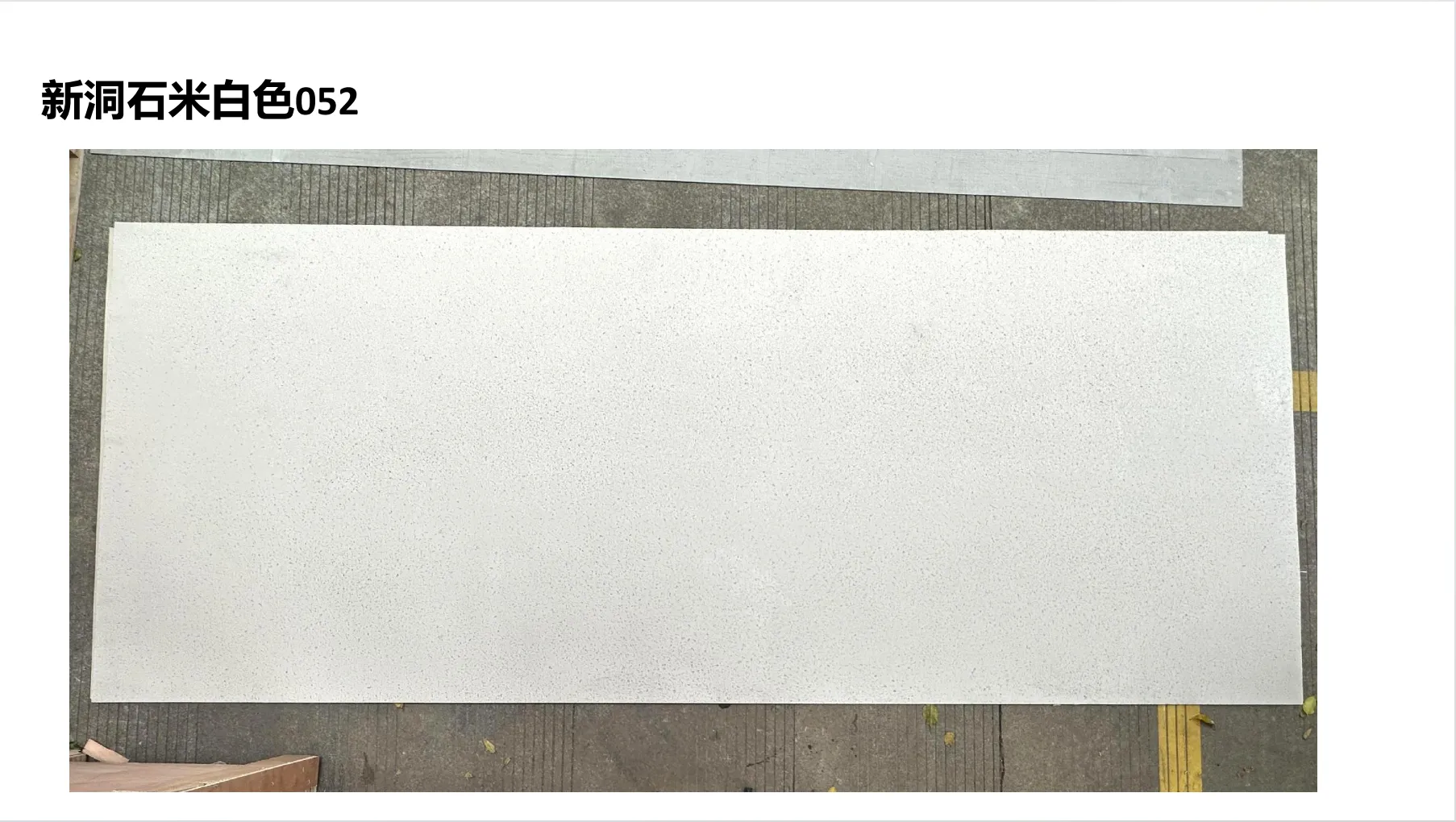
There's something undeniably timeless about the soft, creamy elegance of travertine. Its subtle veining and warm white tones have adorned everything from ancient Roman baths to modern minimalist homes. But for today's builders and designers, natural travertine often comes with a catch: weight, cost, and maintenance headaches. Enter White Travertino MCM—a material that marries the classic beauty of travertine with the practicality of modern engineering. If you're considering this stunning material for your next project, you're probably wondering: What will it cost to install? Let's dive into the details, breaking down the numbers for residential and commercial spaces, and why MCM flexible stone might just be the smartest choice you'll make.
First things first: MCM stands for Modified Composite Material, a cutting-edge blend of natural minerals, polymers, and reinforcing fibers. Think of it as nature's beauty meets human ingenuity. White Travertino MCM, in particular, is designed to mimic the look and feel of natural white travertine—those soft, porous surfaces and delicate gray veins—without the heft or fragility of the real thing. Unlike traditional stone slabs that can weigh 100+ pounds per square foot, MCM panels are lightweight (often under 5 pounds per square foot) and flexible, making them easier to transport, handle, and install. That flexibility isn't just about physical bend—it's about design freedom, too. Whether you're covering a curved accent wall or a high-rise facade, MCM flexible stone adapts where natural stone would crack or crumble.
But why choose MCM over, say, fair-faced concrete or even natural travertine? For starters, it's more eco-friendly: MCM uses recycled materials and requires less energy to produce than quarrying and cutting natural stone. It's also more durable in harsh climates, resisting moisture, UV rays, and temperature swings better than many traditional options. And let's not forget cost—while MCM isn't the cheapest material on the market, it often hits that sweet spot between affordability and luxury, especially when you factor in long-term maintenance savings.
Installing White Travertino MCM isn't a one-size-fits-all expense. The final bill depends on a mix of variables, from the size of your project to the complexity of the design. Let's break down the key factors that will shape your budget.
Unsurprisingly, the cost of the MCM panels themselves is the starting point. White Travertino MCM typically ranges from $15 to $35 per square foot, depending on the panel size, thickness, and finish (matte, polished, or textured). Compare that to natural white travertine, which can run $25 to $50+ per square foot, or even historical pathfinders stone—a popular design alternative—at $30 to $60 per square foot. MCM's affordability here is a big win, especially for larger projects. Keep in mind that some suppliers offer bulk discounts for commercial orders, so if you're tackling a 10,000-square-foot facade, you might see savings of 10-15% on material costs.
Labor costs can make or break your budget, and they vary dramatically between residential and commercial jobs. For residential projects—think kitchen backsplashes, bathroom walls, or outdoor patios—labor usually runs $8 to $15 per square foot. Why the range? It depends on the installer's experience (MCM requires specific training to avoid damaging the panels), the project's complexity (a straight wall vs. a curved niche), and your location (installers in urban areas like New York or Los Angeles charge more than those in smaller towns).
Commercial projects, on the other hand, often hit $15 to $30 per square foot in labor. Why the jump? Commercial jobs are usually larger, require more specialized equipment (scaffolding, lifts for high-rise work), and demand stricter safety protocols. For example, installing White Travertino MCM on a 10-story office building's facade isn't just about sticking panels to a wall—it involves coordinating with structural engineers, meeting building codes, and working at heights, all of which add time and cost.
It's simple math: more square footage means more materials and more labor. A small residential project, like a 50-square-foot backsplash, might cost $1,500 to $3,000 total (materials + labor). A commercial project, say a 5,000-square-foot retail storefront, could easily top $100,000. But here's the silver lining: larger projects often benefit from economies of scale. Suppliers may lower material costs for bulk orders, and installers can streamline their workflow, reducing the per-square-foot labor rate.
Not all walls are created equal. A flat, straight residential accent wall? That's straightforward. A commercial facade with custom cutouts for windows, or a residential fireplace surround with curved edges? That's complex. Custom cuts, intricate patterns, and uneven surfaces all require more time and skill, driving up labor costs by 20-50%. For example, if you want to incorporate a geometric design using White Travertino MCM and, say, historical pathfinders stone for contrast, the installer will need to precision-cut both materials, align the seams perfectly, and ensure the pattern flows—all of which adds hours to the job.
Where you live (or build) matters. If your project is in a remote area, delivery fees for MCM panels can spike—trucking materials 200 miles costs more than 20 miles. Urban projects might face parking fees for installation vehicles or restrictions on work hours (e.g., only working 9 AM-5 PM to avoid disrupting traffic), which can stretch timelines and increase labor costs. And let's not forget climate: installing MCM in a rainy region might require weatherproofing steps, while a desert locale could demand heat-resistant adhesives—both adding to the bottom line.
To make this tangible, let's compare two hypothetical projects: a residential kitchen backsplash and a commercial restaurant facade, both using White Travertino MCM. We'll factor in material, labor, and a 10% buffer for unexpected costs (because let's be real—there's always something).
| Project Type | Size (Sq Ft) | Material Cost (Avg) | Labor Cost (Avg) | Total Cost (Including 10% Buffer) |
|---|---|---|---|---|
| Residential Kitchen Backsplash | 80 | $2,000 ($25/sq ft) | $960 ($12/sq ft) | $3,256 |
| Commercial Restaurant Facade | 1,200 | $28,800 ($24/sq ft, bulk discount) | $32,400 ($27/sq ft, high-rise work) | $67,320 |
Notice the difference in labor rates? For the commercial facade, the installer is working at height, coordinating with the building's construction team, and handling a larger, more complex surface area—hence the $27/sq ft labor cost vs. $12/sq ft for the residential backsplash. Also, the commercial project gets a slight material discount ($24/sq ft vs. $25/sq ft) because of the bulk order, which helps offset some of the labor premium.
Even the most detailed budget can miss a few things. Here are some sneaky costs to watch for:
At the end of the day, the question isn't just "how much does it cost?" but "how much value does it add?" For homeowners, White Travertino MCM can boost resale value by enhancing curb appeal or creating a high-end kitchen focal point. For businesses, it's a way to stand out—imagine a cafe with a White Travertino MCM facade that looks like it's clad in ancient stone, but costs a fraction of the price and requires zero sealing or annual maintenance.
Compare that to fair-faced concrete, which is durable but lacks the warmth of travertine, or natural stone, which demands regular sealing and can crack under stress. MCM flexible stone offers the best of both worlds: beauty and brains. And when you factor in its 20+ year lifespan (many manufacturers offer warranties), the upfront cost starts to look like a long-term bargain.
Installing White Travertino MCM is an investment in style, durability, and peace of mind. To keep costs in check:
Whether you're a homeowner dreaming of a spa-like bathroom or a business owner aiming to wow customers, White Travertino MCM proves that luxury doesn't have to break the bank. With its blend of beauty, flexibility, and affordability, it's no wonder MCM flexible stone is quickly becoming the go-to choice for designers who refuse to compromise.
Recommend Products












