
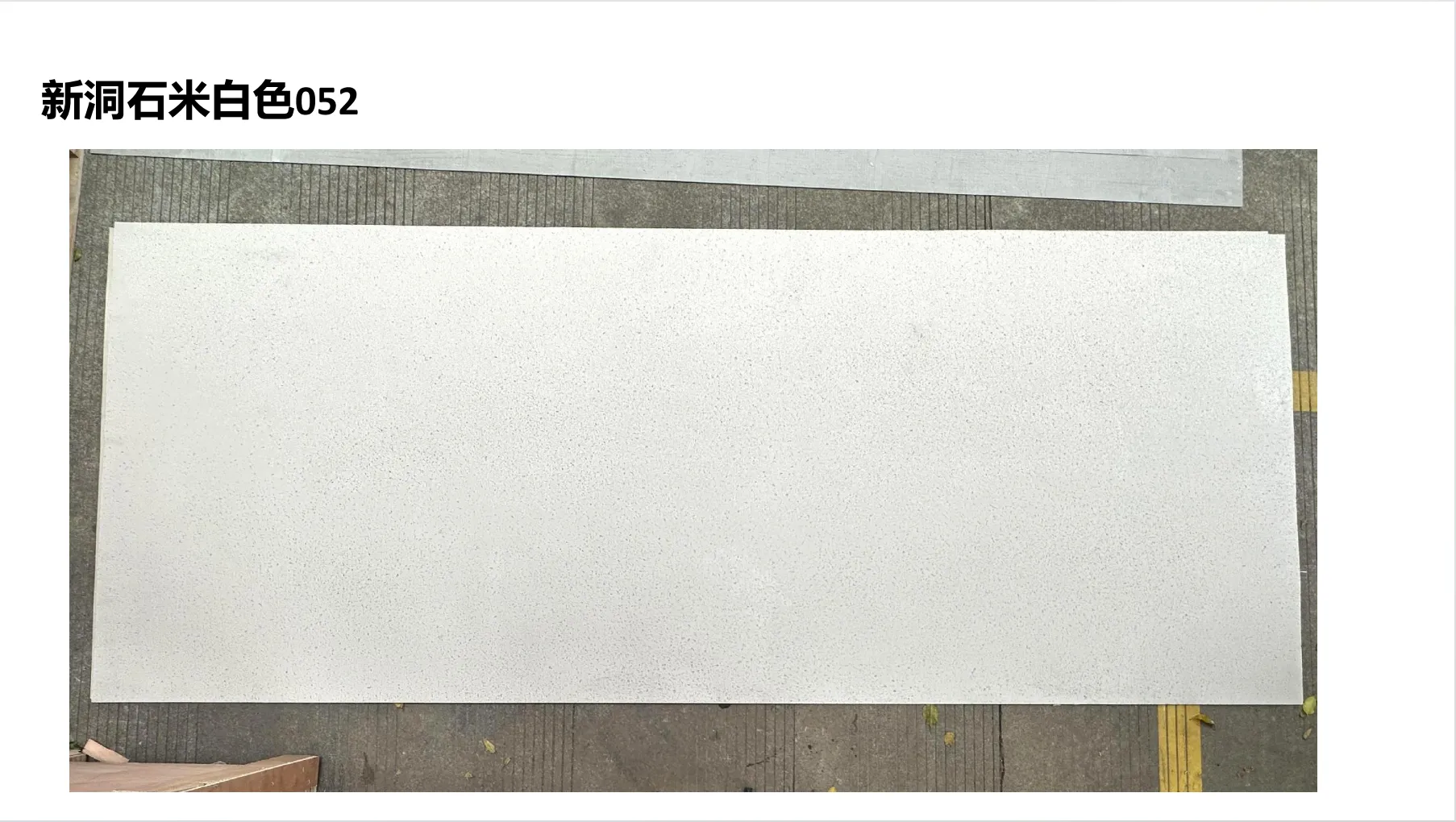
In the world of modern architecture and construction, time is more than just money—it's a defining factor in project success. Fast-track construction, with its compressed schedules and overlapping phases, has become the norm for commercial buildings, hospitality projects, and urban developments. Yet, this urgency often collides with another critical demand: design excellence. Clients no longer accept generic, cookie-cutter finishes; they crave materials that tell a story, elevate spaces, and stand the test of time. Enter the MCM project board series —a revolution in building materials that bridges the gap between speed and sophistication. At the forefront of this innovation is the White Travertino MCM Project Board, a material that doesn't just keep up with fast-track timelines but redefines what's possible in efficient, high-quality construction.
Fast-track construction isn't for the faint of heart. Imagine coordinating foundation work while design details for the facade are still being finalized. Or rushing to meet a grand opening deadline for a retail complex, knowing that any delay could cost the client thousands in lost revenue. Traditional building materials often become the bottleneck here. Natural stone, for example, is stunning but heavy, requiring specialized labor and equipment for installation. Concrete, while durable, can be slow to cure and challenging to customize. Even modern composites sometimes fall short, lacking the texture or authenticity that architects and clients demand.
This is where MCM (Modified Composite Material) steps in. Developed to address the limitations of traditional materials, MCM products combine the best of nature and technology. They're engineered to be lightweight, durable, and adaptable—qualities that make them ideal for fast-track projects. And within the vast MCM lineup, the White Travertino MCM Project Board stands out as a prime example of how innovation can meet aesthetics. Let's take a closer look at what makes this material a game-changer.
Travertine has long been revered in architecture for its warm, porous texture and earthy elegance. From ancient Roman amphitheaters to modern luxury hotels, it adds a touch of timelessness to any space. But traditional travertine comes with drawbacks: it's heavy, prone to chipping, and requires regular sealing to prevent staining. The White Travertino MCM Project Board reimagines this classic material for the demands of today's construction sites.
At its core, this product is part of the broader MCM flexible stone family, which uses a proprietary process to bond natural stone aggregates with a reinforced polymer matrix. The result? A panel that weighs up to 70% less than natural travertine but retains the same authentic texture and visual depth. For fast-track projects, this lightweight quality is a game-changer. Installation crews can handle panels with standard equipment, reducing the need for heavy machinery and cutting down on labor hours. A 500-square-foot facade that might take a week to clad with natural stone can be completed in just two to three days with White Travertino MCM panels—time saved that can be redirected to other critical tasks.
But it's not just about speed. The White Travertino MCM Project Board also offers unmatched design flexibility. Unlike natural travertine, which is limited by quarry sizes, MCM panels can be produced in large formats as part of the MCM big slab board series . These big slabs—often measuring 1200x2400mm or larger—minimize visible seams, creating a sleek, uninterrupted surface that enhances the modern aesthetic of commercial and residential buildings. Architects can also choose from a range of finishes, from honed to brushed, allowing them to tailor the look to the project's unique theme.
Fast-track construction doesn't mean cutting corners on quality. In fact, the opposite is true: materials used in these projects must be able to withstand the rigors of rapid installation and long-term performance. White Travertino MCM Project Board delivers on this front with impressive durability credentials. Its polymer matrix resists cracking, chipping, and moisture absorption, making it suitable for both interior and exterior applications. Unlike natural stone, it doesn't require sealing, reducing maintenance costs over the building's lifetime. This is especially valuable for high-traffic areas like hotel lobbies, shopping malls, or office entrances, where wear and tear are inevitable.
Consider a recent project in downtown Seattle, where a boutique hotel was racing to open before the busy tourist season. The design called for a travertine-inspired facade that would stand out among the city's glass-and-steel skyscrapers. The construction team initially considered natural travertine but quickly realized it would delay the project by at least two weeks due to installation complexity. Switching to White Travertino MCM panels allowed them to shave off those two weeks, meet the opening deadline, and stay within budget. Six months later, the facade still looks as pristine as the day it was installed, with no signs of fading or damage from Seattle's rainy climate.
White Travertino MCM Project Board isn't an outlier—it's part of a larger ecosystem of MCM products designed to thrive in fast-track environments. Let's break down the key advantages that make MCM materials compatible with tight deadlines and high design standards:
Traditional building materials like natural stone or concrete can weigh 20-30 kg per square meter. MCM panels, by contrast, typically weigh just 4-6 kg per square meter. This drastic reduction in weight simplifies handling and installation. Crews can carry panels by hand, eliminating the need for cranes or forklifts in many cases. For example, foamed aluminium alloy board (vintage silver) —another popular MCM product—weighs even less, making it ideal for high-rise cladding where every kilogram counts. Faster installation means fewer labor hours, lower equipment costs, and a reduced risk of project delays.
MCM panels are factory-fabricated to exact specifications, ensuring consistency across every piece. This pre-fabrication minimizes on-site cutting and adjustments, which are major time drains in traditional construction. For instance, if an architect specifies a custom pattern using lunar peak silvery panels, the manufacturer can produce each panel with the pattern already etched in, ready to be installed straight from the box. This level of precision is especially valuable in fast-track projects, where on-site errors can cascade into costly delays.
Fast-track projects often mean working through less-than-ideal weather conditions. MCM materials are engineered to withstand the elements, from heavy rain to extreme temperatures. White Travertino MCM panels, for example, are UV-resistant, ensuring their color won't fade under harsh sunlight. Similarly, fair-faced concrete MCM panels offer the same raw, industrial look as traditional fair-faced concrete but with better impact resistance, reducing the risk of damage during hurried installations.
Today's clients and regulatory bodies demand sustainable building practices, and MCM materials deliver here as well. The production process for MCM panels generates significantly less waste than quarrying natural stone or manufacturing traditional concrete. Many MCM products, including the White Travertino series, also contain recycled materials, aligning with LEED and WELL certification goals. For fast-track projects aiming to meet green building standards, this is a win-win: sustainability without sacrificing speed.
MCM materials aren't limited to facades. They can be used for interior walls, ceilings, flooring, and even furniture. This versatility means contractors can source multiple materials from a single MCM product line, streamlining the supply chain. For example, a hotel project might use White Travertino MCM panels for the exterior facade, epoch stone for the lobby walls, and century stone for the guest room floors. Coordinating these materials from one manufacturer reduces lead times and ensures consistent quality across the project.
While White Travertino MCM Project Board is a standout, the broader MCM lineup offers a wealth of options to suit diverse design needs. Let's explore some key products that complement fast-track construction, each bringing its own unique benefits:
For projects that demand grand, sweeping surfaces, the MCM big slab board series is the answer. These panels, available in sizes up to 1800x3600mm, create a seamless look that's perfect for modern commercial buildings and luxury resorts. Imagine a convention center with a facade clad in big slab travertine (starry green) panels—their large size reduces installation time by minimizing the number of panels needed, while the starry green hue adds a dynamic, eye-catching element. For fast-track projects, fewer panels mean fewer joints to seal and less labor, translating directly to time savings.
The lunar peak silvery , lunar peak golden , and lunar peak black panels draw inspiration from the moon's surface, with a textured finish that shimmers and shifts with light. These panels are ideal for accent walls in hospitality projects, where creating a memorable ambiance is key. In a fast-track hotel renovation, for example, lunar peak golden panels could be installed in the bar area to add warmth and luxury without the lead time of custom metalwork or stone carving.
For a sleek, industrial look, foamed aluminium alloy board (vintage silver) , vintage gold , and gold variants are hard to beat. These panels combine the durability of aluminium with a lightweight foam core, making them easy to install on both interior and exterior surfaces. A tech startup's office, racing to open in time for a product launch, might use vintage silver foamed aluminium panels for the reception desk and accent walls—their modern aesthetic aligns with the brand, and their quick installation keeps the project on track.
Epoch stone and century stone MCM panels are designed to mimic the weathered, aged look of stone that has stood the test of time. These materials are perfect for heritage restoration projects or buildings aiming to evoke a sense of history, even on a tight schedule. For example, a fast-track renovation of a historic town hall could use epoch stone panels to replicate the look of original stonework, avoiding the time-consuming process of sourcing and installing reclaimed stone.
To truly understand the impact of MCM materials on fast-track construction, let's compare them side-by-side with traditional options. The table below highlights key metrics like weight, installation time, durability, and design flexibility for common building materials:
| Material Type | Weight (kg/m²) | Installation Time (per 100m²) | Durability Rating* | Design Flexibility |
|---|---|---|---|---|
| Natural Travertine | 25-30 | 40-50 hours | Medium (prone to chipping/staining) | High (natural variation), but limited by quarry size |
| White Travertino MCM Project Board | 4-5 | 15-20 hours | High (UV/moisture resistant) | Very High (large slabs, custom finishes) |
| Traditional Concrete | 20-25 | 30-40 hours (plus curing time) | High (but heavy) | Low (limited finishes, slow customization) |
| Fair-Faced Concrete MCM | 5-6 | 10-15 hours | Very High (impact resistant) | High (textured, colored variants) |
| Natural Stone (Granite) | 28-35 | 45-60 hours | Very High | Medium (limited by slab size, heavy) |
| Lunar Peak Silvery MCM | 3-4 | 12-18 hours | High (scratch/UV resistant) | Very High (metallic finishes, custom sizes) |
*Durability Rating: Based on industry standards for impact resistance, moisture absorption, and UV stability.
The data speaks for itself: MCM products consistently outperform traditional materials in key areas that matter for fast-track construction. Lower weight reduces labor and equipment needs, faster installation times keep projects on schedule, and high durability ensures long-term performance—all without compromising on design.
To put theory into practice, let's explore a few hypothetical (but realistic) case studies of fast-track projects that leveraged MCM materials to meet tight deadlines and exceed design expectations.
A major retail chain needed to renovate the facade of a 10,000-square-foot shopping center in downtown Los Angeles to attract new tenants. The deadline was just 10 weeks—a tight timeline by any standard. The design called for a mix of warm, natural textures and modern metallic accents. The construction team opted for White Travertino MCM Project Board for the main facade, paired with foamed aluminium alloy board (vintage gold) for accent panels and masonry stone MCM for the base. Thanks to the lightweight nature of the MCM panels, the installation crew of 10 was able to complete the entire facade in just 7 weeks, leaving 3 weeks for final touches and inspections. The result? A striking, cohesive design that helped the retail center secure three new high-profile tenants before the grand reopening.
A boutique hotel in Miami aimed to transform its outdated 1980s exterior and interior into a modern, Instagram-worthy destination—all within 16 weeks to peak tourist season. The design brief included a facade that would stand out in Miami's vibrant skyline, a lobby with a "wow factor," and guest rooms with a calm, beachy vibe. The team selected MCM big slab board series in travertine (starry blue) for the facade, creating a dynamic, ocean-inspired look. Inside, the lobby featured lunar peak silvery panels on the ceiling and bamboo mat board accents on the walls. Guest rooms used travertine (beige) MCM panels for the headboards and wood grain board for the flooring. The project was completed on time, with the hotel reporting a 25% increase in bookings in the first month post-opening—proof that MCM materials can deliver both speed and aesthetic appeal.
A growing tech company needed to expand its office campus to accommodate 500 new employees, with the common areas (cafeteria, lounge, and meeting spaces) requiring a complete build-out in just 8 weeks. The design called for a blend of industrial and natural elements to foster creativity. The construction team chose fair-faced concrete MCM panels for the cafeteria walls, rough granite stone (medium grey) for the lounge floors, and weaving (khaki) MCM panels for the meeting room dividers. The lightweight MCM materials allowed for quick installation, and the pre-fabricated panels ensured a consistent look across all spaces. The project was finished a full week ahead of schedule, giving employees extra time to settle in before the official move-in date.
As construction schedules continue to shrink and design expectations rise, materials like the White Travertino MCM Project Board will play an increasingly vital role. MCM technology is evolving, with manufacturers constantly refining production processes to offer even more textures, finishes, and sizes. We're already seeing innovations like 3D-printed MCM panels (part of the MCM 3D printing series ) that allow for unprecedented custom shapes and patterns, all while maintaining the lightweight, fast-install benefits of traditional MCM products.
Another emerging trend is the integration of smart technology into MCM panels. Imagine facade panels that can self-clean, regulate temperature, or even generate small amounts of energy—all while retaining the aesthetic and installation benefits of MCM. While still in the early stages, these advancements could further revolutionize fast-track construction by adding functionality to speed and beauty.
For architects, contractors, and clients alike, the message is clear: MCM materials aren't just a passing trend—they're a fundamental shift in how we approach building. They empower teams to take on ambitious projects with tight deadlines, confident that the materials will keep up. And in a world where time is the most precious resource, that confidence is invaluable.
Fast-track construction doesn't have to mean compromising on design or quality. The White Travertino MCM Project Board, along with the broader MCM project board series , MCM flexible stone , and MCM big slab board series , proves that speed and sophistication can coexist. By combining lightweight durability, design flexibility, and sustainability, these materials are setting a new standard for modern construction.
Whether you're cladding a skyscraper, renovating a historic building, or designing a boutique hotel, MCM products offer a path forward—one where deadlines are met, budgets are respected, and spaces are transformed into something extraordinary. So the next time you walk past a construction site racing to finish, take a closer look. Chances are, you'll see MCM panels in action, quietly revolutionizing the way we build—one fast-track project at a time.
Recommend Products












