
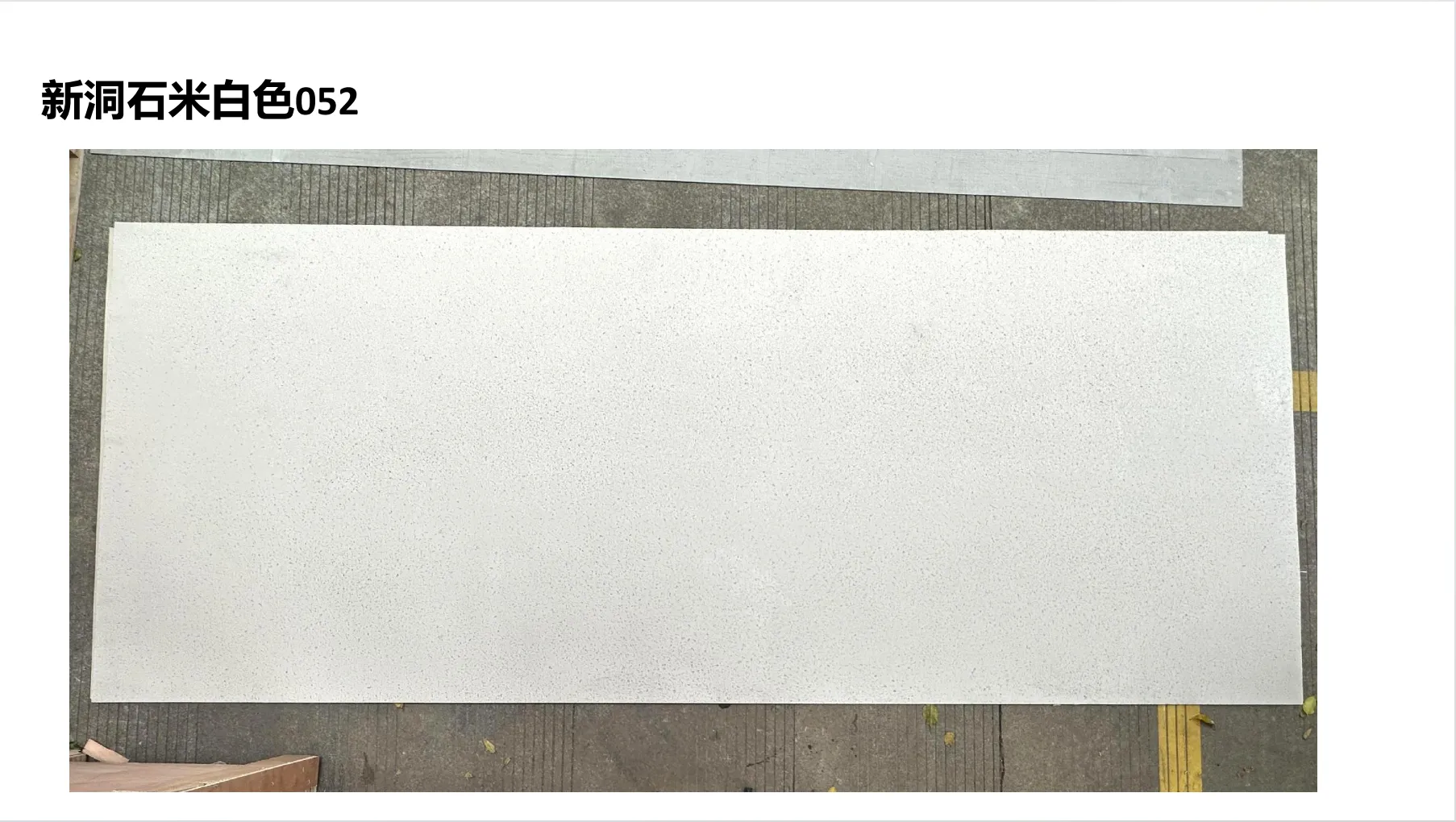
Walk down any city street, and you'll notice the buildings around you—tall, imposing, or warm and inviting. But have you ever stopped to think about the materials that shape these structures? For decades, the construction industry has relied on resource-heavy materials, leaving a significant carbon footprint in its wake. Today, though, a shift is underway. Enter White Travertino MCM—a material that marries timeless beauty with a commitment to the planet. In a world where every choice we make echoes in the health of our environment, White Travertino MCM stands out not just for its elegance, but for its promise of a more sustainable future.
First, let's demystify the term: MCM, or Modified Composite Material, is an innovative category of building materials engineered to replicate the aesthetic appeal of natural stone while addressing its environmental drawbacks. White Travertino, a standout in this family, takes inspiration from classic travertine—beloved for its soft, porous texture and warm, earthy tones—but reimagines it through a lens of sustainability. Unlike traditional travertine, which is quarried from the earth using heavy machinery (often leaving behind scarred landscapes and depleting finite resources), White Travertino MCM starts with a foundation of recycled materials. Think reclaimed stone particles, recycled polymers, and eco-friendly binders that would otherwise languish in landfills. This isn't just recycling—it's a second chance for materials to tell a new story, one that honors the planet's limits.
But sustainability isn't just about what goes into the material; it's about the journey from factory to finished building. The production process of White Travertino MCM is a lesson in efficiency. Traditional stone extraction demands massive energy for cutting, shaping, and transporting heavy blocks—each step adding to its carbon footprint. In contrast, MCM manufacturing leverages advanced technologies to minimize energy use. The panels are lightweight, too: a single sheet of White Travertino MCM weighs up to 60% less than natural travertine of the same size. This lightness translates to fewer trucks on the road, lower fuel consumption, and reduced emissions during transportation. It's a small detail with a big impact, proving that sustainability often lies in the choices we make at every stage.
At the heart of White Travertino MCM's sustainability is its commitment to recyclability. Unlike natural stone, which is difficult to repurpose once installed, MCM panels are designed with end-of-life in mind. When a building is renovated or demolished, White Travertino MCM can be stripped, processed, and reused in new panels—reducing the need for virgin materials and cutting down on construction waste. In fact, some manufacturers report that up to 40% of the material in each new panel comes from recycled MCM scrap, creating a closed-loop system that minimizes environmental impact.
Compare this to traditional building materials like fair-faced concrete, which is notoriously hard to recycle. Concrete's heavy composition and chemical makeup make it challenging to break down and repurpose, leading to mountains of debris in landfills. White Travertino MCM, by contrast, turns waste into a resource. It's a shift from a "take-make-dispose" model to one of "reduce-reuse-recycle"—a philosophy that's becoming non-negotiable in forward-thinking construction.
Carbon footprint isn't just a buzzword—it's a measurable indicator of how much a product contributes to climate change. When it comes to building materials, the "embodied carbon" (the total emissions generated during production, transportation, and installation) can make or break a project's eco credentials. White Travertino MCM shines here, with a carbon footprint up to 40% lower than natural travertine over its lifecycle. How? Let's break it down:
To put this in perspective, consider a mid-sized commercial project using 1,000 square meters of cladding. Choosing White Travertino MCM over natural travertine could save approximately 8-10 tons of CO2 emissions—equivalent to taking 2 cars off the road for a year. That's not just a number; it's a tangible step toward slowing climate change.
| Material | Recyclable Components | Carbon Footprint (kg CO2/m²) | Expected Lifespan (Years) | Transportation Impact |
|---|---|---|---|---|
| Traditional Travertine | 0% | 15-20 | 50-60 | High (heavy, requires more fuel) |
| White Travertino MCM | 30-40% | 8-10 | 70-80 | Low (lightweight, fewer trips) |
| Fair-Faced Concrete | 5% | 12-15 | 40-50 | Medium (dense, moderate fuel use) |
Sustainability shouldn't mean sacrificing style—and with White Travertino MCM, it never does. As part of the MCM Big Slab Board Series, it offers large, seamless panels that reduce installation time and minimize waste from cutting. Imagine a hotel lobby with floor-to-ceiling White Travertino walls, their soft white surface catching the light and revealing subtle, unique textures (thanks to the recycled materials mixed into each panel). Or a home kitchen backsplash that adds warmth without the guilt of overusing natural resources. The flexibility of MCM Flexible Stone takes this even further: panels can be curved, cut, or shaped to fit any design vision, from sleek modernist homes to cozy rustic cabins. It's not just a material—it's a collaborator for architects and designers, proving that eco-friendly choices can enhance creativity, not limit it.
And let's talk durability. White Travertino MCM isn't just pretty; it's tough. Resistant to scratches, stains, and weathering, it holds up in high-traffic areas like airports, shopping malls, and outdoor patios. Its longevity means fewer replacements over time, reducing the need for new materials and lowering its overall environmental impact. In a world where "fast fashion" and "disposable design" dominate, White Travertino MCM is a reminder that sustainability and durability go hand in hand.
Numbers and specs tell part of the story, but real-world examples bring sustainability to life. Take the Riverbank Plaza renovation in Portland, Oregon. The developers wanted to update the 1980s-era mall with a fresh, modern look while earning LEED Gold certification—a rigorous standard for green buildings. Choosing White Travertino MCM for the exterior cladding was a game-changer. The lightweight panels reduced the building's structural load, cutting costs on support materials, and their low carbon footprint helped the project meet LEED's strict emissions criteria. Today, visitors often comment on the plaza's "soft, welcoming glow," a stark contrast to the cold concrete facades of old. It's proof that sustainable materials don't just help the planet—they make spaces more inviting, too.
Another example: a residential complex in Barcelona, Spain, where architects opted for White Travertino MCM in both exterior and interior spaces. The material's versatility allowed them to create a cohesive design, from the building's facade to the lobby floors and even bathroom walls. Residents love the natural, organic feel, while the developers appreciate the reduced maintenance costs (no sealing or special treatments required, unlike natural stone). It's a win-win that shows sustainable building can be both beautiful and practical.
In the end, White Travertino MCM isn't just a building material—it's a statement. It says that we care about the planet we leave for future generations, that we refuse to choose between beauty and responsibility. As more architects, developers, and homeowners embrace green building materials like this, we move closer to a world where every structure tells a story of sustainability. So the next time you pass a building with a striking stone facade, take a moment to wonder: Is it just beautiful, or is it building a better future? With White Travertino MCM, the answer can be both.
Sustainability isn't a trend; it's a responsibility. And in materials like White Travertino MCM, we find hope that progress and preservation can walk hand in hand. After all, the best buildings aren't just made of stone—they're made of purpose.
Recommend Products












