
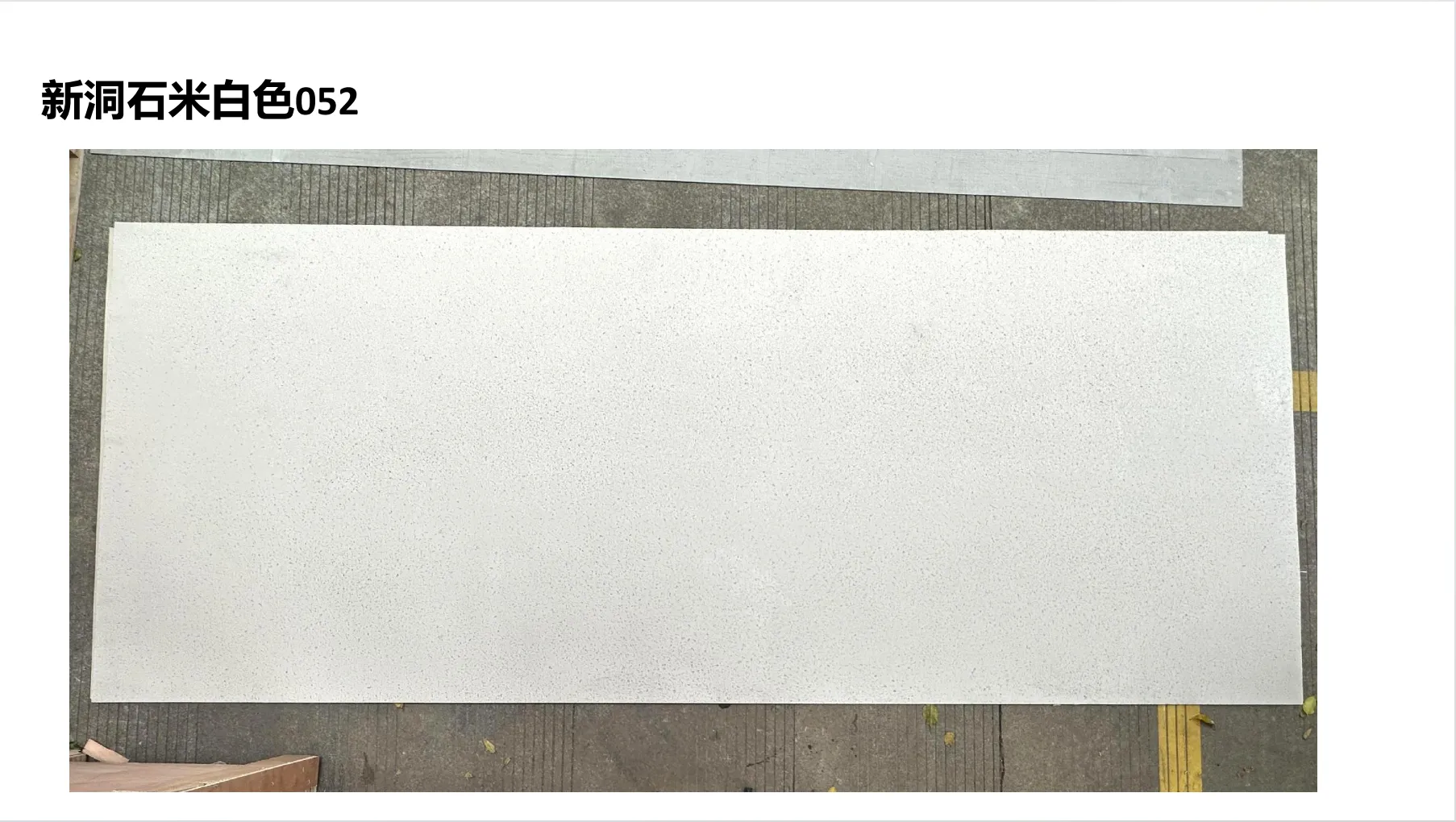
There's a quiet magic in materials that outlive empires. Walk through the heart of Rome, and you'll feel it in the sun-warmed surfaces of the Colosseum, in the weathered steps of the Pantheon, in the honey-gold glow of travertine that has borne witness to two millennia of human stories. White Travertino—with its soft, porous texture and subtle veining—isn't just stone. It's a living chronicle, a bridge between the hands that quarried it 2,000 years ago and the innovators reimagining it today. In the modern era, as architecture dances between tradition and technology, MCM (Modified Composite Material) has breathed new life into this ancient material, turning White Travertino into a symbol of how the past can inform, not restrict, the future. Let's trace that journey: from the quarries of Tivoli to the 3D printers of today, and from imperial grandeur to the flexible, sustainable designs of tomorrow.
To understand White Travertino's allure, we must first stand in the shadow of the Apennine Mountains, where the Tiber River carves through the region of Lazio. Here, in the town of Tivoli, ancient Roman quarries once yielded blocks of travertine so prized that they became the backbone of the empire's most iconic structures. Unlike marble, which is dense and crystalline, travertine is a sedimentary stone formed by mineral-rich hot springs. Its porous surface—dotted with tiny vesicles (holes left by trapped gas bubbles)—gives it a tactile warmth, while its creamy white base, streaked with hints of gold or gray, softens even the harshest sunlight. For the Romans, this wasn't just a building material; it was a statement of permanence.
Emperor Augustus, ever the visionary, is said to have declared that Rome would transition from "brick to marble," but in truth, travertine was the unsung hero of that transformation. The Colosseum, that colossus of engineering, rises from travertine blocks quarried just 30 kilometers away. Imagine the labor: thousands of slaves and workers hauling 100-ton slabs on wooden rollers, navigating muddy roads to build an amphitheater that would seat 50,000 spectators. The stone's natural strength—resistant to fire and weather—made it ideal for the Colosseum's arches and vaults, while its light color reflected the sun, keeping the interior cooler during brutal summer games. Nearby, the Pantheon's dome, still the largest unreinforced concrete dome in the world, rests on a drum of travertine, a material chosen for its ability to bear immense weight without crumbling.
But White Travertino wasn't reserved for grand monuments alone. It lined the floors of wealthy villas, paved the Appian Way, and adorned public baths where citizens debated philosophy and politics. Its porosity made it easy to carve, allowing artisans to etch intricate reliefs—gods, gladiators, and everyday scenes—into its surface. Even the word "travertine" hints at its Roman roots: derived from the Latin tiburtinus , meaning "from Tibur" (the ancient name for Tivoli). For centuries, it was the stone of power, prestige, and progress.
What is it about White Travertino that has captivated architects for millennia? Part of its charm lies in its imperfection . Unlike polished marble, which shimmers with a cold, uniform perfection, travertine wears its history on its sleeve. The vesicles—those tiny holes—are like fingerprints, unique to each block. Over time, rainwater seeps into them, carrying minerals that stain the stone with earthy tones, creating a patina that grows richer with age. In ancient Rome, this was seen not as a flaw, but as a mark of character. A building clad in travertine didn't just look timeless; it became more beautiful as it weathered, blending into the landscape and the passage of time.
Practicality also played a role. Travertine is lighter than many other natural stones, making it easier to transport and hoist into place—a critical advantage in an era without cranes. Its thermal properties, too, were a boon: in the hot Roman summers, it stayed cool to the touch, while in winter, it retained warmth, making it ideal for both public spaces and private homes. And unlike limestone, which erodes quickly in acidic environments, travertine's high calcium carbonate content makes it surprisingly durable. The fact that the Colosseum still stands—after earthquakes, wars, and centuries of neglect—is a testament to that resilience.
With the fall of the Roman Empire, travertine's star dimmed. The quarries of Tivoli fell silent, and for centuries, the stone was largely forgotten, overshadowed by marble in Renaissance Italy and brick in medieval Europe. It wasn't until the 19th century, as architects began to romanticize the grandeur of ancient Rome, that travertine experienced a revival. Buildings like the Trevi Fountain (rebuilt in the 1700s) and the Victor Emmanuel II Monument in Rome (completed in 1925) reintroduced the world to its warm, earthy beauty. But even then, its use was limited: quarrying travertine remained labor-intensive, and transporting large blocks was costly, making it a luxury reserved for (landmark buildings).
The real revolution came in the late 20th century, with the rise of composite materials. As sustainability and flexibility became priorities in architecture, designers began to ask: Could we capture the essence of travertine—its texture, its color, its soul—without the environmental and logistical burdens of natural stone? The answer arrived in the form of MCM, or Modified Composite Material. MCM White Travertino, born from this question, isn't a replacement for the ancient stone; it's a reimagining. By combining natural minerals with advanced polymers, manufacturers created a material that mimics travertine's look and feel but with game-changing benefits: it's lighter, more flexible, and far more sustainable than quarried stone.
Today, MCM White Travertino stands at the intersection of history and innovation, and nowhere is this more evident than in the MCM project board series . Designed for modern construction needs, these boards are thin—often just 4-6mm thick—and lightweight, yet surprisingly strong. Imagine a skyscraper's facade, clad in panels that evoke the warmth of Roman travertine but weigh a fraction of the real stone. Suddenly, travertine isn't just for low-rise buildings or historic districts; it can climb to new heights, adding character to urban skylines without straining a building's structural integrity.
But flexibility isn't just about weight. Thanks to MCM flexible stone technology, MCM White Travertino can bend and curve, conforming to the most ambitious architectural designs. Picture a museum with a sweeping, organic facade that seems to flow like water—traditionally, such a design would be impossible with rigid natural stone, but with MCM, it's achievable. The material's flexibility also makes installation a breeze: unlike natural travertine, which requires heavy machinery and skilled stonemasons, MCM panels can be cut on-site, drilled, and mounted with minimal effort. This not only reduces construction time but also lowers labor costs, making the beauty of travertine accessible to more projects, from boutique hotels to residential homes.
Then there's the MCM 3D printing series , a technology that would have astounded ancient Roman stonemasons. With 3D printing, designers can create intricate, custom patterns inspired by travertine's natural veining—patterns that would take months to carve into natural stone, but can be printed in hours with MCM. Imagine a restaurant wall adorned with a 3D-printed MCM White Travertino mural, where the vesicles (those iconic travertine holes) are arranged in a geometric pattern, blending the randomness of nature with the precision of technology. It's a celebration of travertine's heritage, but with a modern, artistic twist.
Sustainability, too, is at the heart of MCM White Travertino's appeal. Quarrying natural travertine disrupts ecosystems, consumes vast amounts of water, and generates tons of waste. MCM, by contrast, uses recycled materials in its production and produces minimal waste. Its lightweight nature also reduces transportation emissions: a truckload of MCM panels can cover 10 times the area of a truckload of natural travertine, cutting carbon footprints dramatically. For architects and builders committed to green design, MCM White Travertino isn't just a choice—it's a statement about honoring the past while protecting the future.
To truly appreciate MCM White Travertino, it helps to see how far we've come. Below is a comparison of natural White Travertino and its modern MCM counterpart, highlighting the ways technology has enhanced—but not erased—the stone's timeless appeal:
| Characteristic | Natural White Travertino (Ancient Rome) | MCM White Travertino (Modern) |
|---|---|---|
| Weight | Heavy (2.7-3.0 g/cm³); requires structural support | Lightweight (0.8-1.2 g/cm³); ideal for high-rises and retrofits |
| Flexibility | Rigid; prone to cracking if bent | Flexible; can bend up to 30° without breaking |
| Sustainability | Resource-intensive (quarrying, transportation, waste) | Eco-friendly (recycled materials, low waste, reduced emissions) |
| Installation | Labor-intensive (requires skilled stonemasons, heavy machinery) | Easy to install (lightweight panels, on-site cutting) |
| Texture & Appearance | Natural vesicles, unique veining; varies block to block | Mimics natural texture with consistent quality; customizable veining |
| Durability | High (resistant to weather, fire); prone to staining | High (resistant to weather, fire, staining); UV-stable |
As technology advances, MCM White Travertino continues to push boundaries. The MCM 3D printing series , for example, is now being used to create not just cladding panels, but furniture, sculptures, and even custom lighting fixtures. Imagine a desk with a surface that looks like it was hewn from ancient travertine, but is actually lightweight and scratch-resistant, or a pendant light with a shade that mimics travertine's vesicular texture, casting warm, dappled light into a room. These innovations blur the line between "building material" and "art," proving that MCM White Travertino is limited only by the imagination.
Even in large-scale projects, MCM White Travertino is making its mark. Take, for example, the renovation of a historic theater in Milan. The architects wanted to preserve the building's 19th-century charm but needed to update the facade for energy efficiency. They chose MCM White Travertino panels from the project board series, which matched the original travertine's color and texture so closely that visitors often can't tell the difference. The result? A building that honors its past while meeting modern sustainability standards—a perfect metaphor for the material itself.
White Travertino has always been more than stone. For the Romans, it was a symbol of empire; for Renaissance architects, a link to a golden age; and for modern designers, a bridge between tradition and innovation. MCM technology hasn't diminished that legacy—it has expanded it. Today, MCM White Travertino allows us to bring the warmth, character, and history of ancient travertine to schools, hospitals, homes, and skyscrapers, making it accessible to all, not just emperors or millionaires.
As we stand in a world of fast-paced change, there's comfort in materials that connect us to our roots. MCM White Travertino does that, but it does more: it reminds us that progress doesn't have to mean forgetting the past. It's a testament to human ingenuity—to our ability to look back, learn, and then leap forward. So the next time you see a building clad in MCM White Travertino, take a moment to touch its surface. Feel the vesicles, the soft warmth, the echo of ancient quarries. Then smile, knowing that this is how history lives on—not in museums, but in the walls we build, the spaces we create, and the stories we continue to tell.
Recommend Products












