
Walk into any busy space—a hotel lobby, a shopping mall, an airport terminal—and you'll quickly realize: the materials that shape these environments work harder than most of us. They endure thousands of footsteps daily, withstand spills, resist scratches, and still need to look intentional, even beautiful. Choosing the right surface for high-traffic areas isn't just about checking a "durability" box; it's about finding that sweet spot where resilience meets character. That's where MCM comes in. Short for Modified Composite Material, MCM reimagines traditional stone, turning it into something lighter, more flexible, and surprisingly versatile. Today, we're diving into two standout options from the MCM project board series: White Travertino and Granite. Let's explore how they stack up, and why they might just be the answer to your high-traffic design dilemmas.
Before we pit White Travertino against Granite, let's talk about what makes MCM different. Traditional natural stone—think marble, granite, travertine—has been a go-to for centuries, and for good reason: it's sturdy, timeless, and full of organic charm. But it's also heavy, rigid, and prone to cracking if not installed perfectly. Enter MCM flexible stone. Part of the innovative MCM project board series, this material takes the essence of natural stone—its texture, color, and depth—and infuses it with modern engineering. The result? A panel that's thin (often just 3-5mm thick), lightweight (up to 70% lighter than traditional stone slabs), and flexible enough to bend without breaking. It's like having the beauty of stone with the adaptability of a more forgiving material.
For designers and architects, this flexibility is a game-changer. Suddenly, curved walls, uneven surfaces, or large-scale installations aren't limited by the weight or brittleness of natural stone. And for high-traffic areas? MCM's durability is no accident. Its composite structure resists impacts, repels moisture, and holds up to daily wear without losing its luster. Now, let's zoom in on two of its most popular iterations: White Travertino and Granite.
Travertino, with its creamy whites, soft veining, and signature pitted texture, has long been a symbol of understated luxury. Think of the Colosseum's weathered grandeur or the classic floors of Italian villas—travertine brings warmth and history to any space. But traditional travertine is porous, heavy, and requires regular sealing to prevent stains. MCM's White Travertino takes that iconic look and solves its biggest headaches.
In the MCM project board series, White Travertino isn't just a copycat; it's a reimagining. The panels capture every nuance of natural travertine—the subtle variations in veining, the gentle of its pores—but with a non-porous, reinforced surface. That means no more worrying about coffee spills seeping in or constant resealing. It's travertine, but smarter.
What makes White Travertino a standout in high-traffic areas? Its ability to soften a space without sacrificing durability. Unlike some hard-edged materials that can feel cold, White Travertino's warm undertones and organic texture add a layer of approachability. Imagine a busy restaurant where the walls are clad in MCM White Travertino—even during the lunch rush, the space feels inviting, not industrial. Its light color also reflects light, making smaller areas feel more open, a trick that's especially handy in corridors or retail spaces where every inch counts.
And let's talk about versatility. The MCM project board series offers White Travertino in a range of finishes, from matte to subtly polished, so you can tailor it to your design vision. Want a rustic, "aged" look for a boutique hotel? Opt for the natural pitted texture. Prefer something sleeker for a modern office lobby? A lightly honed finish softens the pores while keeping that travertine essence intact.
If White Travertino is the "warm classic," Granite is the "stoic powerhouse." Known for its toughness (it's one of the hardest natural stones on the planet), granite has been a staple in kitchens and commercial spaces for decades. But traditional granite slabs are heavy, hard to cut, and can be prone to chipping at the edges. MCM's take on granite flips the script. By compressing granite particles into a flexible composite panel, the MCM project board series retains granite's legendary strength while making it easier to work with.
What does that mean for high-traffic areas? A surface that laughs off scratches (even from heavy furniture or rolling luggage), resists heat (perfect for lobbies with fireplaces or coffee stations), and holds up to the occasional dropped object. It's the kind of material that looks just as good on day one as it does on day 1,000.
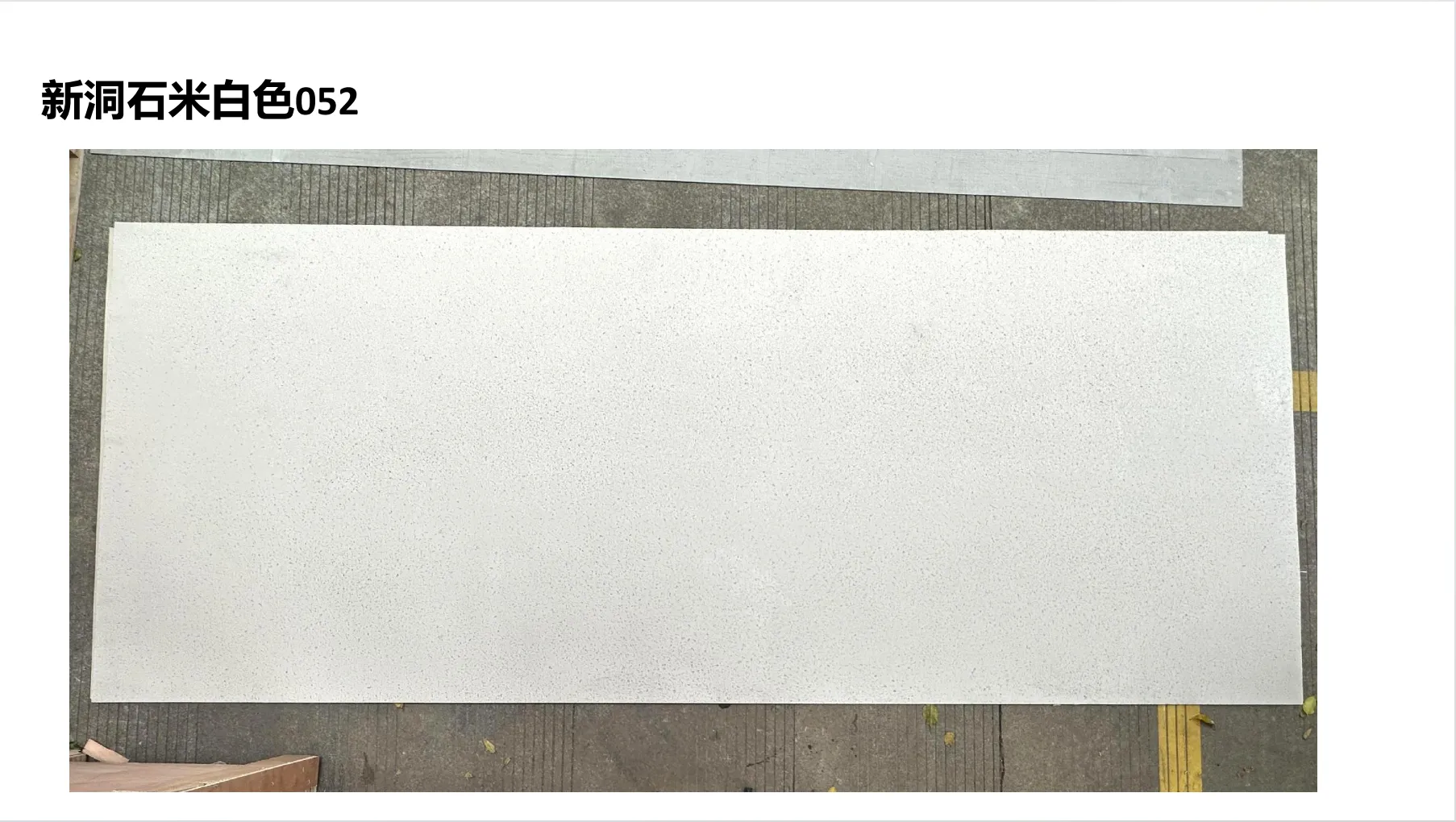
Granite's greatest strength (pun intended) might be its variety. The MCM project board series offers granite panels in a spectrum of colors and patterns—from deep, moody blacks with gold flecks to speckled grays and even warm beiges. This range makes it a chameleon in design: pair a dark granite with brass accents for a luxe hotel bar, or use a light, speckled option to brighten a healthcare facility. Unlike some stones that fade into the background, granite makes a statement—without demanding constant attention.
And let's not overlook installation. Traditional granite requires heavy machinery and structural support, especially for large slabs. MCM granite panels, by contrast, are lightweight enough to be installed with basic tools, cutting down on labor time and costs. For contractors working on tight deadlines (and who isn't?), that's a win worth noting.
So, how do these two MCM stars compare when the rubber meets the road? Let's break it down.
| Feature | MCM White Travertino | MCM Granite |
|---|---|---|
| Durability | Excellent; resists impacts and daily wear. Non-porous surface prevents staining. | Superior; scratch-resistant, heat-resistant, and highly impact-resistant (ideal for heavy foot traffic). |
| Aesthetic Vibe | Soft, organic, and warm. Creamy whites with subtle veining and natural pitting for a classic, timeless look. | Bold, sleek, and modern. Available in rich colors (blacks, grays, beiges) with speckled or marbled patterns. |
| Maintenance | Low; wipe clean with mild soap and water. No need for annual sealing (unlike natural travertine). | Ultra-low; highly resistant to spills and stains. Requires minimal cleaning—just a damp cloth for most messes. |
| Installation | Lightweight (5-8kg/sqm) and flexible; can be installed on curved or uneven surfaces with basic tools. | Equally lightweight (5-7kg/sqm) and flexible; easy to cut and shape for custom designs. |
| Best For | Spaces needing warmth: hotel lobbies, restaurants, boutique retail, residential foyers. | Spaces needing toughness: airports, shopping malls, commercial kitchens, high-traffic corridors. |
| Design Flexibility | Available in matte, honed, or lightly polished finishes; pairs well with wood, brass, and soft textiles. | Offers diverse colorways and patterns; works with modern, industrial, or luxury design schemes. |
The team behind a 50-room boutique hotel in downtown Chicago wanted a lobby that felt both luxurious and welcoming—no small feat for a space that sees check-ins, luggage carts, and morning coffee spills daily. They chose MCM White Travertino from the project board series for the feature wall behind the reception desk. "We loved the idea of travertine, but natural stone felt too risky with all the foot traffic," says lead designer Mia Chen. "MCM's version gave us that soft, organic texture without the porosity. Plus, the panels were flexible enough to wrap around the curved archway of the desk—something traditional stone could never do. A year later, it still looks brand new, even with guests leaning against it or setting down suitcases."
When a major shopping mall in Houston decided to renovate its food court, durability was non-negotiable. "We needed something that could handle food spills, kids running around, and the constant drag of chairs," explains facilities manager Raj Patel. The solution? MCM Granite panels in a warm beige tone. "Granite has always been a workhorse, but traditional slabs would have been too heavy for the existing structure. MCM's version was lightweight enough to install over the old flooring without reinforcing the substructure. Six months in, there's not a scratch in sight. And the best part? It doesn't feel like a 'commercial' material—it's got this subtle sparkle that makes the food court feel elevated, not utilitarian."
Still on the fence? Let's simplify. Choose MCM White Travertino if you're after a space that feels inviting . It's perfect for areas where you want to balance durability with warmth—think boutique hotels, high-end retail, or office lobbies that aim for a "home away from home" vibe. Its light color also works wonders in spaces with limited natural light, as it reflects brightness and opens up the room.
Opt for MCM Granite if resilience is your top priority. It shines in high-impact areas: airports, stadiums, shopping malls, or commercial kitchens. Its bold patterns and rich colors also make it a great choice for statement walls or floors where you want the material to anchor the design—think a sleek black granite accent wall in a modern office or a speckled gray floor in a busy restaurant.
"The beauty of MCM's project board series is that you don't have to sacrifice style for strength," says Lisa Wong, an architect specializing in commercial spaces. "White Travertino and Granite are just two options—there's also fair-faced concrete, wood grain board, and even foamed aluminium alloy board for more industrial looks—but these two stand out because they bridge the gap between 'traditional' and 'modern.' They let designers have their cake and eat it too: materials that work hard, but never look like they're trying."
At this point, you might be wondering: why not just use natural travertine or granite? It's a fair question. But when you factor in the challenges of traditional stone—its weight, its porosity, its installation costs—MCM starts to look less like an alternative and more like an upgrade.
Take weight, for example. A standard natural stone slab weighs around 25-30kg per square meter; MCM panels clock in at just 5-8kg/sqm. That difference isn't just about ease of installation—it's about structural feasibility. Many older buildings can't support the weight of natural stone, limiting design options. MCM removes that barrier, letting you use stone-like materials in spaces that once had to settle for vinyl or laminate.
Then there's sustainability. MCM's manufacturing process uses fewer natural resources than quarrying and cutting traditional stone, and its lightweight nature reduces transportation emissions. For brands and businesses prioritizing eco-friendly practices, that's a meaningful bonus.
High-traffic spaces deserve materials that don't just survive—they thrive. White Travertino and Granite from the MCM project board series do exactly that, each bringing its own unique personality to the table. Whether you lean into White Travertino's soft elegance or Granite's bold resilience, you're not just choosing a surface—you're choosing a material that works as hard as the space it shapes.
So, the next time you're staring at a blank wall or a scuffed floor in a busy area, remember: MCM flexible stone isn't just about fixing a problem. It's about reimagining what's possible. With White Travertino and Granite, you can have durability without the dullness, style without the sacrifice. Now that's a material worth investing in.
Recommend Products












