
There's a quiet magic in the way natural materials whisper stories. For ancient wood lovers—those who cherish the grain of a well-worn table, the warmth of a cedar chest, or the rhythm of wooden beams holding up a roof—this connection runs deeper than aesthetics. It's a love letter to craftsmanship, to the earth, and to the passage of time. But in an era where "sustainability" isn't just a buzzword but a moral imperative, that love has grown complicated. How do you honor the beauty of wood, stone, and clay without contributing to deforestation, quarrying, or soil depletion? Enter MCM (Modified Composite Material) solutions—a bridge between tradition and responsibility that's winning over even the most discerning ancient wood enthusiasts.
Ask an ancient wood lover what draws them to natural materials, and they'll rarely mention "trends." Instead, they'll talk about feeling : the way a rough-hewn stone wall grounds a room, the soft glow of travertine in morning light, or the way wood seems to "breathe," shifting subtly with humidity and temperature. These materials aren't just building blocks—they're living, evolving parts of a home. A wooden floor doesn't just hold weight; it holds memories: the first steps of a child, the scrape of a chair during family dinners, the quiet hum of life happening on top of it.
But here's the conflict: that same wood often comes with a hidden cost. Old-growth forests felled for hardwood floors, quarries scarring landscapes for marble slabs, or clay mines stripping soil for adobe bricks. For those who revere nature, the guilt of choosing beauty over preservation can overshadow even the coziest cabin. "I used to dream of a teak deck," admits Elara, a designer who specializes in heritage home restorations. "But after visiting a deforested region in Southeast Asia, I couldn't stomach it. I loved the look, but I loved the planet more."
MCM isn't about replacing natural materials—it's about reimagining them. These engineered composites blend recycled fibers, minerals, and eco-friendly resins to mimic the texture, color, and even the "feel" of wood, stone, and metal, but with a fraction of the environmental impact. For ancient wood lovers, this isn't just a compromise; it's a revelation. Suddenly, you can have the weathered charm of a barnwood wall without tearing down a barn. You can get the veining of marble without dynamiting a mountain. And you can do it all while knowing your renovation is treading lightly on the earth.
Let's dive into the MCM materials that are capturing the hearts of ancient wood lovers, and why they feel like more than just "alternatives."
Imagine running your hand over a travertine wall—the porous surface, the warm beige tones, the faint sparkle of minerals. Now imagine that same wall weighing 70% less, installed in hours instead of days, and made from 85% recycled stone dust and polymer resins. That's MCM flexible stone. It's thin, lightweight, and adaptable, meaning it can wrap around curves, cover uneven surfaces, or even be used for furniture accents—all without the carbon footprint of quarrying and transporting natural stone.
"I renovated my 1920s kitchen last year and wanted that 'old world' stone backsplash," says Marcus, a carpenter and self-proclaimed "stone snob." "Natural travertine would have required reinforcing the walls and cost a fortune in delivery. MCM flexible stone gave me the exact texture—even the little pits and crevices I love—and it weighs so little, my contractor laughed when he lifted it. Plus, it's water-resistant. No more worrying about mold in the grout lines."
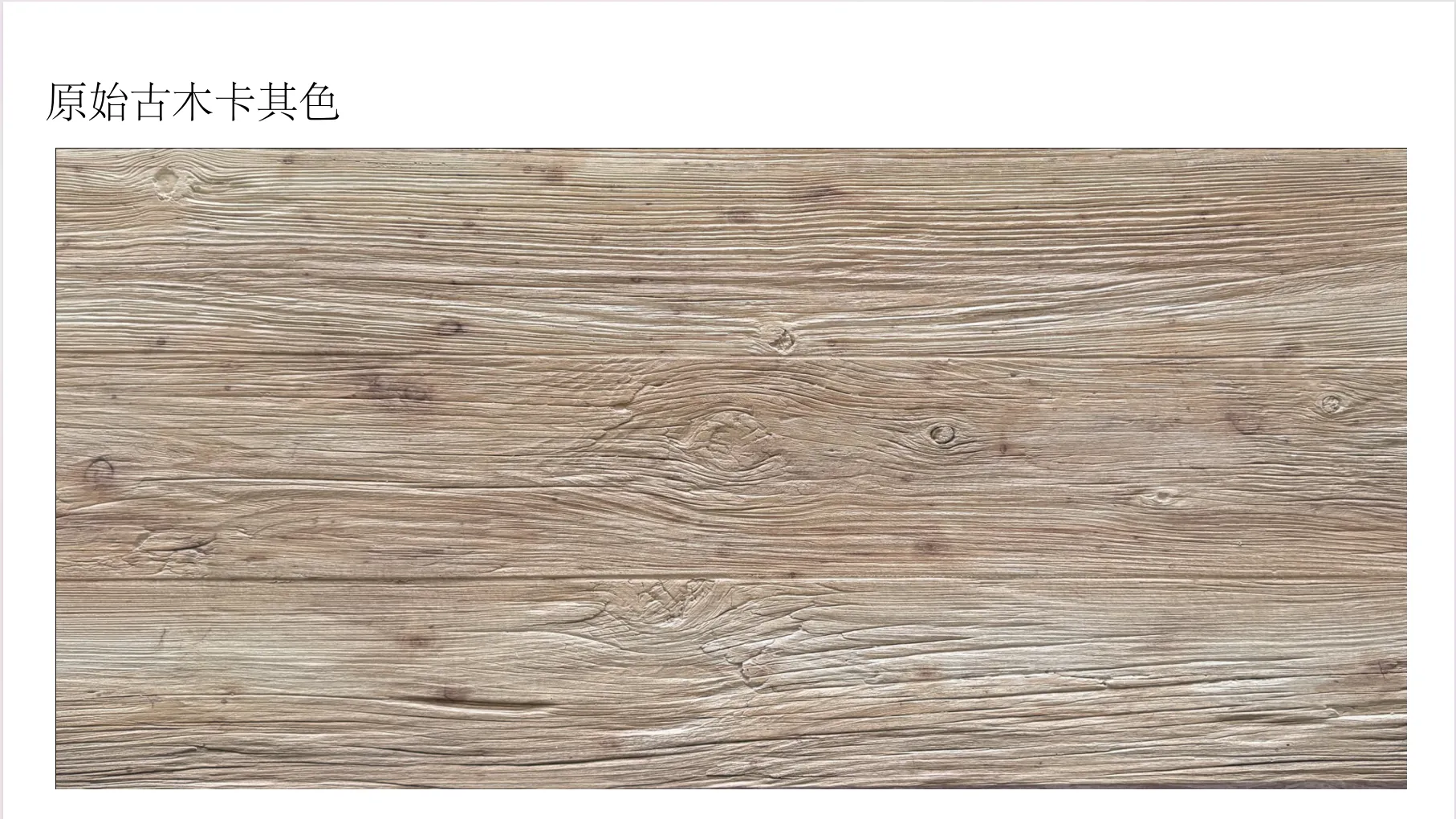
For ancient wood lovers, nothing compares to the soul of wood. But wood warps. It rots. It gets eaten by termites. And let's not forget: every tree turned into a plank is a tree that can't absorb CO2. MCM wood grain board solves this by mimicking the look and feel of oak, teak, or pine using recycled wood fibers, bamboo pulp, and non-toxic binders. The result? A surface that has the same tactile warmth—you can almost smell the sawdust—but with none of the maintenance. Spill wine on it? Wipe it off. Live in a humid climate? No warping. And because it's made from waste materials (think: sawmill scraps that would otherwise end up in landfills), it's a circular solution that honors the tree's life by giving it a second one.
Ancient wood lovers don't just crave warmth—they love contrast. A weathered wooden table paired with a sleek metal lamp, or a stone fireplace accented with brass hardware. MCM foamed aluminium alloy boards tap into this by offering the vintage allure of aged metal (think: patinaed silver, warm gold, or rich bronze) without the environmental toll of mining virgin aluminium. The foam core makes them lightweight and insulating, perfect for accent walls, backsplashes, or even outdoor furniture. And unlike real metal, they won't rust, corrode, or require polishing. "I used vintage silver foamed aluminium for my bookshelf trim," says Lila, an interior designer focused on eco-luxury. "It has that 'antique shop find' look, but I know it's made from recycled cans and scrap metal. It's the best of both worlds."
Rammed earth has been around for millennia—think of the Great Wall of China or ancient African mud-brick villages. Its appeal lies in its raw, earthy texture and natural color variations, a testament to the land itself. But traditional rammed earth requires large amounts of topsoil, which is a finite resource. MCM rammed earth boards replicate that same rustic beauty using recycled clay, sand, and organic pigments, pressed into panels that are strong, lightweight, and installation-friendly. "I wanted my home office to feel like a desert adobe hut," says Raj, a writer. "Rammed earth board gave me those soft, terracotta hues and that slightly uneven surface that makes a room feel alive. But instead of digging up acres of soil, it's made from construction waste. That's the kind of innovation that makes me hopeful."
| Feature | Traditional Materials (Wood/Stone) | MCM Solutions (Flexible Stone/Wood Grain/Foamed Aluminium) |
|---|---|---|
| Environmental Impact | High: Deforestation, quarrying, soil depletion, high transportation emissions. | Low: Made from 70-90% recycled materials; reduces waste, lowers carbon footprint. |
| Durability | Variable: Wood rots/warps; stone cracks; metal rusts; requires regular sealing. | High: Resistant to moisture, pests, fading, and impact; minimal maintenance. |
| Installation | Labour-intensive: Heavy, requires specialized tools; long lead times. | Easy: Lightweight, flexible, can be cut/trimmed on-site; faster installation. |
| Aesthetic Versatility | Limited: Dependent on natural variations; hard to replicate specific looks. | Unlimited: Can mimic rare stones, exotic woods, or custom colors/textures. |
| Long-Term Cost | High: Initial cost + ongoing maintenance (sealers, repairs, replacements). | Lower: Higher upfront cost balanced by zero maintenance and 20+ year lifespan. |
Ancient wood lovers don't resist change out of stubbornness—they resist it because they know what's worth preserving. The problem with many "modern" materials is that they feel soulless, like a cheap imitation of something real. MCM is different. It doesn't try to replace wood, stone, or metal; it elevates them. It takes the best parts—the texture, the color, the story—and leaves behind the flaws: the waste, the fragility, the guilt.
When Elara, the heritage designer, finally renovated her kitchen, she chose MCM wood grain board for the cabinets and flexible stone for the countertops. "The first time I ran my hand over the cabinet doors, I teared up," she says. "It felt like oak—warm, solid, alive. But instead of coming from a tree that took 100 years to grow, it came from recycled sawdust. That's not a compromise. That's progress."
For ancient wood lovers, MCM isn't just a material choice—it's a values choice. It's saying, "I love the earth too much to take more than I need." It's proving that you can honor tradition without being trapped by it. And in a world that often pits beauty against responsibility, that's a gift worth celebrating.
"We don't inherit the earth from our ancestors; we borrow it from our children." MCM helps us return it in better shape—without losing the beauty that makes it worth protecting.
Recommend Products












