
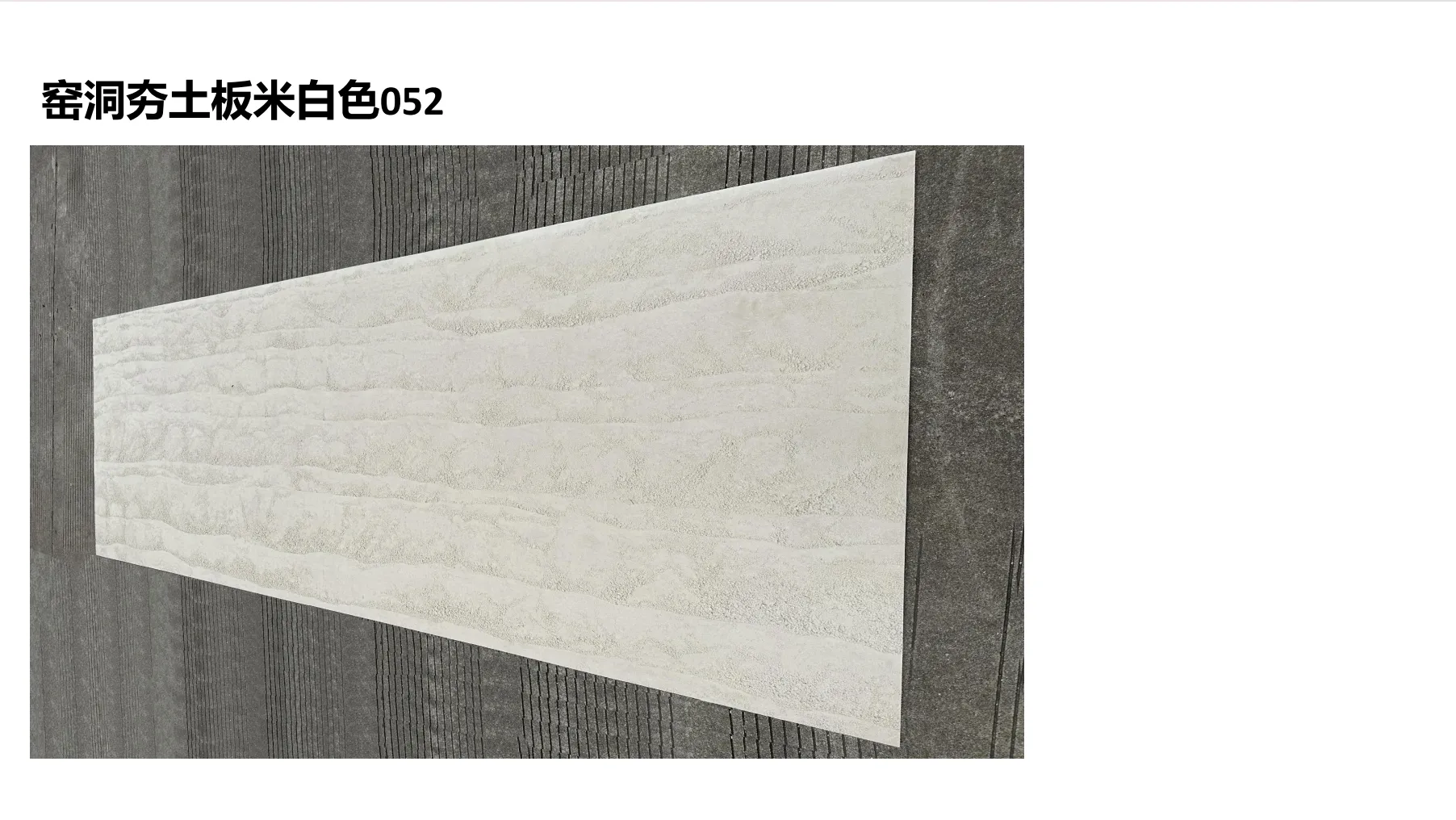
In the quiet hum of an architect's studio, where blueprints meet daydreams, there's a material that's been turning heads—not just for its sustainability, but for its ability to tell a story. Gradient color rammed earth boards, once a niche choice, are now stepping into the spotlight as a bridge between nature, tradition, and modern design. As the world leans into buildings that do more than stand—buildings that breathe, adapt, and resonate—architects are finding in these boards a partner that speaks both to the planet and the people who inhabit these spaces. It's not just about building walls; it's about crafting experiences, and gradient rammed earth does that with a rare blend of artistry and purpose.
Architecture has always been a language, but in recent years, that language has grown softer, more conversational. Clients no longer want buildings that shout—they want ones that whisper, that invite connection. This is where gradient color rammed earth boards shine. Unlike uniform materials that feel static, these boards carry the organic flow of color transitions: soft terracotta bleeding into warm amber, sage green melting into deep forest, or blush pink fading into cream. Each shift is intentional, not manufactured; it's the earth itself, compacted and preserved, telling a story of time and place.
For architects, this is more than aesthetics—it's emotional resonance. "When you run your hand over a gradient rammed earth wall, you don't just feel texture," says Maria Gonzalez, a sustainable design specialist in Barcelona. "You feel memory. It's like touching the side of a canyon, where layers of sediment have settled over centuries. That kind of depth turns a building into a living narrative." In a world oversaturated with synthetic finishes, this authenticity is a breath of fresh air. A community center in Oregon, for example, used gradient rammed earth in its main hall, with hues shifting from dawn pink at the entrance to twilight blue near the windows. Visitors often pause, unconsciously tracing the color waves, as if the wall itself is guiding them through the space.
Sustainable architecture isn't just a trend—it's a responsibility. And gradient color rammed earth boards walk the walk, not just talk the talk. At their core, they're made from locally sourced soil, sand, and natural pigments, reducing transportation emissions that plague materials like imported marble or even some MCM flexible stone variants. The production process? Minimal energy: no firing in kilns, no harsh chemicals—just compaction, pressure, and time. It's building with the earth, not against it.
Durability is another feather in its cap. Unlike painted surfaces that chip or fade, the color in gradient rammed earth is intrinsic. It weathers gracefully, developing a patina over time that adds character rather than detracting from it. "I designed a home in New Mexico ten years ago with gradient rammed earth walls," recalls James Chen, a principal architect in Santa Fe. "Last year, the owners sent me photos—those walls look better now than they did on move-in day. The sun has softened the edges, the rain has deepened the greens, and it still requires zero maintenance. That's sustainability you can see and feel."
And when a building reaches the end of its life? The boards can be broken down and returned to the earth, leaving no toxic footprint. Compare that to materials like foamed aluminium alloy board (vintage silver), which, while lightweight, often ends up in landfills due to recycling complexities. Gradient rammed earth doesn't just reduce a project's carbon footprint—it eliminates it, one compacted layer at a time.
Aesthetics and sustainability are table stakes, but gradient rammed earth boards bring more to the table. Take thermal mass, for example. The dense composition acts as a natural insulator, absorbing heat during the day and releasing it at night. In hot climates, this can cut HVAC costs by 20–30%; in cold regions, it maintains cozy interiors without over-reliance on heating systems. "We used gradient rammed earth for a school in Arizona," says Chen. "The classrooms stay 10 degrees cooler in summer than the adjacent wing with traditional drywall. The kids are more focused, the utility bills are lower—everyone wins."
Versatility is another plus. It pairs seamlessly with other sustainable materials, creating dynamic contrasts that elevate design. Imagine a facade where gradient rammed earth forms the base, rising to meet a panel of lunar peak silvery—its metallic sheen adding modernity, while the earthy gradients ground it in nature. Or a kitchen backsplash where rough granite stone (medium grey) provides countertop durability, and gradient rammed earth walls add warmth. It's not about replacing other materials; it's about harmonizing with them.
Even in challenging environments, it holds its own. Coastal projects? Its natural resistance to saltwater makes it a better choice than some travertine (vintage gold) variants that etch easily. Humid climates? It regulates moisture, preventing mold growth that plagues wood-based materials like bamboo mat board. "I once had a client worried about using rammed earth in Seattle's rain," Gonzalez laughs. "We tested it for a year—no mold, no warping, just walls that felt 'breathable.' She now calls it her 'secret weapon' against the Pacific Northwest drizzle."
To truly understand why architects are choosing gradient color rammed earth, it helps to see how it compares to other popular sustainable materials. Let's break it down:
| Material | Aesthetic Vibe | Sustainability Score (1–10) | Best For |
|---|---|---|---|
| Gradient Color Rammed Earth | Organic, earthy gradients; tells a "time and place" story | 9/10 (local sourcing, zero-waste production, recyclable) | Community centers, eco-resorts, residential homes |
| Lunar Peak Silvery | Metallic, sleek, modern; industrial edge | 7/10 (recyclable but higher production energy) | Urban lofts, tech offices, minimalist facades |
| Fair-Faced Concrete | Raw, minimalist, monochromatic | 6/10 (high carbon footprint in production) | Museums, urban public spaces |
| MCM Flexible Stone | Versatile, lightweight, dynamic textures | 8/10 (low waste, flexible application) | Curved surfaces, accent walls, retrofits |
The standout? Gradient rammed earth's ability to balance sustainability, emotion, and function. It's not just a material—it's a collaborator.
Numbers and specs tell part of the story, but real projects tell the rest. Take the Desert Bloom Community Center in Tucson, Arizona. Designed by Gonzalez's firm, the center's facade features gradient rammed earth in desert hues—terracotta, amber, and sand—mirroring the surrounding Sonoran landscape. "The goal was to make the building feel like it had always been there," Gonzalez explains. "Now, locals refer to it as 'the heart of the desert.' Kids play on the lawn, elders gather under the overhangs, and everyone comments on how 'warm' the building feels—even in 100-degree heat."
Then there's the Skyline Library in Portland, Oregon. The architects paired gradient rammed earth (sage to forest green) with floor-to-ceiling windows, creating a space where the indoors and outdoors blur. "We wanted the library to feel like a treehouse," says lead architect Lila Patel. "The gradient walls mimic the forest canopy, and the thermal mass keeps the space cool, even on hot days. Attendance has doubled since we opened—people aren't just coming for books; they're coming for the atmosphere."
Architecture is about more than function—it's about feeling. And gradient color rammed earth boards get that. They're sustainable without sacrificing soul, beautiful without being fleeting, and durable without being cold. In a world that's hungry for authenticity, they're a reminder that the best buildings aren't just built—they're grown, from the earth up.
So why do architects prefer them? Because they don't just build with gradient rammed earth—they build with purpose. They build spaces that tell stories, honor the planet, and make people feel seen. And in the end, isn't that what great architecture is all about?
Recommend Products












