
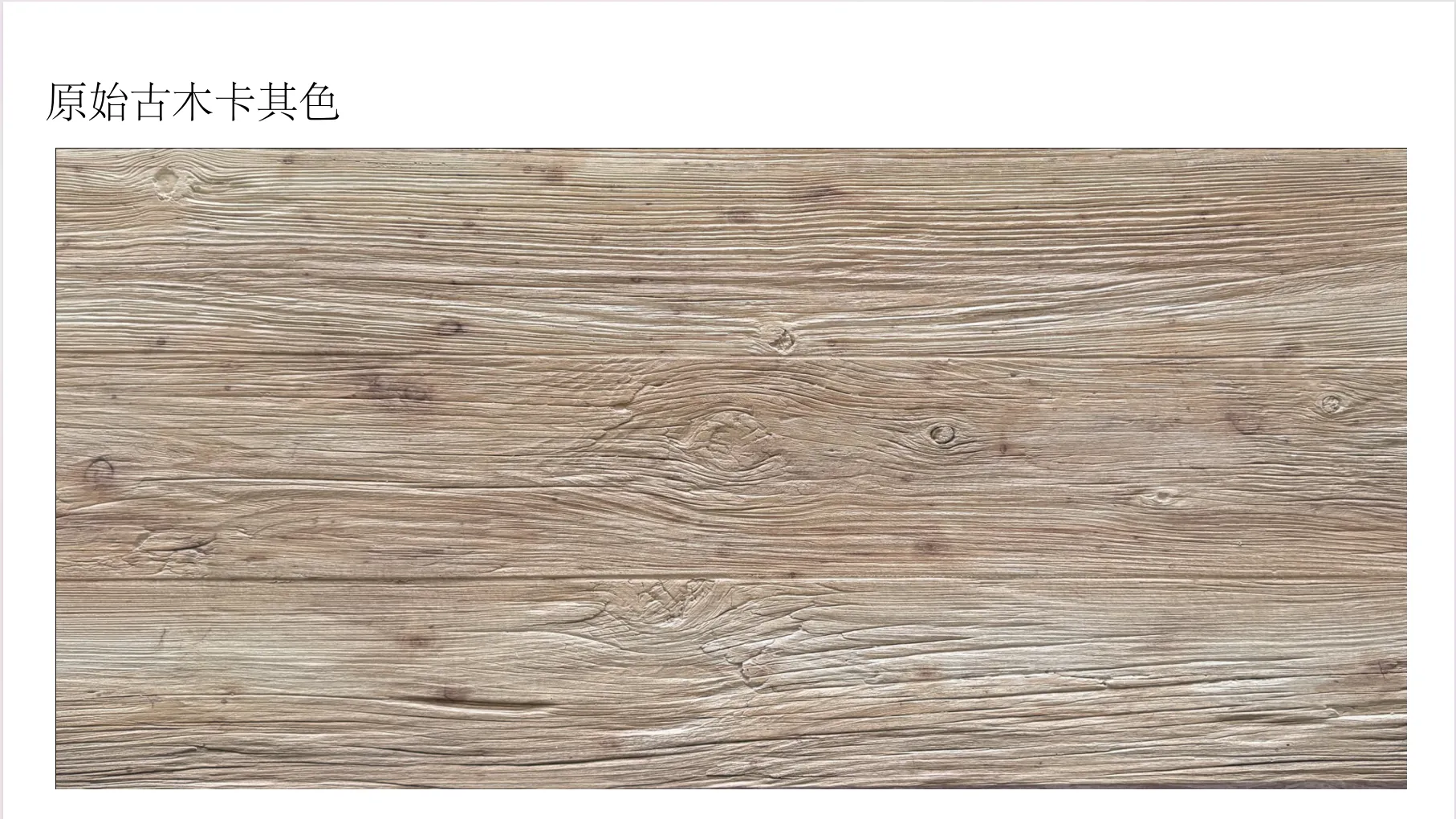
Walk into a modern café, a boutique hotel, or a trendy co-working space these days, and there's a good chance you'll be greeted by a familiar sight: walls, ceilings, or accent pieces that look like they've been hewn from centuries-old timber. That warm, weathered texture, the soft play of light on gnarled grains, the quiet nostalgia of wood that seems to hold stories—this is the magic of ancient wood aesthetics. In a world dominated by sleek glass and cold steel, commercial spaces are leaning into this trend not just for style, but for something deeper: connection. People crave environments that feel human, that whisper of history, and that ground them in nature. But here's the catch: real ancient wood? It's not always the answer.
Let's be honest: sourcing genuine ancient wood—reclaimed barn planks, old-growth timber, or weathered ship decks—sounds romantic, but it's riddled with challenges. For starters, it's unsustainable. Old-growth forests are finite, and reclaimed wood, while eco-friendly in theory, is often scarce and expensive. Then there's durability: real wood warps, rots, or succumbs to pests, especially in high-traffic commercial spaces like restaurants or retail stores. Maintenance? A nightmare. Staining, sealing, and repairing cracks become constant chores, eating into budgets and disrupting business. And let's not forget consistency—no two pieces of real wood are alike, making it tough to replicate a cohesive look across large projects. Architects love the idea of ancient wood, but the reality? It's often more trouble than it's worth.
This is where Modified Composite Material (MCM) steps in—and it's no exaggeration to say it's revolutionized how architects approach ancient wood aesthetics. MCM isn't just a substitute for real wood; it's a reimagination of it. By blending advanced engineering with artistic precision, MCM panels capture the soul of aged timber—the texture, the color, the character—without any of the drawbacks. Suddenly, architects aren't limited by nature's constraints. They can design with the warmth of a 200-year-old oak, but with the resilience of a material built for the demands of modern life. Let's dive into why MCM has become the go-to choice, and the specific products that are winning over architects worldwide.
MCM offers a treasure trove of options for nailing ancient wood aesthetics, but a few standouts have become architects' darlings. These aren't just "wood-look" panels—they're experiences that make you do a double-take, wondering, "Is that really not wood?"
If there's a poster child for MCM's wood mimicry, it's the wood grain board. Run your hand over one, and you'll swear you're touching a plank pulled from an old barn. The texture is uncanny: deep, tactile grooves that mimic years of wind and rain, tiny knots that look like they've been there since the tree was young, and color variations that range from honeyed amber to weathered gray—each shade telling a "story" of time. What architects love? Versatility. Wood grain boards work everywhere: accent walls in restaurants, ceiling panels in lobbies, even backsplashes in cafes. They're lightweight (so easier to install on high walls or ceilings), moisture-resistant (no warping in humid kitchens), and maintenance-free—no need for annual staining or sealing. It's ancient wood, minus the upkeep.
For architects craving a mix of raw ruggedness and modern edge, wood concrete board is a dream. Imagine fusing the weathered charm of ancient wood with the sleek, industrial vibe of concrete—that's exactly what this panel delivers. It has a unique duality: the surface looks like aged timber, with visible grain and subtle cracks, but the base adds a hint of concrete's cool gray, creating a texture that's both earthy and contemporary. It's perfect for high-impact spaces: think brewery taprooms, art galleries, or boutique hotels. Durability? Off the charts. It's fire-resistant (a big win for commercial codes), scratch-proof (even with heavy foot traffic), and heat-resistant (so it holds up near fireplaces or ovens). One architect put it best: "It's like building with history, but with a safety net."
Bamboo has its own ancient legacy—symbolizing resilience, growth, and quiet strength—and MCM's bamboo mat board captures that spirit beautifully. These panels mimic the delicate weave of traditional bamboo mats, with thin, parallel strips that evoke images of old Asian temples or tropical huts. But unlike real bamboo (which can splinter or fade), MCM bamboo mat boards are tough as nails. They're lightweight and flexible, making them ideal for curved walls or ceiling accents, and their soft, airy texture adds a subtle warmth to spaces without overwhelming them. A hotel designer recently used them in a spa lobby, and guests often comment on how "calming" the space feels—proof that MCM doesn't just look good; it feels good, too.
Sometimes, ancient wood aesthetics are about lines —the horizontal planks of a cabin wall, the vertical beams of a barn. That's where wood line MCM panels shine. These slim, linear strips are spaced just right to create a rhythmic pattern that draws the eye and adds depth. They're crisp and clean, but with the organic texture of aged wood—think "modern rustic" at its finest. Architects love using them to guide movement: horizontal wood line panels in a retail store can make the space feel wider, while vertical ones in a restaurant booth add height and intimacy. They're also a breeze to install, cutting down on construction time—a huge plus for tight commercial deadlines.
For projects that demand the most authentic "lived-in" look, MCM's ancient wood series is unbeatable. These panels don't just replicate wood—they embody it. Some have "nail holes" that look like they've held up shelves for decades; others have "cracks" that mimic the natural expansion and contraction of real timber; a few even have a subtle "patina" that looks like it's been polished by countless hands over generations. It's the kind of detail that makes a space feel lived in , not just designed. A boutique owner in Chicago used ancient wood series panels for their fitting room walls, and customers regularly remark that it feels "like trying on clothes in a cozy cabin." That's the power of MCM: it doesn't just create a look—it creates a memory .
| Product | Key Features | Aesthetic Vibe | Best For |
|---|---|---|---|
| Wood Grain Board | Deep texture, knot details, varied colors | Classic barn/ranch rustic | Accent walls, cafes, retail backdrops |
| Wood Concrete Board | Wood-concrete hybrid, fire-resistant, scratch-proof | Rugged industrial-rustic | Breweries, galleries, hotel lobbies |
| Bamboo Mat Board | Woven texture, lightweight, flexible | Soft, tropical-organic | Spas, wellness centers, restaurant partitions |
| Wood Line | Linear strips, rhythmic pattern, easy installation | Modern rustic, cabin-like | Retail aisles, hotel corridors, booth dividers |
| Ancient Wood Series | Nail holes, cracks, patina effects | "Lived-in" vintage charm | Boutiques, bed-and-breakfasts, heritage-themed spaces |
Sure, MCM nails the ancient wood look—but architects aren't just romantics; they're problem-solvers. MCM checks boxes that real wood can't, making it a no-brainer for commercial projects:
Don't just take our word for it—commercial spaces everywhere are using MCM to bring ancient wood aesthetics to life. Take the "Timber & Co." café in Seattle: Its walls are clad in wood grain board, and customers often ask if the panels are reclaimed. The owner smiles and says, "Better—they'll still look this good in 10 years, no maintenance needed." Then there's the "Heritage" boutique hotel in Boston, where wood line panels line the corridors, creating a cozy, cabin-like feel that guests rave about. Even airports are getting in on the action: A recent terminal renovation used bamboo mat board for ceiling accents, softening the sterile environment with a touch of organic warmth.
As sustainability and biophilic design take center stage, MCM's role in ancient wood aesthetics will only grow. Architects are already pushing boundaries, mixing MCM wood panels with glass, metal, or stone to create hybrid spaces that honor the past while embracing the future. Imagine a tech startup office with wood concrete board walls and sleek glass partitions—history meets innovation, and it works. MCM isn't just keeping ancient wood aesthetics alive; it's helping them evolve.
At the end of the day, architecture is about people. It's about creating spaces that make us feel something—connected, comfortable, inspired. Ancient wood aesthetics do that, but only if they're accessible, sustainable, and reliable. MCM doesn't just make that possible; it makes it extraordinary . It lets architects be storytellers, using the language of wood that's been spoken for centuries, but with a new, more resilient voice. So the next time you step into a commercial space and feel that warm, nostalgic hug of ancient wood, take a closer look—it might just be MCM, quietly revolutionizing how we build, one beautiful panel at a time.
Recommend Products












