
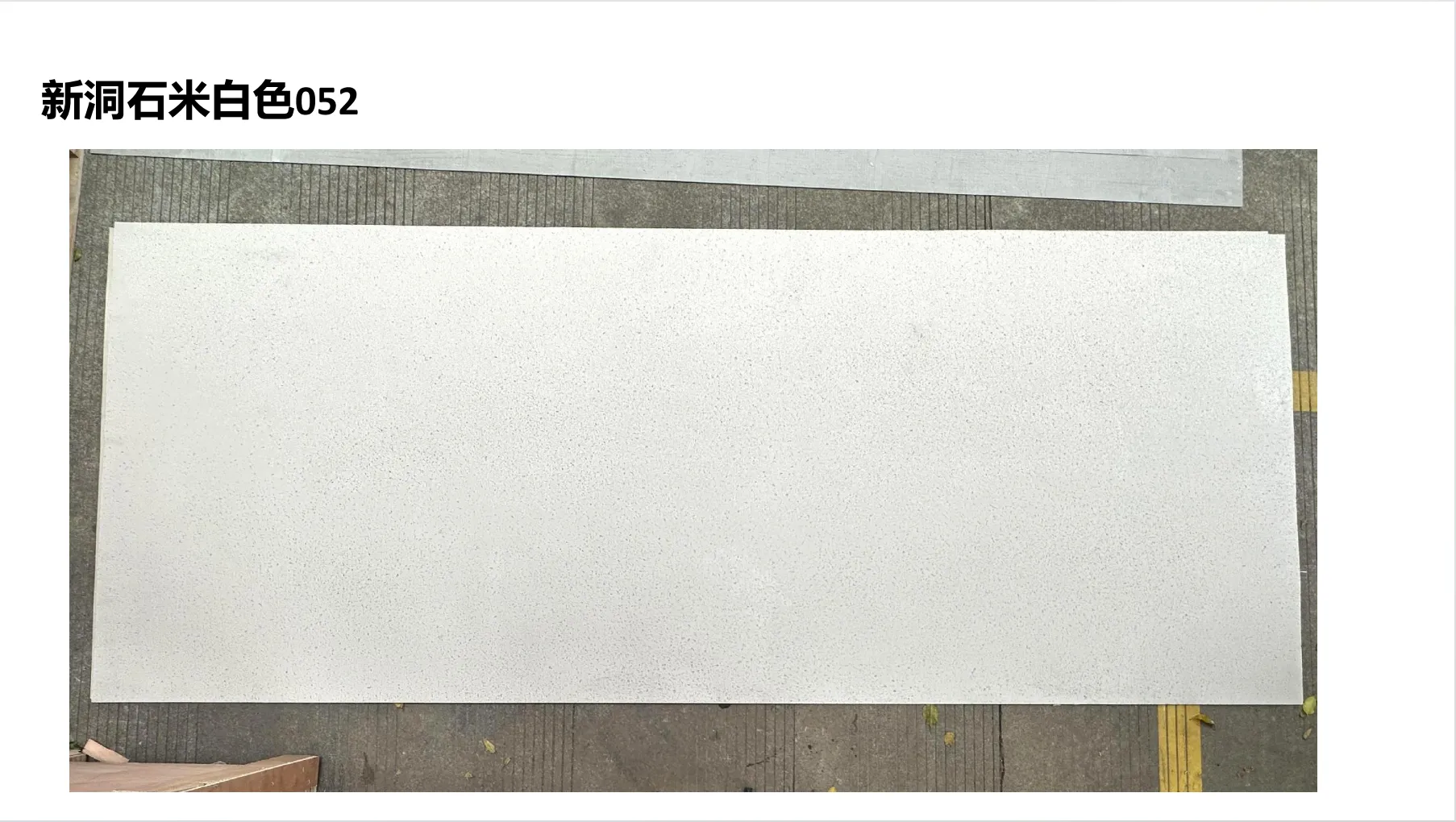
Walk into any modern commercial space today—a sleek tech headquarters, a bustling urban mall, or a serene boutique hotel—and you'll notice something immediately: the materials tell a story. They don't just fill a functional role; they shape how we feel, how we move, and how we remember the space. For architects, choosing the right material is like choosing the right brushstroke for a masterpiece. It has to balance beauty with purpose, innovation with reliability, and in today's fast-evolving design landscape, there's one material that's been turning heads and winning hearts: White Travertino MCM. But what makes it stand out in a sea of options, from fair-faced concrete to lunar peak silvery panels? Let's dive in.
First, let's talk about aesthetics—the "wow" factor that makes clients and visitors pause. White Travertino MCM isn't just white; it's a canvas of subtlety. Imagine the soft glow of morning light filtering through a glass curtain wall and hitting a lobby clad in White Travertino. The surface, with its gentle veining and warm undertones, doesn't scream for attention. Instead, it invites you in, creating an atmosphere that's both sophisticated and approachable. Unlike stark whites that can feel cold, this material has a lived-in warmth, like a well-loved book or a handcrafted ceramic mug. It's the kind of texture that makes you want to reach out and touch it, to trace the natural patterns that mimic the slow, patient work of geological time.
But what really sets White Travertino MCM apart is its versatility. Architects love materials that don't box them into a single design style, and this one delivers. Pair it with dark metal accents for an industrial-chic vibe, or with light wood and greenery for a biophilic retreat. It works in minimalist spaces, where clean lines and negative space reign, but it also holds its own in more layered designs, adding depth without overwhelming. Recently, I spoke with an architect who used White Travertino MCM for a high-end retail store in downtown Chicago. "We wanted something that felt luxurious but not intimidating," she said. "Every time a customer walks in, they comment on how calm the space feels. That's the power of this material—it sets a mood without trying too hard."
Aesthetics might get the spotlight, but in commercial architecture, practicality is the unsung hero. White Travertino MCM doesn't just look good; it works hard, too. Let's start with durability—a non-negotiable for spaces that see heavy foot traffic, harsh weather, and the occasional coffee spill. Unlike natural travertine, which can be porous and prone to staining, MCM (Modified Composite Material) technology enhances the stone's natural properties. It's resistant to scratches, water, and even UV rays, meaning that lobby wall or exterior façade will look just as crisp in five years as it did on day one. For a busy airport terminal or a hotel with 24/7 operations, that's a game-changer. No constant re-sealing, no panic over maintenance costs—just a material that keeps up with the chaos of daily life.
Then there's weight. Traditional stone slabs can be heavy, requiring reinforced structures and driving up construction costs. White Travertino MCM, though, is surprisingly lightweight. Think of it as a high-performance athlete in a tailored suit—strong but agile. This lightness makes installation faster and more efficient, which translates to shorter project timelines and lower labor bills. One contractor I worked with on a hospital renovation project put it this way: "We used to dread installing natural stone because of the logistics—crane rentals, extra crew, handling. With White Travertino MCM, we cut installation time by 30%. That's not just a win for the budget; it's a win for everyone who gets to use the space sooner."
And let's not forget sustainability—a buzzword that's quickly becoming a requirement for forward-thinking clients. White Travertino MCM is made with a focus on reducing environmental impact. The manufacturing process uses less water and energy than traditional stone cutting, and the material itself is often composed of recycled content. Plus, its long lifespan means fewer replacements, which cuts down on waste. For companies aiming for LEED certification or simply wanting to align with their eco-conscious values, this is a material that checks the box without sacrificing performance.
To really understand why White Travertino MCM is a favorite, let's compare it to other popular materials in the architectural toolkit. Below is a breakdown of how it measures up against fair-faced concrete, lunar peak silvery panels, and even traditional natural travertine—all options architects often consider for commercial projects.
| Material | Aesthetic Vibe | Durability | Installation Ease | Sustainability | Best For |
|---|---|---|---|---|---|
| White Travertino MCM | Warm, veined white with natural texture; versatile across styles | High (scratch, water, UV-resistant) | Lightweight, fast installation; minimal structural support needed | Recycled content, low maintenance, long lifespan | Lobbies, retail spaces, exterior façades, hospitality interiors |
| Fair-Faced Concrete | Raw, industrial; cool gray tones with visible formwork lines | Very high (resistant to weather, fire) | Heavy, requires precise formwork; longer installation time | Low embodied carbon if locally sourced; can be energy-intensive to produce | Warehouse conversions, cultural centers, minimalist offices |
| Lunar Peak Silvery | Metallic, futuristic; silvery sheen with subtle granular texture | High (corrosion-resistant, durable) | Moderate weight; works well for accent panels | Recyclable materials; good for modern, tech-focused designs | Accent walls, ceiling panels, high-tech office features |
| Traditional Natural Travertine | Organic, porous; classic beige/ivory with bold veining | Moderate (prone to staining, requires sealing) | Heavy; needs structural reinforcement | Natural material but high extraction impact; shorter lifespan | Historic renovations, luxury residential, low-traffic areas |
The table tells a clear story: White Travertino MCM hits the sweet spot between beauty, durability, and practicality. It's not the only strong contender, but it's the one that adapts to the unique demands of commercial projects—where time, budget, and long-term performance are always top of mind.
Another reason architects are reaching for White Travertino MCM? Its compatibility with architectural big slab solutions. In commercial design, scale matters. A large, uninterrupted slab of material can transform a space, creating a sense of grandeur and continuity. But traditional big slabs often come with big problems—weight, transportation, installation complexity. White Travertino MCM solves this with its ability to be fabricated into large-format panels (think 10 feet by 5 feet or more) that are surprisingly easy to handle.
Take, for example, a recent project in Dubai: a luxury hotel wanted a sweeping entrance façade that made guests feel immersed in luxury from the moment they arrived. The architect specified 12-foot-tall White Travertino MCM slabs, installed vertically to create a seamless, column-like effect. "With natural stone, that size would have required cranes, special transport, and a team of installers," the project manager explained. "But with MCM, we could lift the panels with standard equipment and have the entire façade up in a week. The client was blown away by how quickly it came together—and how stunning it looked."
Big slabs also mean fewer seams, which is a win for both aesthetics and maintenance. Fewer grout lines mean less dirt buildup, less chance of water seepage, and a cleaner, more polished look. It's the kind of detail that might go unnoticed by the average person, but architects and contractors know: those small, seamless surfaces make a big difference in the long run.
These days, no material conversation is complete without talking about sustainability. Clients are asking for it, cities are mandating it, and architects are passionate about it. White Travertino MCM aligns with this shift in a few key ways. First, its longevity. A material that lasts 20+ years means less frequent replacement, which reduces waste and the carbon footprint associated with manufacturing new materials. Second, its low maintenance requirements. No harsh chemicals needed for cleaning—just soap and water. Third, the manufacturing process itself. Many MCM producers use recycled stone dust and eco-friendly resins, cutting down on the need for virgin materials and reducing landfill waste.
Compare this to fair-faced concrete, which, while durable, can have a higher embodied carbon footprint if not sourced locally. Or natural travertine, which requires extensive quarrying and transportation. White Travertino MCM isn't perfect, but it's a step forward—a material that lets architects create beautiful spaces without compromising their commitment to the planet. As one sustainability consultant put it: "We're not just building buildings; we're building legacies. Materials like White Travertino MCM help ensure those legacies are kind to the Earth."
So, what does the future hold? As commercial architecture continues to evolve—toward more flexible, human-centered, and sustainable spaces—materials that offer both beauty and brains will be in high demand. White Travertino MCM fits that bill. It's not a trend; it's a tool that adapts to whatever the future brings. Whether architects are designing net-zero buildings, adaptive reuse projects, or spaces that blend work, leisure, and living, this material will be there, quietly supporting their vision.
I'll leave you with this: architecture is about more than steel and concrete. It's about creating spaces that make us feel something—connected, inspired, at peace. White Travertino MCM isn't just a material; it's a partner in that mission. It's the reason a tired traveler feels calm in a hotel lobby, why a shopper lingers a little longer in a store, why a team collaborates better in an office that feels less like a cubicle farm and more like a second home. For architects, that's the ultimate win: a material that doesn't just build spaces, but builds experiences.
So the next time you walk into a modern commercial space and find yourself thinking, "This feels different," take a closer look at the walls. Chances are, you're standing in front of White Travertino MCM—quiet, confident, and quietly changing the way we build our world.
Recommend Products












