
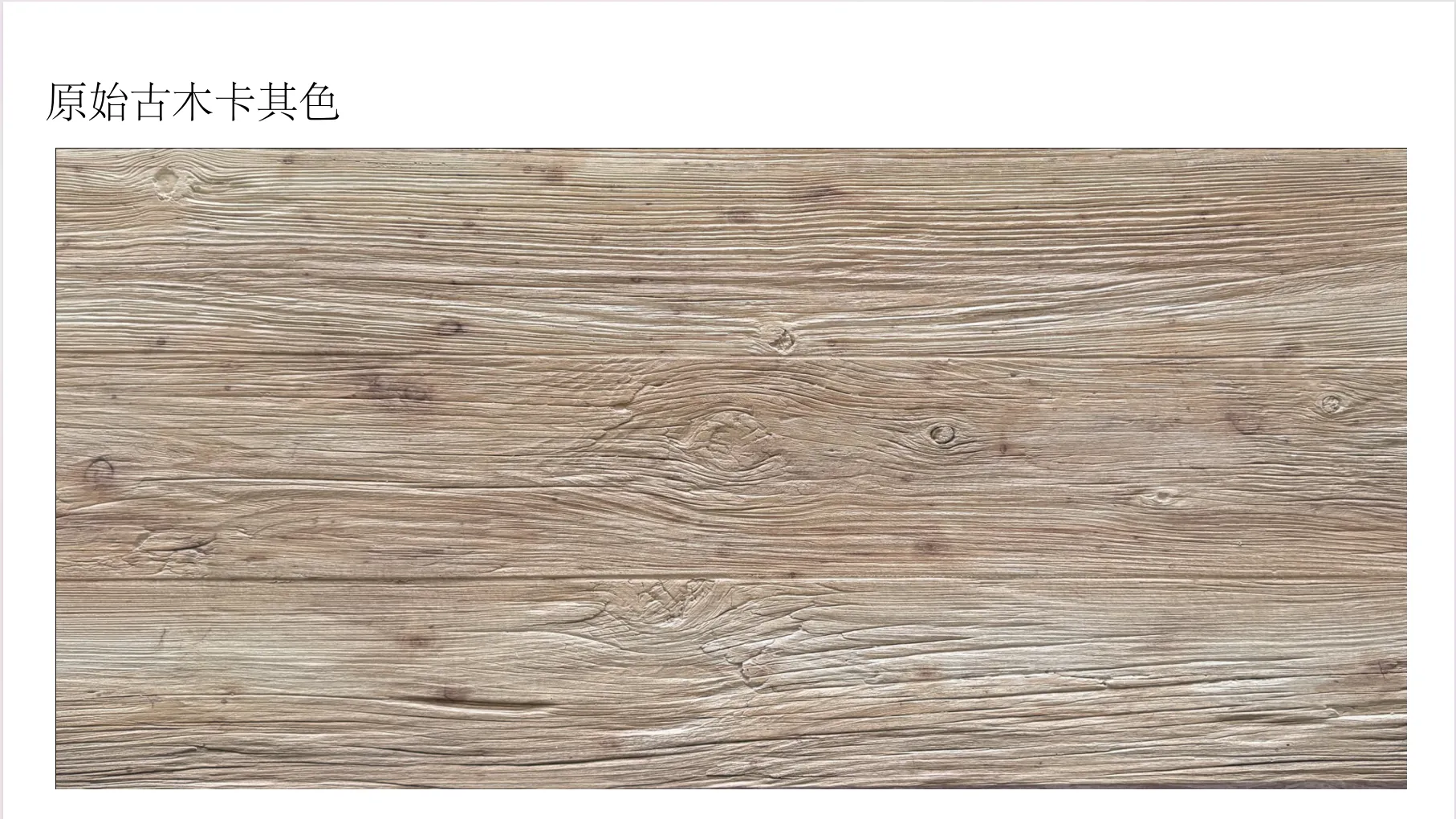
Let's start with something we can all relate to: a building's exterior is more than just walls and windows. It's the first impression, the "face" it shows to the world. Think of it like a person's skin—soft yet resilient, expressive yet protective. For decades, natural ancient wood has been the go-to for that warm, rustic charm that makes a building feel like it has a story. But here's the thing: stories fade, and so does wood. Cracks, rot, termites, and the endless cycle of repainting? That's not the kind of plot twist anyone wants. Enter MCM—modified composite material—a modern solution that's rewriting the rules of exterior cladding. In this article, we're breaking down why MCM, from flexible stone sheets to bold big slabs, is quickly becoming the smarter, more sustainable, and infinitely more durable choice over natural ancient wood.
Let's be honest—natural ancient wood has a magic to it. Picture a cabin nestled in the mountains, its weathered planks glowing golden in the sunset, or a historic barn with beams that creak like old friends sharing secrets. That warmth, that connection to nature, is hard to replicate. It's why homeowners and architects have turned to wood for centuries: it feels alive, organic, and timeless. But here's where the fairy tale ends.
First, there's the maintenance. I recently spoke to a homeowner in Vermont who'd renovated a 1920s cottage with reclaimed oak siding. "It looked perfect the first year," she told me. "Then winter hit. Ice got into the cracks, the wood swelled, and by spring, half the planks were warped. We spent $3,000 on repairs and another $1,500 on a 'superior' sealant. Now, every fall, I'm up on a ladder checking for rot. It's like having a second job." Sound familiar? Wood demands constant attention—sealing, painting, power washing—to stand up to rain, snow, UV rays, and pests. And even with all that, its lifespan is limited: 15–20 years on average for exterior wood, if you're lucky.
Then there's the sustainability elephant in the room. "Ancient wood" often comes from old-growth forests, which take centuries to regenerate. Deforestation isn't just an environmental issue; it's a moral one. The more we harvest these rare woods, the fewer habitats we leave for wildlife and the more carbon we release into the atmosphere. And let's not forget consistency: no two wood planks are alike. One might be rich chestnut, the next a pale honey, leading to a patchwork look that strays from the original design. Beautiful? Sure. Reliable? Not so much.
So, what is MCM, exactly? Let's break it down. MCM stands for modified composite material—a blend of recycled polymers, natural minerals (like stone dust or clay), and reinforcing fibers, engineered to mimic the look of natural materials while fixing their flaws. Think of it as nature's best qualities, reimagined with science. And it's not just one thing: MCM comes in a dizzying array of forms, from MCM flexible stone that bends around curved walls to the MCM big slab board series that creates seamless, sweeping facades. It even includes innovations like foamed aluminium alloy board (vintage silver) for a sleek, metallic finish, or wood grain board that the texture of oak or teak without a single tree cut down.
But why does this matter? Let's take a step back. Modern architecture isn't just about looking good—it's about performing well. Buildings today need to withstand extreme weather, reduce energy use, and align with eco-friendly goals. Natural ancient wood checks the "look good" box but fails the rest. MCM? It's built for the demands of the 21st century. Let's dive into the details.
To really understand the difference, let's put them side by side. Below is a breakdown of how MCM (specifically MCM flexible stone and the MCM big slab board series ) stacks up against natural ancient wood across the factors that matter most to homeowners, architects, and builders.
| Factor | Natural Ancient Wood | MCM (Flexible Stone & Big Slab Series) |
|---|---|---|
| Durability | Typically 15–20 years with heavy maintenance. Prone to rot, warping, termite damage, and UV fading. | 50+ year lifespan with minimal upkeep. Resistant to moisture, pests, UV rays, and extreme temperatures (from -40°C to 80°C). |
| Maintenance | Annual sealing, repainting every 3–5 years, and frequent repairs (replacing rotted planks, treating mold). | Occasional washing with soap and water. No sealing, painting, or repairs needed. |
| Sustainability | Often sourced from old-growth forests, contributing to deforestation. Requires chemical treatments (pesticides, sealants) that leach into soil. | Made with 30–50% recycled materials (plastics, stone waste). Low-carbon production process; no deforestation or harmful chemicals. |
| Design Versatility | Limited to natural wood tones and textures. Irregular grain patterns can lead to uneven aesthetics. | Replicates wood, stone, metal, and even concrete (like fair-faced concrete ). Consistent color/texture, plus custom finishes (e.g., foamed aluminium alloy vintage silver or wood grain). |
| Installation | Heavy (20–30 kg/m²), requiring reinforced framing. Time-consuming (1–2 days per 100 sq ft) due to cutting, fitting, and sealing. | Lightweight (8–12 kg/m²), no need for structural reinforcement. Quick installation (1 day per 200+ sq ft) with interlocking systems; big slabs reduce seams. |
| Long-Term Cost | Initial cost: $10–$15/sq ft. Annual maintenance: $2–$3/sq ft. Total over 20 years: ~$70/sq ft. | Initial cost: $15–$20/sq ft. Annual maintenance: $0.10/sq ft. Total over 50 years: ~$25/sq ft. |
Numbers tell a story, but let's dig deeper into what makes MCM truly game-changing. We'll focus on four areas where it outshines natural ancient wood: sustainability, design freedom, practicality, and long-term value.
Let's talk about the elephant in the room: deforestation. Ancient wood often comes from old-growth forests, which take centuries to regrow. According to the United Nations, deforestation contributes to 10% of global greenhouse gas emissions. MCM, on the other hand, is a champion of circular economy. Many MCM products, including wood grain board , use recycled wood fibers and stone waste, diverting materials from landfills. Even better, its production process uses 70% less energy than manufacturing natural stone or processing hardwood. And since it lasts 50+ years, there's no need for frequent replacements—meaning fewer resources consumed over time.
Take fair-faced concrete , a popular MCM variant. Traditional concrete is resource-heavy, but MCM's version uses recycled aggregates and a lightweight matrix, cutting carbon emissions by up to 40%. It's the industrial, raw look architects love, without the environmental cost. Natural ancient wood? Even "sustainably sourced" options can't compete—logging still disrupts ecosystems, and transporting heavy timber adds to carbon footprints.
One of the biggest myths about MCM is that it's "fake" wood. Sure, wood grain board the warmth of oak or pine, but MCM goes way beyond mimicry. Want a facade that looks like weathered stone? MCM flexible stone has you covered, with textures so realistic you'll want to reach out and touch it. Dreaming of a modern, metallic sheen? Foamed aluminium alloy board (vintage silver) adds a touch of industrial elegance that wood can never match. And the MCM big slab board series ? These large-format panels (up to 1200x2400mm) create seamless, monolithic surfaces that make buildings look taller, sleeker, and more cohesive—no more unsightly seams between planks.
Natural ancient wood, by contrast, is limited by nature. Every plank is different—some lighter, some darker, some with knots, some without. That "character" can quickly become chaos if you're aiming for a uniform look. MCM, though? It's consistent. You can order 500 panels, and they'll all match—no surprises, no rework. And with 3D printing technology (hello, MCM 3D printing series ), you can even create custom textures, like ripples or geometric patterns, that would be impossible to carve into wood without months of labor.
Let's get real: no one wants to spend weekends scraping peeling paint or treating wood rot. With natural ancient wood, that's par for the course. MCM? It's the "set it and forget it" of cladding. Because it's non-porous, moisture can't seep in—so no rot, no mold, no mildew. Termites? They can't digest composite materials, so your walls stay pest-free. UV rays? MCM's color is infused during production, not painted on, so it won't fade or chalk over time. Even in coastal areas, where salt spray eats away at wood, MCM holds strong—its resin matrix acts as a barrier against corrosion.
Installation is another win. Natural ancient wood is heavy—so heavy that it often requires reinforced framing, adding time and cost to a project. MCM, though, weighs in at 8–12 kg/m² (about the same as drywall), so it can be installed on almost any structure without extra support. The MCM big slab board series is a game-changer here: larger panels mean fewer joints, faster installation, and a cleaner finish. A team of two can cover 200+ sq ft in a day, compared to 100 sq ft with wood. That's less labor, less downtime, and more money saved.
Let's talk numbers. Natural ancient wood often lures people in with a lower upfront cost—around $10–$15/sq ft. But that's just the starting line. Factor in annual maintenance (sealants, paints, repairs) at $2–$3/sq ft, and over 20 years, you're looking at $70/sq ft or more. MCM, on the other hand, starts at $15–$20/sq ft, but maintenance costs are next to nothing (maybe $0.10/sq ft/year for a quick wash). Over 50 years, that's just $25/sq ft total. Do the math: MCM costs less than half as much over its lifespan. And since it lasts longer, you won't be replacing your cladding in 20 years—saving you the hassle and expense of a full renovation.
Still not convinced? Let's look at real projects where MCM has outperformed natural ancient wood. Take the Riverbank Community Center in Portland, Oregon. Built in 2015, it originally used reclaimed cedar siding. By 2020, the wood was warped, and termites had infested the lower panels. The city faced a $120,000 repair bill. Instead, they opted for MCM big slab board series in wood grain board finish. Today, five years later, the facade still looks brand new—no maintenance, no pests, and it withstood the 2021 heatwave that cracked asphalt on nearby roads.
Then there's the Coastal Breeze Hotel in Miami, Florida. Saltwater and humidity are wood's worst enemies, and the hotel's original teak siding needed replacement every 10 years. In 2018, they switched to MCM flexible stone in a "weathered limestone" texture. Now, guests still rave about the "beachy, natural vibe," but the hotel saves $50,000 annually on maintenance. Plus, the foamed aluminium alloy board (vintage silver) accents on the balconies add a modern twist that's become a Instagram favorite.
At the end of the day, choosing MCM over natural ancient wood isn't about settling for less. It's about getting more: more durability, more design options, more sustainability, and more value. Natural ancient wood has its place—in furniture, in small accents, in spaces where maintenance is a labor of love. But for exterior cladding, where performance and longevity matter most, MCM is the clear winner.
Think of it this way: natural ancient wood is a classic novel—charming, but fragile, and best kept on a shelf. MCM is a modern epic—durable, adaptable, and ready to stand the test of time. It's not just cladding; it's a promise that your building will look as good in 50 years as it does today. And in a world where we're all trying to build smarter, not just better, that's a story worth telling.
So, the next time you're planning a project, ask yourself: Do I want a facade that fades, cracks, and costs more in the long run? Or do I want one that's built to last, kind to the planet, and infinitely customizable? The answer, we think, is clear. MCM isn't just the future of exterior cladding—it's the present. And it's time we all started living in it.
Recommend Products












