
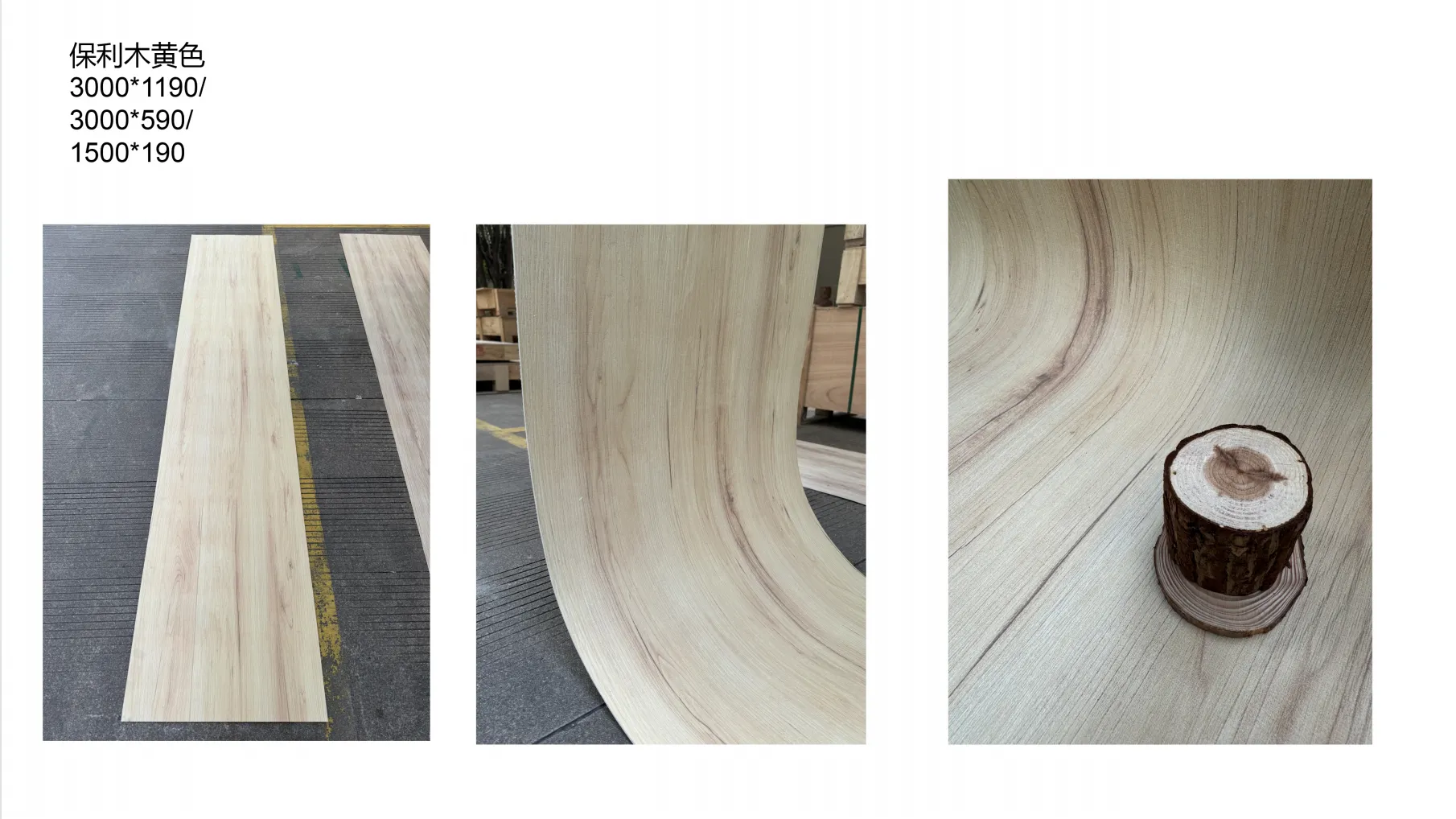
It's a sweltering morning in Jeddah, and Sarah Al-Hassan, a project manager at Saudi Construction Partners, is kneeling on the rooftop of a new mixed-use development, running her hand over a sample panel. The material is smooth, lightweight, and has a subtle texture that mimics natural stone—but something feels off. "This Poly Wood Board looked great in the catalog," she mutters, "but after just two weeks in the sun, it's already warping at the edges." Beside her, a contractor shakes his head. "We tested it in the lab, but Riyadh's summer? It's a whole different beast."
Across Saudi Arabia, stories like Sarah's are all too common. As the kingdom races to build futuristic cities, luxury resorts, and sustainable communities under Vision 2030, the pressure to choose building materials that balance aesthetics, durability, and performance has never been higher. Poly Wood Board, with its affordable price tag and "eco-friendly wood-look" appeal, has long been a go-to for developers—but in a climate where temperatures soar to 55°C, sandstorms rage, and humidity spikes along the coast, its limitations are becoming impossible to ignore.
Enter MCM: Modified Composite Material. A revolutionary cladding solution that's redefining what's possible in Saudi construction. From the sleek facades of Riyadh's tech hubs to the cultural centers of AlUla, MCM is quickly becoming the material of choice for architects and builders who refuse to compromise. But what makes it better than Poly Wood Board? Let's dive in.
First, let's acknowledge why Poly Wood Board gained popularity. It's lightweight, easy to install, and offers a warm, organic aesthetic that's hard to replicate with traditional concrete or metal. For indoor spaces or mild climates, it works. But Saudi Arabia isn't mild.
"We used Poly Wood Board on a residential complex in Dammam five years ago," recalls Khalid Ibrahim, a site engineer with Eastern Province Builders. "The loved the 'beach house vibe'—until the first summer. The panels expanded in the heat, buckled at the seams, and the 'wood grain' started peeling off like sunburned skin. By year three, we had to replace 40% of the facade. The maintenance costs? Through the roof."
The issues boil down to chemistry. Poly Wood Board is typically made from a mix of plastic polymers and wood fibers. While the plastic resists moisture, it's highly susceptible to UV degradation—meaning color fading and brittleness over time. The wood fibers, meanwhile, can absorb humidity, leading to warping or mold in coastal areas like Jeddah or Yanbu. And in sandstorms? The abrasive particles scratch the surface, turning a once-sleek finish into a dull, pitted mess.
Worst of all? Its limited design flexibility. Poly Wood Board comes in standard sizes and a narrow color range—great for cookie-cutter projects, but useless for architects aiming to create iconic, one-of-a-kind structures that reflect Saudi's cultural heritage.
MCM, by contrast, was engineered for extremes. At its core, it's a blend of natural minerals (like marble, granite, or travertine), reinforced with fiberglass and a polymer matrix—creating a material that's 80% lighter than natural stone but 5x stronger than Poly Wood Board. But it's not just about strength; MCM is a chameleon, offering endless design possibilities while standing up to Saudi's harshest conditions.
Imagine a material that laughs at sandstorms. MCM's non-porous surface is designed to repel dust and debris, so even after a week of Riyadh's infamous haboobs, a quick hose-down is all it takes to restore its shine. Unlike Poly Wood Board, which traps sand in its textured grooves (leading to scratches and discoloration), MCM's smooth, dense finish acts as a shield.
UV resistance? MCM's color is embedded during manufacturing, not painted on. That means no fading—even after a decade of Saudi sun. "We installed MCM flexible stone on the King Abdullah Financial District's Innovation Tower in 2018," says architect Omar Khalid. "The panels still look as vibrant as the day they went up. Compare that to the Poly Wood Board accents on the lobby walls—they're already a washed-out gray."
And moisture? MCM doesn't absorb water, making it ideal for coastal projects in Jeddah or Dammam. Poly Wood Board, on the other hand, swells when exposed to humidity, leading to gaps, warping, and even mold growth in hidden corners.
Saudi architecture is a celebration of contrasts: the futurism of NEOM, the heritage of Diriyah, the luxury of the Red Sea Project. Poly Wood Board, with its limited "wood-look" palette, struggles to keep up. MCM? It's a designer's dream.
Take the MCM big slab board series : massive, seamless panels (up to 1.2m x 3.6m) that create sleek, monolithic facades—perfect for the minimalist designs of Riyadh's skyline. Or travertine (starry green) , a MCM variant that mimics the natural stone's porous texture but with iridescent "star" flecks that catch the Saudi sun, adding depth to cultural centers and museums.
For projects aiming for a celestial vibe, there's lunar peak silvery —a shimmering, moon-like finish that's been used on the exterior of Riyadh's Lunar Observatory, where it reflects the desert sky by day and glows under LED lighting by night. "Poly Wood Board can't do that," says Lama Al-Sayed, a designer at Riyadh-based Studio 55. "It's stuck in 'cottagecore.' MCM lets us tell stories through texture and color."
In AlUla, where ancient rock formations meet modern cultural preservation, the AlUla Cultural Center needed a material that honored the region's heritage while withstanding its arid climate. The team chose MCM flexible stone in travertine (starry green) for the facade. "The green tones echo the oasis palm fronds, and the starry flecks mirror the night sky over Hegra," explains lead architect Zaid Al-Mutairi. "We tested Poly Wood Board, but it looked plastic next to the natural rock. MCM? It blends in like it's always been there." Three years later, the center's facade remains flawless—no fading, no cracks, no sand damage.
Vision 2030 isn't just about building—it's about building sustainably. Poly Wood Board, despite marketing claims, often contains high levels of virgin plastic, which is non-biodegradable and energy-intensive to produce. MCM, by contrast, is a champion of sustainability.
Most MCM variants use recycled minerals and post-industrial waste, reducing their carbon footprint by up to 40% compared to traditional cladding materials. Fair-faced concrete , a popular MCM companion, is made with low-carbon cement, further cutting emissions. And because MCM is so durable, it reduces the need for frequent replacements—saving resources in the long run.
"We're seeing a huge push for LEED-certified projects in Saudi," says environmental engineer Layla Ahmed. "MCM checks every box: low VOC emissions, recyclable, and its thermal insulation properties reduce energy use for cooling. Poly Wood Board? It might save on upfront costs, but the environmental cost of replacing it every 5–7 years is too high."
Still on the fence? Let's break it down with hard data. The table below compares key features of MCM (using MCM flexible stone as a benchmark) and Poly Wood Board, based on real-world testing in Saudi conditions.
| Feature | MCM (e.g., MCM Flexible Stone) | Poly Wood Board |
|---|---|---|
| Temperature Resistance | Withstands -40°C to 80°C (ideal for Saudi summers) | Warping occurs above 40°C; structural damage at 50°C+ |
| UV Stability | Color retention > 15 years | Noticeable fading within 2–3 years |
| Moisture Resistance | Non-porous; resists mold and rot | Porous; swells in high humidity (coastal areas) |
| Design Options | Over 50 finishes (stone, metal, concrete, custom colors) | Limited to wood-look; 5–10 standard colors |
| Lifespan | 25–30 years with minimal maintenance | 5–7 years before needing replacement |
| Sustainability | Recycled materials; low carbon footprint | Often contains virgin plastic; non-biodegradable |
At the end of the day, choosing a building material isn't just about specs—it's about trust. For Sarah Al-Hassan, the Jeddah project manager we met earlier, that trust was sealed during a site visit to Riyadh's King Abdullah Economic City (KAEC).
"We walked through a 10-year-old commercial building clad in MCM flexible stone," she says. "It looked brand new. The contractor told us they'd only pressure-washed it twice in a decade. Compare that to the Poly Wood Board walkway nearby—it was cracked, faded, and sticky to the touch in the heat. I made the switch that day."
Today, Sarah's Jeddah development features the MCM big slab board series in lunar peak silvery. "The loves it," she. "And I sleep better knowing we won't be replacing panels in five years."
Poly Wood Board has its place, but not in Saudi Arabia. In a kingdom where buildings are built to last and make a statement, MCM offers something irreplaceable: durability without dullness, beauty without brittleness, and sustainability without sacrifice.
From the starry green travertine of AlUla to the silvery peaks of Riyadh, MCM isn't just cladding—it's a testament to Saudi innovation. It's the material that says, "We build for the future, not just for now."
So, to all the Sarahs, Omars, and Lamas out there: The next time you're staring at samples on a conference table, ask yourself: Does this material belong in Saudi Arabia? If the answer is yes, it's probably MCM.
Recommend Products












