Think about the last time you walked into a space that made you stop and say, "Wow." Maybe it was a cozy café with walls that felt like a warm hug, or a sleek office lobby that blended modernity with a touch of nature. Chances are, the secret behind that "wow" factor wasn't just the furniture or the lighting—it was the materials used to craft the space. Decorative materials are the unsung heroes of interior and exterior design; they set the mood, tell a story, and turn a house into a home, or a building into a landmark. But here's the thing: choosing the right material isn't easy. You want something that looks authentic, feels durable, and doesn't break the bank. You want soul, not just surface. That's where MCM comes in—and more specifically, MCM with
weaving real photos. Let's dive into why this innovative material might just be the game-changer you've been looking for.
First Things First: What Even is MCM?
If you're not familiar with the term, MCM stands for Modified Composite Material. But let's skip the jargon—think of it as a superhero of the design world. MCM takes the best of different materials (think polymers, minerals, and recycled fibers) and blends them into something that's lightweight, flexible, and incredibly versatile. Unlike traditional materials that are often rigid or fragile, MCM bends, cuts, and installs with ease. And here's the kicker: it's designed to mimic the look and feel of natural materials—stone, wood, metal, even fabric—without the headaches that come with the real deal. One of the most popular types of MCM is
MCM flexible stone
, a thin, bendable panel that looks just like natural stone but weighs a fraction of the weight. But what really sets MCM apart, especially in today's design landscape, is its ability to incorporate hyper-realistic textures—like the weaving patterns captured in
weaving real photos
.
Let's talk about texture. In design, texture is what makes a space feel alive. A smooth marble countertop might feel luxurious, but a woven rug or a textured wall adds depth—like a visual and tactile invitation to reach out and touch. But here's the problem with most traditional materials: when they try to replicate textures like weaving, they often fall flat. Think of those "wood-look" laminates that scream "fake" from a mile away, or printed wallpaper with a "woven" pattern that looks more like a pixelated mess up close. They lack authenticity because they're not based on reality—they're just digital approximations.
MCM with
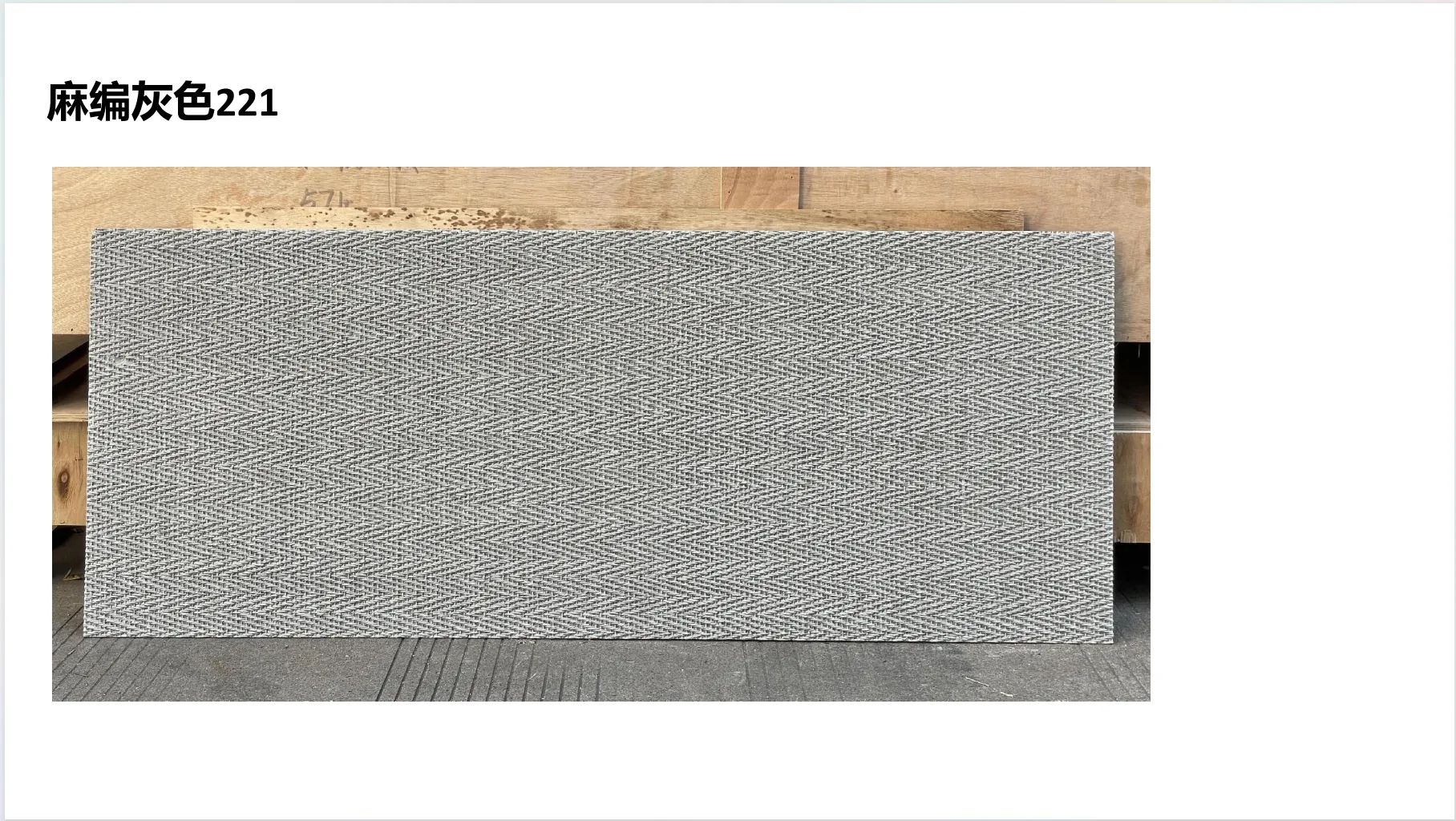
weaving real photos is different. Instead of using generic, computer-generated patterns, manufacturers capture high-resolution photos of real woven textures—think handwoven baskets, artisanal textiles, or even ancient tapestries. These photos aren't just slapped onto the material; they're embedded into the MCM's surface during production, creating a depth and realism that's impossible to replicate with traditional printing. The result? A material that doesn't just
look
woven—it
feels
woven. Run your hand over it, and you'll notice subtle ridges and valleys, just like the real thing. Stand back, and the play of light on those textures creates shadows and highlights that make the wall or panel feel like it's breathing.
Imagine walking into a bedroom where the accent wall is covered in MCM with
weaving real photos of a traditional khaki woven mat. The texture isn't flat or uniform; it has the slight imperfections of handiwork—the kind that makes you think of a craftsman sitting for hours, looping
thread over
thread. It's not just a wall anymore; it's a conversation starter. It's a piece of art that tells a story of craftsmanship and tradition. That's the power of
weaving real photos in MCM: it turns a decorative material into a storyteller.
MCM vs. Traditional Decorative Materials: Let's Break It Down
To really understand why MCM with
weaving real photos is a cut above, let's compare it to some of the most popular traditional decorative materials out there. We'll look at wood, natural stone, concrete, and metal—four staples of design—and see how MCM stacks up.
1. Wood: Beauty with a Price (and a Short Lifespan)
Wood is a classic for a reason. It's warm, versatile, and has a natural charm that's hard to beat. From oak floors to cedar siding, wood brings a sense of nature indoors. But here's the downside: real wood is high-maintenance. It warps in humidity, fades in sunlight, and is a magnet for termites and mold. Even "durable" woods like teak or ipe need regular sealing and staining to stay looking good. And let's not forget the cost—solid wood panels or custom woodwork can eat up a huge chunk of your budget.
MCM offers a solution with options like
wood grain board
and
sawing wood board
. These MCM panels mimic the look of real wood, complete with knots, grains, and even the subtle variations in color that make wood so unique. But unlike real wood, MCM wood-look panels are moisture-resistant (no warping!), termite-proof (no creepy crawlies!), and fade-resistant (no sun damage!). And because they're lightweight, they're easier to install on walls, ceilings, or even furniture. But what if you want the texture of woven wood, like a bamboo mat or a rattan screen? That's where
weaving real photos
come in. MCM can capture the intricate pattern of a
bamboo mat board
or a woven rattan texture, turning a plain wall into a tropical retreat—without the worry of the material rotting or fraying over time.
2. Natural Stone: Heavy on Beauty, Heavy on Headaches
There's nothing quite like the elegance of natural stone.
Travertine, marble, granite—these materials have been used for centuries to build palaces, temples, and luxury homes. But here's the reality of working with natural stone: it's
heavy
. A single slab of marble can weigh hundreds of pounds, making installation a logistical nightmare (and expensive, too—you'll need structural support and a team of pros). It's also porous, which means it stains easily (hello, red wine spills on a
travertine floor) and requires regular sealing. And let's not forget the cost: high-quality natural stone can run you $50 to $100 per square foot, and that's before installation.
MCM has changed the game with
travertine (starry blue)
,
marble interstellar gray
, and
granite portoro
panels. These MCM options look identical to natural stone—same veining, same color depth, same luxurious finish—but they're up to 90% lighter. That means you can install them on walls, backsplashes, or even ceilings without worrying about structural damage. And because they're non-porous, they're stain-resistant and require zero sealing. But the real magic? When MCM combines stone looks with
weaving real photos
. Imagine a feature wall in your living room: half
lunar peak silvery
(a sleek, moon-like stone finish) and half woven texture captured from a traditional Moroccan rug. The contrast of cool stone and warm woven texture creates a space that's both modern and inviting—something you'd never get with heavy, one-note natural stone.
3. Concrete: Industrial Cool, But Lacking Warmth
Concrete has had a moment in recent years, thanks to the rise of minimalist and industrial design.
Fair-faced concrete
(concrete left in its natural state, without paint or plaster) is celebrated for its raw, utilitarian beauty. But let's be honest: plain concrete can feel cold and sterile, like walking into a factory rather than a home. It's also prone to cracking, especially in areas with temperature fluctuations, and it's hard to customize—you're stuck with a uniform gray (unless you add dyes, which can fade over time).
MCM's take on concrete, like
polish concrete
or
marble concrete board
, keeps the industrial edge but adds warmth and texture. And when you pair it with
weaving real photos
? Game over. Imagine a restaurant with
fair-faced concrete
MCM walls, but instead of plain gray, the concrete is embossed with the texture of a woven jute sack—captured in a real photo. The result is a space that feels industrial yet cozy, like a trendy warehouse conversion with a touch of rustic charm. The weaving texture softens the concrete's harshness, making it feel more inviting. Plus, MCM concrete panels are crack-resistant and lightweight, so you can use them in high-traffic areas (like a busy restaurant floor) without worrying about chips or damage.
4. Metal: Shiny, But Prone to Tarnish
Metal adds a sleek, modern touch to any space—think stainless steel appliances, copper accents, or aluminum siding. But traditional metal has its flaws: it's prone to rust (especially in humid climates), it dents easily, and it can get scorching hot in the sun (not ideal for exterior walls). And if you want a vintage or weathered look, like
foamed aluminium alloy board (vintage silver)
, traditional metal often requires expensive treatments that wear off over time.
MCM's metal-inspired panels, like
foamed aluminium alloy board (vintage gold)
or
boulder slab (vintage black)
, solve these issues. Foamed aluminum alloy is lightweight, corrosion-resistant, and has a matte, vintage finish that doesn't fade or tarnish. But what if you want the texture of woven metal, like a decorative wire mesh or a chain-link pattern? Again,
weaving real photos
to the rescue. MCM can capture the intricate weave of a metal mesh or a braided metal texture, turning a plain column into a statement piece. And because the texture is embedded in the material, it won't scratch off or wear away—unlike paint or on traditional metal.
From Drab to Fab: A Café's MCM Makeover
Let's bring this to life with a real example. Meet Maria, the owner of a small café in downtown Portland. Her space was functional but felt cold—white walls, generic tile floors, and a back counter that looked like it belonged in a hospital. She wanted to create a vibe that felt "cozy and rustic, like a cabin in the woods but with a modern twist." Her first thought was to use reclaimed wood for the walls, but after getting quotes (and hearing horror stories about termites from a friend), she hesitated. Then she discovered MCM.
Maria worked with a designer to choose
rammed earth board (matcha green)
for the main walls—a warm, earthy tone that mimics the look of hand-packed soil. For the accent wall behind the counter, they went bold:
weaving real photos
of a handwoven jute rug, captured in high resolution to show every fiber and knot. The MCM panels were lightweight enough to install in a day, and the result? A wall that looks like it's covered in a giant woven tapestry, but wipes clean with a damp cloth (essential for a busy café!). To tie it all together, they added
wood line
trim (MCM, of course) around the windows and
stream limestone (claybank)
for the backsplash—all lightweight, durable, and budget-friendly.
"Customers walk in and immediately comment on the wall," Maria says. "They think it's real woven fabric! I love that it's easy to clean—no more scrubbing stains out of real fabric. And honestly? It feels more authentic than the reclaimed wood would have. The weaving texture has so much depth; it's like bringing a piece of the outdoors in, but better."
Sustainability: MCM Cares About the Planet, Too
In today's world, sustainability isn't just a buzzword—it's a necessity. Traditional decorative materials often come with a heavy environmental cost. Quarrying natural stone destroys habitats and releases tons of carbon emissions. Cutting down trees for wood contributes to deforestation. Even concrete production is a major source of greenhouse gases (cement manufacturing alone accounts for about 8% of global CO2 emissions).
MCM, on the other hand, is designed with the planet in mind. Most MCM panels are made with recycled materials—think crushed stone, recycled plastic, and even post-consumer waste. The production process uses less energy than mining or quarrying, and MCM emits low levels of volatile organic compounds (VOCs), which are harmful to both people and the environment. Plus, because MCM is lightweight, transporting it uses less fuel than hauling heavy stone or wood. And since it's durable, it lasts longer—meaning less waste from replacement over time.
But what about the
weaving real photos
aspect? By capturing textures from existing materials (like old rugs, vintage textiles, or natural fibers), MCM reduces the need to produce new woven fabrics for decoration. Instead of buying a giant woven wall hanging that will wear out in a few years, you can have the same look in a durable MCM panel that will last decades. It's a small but meaningful way to reduce waste and keep precious resources intact.
Wrapping It Up: MCM with Weaving Real Photos Isn't Just a Material—It's a Mood
At the end of the day, decorating is about more than just making a space look good. It's about creating a feeling. Whether you're designing a home, a office, or a commercial space, you want materials that reflect your style, stand up to daily life, and make people feel something. Traditional materials often force you to choose between beauty and practicality—wood is warm but high-maintenance, stone is elegant but heavy, metal is sleek but cold. MCM with
weaving real photos flips that script.
It's lightweight but durable, beautiful but budget-friendly, and sustainable without sacrificing style. The
weaving real photos
add a layer of authenticity that printed patterns can never match—they're not just textures, they're stories. A
travertine (starry blue)
panel with woven accents might evoke the night sky over a Moroccan market. A
foamed aluminium alloy board (vintage gold)
with a woven texture could feel like a glamorous 1920s speakeasy. The possibilities are endless, and the best part? You don't have to worry about the material fading, cracking, or falling apart.
So, why choose MCM with
weaving real photos? Because you deserve a space that's as unique as you are—one that looks amazing, works hard, and doesn't cost the earth. It's not just a material upgrade; it's a design revolution. And trust us, once you see (and feel) the difference, you'll never go back to traditional materials again.