
Where durability meets desert warmth, and tradition dances with modernity
Walk through the bustling commercial districts of Riyadh, Jeddah, or Dammam, and you'll notice a silent dialogue happening across skylines: the clash and harmony of old and new. Saudi Arabia's commercial architecture isn't just about glass and steel—it's about building spaces that withstand 50°C summer days, sandstorms that test the sturdiest materials, and a cultural hunger for designs that honor heritage while reaching for the future. In this landscape, choosing the right exterior material isn't just a practical decision; it's a storyteller's choice. And that's where Rusty Red MCM steps in—not just as a building material, but as a bridge between the desert's raw beauty and the ambition of modern commerce.
MCM, or Modified Composite Material, has been turning heads in global architecture for years, but its Rusty Red variant? It's a love letter to Saudi Arabia's unique needs. Let's dive into why this material isn't just a trend, but a transformative choice for commercial projects across the Kingdom.
Saudi Arabia's climate is no gentle giant. Blistering UV rays, sudden temperature swings (from scorching days to surprisingly cool nights), and sand-laden winds that act like sandpaper on building exteriors—these are the daily realities for commercial structures. Traditional materials often falter here: concrete cracks under thermal stress, natural stone fades or chips, and wood? It's rarely a contender in the long run.
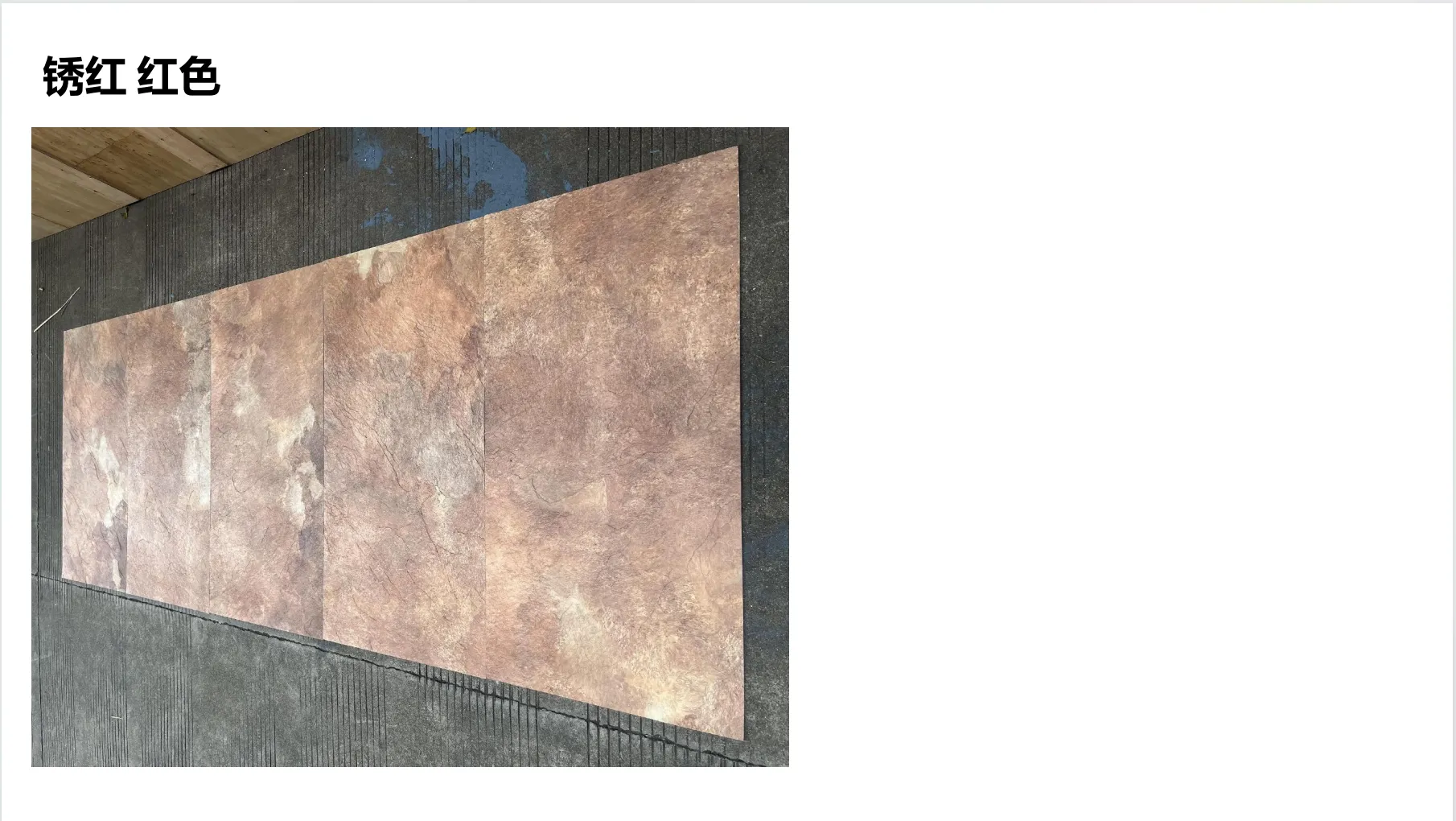
Rusty Red MCM, though, is engineered for resilience. Made from a blend of fiberglass mesh, mineral pigments, and high-performance polymers, it's lightweight (around 3-5 kg per square meter) but tough enough to shrug off sand abrasion. Unlike porous materials like travertine (starry red) —which can absorb moisture and develop stains—MCM is non-porous, resisting water, salt, and the alkaline dust common in desert air. And when the sun beats down? Its UV-stable pigments ensure that rich, rusty hue won't fade to a dull pink after a few seasons. Architects in Riyadh have reported projects using MCM that still look brand-new after 10+ years—no small feat in a climate that ages materials prematurely.
But durability isn't just about surviving—it's about performing. Rusty Red MCM has low thermal conductivity, meaning it acts as a natural insulator. In practical terms? It keeps interiors cooler, reducing reliance on AC systems and cutting energy costs. For commercial buildings like malls or office towers, where energy bills can make or break operational budgets, that's a game-changer.
Color matters in Saudi Arabia. It's not just about aesthetics; it's about emotion, culture, and identity. Red, in particular, holds a special place: it's the color of the Kingdom's flag, a symbol of pride and unity. It's the hue of desert sunsets, painting the sky in gradients of amber and rust as day turns to night. It's the warmth of traditional majlis gatherings, where red cushions and carpets create an atmosphere of hospitality.
Rusty Red MCM leans into this cultural language. Unlike the cold, clinical grays of fair-faced concrete or the muted tones of some natural stones, Rusty Red radiates warmth. It doesn't shout; it invites. Imagine a boutique hotel in Jeddah, its facade glowing like a desert sunset against the twilight—suddenly, the building isn't just a structure; it's a part of the city's emotional landscape. Or a retail complex in Riyadh, where the Rusty Red panels echo the terracotta hues of historical mud-brick forts, connecting shoppers to Saudi heritage without feeling outdated.
What's more, Rusty Red isn't a one-note color. Its textured finish—subtle variations in tone, like the natural patina of weathered desert rock—adds depth. It shifts with the light: brighter and more vibrant under midday sun, softer and more velvety as dusk falls. This versatility means it pairs beautifully with other materials, too: contrast it with foamed aluminium alloy board (vintage silver) for a modern edge, or blend it with wood accents for a cozier, more organic feel. In a market where differentiation is key, that's a powerful tool for commercial projects aiming to stand out.
Commercial architecture in Saudi Arabia isn't cookie-cutter. A luxury mall in Riyadh demands grandeur; a tech startup's headquarters in Dammam craves innovation; a heritage-focused development in Al-Ula needs to whisper history. Rigid materials—like heavy stone slabs or one-size-fits-all concrete panels—often limit these visions. Rusty Red MCM, though, is a collaborator, not a constraint.
Thanks to its MCM flexible stone core, this material bends without breaking. It can be cut into custom shapes—arches that echo traditional Islamic architecture, sharp angles for futuristic designs, or even 3D-printed patterns that mimic desert sand dunes. Installation is a breeze, too: its lightweight nature means it doesn't require massive structural support, cutting down on construction time and labor costs. For developers racing to meet project deadlines, that's a lifeline.
Take, for example, a recent mixed-use project in Jeddah's waterfront district. The architects wanted a facade that curved gently, mimicking the waves of the Red Sea, but traditional stone was too heavy to bend without compromising safety. Enter Rusty Red MCM panels, curved on-site to fit the design's flowing lines. The result? A building that looks like it's dancing with the breeze—all while staying strong enough to face the harshest coastal winds.
Sustainability isn't just a buzzword in Saudi Arabia—it's a national priority. With Vision 2030 pushing for a more eco-conscious economy, commercial projects are under increasing pressure to reduce their carbon footprint. Rusty Red MCM aligns with this goal in ways that few traditional materials can match.
First, its production is surprisingly low-waste. Unlike natural stone quarrying, which often leaves behind heaps of unused rock, MCM manufacturing uses precise amounts of raw materials, minimizing waste. Its lightweight composition also reduces transportation emissions—trucks can carry more panels per trip, cutting down on fuel use. And because it's so durable, buildings clad in Rusty Red MCM require fewer repairs and replacements over time, reducing the lifecycle environmental impact.
Then there's energy efficiency. As mentioned earlier, MCM's insulating properties lower AC usage—a critical factor in a country where cooling accounts for up to 70% of a commercial building's energy consumption. Some projects have reported energy savings of 20-30% after switching to MCM cladding, a number that adds up quickly for large-scale developments. When you pair that with its recyclable nature (many MCM panels can be repurposed at the end of their life), it's clear: this isn't just a material for today—it's a material for the Saudi Arabia of tomorrow.
Still on the fence? Let's put Rusty Red MCM side-by-side with two popular alternatives for Saudi commercial projects:
| Feature | Rusty Red MCM | Fair-Faced Concrete | Travertine (Starry Red) |
|---|---|---|---|
| Heat Resistance | Excellent (UV-stable, low thermal expansion) | Good, but prone to cracking in temperature swings | Moderate (porous, may fade over time) |
| Installation Ease | Lightweight, flexible, quick to install | Heavy, requires structural support, slow curing time | Heavy, brittle, requires skilled labor |
| Aesthetic Versatility | Custom shapes, textures, and consistent color | Limited to rough or polished finishes, neutral tones | Natural variation, but limited color options |
| Sustainability | Low-waste production, recyclable, energy-efficient | High carbon footprint from cement production | Quarrying impacts ecosystems, heavy transportation |
| Long-Term Durability | 15+ years with minimal maintenance | 10-15 years, prone to staining and cracks | 8-12 years, may require sealing every 2-3 years |
Talk is cheap—let's look at real-world results. In 2023, a prominent retail center in Riyadh's King Abdullah Financial District (KAFD) chose Rusty Red MCM for its exterior. The design team wanted a material that would stand out among KAFD's glass towers while nodding to Saudi culture. The result? A 10-story building with curved Rusty Red panels that mimic the rolling dunes of the Rub' al Khali desert. Shoppers and tenants alike rave about the building's "welcoming warmth," and maintenance crews report zero issues with fading or damage after two harsh summers.
Then there's the boutique office complex in Jeddah's Al Salamah district, which used Rusty Red MCM alongside wood grain board to create a blend of industrial chic and organic warmth. The developers noted that installation was 30% faster than originally projected, thanks to MCM's lightweight panels, and energy bills have been consistently lower than neighboring buildings—a win for both their budget and their sustainability goals.
Saudi Arabian commercial projects aren't just about bricks and mortar. They're about creating spaces that reflect the Kingdom's spirit: resilient, warm, and unapologetically forward-thinking. Rusty Red MCM doesn't just meet the practical demands of this environment—it elevates them. It's durable enough to laugh off sandstorms, beautiful enough to turn heads, flexible enough to bring bold designs to life, and sustainable enough to align with Saudi Arabia's green vision.
So, to the architects, developers, and dreamers shaping Saudi's commercial future: When you choose Rusty Red MCM, you're not just choosing a cladding material. You're choosing a story—one of a desert that inspires, a culture that endures, and a future built to last. And in a skyline as dynamic as Saudi Arabia's, that story is worth telling.
Recommend Products












