
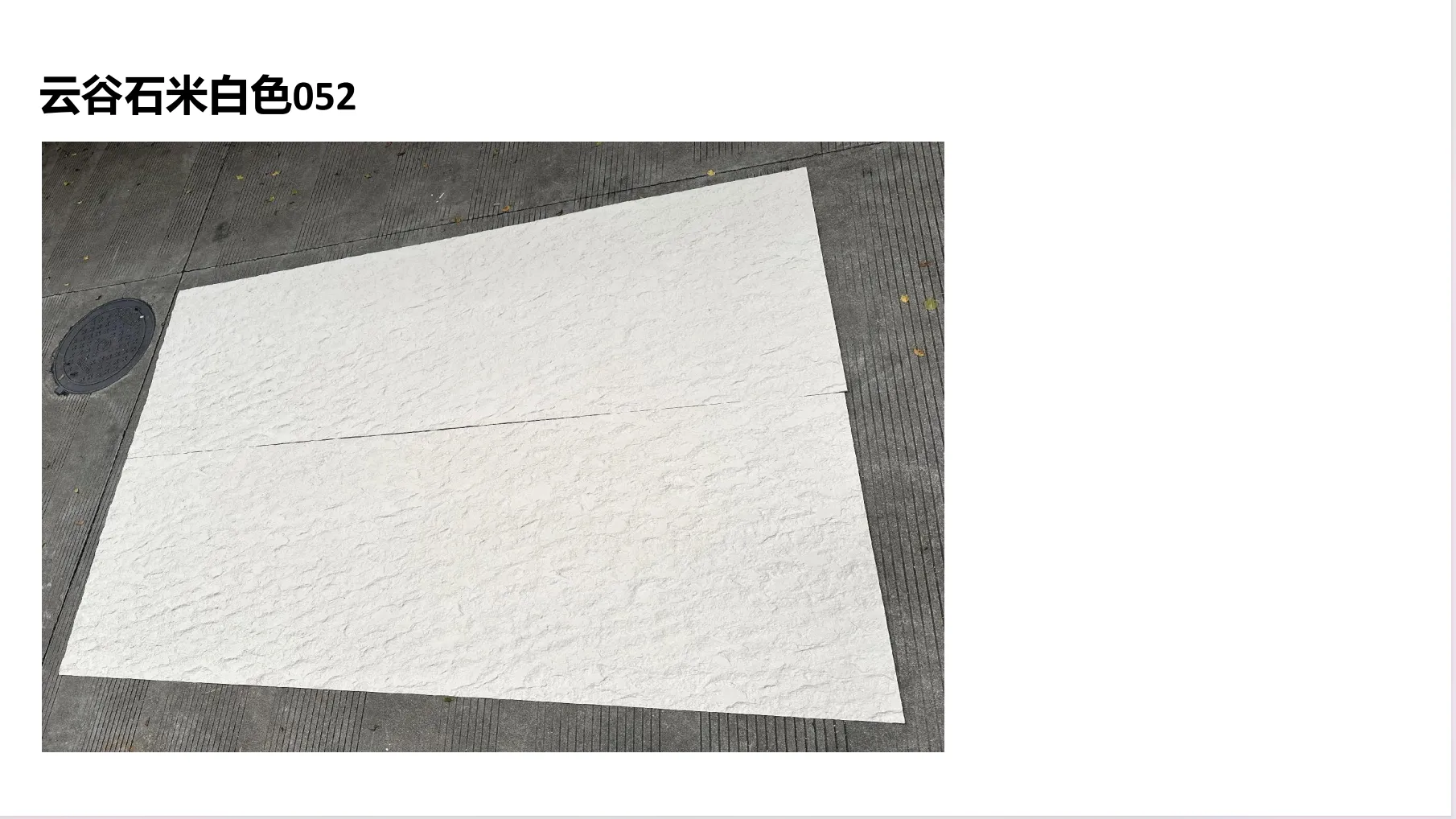
In an era where every industry is under pressure to shrink its environmental footprint, construction stands out as a sector ripe for change. From towering skyscrapers to cozy family homes, the materials we choose shape not just our buildings, but the health of our planet. Traditional options like natural stone, concrete, and brick have long been go-to choices, but they come with a heavy cost: high carbon emissions, resource depletion, and mountains of waste. Enter Cloud Stone —a rising star in the world of sustainable building materials. But what makes it so eco-friendly? Let's dive in and explore how this innovative material is redefining green construction, one panel at a time.
Before we unpack its green credentials, let's get clear on what Cloud Stone actually is. At its core, Cloud Stone is part of a broader category of modified composite material panels (MCM), a family of building products designed to blend durability with sustainability. Think of it as a smart hybrid: it takes the best of natural minerals—like crushed stone, marble dust, or recycled aggregates—and binds them with eco-friendly resins and polymers. The result? A material that looks and feels like natural stone but behaves nothing like it in terms of weight, flexibility, and environmental impact.
You might have heard of similar products under names like mcm flexible stone —and that's no accident. Cloud Stone shares that same DNA of being lightweight and bendable, making it easier to install and more versatile than traditional rigid materials. But what truly sets it apart is its unwavering focus on sustainability, from the moment its ingredients are sourced to the day it's eventually recycled.
Let's start at the beginning: how Cloud Stone is made. Traditional building materials often have a messy origin story. Quarrying natural stone, for example, involves heavy machinery tearing through landscapes, disrupting ecosystems, and releasing tons of carbon dioxide into the air. Concrete production is even worse: cement, its main ingredient, is responsible for about 8% of global CO2 emissions, according to the International Energy Agency. Cloud Stone, on the other hand, flips the script.
The manufacturing process for Cloud Stone is intentionally low-impact. Instead of mining virgin stone, many producers use recycled or waste materials—like leftover stone dust from quarries, demolished concrete, or even glass shards. This not only keeps waste out of landfills but also reduces the need for new resource extraction. Then, these recycled aggregates are mixed with plant-based resins or low-VOC (volatile organic compound) polymers, which emit far fewer harmful chemicals than the adhesives used in traditional composites.
What about energy use? Cloud Stone's production line runs on significantly less energy than, say, firing bricks in a kiln or cutting massive slabs of natural stone. Most manufacturers report using 30-50% less energy compared to traditional stone processing, thanks to lower heating requirements and streamlined production steps. And because the material is formed in controlled factory settings, there's minimal waste—unlike quarrying, where up to 60% of extracted stone can end up as discard due to cracks or imperfections.
Here's a fact that might surprise you: the weight of building materials plays a huge role in their overall carbon footprint. Heavy materials like natural stone or concrete require more fuel to transport, more labor to install, and more structural support in buildings—all of which add up to higher emissions. Cloud Stone, though, is a game-changer in this department, thanks to its classification as a lightweight flexible stone sheet .
On average, Cloud Stone weighs in at just 8-12 kg per square meter, compared to natural marble or granite, which can tip the scales at 25-30 kg per square meter. That might not sound like a lot, but multiply it by the thousands of square meters in a commercial project, and the difference is staggering. A lighter material means fewer trucks on the road to transport it, which cuts down on diesel emissions. It also makes installation faster and easier: workers don't need heavy cranes or specialized equipment to hoist panels into place, reducing on-site energy use and labor hours.
But the benefits don't stop at construction day. Lighter cladding puts less stress on a building's foundation and structure, which can lead to thinner, more energy-efficient support systems. Over time, this translates to lower maintenance costs and a reduced need for repairs—all while keeping the building's carbon footprint in check.
Sustainability isn't just about what goes into a material—it's also about how long it lasts. A product that needs to be replaced every 10 years is never truly green, no matter how eco-friendly its production. Cloud Stone, however, is built to go the distance. Thanks to its composite structure, it's highly resistant to the elements: rain, snow, UV rays, and even extreme temperatures don't phase it. Unlike natural stone, which can crack or erode over time, Cloud Stone panels are designed to flex (hence the "flexible" in mcm flexible stone ), reducing the risk of breakage from thermal expansion or structural movement.
Mold, mildew, and staining? Also not a problem. The resins in Cloud Stone create a non-porous surface, so water and moisture can't seep in and cause damage. That means less need for harsh chemical cleaners or frequent repairs, both of which have their own environmental costs. And when it comes to aesthetics, Cloud Stone holds its color and texture for decades—no fading, no discoloration, no need to replace panels just to keep a building looking fresh.
Let's put this in perspective: The average lifespan of traditional exterior cladding materials is around 20-30 years. Cloud Stone? Many manufacturers warranty it for 50 years or more. That's decades of avoiding the waste and emissions that come with tearing down old cladding and installing new. In the world of sustainability, longevity is just as important as "green" production—and Cloud Stone delivers on both.
Even the most durable materials eventually reach the end of their life in a building. The question is: what happens next? For many traditional composites, the answer is a landfill. But Cloud Stone is designed with the circular economy in mind. Because it's made from a blend of natural minerals and recyclable resins, it can often be broken down and repurposed at the end of its life cycle.
Some manufacturers have already developed recycling programs where old Cloud Stone panels are collected, ground into powder, and reused as aggregates in new panels or other construction materials. Others are exploring ways to repurpose them as decorative elements, garden pavers, or even furniture. Compare that to natural stone, which, once removed from a building, is often too heavy or damaged to be reused and ends up as landfill waste. Or traditional concrete, which is notoriously hard to recycle and often contributes to overflowing dumpsites.
This focus on recyclability is a big deal. The construction industry generates more waste than any other sector—over 2 billion tons globally each year, according to the United Nations. By designing materials that can be recycled or reused, Cloud Stone is helping to close the loop, turning "waste" into a resource for future projects.
To really understand Cloud Stone's eco-friendly edge, it helps to see it side by side with the materials it's replacing. Below is a comparison of Cloud Stone with natural stone and traditional concrete—two of the most common building materials—across key sustainability metrics:
| Metric | Cloud Stone | Natural Stone (Granite/Marble) | Traditional Concrete |
|---|---|---|---|
| Carbon Footprint (kg CO2 per m²) | 15-25 | 40-60 | 30-45 |
| Weight (kg per m²) | 8-12 | 25-30 | 20-25 |
| Durability (Warranty Period) | 50+ years | 20-30 years | 20-30 years |
| Recyclability | High (recyclable/reusable) | Low (often landfilled) | Limited (recycled as aggregate only) |
| Resource Use | Uses recycled/waste materials | Requires virgin quarrying | High demand for sand/cement (finite resources) |
As the table shows, Cloud Stone outperforms traditional materials in nearly every category. Its lower carbon footprint, lighter weight, and longer lifespan make it a clear winner for eco-conscious builders. And when you factor in its recyclability and use of recycled resources, it's easy to see why more and more construction projects are making the switch.
Numbers and comparisons are great, but let's talk about real projects. Across the globe, architects and developers are already using Cloud Stone to build greener, more sustainable spaces. Take the "EcoVillage" development in Portland, Oregon, for example. The project's 12 residential buildings all feature Cloud Stone cladding, and the results speak for themselves: the developer reported a 28% reduction in transportation emissions during construction, thanks to the material's lightweight design. Plus, the buildings' energy bills are 15% lower than similar structures with traditional cladding, in part because Cloud Stone's insulating properties help regulate indoor temperatures.
On the commercial side, the new headquarters of a renewable energy firm in Barcelona opted for Cloud Stone on its facade. The design team wanted a material that matched the company's sustainability mission while still achieving the sleek, modern look they desired. Cloud Stone delivered: the building now has a BREEAM "Outstanding" rating—the highest sustainability certification in Europe—and the firm estimates that the cladding will last twice as long as the natural stone originally planned, cutting long-term maintenance costs by 40%.
These aren't isolated cases. From schools to hotels to office parks, Cloud Stone is proving that sustainability doesn't have to mean sacrificing style or performance. It's a material that works with the planet, not against it—and that's a win for builders, occupants, and the environment alike.
The construction industry is responsible for about 39% of global carbon emissions, according to the World Green Building Council. If we're going to meet global climate goals—like net-zero emissions by 2050—we need to rethink every part of the building process, starting with materials. Cloud Stone isn't a silver bullet, but it's a powerful tool in the fight for sustainability. By choosing materials that are low-carbon, durable, and recyclable, we're not just building better buildings—we're building a better future.
And let's not forget the human element. Sustainable buildings aren't just good for the planet; they're good for people, too. Cloud Stone's non-toxic, low-VOC composition means healthier indoor air quality, reducing the risk of respiratory issues for occupants. Its lightweight nature makes construction sites safer, with fewer accidents from heavy lifting. And its versatility—available in a range of colors, textures, and finishes—lets architects get creative without compromising on green values.
So, why is Cloud Stone eco-friendly? It starts with its recycled materials and low-energy manufacturing, continues with its lightweight design that cuts transportation and installation emissions, and ends with its decades-long durability and recyclability. It's a material that checks every box for sustainability, all while delivering the performance and aesthetics that builders and designers demand.
As we move toward a more sustainable future, materials like Cloud Stone—along with other green building materials —will play a starring role. They're proof that innovation and environmental responsibility can go hand in hand, and that even the smallest choice—like the cladding on a building—can have a big impact on the planet.
So the next time you walk past a building with a sleek, modern facade, take a closer look. It might just be Cloud Stone—and if it is, you'll know it's not just making the world look better, but making it better, too.
Recommend Products












