

Picture this: An architect stands before a blank canvas of a building facade, sketch in hand, dreaming of a material that's not just durable, but tells a story. It needs to withstand harsh weather, adapt to unique design curves, and feel authentically rooted in craftsmanship. For decades, this has been the challenge in construction—finding that sweet spot between innovation and tradition. Enter COLORIA Group, a name that's become synonymous with turning such dreams into reality, especially when it comes to Bali Stone and a portfolio of materials that redefine what's possible in modern architecture.
COLORIA Group didn't start as a global leader by accident. Founded over three decades ago by a team of engineers and designers who shared a passion for reimagining natural materials, the company began with a simple mission: to elevate construction from mere functionality to art. What set them apart? A refusal to accept the status quo. While others stuck to conventional stone and concrete, COLORIA delved into the untapped potential of Bali Stone—a material once overlooked for its perceived fragility. Today, that curiosity has evolved into expertise, with COLORIA pioneering techniques to enhance Bali Stone's durability while preserving its organic, earthy charm.
"We never saw Bali Stone as just another product," says Maria Gonzalez, COLORIA's Head of Material Innovation, in a recent interview. "It's a piece of nature's history, with veins and textures that tell stories of time and geology. Our job was to make sure those stories could withstand the test of time—on skyscrapers, boutique hotels, and heritage sites alike." That mindset has guided every breakthrough, from developing MCM flexible stone to perfecting the MCM big slab board series, each innovation rooted in the belief that materials should serve both design and durability.
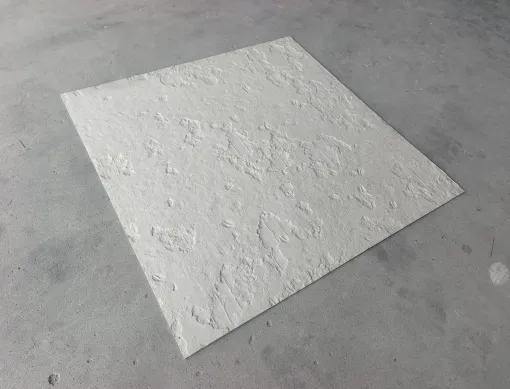
At the heart of COLORIA's success lies Bali Stone—a material that has become the company's signature. Sourced from select quarries in regions known for their unique geological formations, Bali Stone isn't just quarried; it's curated. COLORIA's team of geologists and craftsmen work hand-in-hand to identify blocks with the most striking patterns, ensuring each slab carries the distinct character that architects crave. From warm, sandy hues to deep, moody grays, Bali Stone's versatility makes it a favorite for projects ranging from tropical resorts to urban lofts.
But what truly sets COLORIA's Bali Stone apart is the craftsmanship. Traditional stone-cutting methods are combined with modern technology to shape the stone into everything from sleek, thin panels to bold, textured slabs. Take, for example, the "Historical Pathfinders Stone" collection—a line inspired by ancient pathways, where Bali Stone is treated to mimic the weathered, time-worn look of centuries-old cobblestones. It's a process that requires patience: each piece is hand-finished by artisans, ensuring no two panels are exactly alike. "Clients don't just buy a material from us," explains Gonzalez. "They buy a piece of craftsmanship that can't be replicated by machines alone."
While Bali Stone anchors COLORIA's legacy, innovation keeps them ahead. Enter MCM flexible stone—a game-changer for architects who dream in curves and unconventional shapes. Traditional stone is rigid, limiting design possibilities. MCM (Modified Composite Material) flexible stone, however, bends without breaking, thanks to COLORIA's proprietary blend of natural stone aggregates and a lightweight, high-strength polymer backing. The result? A material that can wrap around columns, arch over doorways, or even climb curved facades—all while retaining the look and feel of natural stone.
Consider the award-winning "Wave Hotel" in Lisbon, where the exterior features sweeping, wave-like curves clad in MCM flexible stone. "We wanted the building to look like it was carved by the ocean," says the project's designer, Carlos Mendes. "Traditional stone would have required heavy steel supports and limited our curves. COLORIA's MCM flexible stone was the only material that let us execute the vision without compromising on durability." The hotel now stands as a testament to the material's strength: after five years of exposure to saltwater and wind, the stone shows no signs of wear, its color and texture as vibrant as day one.
The MCM big slab board series takes this innovation further. Designed for large-scale projects where seamless, grand surfaces are key, these slabs measure up to 3 meters in length, reducing the need for unsightly joints. Imagine a corporate lobby with a single, unbroken wall of Bali Stone-inspired MCM slab—no grout lines, no interruptions, just the uninterrupted flow of texture and color. It's a design choice that elevates spaces from ordinary to extraordinary, and COLORIA's precision manufacturing ensures each slab aligns perfectly, even on the largest canvases.
COLORIA's impact isn't confined to a single region. From the sun-soaked beaches of the Maldives to the bustling streets of Tokyo, their materials have left an indelible mark on skylines worldwide. One standout project is the "Ethereal Tower" in Dubai, a 40-story mixed-use building where the facade alternates between Bali Stone and travertine (starry green)—a bold color choice that mirrors the city's vibrant energy. The travertine's star-like flecks, a signature of COLORIA's stone treatment process, catch the light at dawn and dusk, turning the tower into a glowing beacon.
Closer to home, in Barcelona, the "Riverside Museum of Art" chose COLORIA's fair-faced concrete for its interior galleries. Known for its raw, unpolished finish, fair-faced concrete is notoriously tricky to work with—any imperfection is on full display. But COLORIA's expertise in mixing and pouring ensured a flawless, uniform surface that complements the museum's minimalist aesthetic. "We needed a material that would let the art take center stage, not compete with it," says the museum's curator, Elena Martinez. "COLORIA's fair-faced concrete does exactly that—it's quiet, sophisticated, and has a warmth you don't get with standard concrete."
In an era where sustainability is no longer optional, COLORIA Group leads by example. Bali Stone, for instance, is sourced from quarries with strict reclamation policies—after extraction, the land is restored to its natural state, ensuring minimal environmental impact. The MCM flexible stone production process, too, is designed to reduce waste: by using stone aggregates that would otherwise be discarded as "scrap" from traditional quarries, COLORIA diverts tons of material from landfills annually.
"Sustainability isn't a checkbox for us," says James Chen, COLORIA's Sustainability Director. "It's part of the design process. Take our foamed aluminium alloy boards—they're 30% lighter than traditional aluminium, which means less fuel is used during transportation. And because they're 100% recyclable, they close the loop on the material lifecycle." It's this holistic approach that has earned COLORIA certifications from global green building organizations, making their materials a top choice for LEED and BREEAM-certified projects.
So, what makes COLORIA the go-to for industry leaders? It's the combination of expertise, customization, and support. Unlike mass-produced materials, COLORIA works closely with clients to tailor solutions to their unique needs. Need a custom color for Bali Stone? Their in-house color lab can match any shade. Working on a tight deadline? COLORIA's global distribution network ensures materials arrive on time, even for projects in remote locations.
To illustrate, let's compare COLORIA's Bali Stone with conventional options—a quick look at what sets them apart:
| Feature | COLORIA Bali Stone | Conventional Natural Stone | Standard Concrete |
|---|---|---|---|
| Durability | Enhanced with MCM technology; resistant to weathering and impact | Prone to cracking in extreme climates | Strong but lacks natural texture |
| Design Flexibility | Available in slabs, panels, and custom shapes; pairs with MCM flexible stone for curves | Rigid; limited to flat or simple shapes | Customizable but lacks organic texture |
| Sustainability | Sourced responsibly; minimal waste production | High quarrying impact; excess waste | High carbon footprint in production |
| Aesthetic Appeal | Unique, organic textures and colors; hand-finished details | Uniform but less character | Functional but lacks natural warmth |
As construction evolves, so does COLORIA Group. The company's latest venture? Integrating smart technology with traditional materials. Imagine Bali Stone panels embedded with sensors that monitor temperature and humidity, or MCM big slabs that double as energy-efficient insulators. "The future isn't about replacing natural materials with tech," says Gonzalez. "It's about enhancing them to meet the needs of tomorrow's buildings."
For architects, designers, and developers, COLORIA isn't just a supplier—it's a partner in pushing boundaries. Whether it's a boutique hotel in Bali (fittingly) or a skyscraper in New York, their materials don't just build structures; they build experiences. As the industry continues to demand more from construction materials—more durability, more beauty, more sustainability—COLORIA Group remains at the forefront, proving that with the right blend of craftsmanship and innovation, the possibilities are endless.
So, the next time you walk past a building that makes you stop and stare—its facade catching the light, its texture inviting you to reach out and touch it—chances are, it's not just any material. It's COLORIA. And behind it? Decades of expertise, a passion for Bali Stone, and a commitment to turning the ordinary into the extraordinary.
Recommend Products












