
How a humble material is redefining facades, sustainability, and design freedom for architects and builders
Walk into any modern architecture studio these days, and you'll likely overhear a familiar frustration: "We love the look of natural stone, but it's just not working." Maybe it's the client who wants a facade that shifts color like a sunset, or the engineer pointing out the structural limits of heavy slabs. For decades, materials like travertine (with its classic veining) or marble have been the gold standard for "timeless" design—but in a world that craves both beauty and practicality, they're starting to feel like relics of a bygone era.
Enter gradient color rammed earth boards. You might not have heard the name yet, but if you've seen a building with a facade that flows from soft terracotta to muted sage, or warm amber to cool gray, chances are you've seen their work. These unassuming panels are quietly revolutionizing how architects think about exterior and interior surfaces—offering the organic charm of natural stone without the headaches. Let's dive into why this material is quickly becoming the go-to choice for forward-thinking designers.
Don't get me wrong—traditional stone has its place. Travertine (think Starry Green or the creamy beige varieties) has adorned everything from ancient Roman baths to modern luxury hotels, and for good reason: its unique texture and earthy tones feel inherently "crafted." But step into the shoes of a project manager, and the romance fades fast.
First, there's the weight. A single square meter of travertine can weigh upwards of 50 kilograms. That means reinforcing walls, upgrading foundations, and hiring specialized crews to hoist slabs into place—all adding time and cost. Then there's the installation: cutting stone to fit irregular spaces is messy, imprecise, and wasteful. And let's talk sustainability: quarrying stone involves heavy machinery, disrupts ecosystems, and leaves behind scars on the landscape. Even transporting those slabs? A truck carrying traditional stone burns more fuel than one carrying lighter materials, stacking up carbon emissions.
And color? Natural stone is at the mercy of geology. Want a gradient that transitions from rusty red to cloud-dragon gray? Good luck. You'd need to source multiple types of stone, piece them together, and hope the seams don't look jarring. It's no wonder architects are sighing over their blueprints.
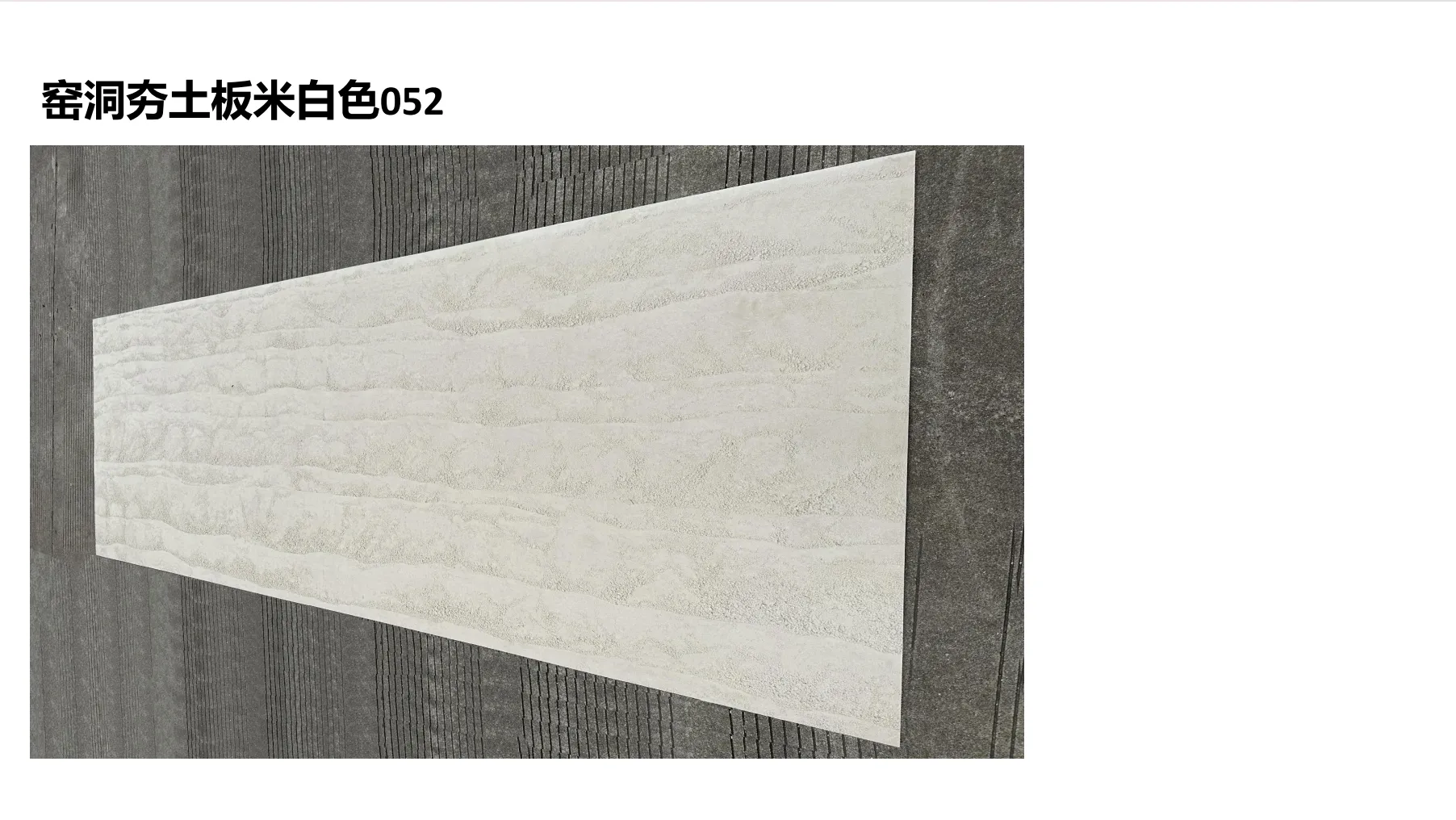
So, what exactly are gradient color rammed earth boards? Think of them as traditional rammed earth's tech-savvy cousin. Instead of mixing soil, clay, and straw on-site and ramming it into forms (a process as old as construction itself), these boards are factory-made with a precise blend of natural materials—think locally sourced soil, recycled aggregates, and mineral pigments—compressed into lightweight panels. The magic? During manufacturing, pigments are layered to create seamless color gradients, giving each board the look of stone that's been kissed by time, not just cut from a quarry.
But they're not just pretty. The compression process makes them dense and durable, resistant to weather, fire, and even mold. And at around 15 kilograms per square meter? They're a fraction of the weight of travertine or marble. That means easier installation, no need for over-the-top structural support, and fewer workers on-site—a win for both timelines and budgets.
Here's where gradient rammed earth boards really shine: they let architects tell a story with color. Imagine a coastal home where the facade shifts from soft sand (beige) at the base to sky blue at the top, mirroring the horizon. Or a mountain retreat that transitions from warm terracotta (like Rona Yellow) to cool gray (resembling glacial slate), blending with the landscape. With traditional stone, this level of customization would be a logistical nightmare. With gradient rammed earth? It's as simple as sharing a Pantone swatch.
And they play well with others, too. Many architects pair them with complementary materials like Lunar Peak series panels—silvery, golden, or black accents that add a modern twist. Picture a commercial building: gradient rammed earth in warm amber forms the main facade, while Lunar Peak Silvery trim outlines the windows, creating depth without clashing. It's versatility that traditional stone, stuck in its natural palette, can't match.
Let's get real—beauty only gets you so far. Architects and builders need materials that perform, and gradient rammed earth boards deliver on that front, too.
Lightweight, but tough: At 15kg/m², they're easy to handle, but don't let that fool you. These boards can withstand harsh weather, from heavy rain to extreme temperatures, without cracking or fading. Unlike foamed aluminium alloy boards (which can dent), or even some types of travertine (prone to etching), they hold up over time.
Installation in a snap: No need for specialized equipment or weeks of labor. Most panels come with interlocking edges, so crews can snap them into place like giant puzzle pieces. A typical facade that would take 3 days to clad with travertine? Done in 1 day with gradient rammed earth.
Cost-effective: Sure, the upfront cost might be similar to high-end stone, but factor in reduced labor, no structural upgrades, and lower transportation fees, and the savings add up fast. One contractor I spoke to estimated a 20% reduction in total project costs when switching from traditional travertine to gradient rammed earth.
In an era where "green building" isn't just a buzzword but a requirement, gradient rammed earth boards check all the boxes. Let's break it down:
Compare that to travertine, which requires heavy machinery to extract and often travels across continents before reaching a job site. It's not even close.
Nestled on the edge of a national park in Arizona, the Desert Bloom Hotel wanted a facade that felt like an extension of the surrounding desert—warm, earthy, and ever-changing with the light. The architect's initial plan? Use a mix of travertine (Starry Orange and Starry Red) to mimic the sunset hues of the landscape. But after crunching the numbers, they hit a wall: the stone was too heavy for the hotel's lightweight steel frame, and the color transition looked choppy in renderings.
Enter gradient rammed earth boards. The team opted for a custom gradient: starting with deep rusty red at the base (echoing the desert floor), fading to soft amber, then pale gold at the roof (matching the sand dunes). To add contrast, they accented the entrance with Lunar Peak Golden panels. The result? A hotel that seems to rise out of the desert, with a facade that shifts color from dawn to dusk. And the best part? The installation took half the time of the original stone plan, and the project came in under budget.
| Feature | Traditional Travertine (e.g., Starry Green) | Gradient Color Rammed Earth Board | Foamed Aluminium Alloy Board (Vintage Silver) |
|---|---|---|---|
| Weight (per m²) | 50 kg | 15 kg | 8 kg |
| Installation Time (100 m²) | 3 days | 1 day | 1.5 days |
| Color Customization | Limited to natural veining; no gradients | Fully customizable gradients (any color combo) | Limited to vintage silver/gold/black |
| Sustainability | High carbon footprint (quarrying, transport) | Low (local materials, recycled content) | Moderate (recyclable but energy-intensive to produce) |
| Durability | Prone to etching, staining | Weather-resistant, fade-proof | Prone to dents, scratches |
| Total Project Cost (Estimated) | $150–$200/m² | $130–$170/m² | $180–$220/m² |
At the end of the day, architecture is about solving problems—whether that's creating a space that feels welcoming, meeting a tight budget, or respecting the planet. Gradient color rammed earth boards check all those boxes, and then some. They offer the warmth of natural stone without the weight, the beauty of custom color without the waste, and the durability of modern materials with an old-world soul.
As more architects and builders discover their potential, we're seeing them pop up everywhere: from boutique cafes in Brooklyn to luxury resorts in Bali, from office parks in Texas to residential homes in Scandinavia. They're not just a trend—they're a shift in how we think about building materials: practical, sustainable, and unapologetically beautiful.
So the next time you walk past a building with a facade that seems to glow, shifting color like a living thing, take a closer look. Chances are, it's not stone at all. It's gradient color rammed earth—proving that sometimes, the best innovations are the ones that feel like they've been here all along.
Recommend Products












