
Walk through the ancient streets of Rome, and you'll feel it—the quiet grandeur of travertine underfoot. From the Colosseum's weathered arches to the Trevi Fountain's sun-dappled basin, this stone has been telling stories for millennia. But here's the thing: in 2025, travertine isn't just a relic of the past. Thanks to innovators like MCM, it's stepping into the future, blending time-honored charm with cutting-edge technology. So why does this stone, hewn from the earth and shaped by history, still capture our imagination? And how is MCM making sure it stays relevant for generations to come?
Travertine's popularity isn't an accident. For centuries, builders and designers have been drawn to its unique character—those soft, honeyed tones, the subtle pits and veins that tell of its formation in mineral springs, and a texture that feels both solid and alive. Unlike sleek, uniform man-made materials, travertine carries the marks of nature: a fossil here, a mineral deposit there, each slab as unique as a fingerprint. It's a stone that ages gracefully, too; over time, it develops a warm patina that only deepens its beauty, turning spaces into stories.
But travertine isn't just pretty—it's tough. The Romans didn't choose it for the Colosseum because it looked nice; they chose it because it could withstand the test of time, harsh weather, and the weight of history. That durability has made it a staple in everything from grand public monuments to cozy backyard patios. And let's not forget versatility: travertine works as well in a minimalist modern home as it does in a rustic villa, adapting to styles without losing its essence. It's no wonder that even in 2025, when design trends shift faster than ever, we still crave that connection to something real, something rooted in the earth.
For all its virtues, traditional travertine has faced challenges in the modern age. Quarrying huge slabs is resource-intensive, and transporting them? A logistical nightmare. Those beautiful, thick slabs can weigh hundreds of pounds, making installation a back-breaking, time-consuming process. And let's talk maintenance: natural travertine is porous, meaning it stains easily and needs regular sealing to stay looking fresh. In a world where speed, efficiency, and low upkeep are king, these drawbacks have made some designers hesitant to reach for the stone they love.
That's where MCM comes in. Instead of abandoning travertine's legacy, they asked: How can we honor its past while solving its present-day problems? The answer? Innovation. MCM has reimagined travertine for the 21st century, keeping its soul intact but wrapping it in modern convenience. From flexible, lightweight panels to bold new colorways, they've turned travertine from a "classic but cumbersome" choice into a "classic and cutting-edge" must-have.
At the heart of MCM's revolution is MCM flexible stone —a game-changer that's redefining what travertine (and natural stone, in general) can do. Imagine the look and feel of authentic travertine, but thin enough to bend, light enough to carry with one hand, and tough enough to stand up to the elements. That's MCM flexible stone in a nutshell. By combining natural stone aggregates with advanced polymers, MCM has created a material that's 70% lighter than traditional travertine slabs, yet just as durable. Suddenly, installing travertine on a high-rise facade or a curved wall isn't a pipe dream—it's a practical, cost-effective reality.
Then there's the MCM big slab board series , which takes grandeur to new heights. Traditional travertine slabs max out at around 6 feet; MCM's big slabs stretch up to 10 feet or more, creating seamless, uninterrupted surfaces that make spaces feel larger and more cohesive. Whether it's a hotel lobby wall or a residential feature wall, these slabs eliminate the need for unsightly grout lines, letting the stone's natural beauty take center stage. And because they're lightweight, they're easier to transport and install, cutting down on labor costs and project timelines.
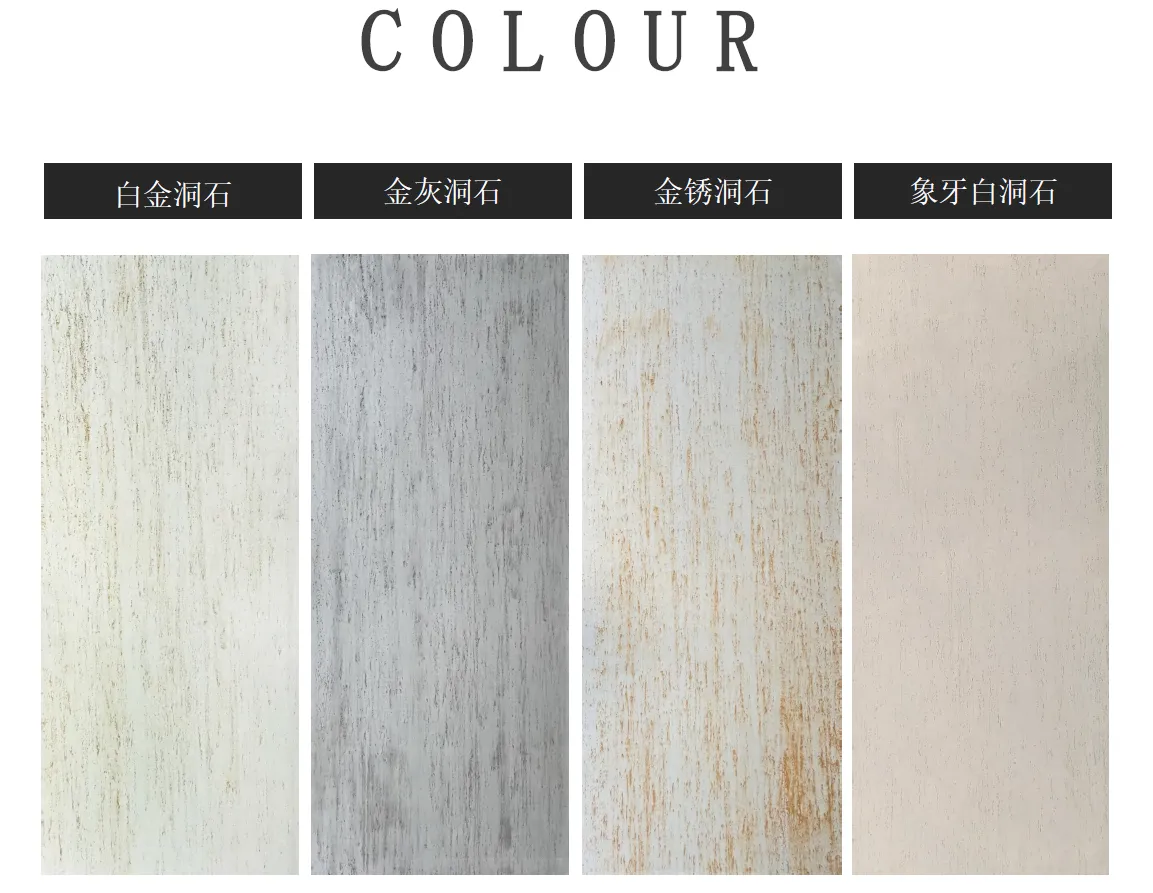
But MCM didn't stop at making travertine easier to work with—they also expanded its creative potential. Take the Lunar Peak series , for example. Available in Silvery, Golden, and Black, these designs blend travertine's organic texture with a modern, otherworldly sheen. It's like bringing a piece of the moon's surface into your space—earthy yet futuristic. Or consider Travertine (Starry Green) : a vibrant twist on classic travertine, with subtle green undertones and "starry" mineral deposits that catch the light, adding depth and whimsy. These aren't just materials; they're conversation starters.
| Feature | Traditional Roman Huge Travertine | MCM Flexible Stone / Big Slab Series |
|---|---|---|
| Weight | Heavy (80-100 lbs per sq ft) | Lightweight (20-30 lbs per sq ft) |
| Thickness | 2-3 inches | 0.2-0.5 inches |
| Installation Time | 3-5 days for a standard wall (requires heavy machinery) | 1-2 days for the same wall (installs like wallpaper) |
| Durability | High (but prone to chipping and staining) | High (scratch-resistant, stain-resistant, and weatherproof) |
| Design Options | Limited to natural colors and textures | Extensive (custom colors, gradients, metallic finishes, 3D textures) |
| Sustainability | Resource-heavy (quarrying large slabs, high transportation emissions) | Eco-friendly (recycled materials, reduced waste, lower carbon footprint) |
MCM's travertine adaptations aren't just theoretical—they're transforming spaces around the globe. Let's take a walk through a few examples:
Commercial Spaces: The new Azure Hotel in Dubai features the MCM big slab board series in its lobby, with 10-foot-tall slabs of Lunar Peak Golden that stretch from floor to ceiling. The effect? A space that feels both luxurious and expansive, with the warmth of travertine balanced by the modern shimmer of the Golden finish. Guests often comment on how the lobby "glows" at sunset—proof that MCM's designs don't just look good; they interact with light in magical ways.
Residential Homes: In a sleek, minimalist home in Tokyo, the designer used Travertine (Starry Green) for the kitchen backsplash. The green hue adds a pop of color without overwhelming the space, while the starry texture catches the light from under-cabinet fixtures, creating a cozy, inviting atmosphere. And because MCM flexible stone is heat-resistant, it's perfect for a busy kitchen—no need to worry about stains from tomato sauce or hot pans.
Public Spaces: The new Central Park Pavilion in Sydney opted for MCM flexible stone in Travertine (Vintage Silver) for its exterior cladding. The lightweight panels were easy to install on the pavilion's curved roof, and their weatherproof design means they'll stand up to Australia's harsh sun and rain for years to come. Plus, the silver finish reflects sunlight, helping to keep the pavilion cool in summer—a small but impactful sustainability win.
MCM's travertine adaptations aren't just about looking good—they're about making life easier, too. Let's start with sustainability. Traditional travertine quarrying can be hard on the environment, with large-scale mining disrupting ecosystems. MCM, however, uses a fraction of the natural stone in their flexible panels, often incorporating recycled materials into the mix. Their production process also generates less waste, and because the panels are lightweight, transporting them emits fewer carbon emissions. For designers and homeowners who care about the planet, that's a big selling point.
Then there's cost. Traditional travertine isn't cheap—between quarrying, transportation, and installation, costs can add up fast. MCM's flexible stone and big slabs cut those costs significantly. Lighter weight means lower shipping fees; easier installation means fewer labor hours; and stain-resistant properties mean less money spent on sealing and maintenance over time. It's a win-win: you get the look of high-end travertine without the high-end price tag.
And let's not forget customization. MCM knows that in 2025, one size doesn't fit all. That's why they offer everything from classic beige travertine to bold gradient colors, from smooth polished finishes to rough, "hand-chiseled" textures. Want a travertine panel that mimics the look of driftwood? They've got it. Dreaming of a wall that fades from Starry Orange to Starry Blue? Done. MCM lets you design spaces that truly reflect your vision, not just what's available in a quarry.
If MCM's track record is any indication, the future of travertine is bright—and bold. They're already experimenting with 3D printing technology to create even more intricate textures, like 3D art concrete boards that combine travertine's organic feel with geometric patterns. Imagine a wall that looks like a cross between ancient stone and a modern art piece—that's the direction they're heading.
Gradient colors are another big trend. MCM's gradient color rammed earth boards (though not travertine, they hint at the direction) show how blending hues can add depth and drama to spaces. It's only a matter of time before we see travertine panels that shift from Lunar Peak Silvery at the top to Starry Red at the bottom, creating a sunset-like effect indoors.
And sustainability will only get more important. MCM is exploring ways to use even more recycled materials in their flexible stone, as well as developing panels that can purify the air or regulate temperature—turning travertine from a static material into an active, eco-friendly component of smart buildings.
In 2025, as we rush toward a future of AI and automation, there's something deeply comforting about travertine. It's a reminder that some things—beauty, durability, authenticity—never go out of style. But thanks to MCM, we don't have to choose between the past and the future. With MCM flexible stone , big slab board series , and innovative lines like Lunar Peak and Travertine (Starry Green) , we can have the best of both worlds: the timeless charm of Roman huge travertine, wrapped in the convenience and creativity of modern technology.
So the next time you walk into a space and think, "This feels timeless yet fresh," take a closer look. Chances are, you're standing in front of MCM's handiwork—travertine, reimagined. And that's the magic of design: it doesn't just shape spaces; it shapes how we connect with the world around us. Here's to travertine's next chapter—and to MCM for writing it.
Recommend Products












