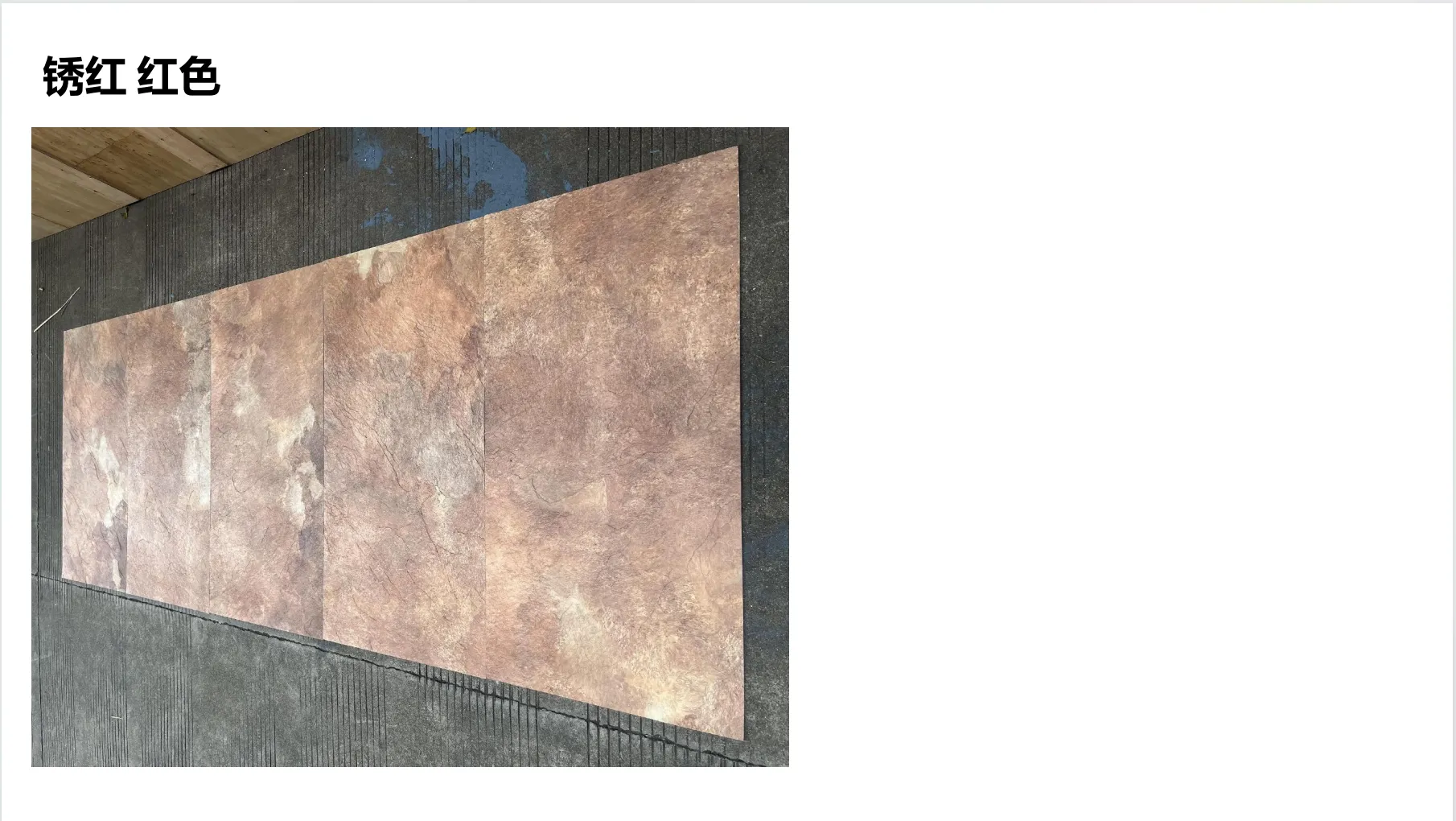
Saudi Arabia's architectural landscape is undergoing a remarkable transformation. From the futuristic skylines of Riyadh to the coastal elegance of Jeddah, the kingdom is redefining modern design while honoring its rich cultural heritage. Amidst this renaissance, one material has emerged as a favorite among architects and designers:
Rusty Red MCM. More than just a building material, it's a storyteller—weaving together the warmth of desert sands, the strength of ancient stone, and the sleekness of contemporary aesthetics. Let's explore why
Rusty Red MCM has become the cornerstone of some of Saudi's most talked-about commercial projects, and how its unique blend of beauty and functionality is shaping the future of design.
The Allure of
Rusty Red: A Color Rooted in Heritage
To understand
Rusty Red MCM's popularity, we must first look to Saudi Arabia's cultural tapestry. Earth tones have long been revered here—think of the terracotta hues of traditional mud-brick forts, the rusted reds of desert canyons at sunset, and the warm browns of ancient archaeological sites.
Rusty Red MCM taps into this deep-seated connection to the land, offering a color that feels both familiar and fresh. Unlike stark whites or cool grays, it exudes warmth, making commercial spaces feel inviting rather than sterile.
But its appeal isn't just cultural.
Rusty Red MCM, part of the broader
mcm flexible stone
family, is a marvel of modern engineering. Crafted using advanced manufacturing techniques, it mimics the texture and depth of natural stone while being significantly lighter and more durable. This flexibility is a game-changer for architects: it can be curved, cut, or shaped to fit even the most ambitious designs, from sweeping facades to intricate interior panels. In a country where temperatures soar and sandstorms are common, durability matters—and
Rusty Red MCM delivers, resisting fading, cracking, and weathering with ease.
Case Study 1: Al-Majd Mall, Riyadh – Where Tradition Meets Modern Retail
Project Overview: A Mall with a Heart for Heritage
Located in northern Riyadh, Al-Majd Mall was envisioned as more than just a shopping destination—it aimed to be a community hub that celebrated Saudi culture. The design brief? Blend traditional elements with modern convenience, creating spaces that felt both timeless and contemporary. Enter
Rusty Red MCM, paired with
historical pathfinders stone
and accents of
fair-faced concrete
.
The mall's exterior facade is a striking example of this synergy. Large panels of
Rusty Red MCM stretch across the building, their warm tone echoing the desert landscape beyond Riyadh. Interspersed with
historical pathfinders stone
—a textured material that mimics the weathered surfaces of ancient trade routes—the facade tells a story of journey and discovery. Inside, the food court features
Rusty Red MCM on accent walls, paired with
fair-faced concrete ceilings to balance industrial edge with earthy warmth.
"Shoppers often comment on how the mall feels 'rooted'—like it belongs here," says Lina Hassan, the project's lead architect. "
Rusty Red MCM wasn't just a choice; it was the only choice. It bridges the gap between our past and present, making the space feel welcoming to everyone, from grandparents to young families."
Case Study 2: Azure Sands Hotel, Jeddah – Coastal Luxury with a Rustic Twist
Project Overview: A Hotel That Honors Land and Sea
Jeddah's Azure Sands Hotel sits just steps from the Red Sea, and its design draws inspiration from both the desert and the coast. The client wanted a material that could stand up to salty sea air while complementing the hotel's blue-and-white color palette.
Rusty Red MCM, paired with
lunar peak silvery
, proved to be the perfect solution.
The hotel's lobby is a showstopper: grand columns wrapped in polished
Rusty Red MCM rise to meet a ceiling clad in
lunar peak silvery
—a metallic-finished MCM that shimmers like sunlight on water. The contrast is stunning: the warm reds ground the space, while the silvery accents add a touch of luxury. Outside, the poolside cabanas feature
Rusty Red MCM walls, their rough-hewn texture blending seamlessly with the surrounding palm trees and sandy terraces.
"We were worried the red might clash with the sea views, but it's the opposite," notes hotel manager Kareem Al-Zahrani. "Guests love how the color changes with the light—deep and rich at dawn, glowing at sunset. It's become a signature part of our brand."
Case Study 3: Innovation Tower, Dammam – Corporate Strength in Stone
Project Overview: An Office Tower That Means Business
For Innovation Tower, a sleek office building in Dammam's tech district, the goal was to convey strength and forward-thinking. The design team chose
Rusty Red MCM for the main entrance facade, pairing it with elements from the
mcm 3d printing series
to add depth and texture.
The entrance features a dramatic, curved wall of
Rusty Red MCM, its surface embossed with geometric patterns created using 3D printing technology. This combination of bold color and intricate texture makes a powerful first impression, signaling the tower's focus on innovation. Inside, elevator lobbies continue the theme, with
Rusty Red MCM panels contrasting against light wood accents and glass partitions.
"Clients often mention the entrance—they say it feels 'unapologetically strong,'" says project designer Ahmed Faraj. "
Rusty Red MCM wasn't just about looks; it was about conveying our tenants' values: resilience, creativity, and connection to the region. It's a material that works as hard as the businesses inside."
Beyond Aesthetics: Why MCM Stands Out
What makes
Rusty Red MCM more than just a pretty face? Let's break it down. As part of the
mcm flexible stone
range, it's lightweight, which reduces construction time and costs—critical for large commercial projects. It's also eco-friendly: made with recycled materials and requiring less energy to produce than natural stone, it aligns with Saudi's push for sustainable building practices. And unlike natural stone, which can vary in color and texture,
Rusty Red MCM offers consistency—ensuring a uniform look across even the largest surfaces.
|
Project
|
MCM Products Used
|
Key Application
|
Standout Feature
|
|
Al-Majd Mall, Riyadh
|
Rusty Red MCM, Historical Pathfinders Stone, Fair-Faced Concrete
|
Exterior Facade, Food Court Accent Walls
|
Blends desert warmth with ancient trade route textures
|
|
Azure Sands Hotel, Jeddah
|
Rusty Red MCM, Lunar Peak Silvery
|
Lobby Columns, Poolside Cabanas
|
Contrasts earthy red with coastal metallic shimmer
|
|
Innovation Tower, Dammam
|
Rusty Red MCM, MCM 3D Printing Series
|
Entrance Facade, Elevator Lobbies
|
3D-printed geometric patterns for a modern edge
|
Conclusion: The Future of Saudi Design is
Rusty Red
As Saudi Arabia continues to build for the future—with projects like NEOM, Qiddiya, and the Riyadh Metro transforming the urban landscape—materials that balance beauty, functionality, and cultural relevance will only grow in importance.
Rusty Red MCM, with its deep roots in heritage and cutting-edge performance, is poised to lead this charge. It's more than a trend; it's a testament to the power of design to connect us to our past while propelling us forward.
Whether in malls, hotels, or corporate towers,
Rusty Red MCM tells a story—one of a nation proud of its heritage and confident in its future. And as more architects and developers discover its potential, we can expect to see even more innovative uses, from sculptural installations to interactive facades. In the end, it's simple:
Rusty Red MCM doesn't just build spaces—it builds experiences. And in Saudi Arabia's dynamic architectural scene, that's exactly what the future demands.