
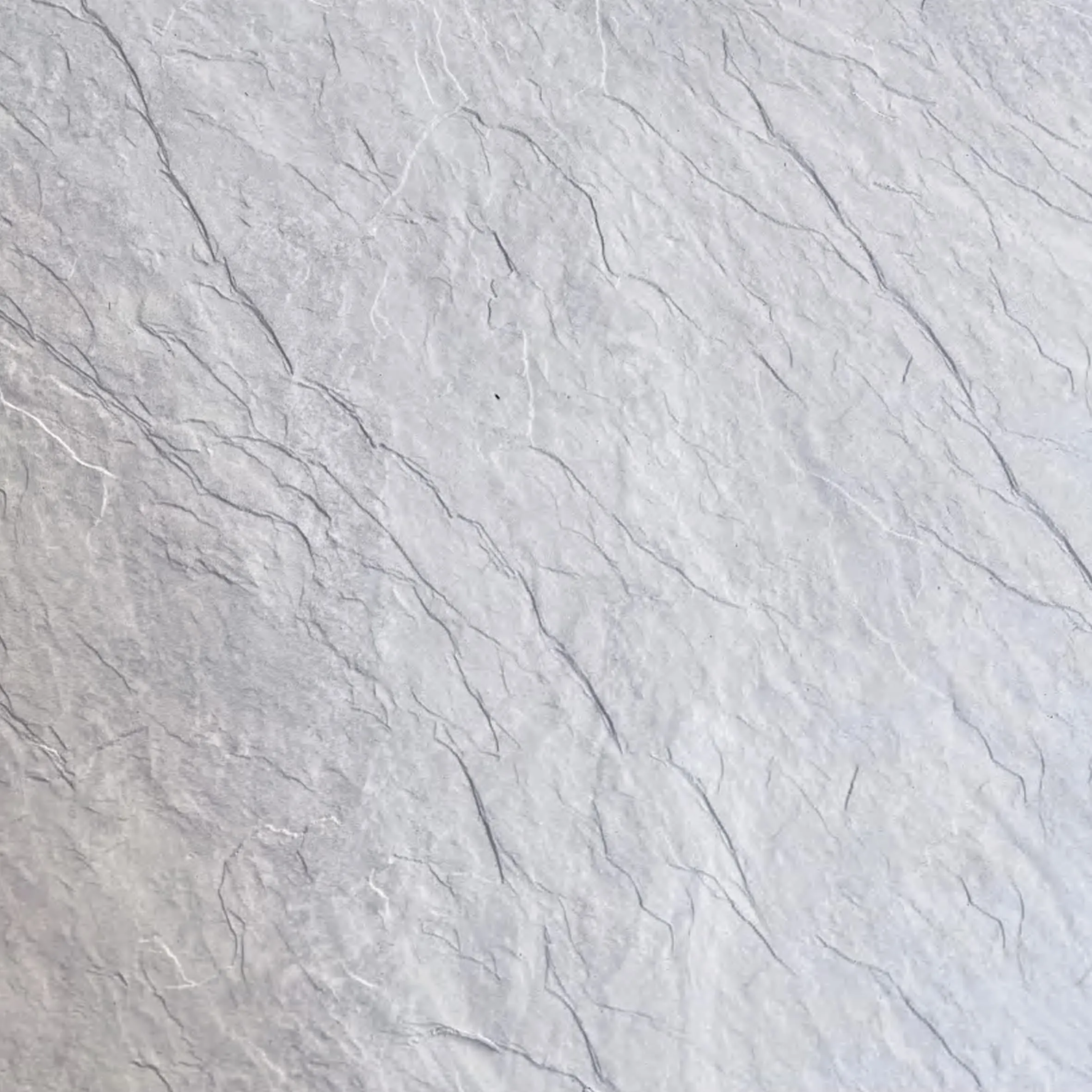
If you've ever stood outside in Riyadh at noon in August, you know the desert doesn't just test buildings—it puts them through a marathon. Temperatures soar past 45°C (113°F), sandstorms whip grit at 60 km/h, and the sun blazes with a intensity that fades even the boldest colors. For architects and builders here, choosing the right cladding isn't just about aesthetics; it's about survival. That's where Slate Veil White MCM comes in. Part of the innovative MCM flexible stone family, this material isn't just another pretty face—it's a desert-proof solution that blends durability, beauty, and practicality in a way traditional stones or even materials like fair-faced concrete simply can't match. Let's dive into why it's becoming the go-to choice for modern Saudi architecture.
To understand why Slate Veil White MCM works, let's first talk about what it's up against. Saudi Arabia's climate is a triple threat: extreme heat, abrasive sand, and sudden temperature swings. Take traditional natural stone, for example—marble or granite. These look stunning, but in 45°C heat, they absorb sunlight like a sponge, turning building exteriors into radiators that drive up AC costs. Worse, when night falls and temperatures drop (sometimes by 20°C or more), the stone expands and contracts, leading to cracks over time. Sandstorms? They scratch polished surfaces, leaving them dull and weathered within a few years.
Then there's fair-faced concrete , a popular choice for its industrial-chic look. It's durable, but it's heavy—adding extra load to buildings—and lacks flexibility. In areas prone to minor seismic activity (yes, even Saudi has them), that rigidity can be a liability. Plus, concrete absorbs moisture, and while Saudi is dry, occasional humidity or rare rains can lead to mold or staining. And let's not forget aesthetics: concrete's gray monotony can feel oppressive under the desert sun, whereas buildings need warmth and character to stand out.
Even other MCM variants, like lunar peak silvery , struggle here. While Lunar Peak's metallic finish is eye-catching, its reflective surface can create glare issues in bright sunlight—annoying for pedestrians and even dangerous for drivers nearby. Slate Veil White, by contrast, has a soft, matte finish that diffuses light, keeping exteriors cool and easy on the eyes.
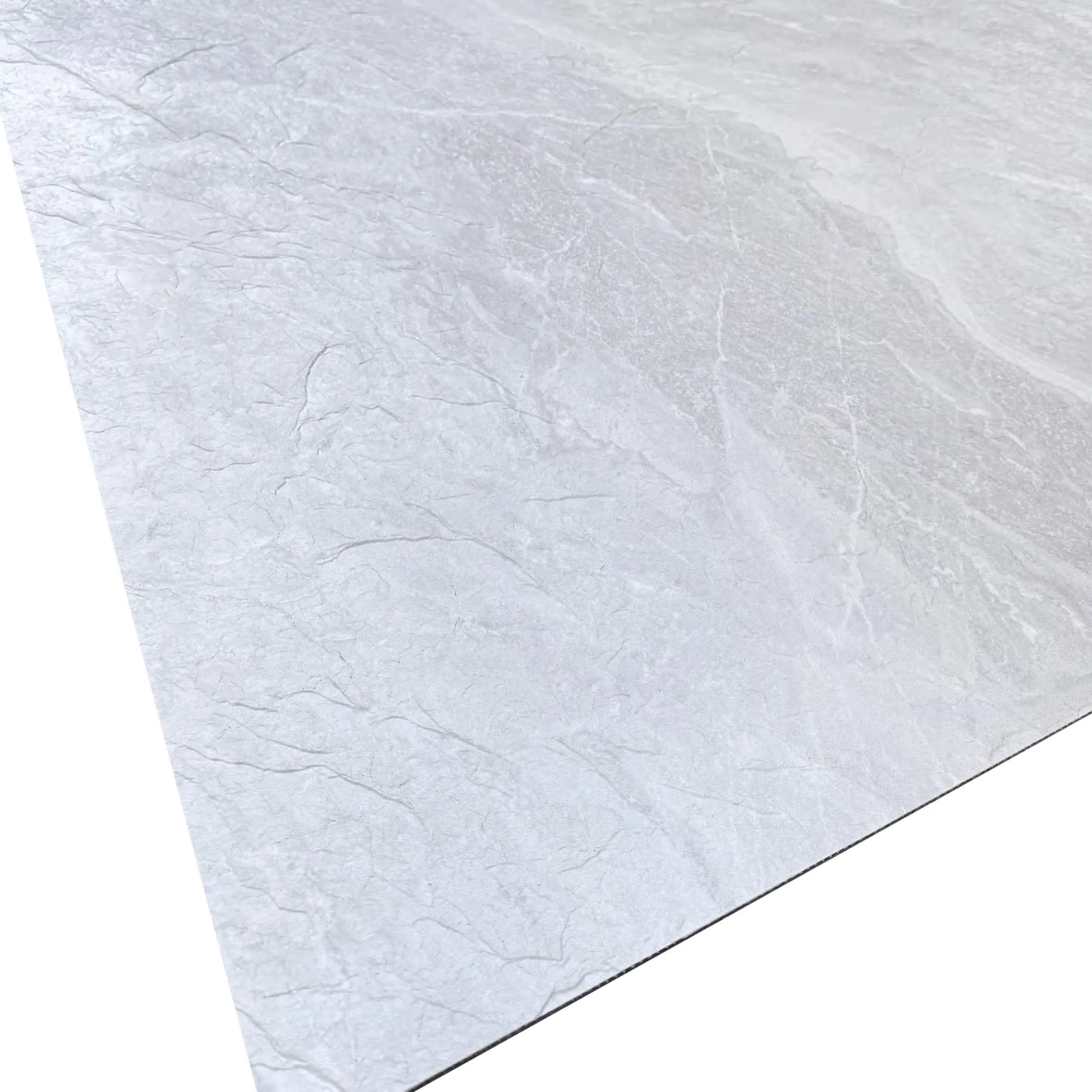
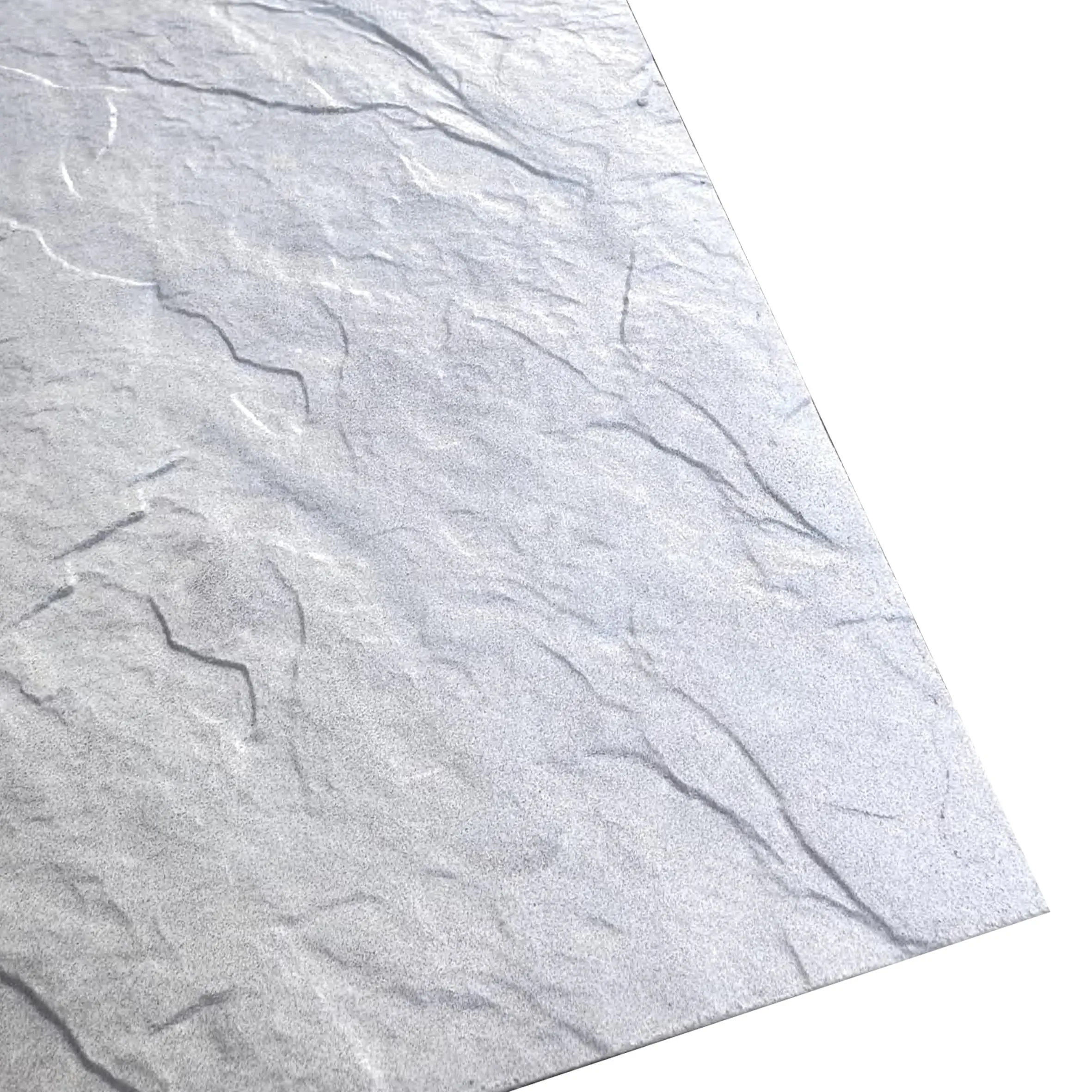
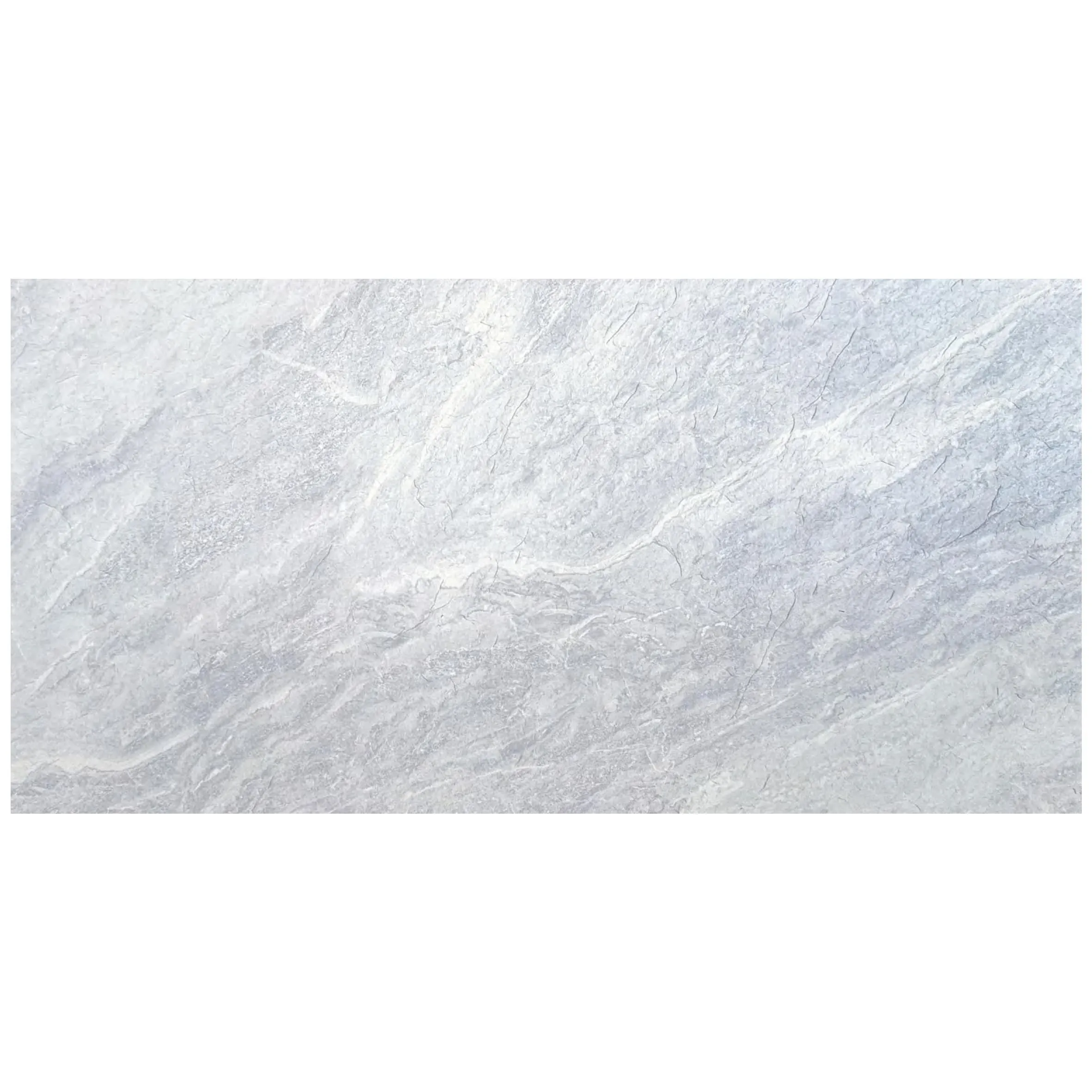
Let's break it down simply: MCM stands for Modified Composite Material. Think of it as nature and technology having a baby. Slate Veil White starts with real stone particles (in this case, fine slate dust) mixed with a lightweight, flexible polymer resin. The result? A thin, durable panel that looks and feels like natural stone but weighs 70% less. It's like having the beauty of a quarry stone without the bulk or fragility.
But what makes Slate Veil White special? Its color, for starters. That soft, off-white hue isn't just for show—it reflects up to 30% more sunlight than darker materials, keeping buildings cooler on the inside. Walk past a Slate Veil-clad wall on a hot day, and you'll notice the difference immediately: it feels noticeably cooler to the touch compared to, say, a dark granite portoro or even a travertine (vintage black) wall.
In Jeddah or Dammam, where summer heat can make asphalt melt, Slate Veil White's thermal performance is a game-changer. Traditional stone absorbs heat, but MCM's polymer core acts as an insulator. Tests show that buildings clad in Slate Veil White have 15-20% lower cooling costs compared to those using natural travertine or granite. How? The material's low thermal conductivity means less heat transfers into the building, so AC units don't have to work overtime. For businesses, that's thousands of riyals saved annually on energy bills. For homeowners, it means a more comfortable living space even when the mercury spikes.
Anyone who's lived through a Saudi sandstorm knows the drill: grit gets everywhere, and surfaces take a beating. Slate Veil White's top layer is treated with a scratch-resistant coating that stands up to flying sand particles. Unlike polished marble, which scratches easily, or rust board granite (which can pit over time), Slate Veil White retains its smooth finish for years. Even better, its flexibility helps it absorb minor impacts—like a stray rock kicked up by a car—without cracking. Traditional rigid stones? They'd chip or shatter.
Here's a dirty secret of construction: heavy materials like natural stone require stronger foundations and more structural support, driving up costs. Slate Veil White weighs just 4-5 kg per square meter —that's less than half the weight of boulder slab or even lightweight options like foamed aluminium alloy board (vintage silver) . This lightness means easier installation (fewer workers, less time), lower transportation costs, and the ability to use it on high-rise buildings without overloading the structure. Its flexibility is another win: panels can bend slightly to follow curved walls or unique architectural designs, something rigid materials like concrete board (dark grey) can't do without cracking.
Saudi building owners don't have time for high-maintenance exteriors. Slate Veil White gets this. Unlike red travertine , which stains easily, or wood grain board , which needs regular sealing, Slate Veil White is nearly maintenance-free. A quick rinse with a hose (no harsh chemicals needed) is enough to wash off dust or sand. Its color is UV-stable, too—no fading under the desert sun. Even after 10 years, that crisp white finish stays bright, unlike lime stone(beige) , which can yellow over time. For busy property managers, that's peace of mind.
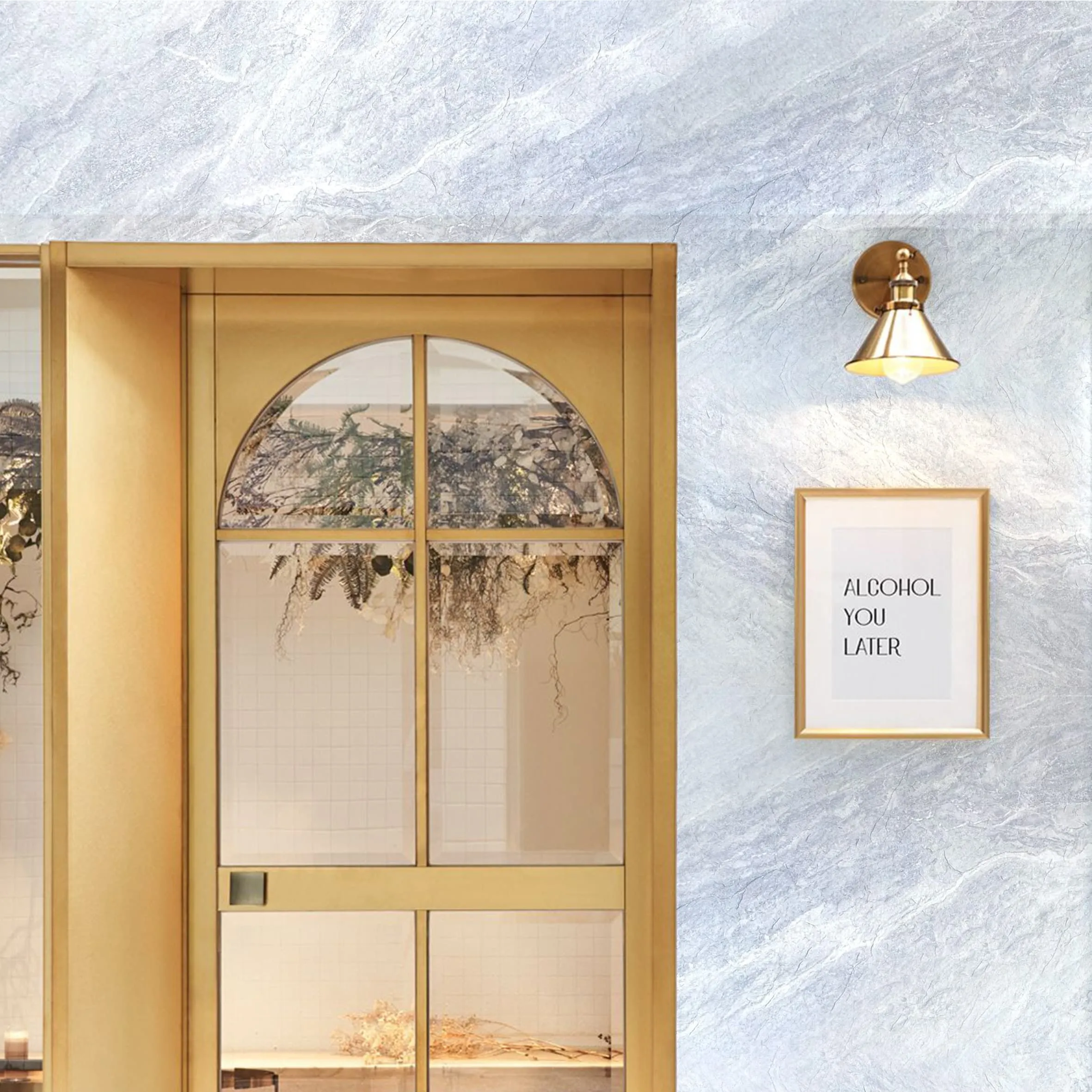
Let's not overlook the "wow" factor. Slate Veil White's soft, veined texture mimics the look of natural slate, but with a clean, contemporary twist. It pairs beautifully with other materials: imagine it alongside foamed aluminium alloy board (vintage gold) for a modern mosque, or with bamboo mat board for a resort with a tropical vibe. Its neutral tone acts as a canvas, letting architects play with color accents or bold designs. Unlike muretto stone (dark grey) , which can feel heavy, Slate Veil White brightens up facades, making buildings feel airy and welcoming—even in the middle of the desert.
| Material | Heat Resistance | Sandstorm Durability | Weight (kg/m²) | Maintenance Needs | Aesthetic Flexibility |
|---|---|---|---|---|---|
| Slate Veil White MCM | Excellent (reflects 30% sunlight) | High (scratch-resistant coating) | 4-5 | Low (hose down occasionally) | High (works with modern/traditional designs) |
| Natural Travertine | Poor (absorbs heat, increases AC costs) | Low (prone to pitting and staining) | 15-20 | High (seal yearly, polish regularly) | Medium (limited color options) |
| Fair-Faced Concrete | Moderate (absorbs heat, but less than stone) | Moderate (can crack from temperature swings) | 20-25 | Medium (seal every 2-3 years) | Low (monochrome, industrial look) |
| Lunar Peak Silvery | Good (metallic finish reflects heat) | Moderate (prone to scratches on metallic surface) | 6-7 | Medium (avoids harsh cleaners) | Medium (metallic sheen limits design versatility) |
Don't just take our word for it—Slate Veil White is already making waves in Saudi Arabia. Take the Al-Mansoora Commercial Tower in Riyadh, completed in 2023. Its facade combines Slate Veil White with foamed aluminium alloy board (vintage gold) for a sleek, modern look. Since opening, the building's management reports 22% lower energy bills compared to similar towers in the area. "We were skeptical at first—how could something so light be so tough?" says project architect Lina Hassan. "But after a summer of 50°C days and two sandstorms, the facade looks brand new. We're using it on our next project, no question."
Residential projects are joining in, too. The Azure Sands Villa Complex in Jeddah chose Slate Veil White for its (exterior walls) to create a bright, coastal-inspired feel—even miles from the ocean. Homeowner Fatima Al-Zahrani loves how it holds up: "We have a pool, and the kids are always splashing water. With our old stone walls, we had mold issues. Now? The MCM panels dry quickly, and there's no mold. Plus, the white color keeps the house so much cooler in summer!"
Building in Saudi Arabia isn't just about creating structures—it's about crafting spaces that can endure the desert's harsh beauty. Slate Veil White MCM checks every box: it's heat-resistant, durable, lightweight, low-maintenance, and stunning to look at. Whether you're designing a skyscraper in Riyadh, a boutique hotel in Al-Ula, or a family home in Dammam, it's a material that works as hard as you do.
So, the next time you're driving through a Saudi city and spot a building that looks impossibly fresh and bright under the sun, take a closer look—it might just be Slate Veil White MCM. In a climate where survival and style rarely go hand in hand, this innovative material is proving they can. And that's a game-changer for Saudi architecture.
Recommend Products












