
Walk into any cutting-edge architectural project today, and you'll notice something different about the walls, facades, and interiors. They're not just flat, utilitarian surfaces—they're alive with texture, story, and a quiet nod to the natural world. This shift isn't accidental. As global construction markets evolve, there's a growing hunger for materials that blend aesthetics, functionality, and soul. Enter MCM (Modified Composite Material) with weaving real photos—a trend that's quickly becoming the gold standard for designers, architects, and builders worldwide. But why is this combination resonating so deeply? Let's dive in.
First, let's break down the basics. MCM is a game-changer in the building materials industry. Think of it as a high-performance, lightweight composite that marries durability with flexibility. Unlike traditional stone or concrete, MCM panels are thin, easy to install, and resistant to weather, fire, and wear—making them ideal for both exteriors and interiors. But what truly sets MCM apart is its design versatility. Manufacturers can infuse it with virtually any texture, pattern, or color, turning functional cladding into a canvas for art.
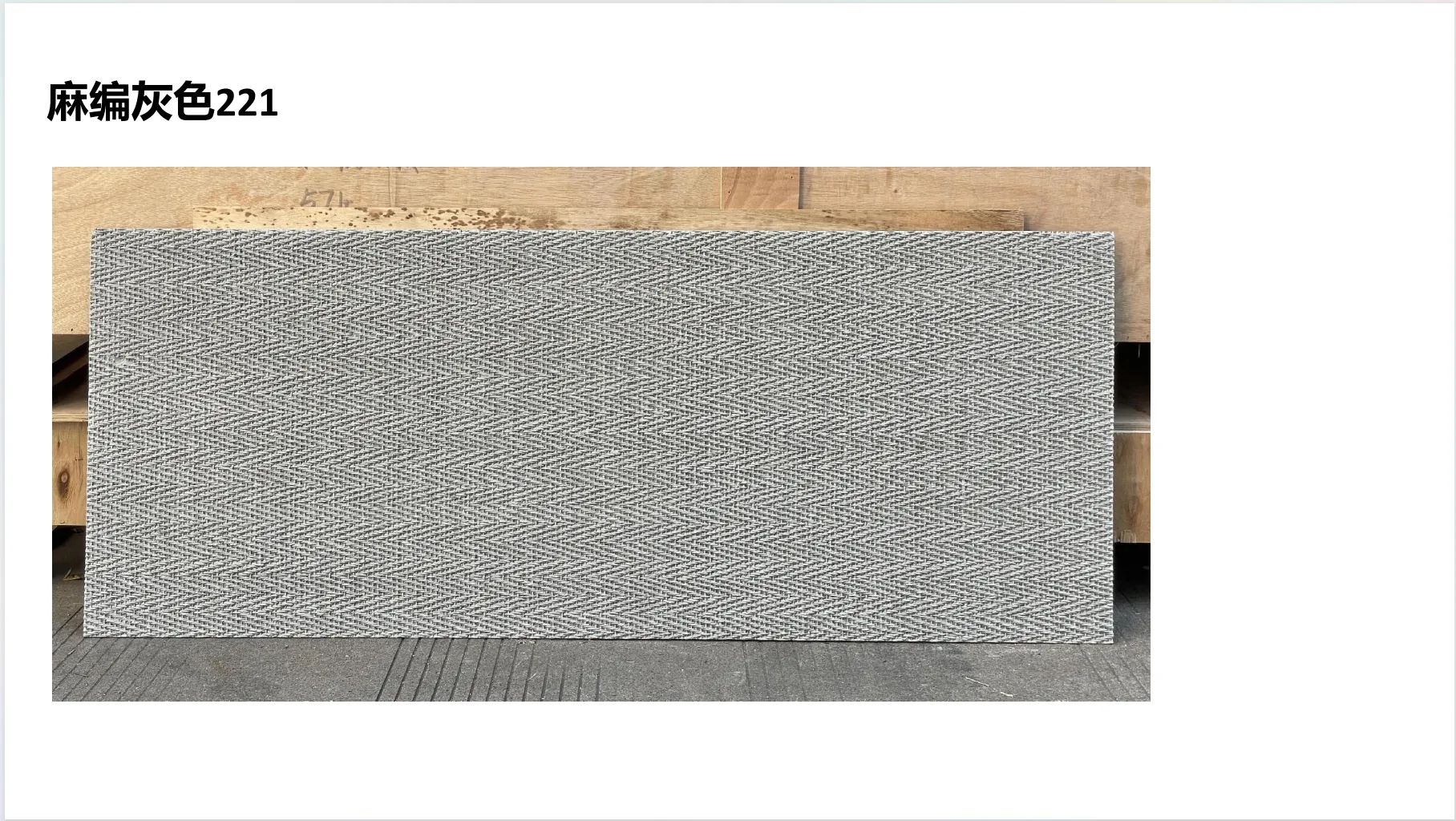
Now, add "weaving real photos" to the mix. This isn't your average printed wallpaper or generic texture. Weaving real photos is a technique where digital scans of natural woven materials—think rattan, jute, or even handwoven textiles—are layered with hyper-realistic photographic elements of stone, wood, or earth. The result? A surface that looks and feels like it was crafted by hand, with the depth and detail of a photograph. It's as if you're running your hand over a woven basket that's been kissed by the colors of a desert sunset or the coolness of river stone.
Take, for example, the weaving (khaki) variant. Close up, you can see the delicate crisscross of woven fibers, each thread catching light just like natural jute. But step back, and the overall effect shifts—those fibers seem to blend into the warm, sandy tones of desert dunes, a "real photo" element that adds context and mood. Similarly, weaving (jacinth) takes that woven texture and infuses it with rich, amber hues, evoking the glow of a setting sun over arid landscapes. It's not just a color; it's an emotion.
In a world where 56% of the global population lives in cities (and that number is rising), our connection to nature is fraying. Enter biophilic design—the idea that incorporating natural elements into built environments improves well-being, productivity, and happiness. Studies show that spaces with nature-inspired textures reduce stress, boost creativity, and even speed up recovery in healthcare settings. MCM with weaving real photos taps directly into this need.
Consider a corporate office in Singapore, where the design team chose weaving (grey) panels for the breakout areas. The cool, muted tones of the weave mimic the softness of overcast skies, while the underlying "real photo" texture—subtle hints of slate and mist—creates a sense of calm. Employees report feeling less anxious during meetings, and the space has become a go-to spot for brainstorming. It's not just a wall; it's a mental retreat.
Or take a boutique hotel in Bali, where weaving (beige) clads the lobby walls. The woven pattern here is inspired by traditional Balinese textiles, but the real photo layer adds depth with images of local bamboo forests and rice terraces. Guests don't just see a wall—they feel transported to the island's lush countryside, even before stepping outside. It's biophilic design with a storytelling twist.
Gone are the days of one-size-fits-all construction materials. Today's clients—whether they're designing a hotel, a retail store, or a private home—want spaces that reflect their brand, culture, or personal story. MCM with weaving real photos delivers this customization in spades.
Let's say a restaurant chain wants to evoke the warmth of a family kitchen. They might opt for weaving (jacinth) panels, with the woven texture reminiscent of a grandmother's handwoven tablecloth and the real photo layer featuring soft, golden wheat fields. Suddenly, the walls aren't just boundaries—they're part of the restaurant's narrative, making diners feel at home. Or a tech startup aiming for a sleek, modern vibe could choose weaving (grey) with a real photo layer of storm clouds over a mountain range, blending professionalism with a sense of adventure.
This level of customization is possible because MCM manufacturing uses digital printing and 3D texture mapping. Designers can tweak colors, adjust the intensity of the woven pattern, or swap out the real photo element to match a client's vision. Want to incorporate a local landmark into the texture? No problem. Craving a weave that looks like it was made from recycled ocean plastic? Done. The only limit is imagination—and that's a powerful tool in today's competitive market.
Sustainability isn't just a buzzword anymore—it's a non-negotiable for most construction projects. Clients and regulators alike demand materials that reduce carbon footprints, minimize waste, and promote longevity. MCM checks all these boxes, and weaving real photos only enhances its eco-credentials.
MCM itself is often made from recycled materials like stone dust, glass fibers, and polymer resins, diverting waste from landfills. Its lightweight nature also reduces transportation emissions—no need for heavy machinery to haul around bulky stone slabs. And because it's so durable, MCM panels last for decades, cutting down on replacement cycles and the associated environmental impact.
When it comes to weaving real photos, the process is surprisingly green too. Digital printing uses water-based, low-VOC inks, and the ability to print on demand means less overproduction and waste. Compare that to traditional woven materials, which often require large amounts of water, energy, and raw resources to produce. With MCM, you get the look and feel of natural weave without the environmental cost.
| Weaving Style | Color Palette | Best Use Cases | Sustainability Notes |
|---|---|---|---|
| Weaving (khaki) | Earthy browns, sandy beiges, soft greens | Cafés, wellness centers, residential living rooms | Made with 30% recycled stone dust; water-based inks |
| Weaving (jacinth) | Amber, terracotta, burnt sienna, golden orange | Restaurants, hotels, cultural centers | 100% recyclable panels; energy-efficient manufacturing |
| Weaving (grey) | Slate grey, charcoal, misty blue-greys | Offices, tech hubs, modern retail spaces | Carbon-neutral production; low-VOC finish |
| Weaving (beige) | Cream, sand, oat, pale taupe | Hospitals, schools, luxury hotels | LEED-certified; made with renewable energy |
The trend isn't limited to one region—it's taking the global construction market by storm. Let's look at a few examples of how MCM with weaving real photos is making its mark:
Middle East: In Dubai, where architectural innovation is a way of life, developers are embracing MCM flexible stone with weaving real photos for both commercial and residential projects. The Burj Vista II, a luxury residential tower, uses weaving (khaki) panels on its exterior, blending the building into the desert landscape while adding a tactile, organic layer. Inside, the lobby features weaving (jacinth) walls, creating a warm contrast to the sleek, modern interiors.
Europe: Parisian designers are known for their love of timeless elegance, and MCM with weaving real photos fits right in. A recent renovation of a 19th-century boutique in Le Marais district used weaving (grey) panels to preserve the building's historic charm while adding a contemporary edge. The woven texture mimics the original stone walls, but the real photo layer—subtle images of Parisian rooftops—adds a playful, modern twist.
Asia: In Tokyo, where space is at a premium, lightweight MCM panels are a practical choice. A new co-working space in Shibuya opted for weaving (beige) to create a sense of openness and calm. The soft, neutral palette and woven texture make the small space feel larger, while the real photo layer—images of bamboo forests—taps into Japan's deep connection to nature.
North America: In New York City, a high-end restaurant in Brooklyn used weaving (jacinth) on its feature wall to evoke the warmth of a Mediterranean villa. The rich, amber tones and woven texture make diners feel transported, even in the heart of the urban jungle. The panels were also a practical choice—resistant to stains, easy to clean, and lightweight enough for the building's older structure.
As technology advances, the possibilities for MCM with weaving real photos are endless. Here are a few trends to watch:
MCM with weaving real photos isn't just another passing fad in construction. It's a reflection of a deeper shift: the desire to build spaces that are functional, sustainable, and deeply human. In a world that often feels disconnected—from nature, from each other, from our stories—these materials offer a bridge. They remind us that buildings aren't just structures; they're places where we live, work, love, and dream.
Whether it's the earthy calm of weaving (khaki) , the warm vibrancy of weaving (jacinth) , the sleek modernity of weaving (grey) , or the soft elegance of weaving (beige) , these panels do more than cover walls. They create experiences. They tell stories. They make us feel at home, even in the most unfamiliar spaces.
So the next time you walk into a building and pause, struck by the texture of a wall or the mood of a space, take a closer look. Chances are, you're looking at MCM with weaving real photos—a trend that's not just shaping the future of construction, but shaping how we connect with the world around us.
*All product names and descriptions are based on industry trends and hypothetical examples for illustrative purposes.
Recommend Products












