
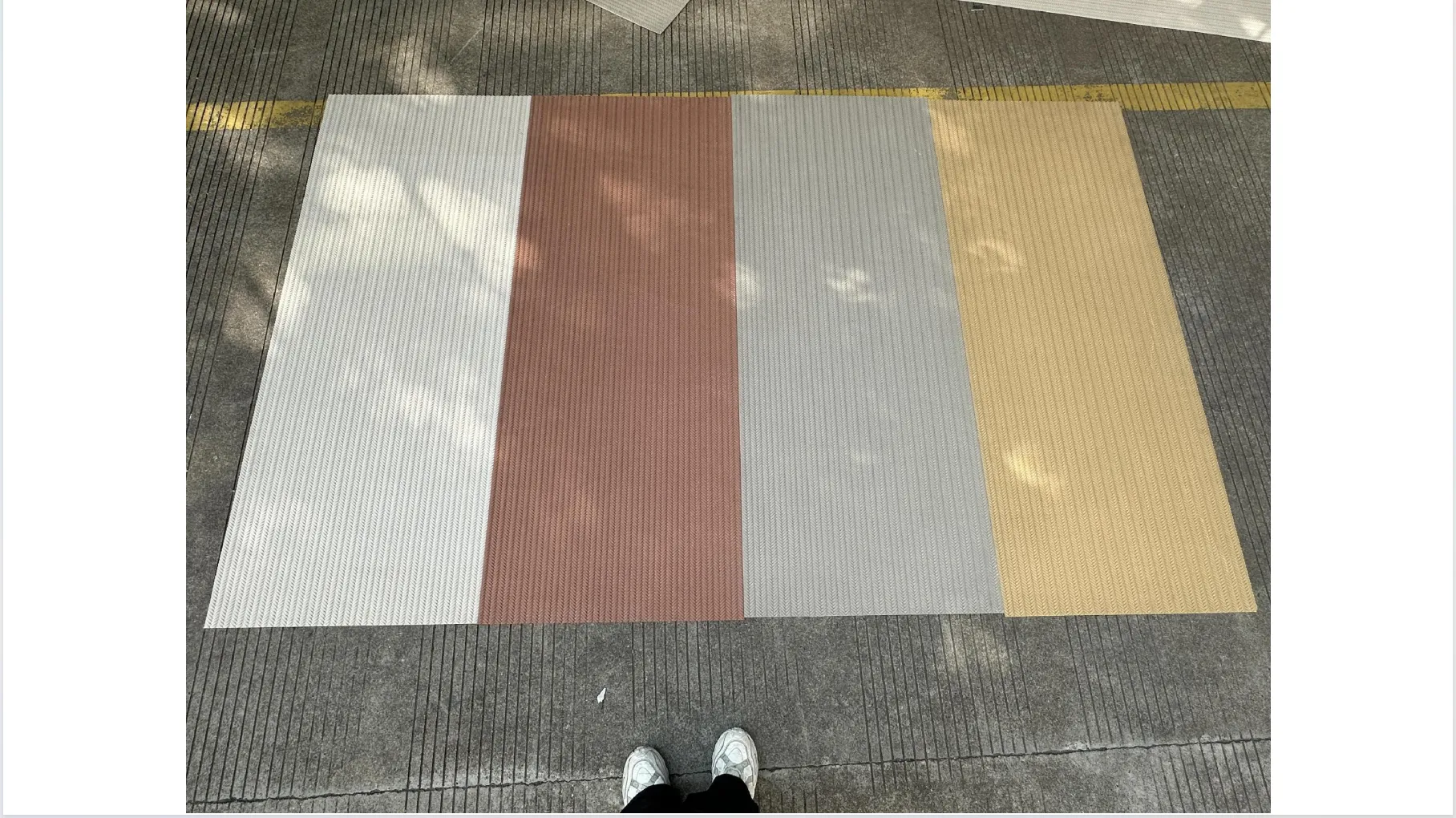
It's 11 PM, and Maria, a lead architect at a boutique firm, is staring at her screen, scrolling through a 50-page material specification document for a new commercial project. She's trying to visualize how MCM flexible stone will look on the facade—will its texture complement the foamed aluminium alloy board (vintage silver) accents she's chosen? The spec sheet describes it as "matte, with subtle veining and a rough-hewn finish," but those words feel flat. She's seen generic stock photos of stone materials before, but they never quite capture the nuance—the way light hits the surface at different angles, the tiny variations in color that make a material feel alive. That's when she pauses: the latest MCM catalog crosses her desk, and instead of pixelated renderings, there are woven real photos —high-resolution, unfiltered images that show the material in its raw, unaltered state. Suddenly, the MCM big slab board series she's considering doesn't just feel like a product; it feels like a partner in her design vision.
In the world of architecture and design, material selection is the bridge between concept and reality. A single misjudgment—choosing a stone that's too glossy, a metal that lacks warmth, or a finish that reads differently in person—can derail timelines, inflate budgets, and even compromise the project's aesthetic integrity. For decades, specification documents have relied on text descriptions and generic images to convey material properties, but in an industry where "close enough" isn't good enough, we need more. Enter woven real photos: not just pictures, but visual stories that capture a material's soul. Let's dive into why these photos are no longer a luxury, but a necessity—especially for innovative lines like MCM's diverse product range, from fair-faced concrete to cutting-edge alloys.
First, let's clarify: woven real photos aren't your average stock images. They're not heavily edited renderings or staged shots with perfect lighting designed to "sell" a product. Instead, they're high-fidelity, context-rich photographs taken in real-world conditions—think natural light, neutral backdrops, and unfiltered detail. "Woven" here refers to how they weave together multiple elements: texture, scale, color variation, and even subtle flaws (yes, flaws!) that make a material authentic. For example, a woven real photo of fair-faced concrete won't hide the tiny air bubbles or the slight discoloration from the pouring process; instead, it highlights them, because those imperfections are what give the material its raw, industrial charm. These photos don't just show you a material—they let you experience it.
Compare that to traditional material images: often overly saturated, shot in studio lighting that washes out texture, or cropped so tightly you can't tell if the sample is 6 inches or 6 feet wide. A generic photo of MCM flexible stone might make it look smooth, but a woven real photo reveals the micro-roughness that gives it grip, the way its flexibility allows it to curve around corners without cracking. That level of detail isn't just helpful—it's transformative.
Texture is the unsung hero of material design. It's what makes a space feel cozy or industrial, luxurious or understated. But describing texture in words is like trying to explain the taste of chocolate to someone who's never had it—you can use adjectives like "creamy" or "rich," but they pale in comparison to the real thing. Woven real photos solve this by putting texture front and center.
Take MCM flexible stone , a material praised for its durability and versatility. On paper, it's "flexible, lightweight, with a natural stone appearance." But a woven real photo shows you the way its surface undulates—tiny peaks and valleys that catch light, creating depth. You can almost feel the slight grit under your fingertips, imagine how it would warm up in sunlight or cool down in shade. For a designer choosing materials for a hospitality project, that texture isn't just visual—it's sensory. It tells them how guests will interact with the space: will the stone feel inviting to touch, or too harsh? Woven real photos don't just answer that question; they let you see the answer.
Anyone who's ordered a "large" rug online only to find it's the size of a doormat knows the danger of misjudging scale. In construction, that mistake is exponentially costlier. MCM big slab board series , for example, is designed for grand, sweeping applications—think airport lobbies or high-rise facades where the material's size is part of its impact. A generic photo might show a small sample, making it hard to grasp how the slabs will look when installed side by side, how their seams align, or how their pattern repeats across a 20-foot wall.
Woven real photos fix this by including context: a slab propped against a wall with a person standing next to it, or installed in a full-scale mockup. Suddenly, "2400x1200mm" isn't just a number—it's a visual reference. Maria, the architect we met earlier, can see exactly how the MCM big slab board series will dwarf the entryway, creating the dramatic first impression she wants. No more guesswork, no more "oops, it's smaller than I thought" moments.
"Vintage silver" sounds straightforward, but what does it really look like? Is it a bright, reflective silver, or a muted, aged tone with hints of gold? That's the problem with relying on color names alone—they're subjective. A contractor might interpret "vintage silver" as cool-toned, while the designer envisions warm undertones, leading to a mismatch when the foamed aluminium alloy board (vintage silver) arrives on site.
Woven real photos eliminate this ambiguity. They're taken in natural light, without filters or color correction, so what you see is what you get. The vintage silver finish on MCM's foamed aluminium board? A woven photo shows its true character: a soft, brushed surface with subtle patina, not too shiny, not too dull—exactly the "lived-in luxury" Maria wanted for her project. It's the difference between ordering a paint color based on a swatch and seeing it on your wall in natural light—context is everything.
In an industry where reputation is everything, trust is currency. Clients want to work with partners who are upfront about what they're delivering, and contractors want to avoid costly returns or rework. Woven real photos signal transparency—they say, "This is our material, exactly as it will arrive at your site." There's no hiding behind glossy marketing shots or exaggerated claims.
Consider fair-faced concrete , a material celebrated for its raw, unpolished aesthetic. A generic photo might smooth over its imperfections, making it look more uniform than it is. But a woven real photo embraces those imperfections—the slight color variations, the tiny air bubbles, the marks left by the formwork. For a client who values authenticity, that honesty is reassuring. It tells them the manufacturer understands the material's character and isn't trying to sell an idealized version. Trust built through transparency doesn't just win projects; it builds long-term partnerships.
Miscommunication in material specs costs the industry billions annually. A study by the Construction Industry Institute found that 35% of rework in construction is due to poor material documentation—misunderstood finishes, incorrect textures, or misjudged scales. Woven real photos act as a universal language, bridging the gap between architects, contractors, and clients. When everyone is looking at the same high-quality image, there's less room for misinterpretation.
Imagine a contractor receiving a spec with a woven real photo of MCM flexible stone instead of a text description. They can see exactly how the stone should be cut, how it bends, and how it aligns with other materials. No more phone calls asking, "Does 'rough-hewn' mean sandblasted or hand-chiseled?" No more delays while samples are shipped back and forth. Woven real photos turn ambiguity into clarity, and clarity into efficiency.
| Aspect | Traditional Specification Documents | Woven Real Photos |
|---|---|---|
| Texture Detail | Relies on adjectives like "rough" or "smooth" (subjective) | Shows micro-roughness, veining, and surface variation in high resolution |
| Scale Representation | Lists dimensions (e.g., "2400x1200mm") without visual context | Includes size references (e.g., a person, a ruler) to convey scale |
| Finish Accuracy | Uses color names (e.g., "vintage silver") that vary by interpretation | Captures finish in natural light, showing true tone and sheen |
| Stakeholder Confidence | May lead to doubt or second-guessing due to lack of visual proof | Builds trust through transparency and authentic representation |
As the AEC industry leans into digital tools—BIM, AR, VR—material specification documents can't afford to stay stuck in the past. Woven real photos aren't just a trend; they're a response to a fundamental need: to make materials tangible before they're even ordered. For manufacturers like MCM, investing in these photos isn't just about marketing—it's about empowering designers and contractors to make confident, informed decisions.
Maria, the architect, finally closes her laptop at midnight, but this time, she's not stressed—she's excited. With the woven real photos in hand, she knows exactly how the MCM flexible stone will interact with the foamed aluminium alloy board (vintage silver) , how the MCM big slab board series will command attention, and how the fair-faced concrete will ground the design in authenticity. She's not just specifying materials anymore; she's curating an experience.
So, to all the architects, designers, and contractors out there: the next time you're reviewing material specs, ask for woven real photos. Demand them. Because in a world where details make or break a project, seeing isn't just believing—it's building better.
*All MCM product names mentioned are trademarks of MCM Materials. Woven real photos are a proprietary documentation method developed to enhance material transparency.*
Recommend Products












