
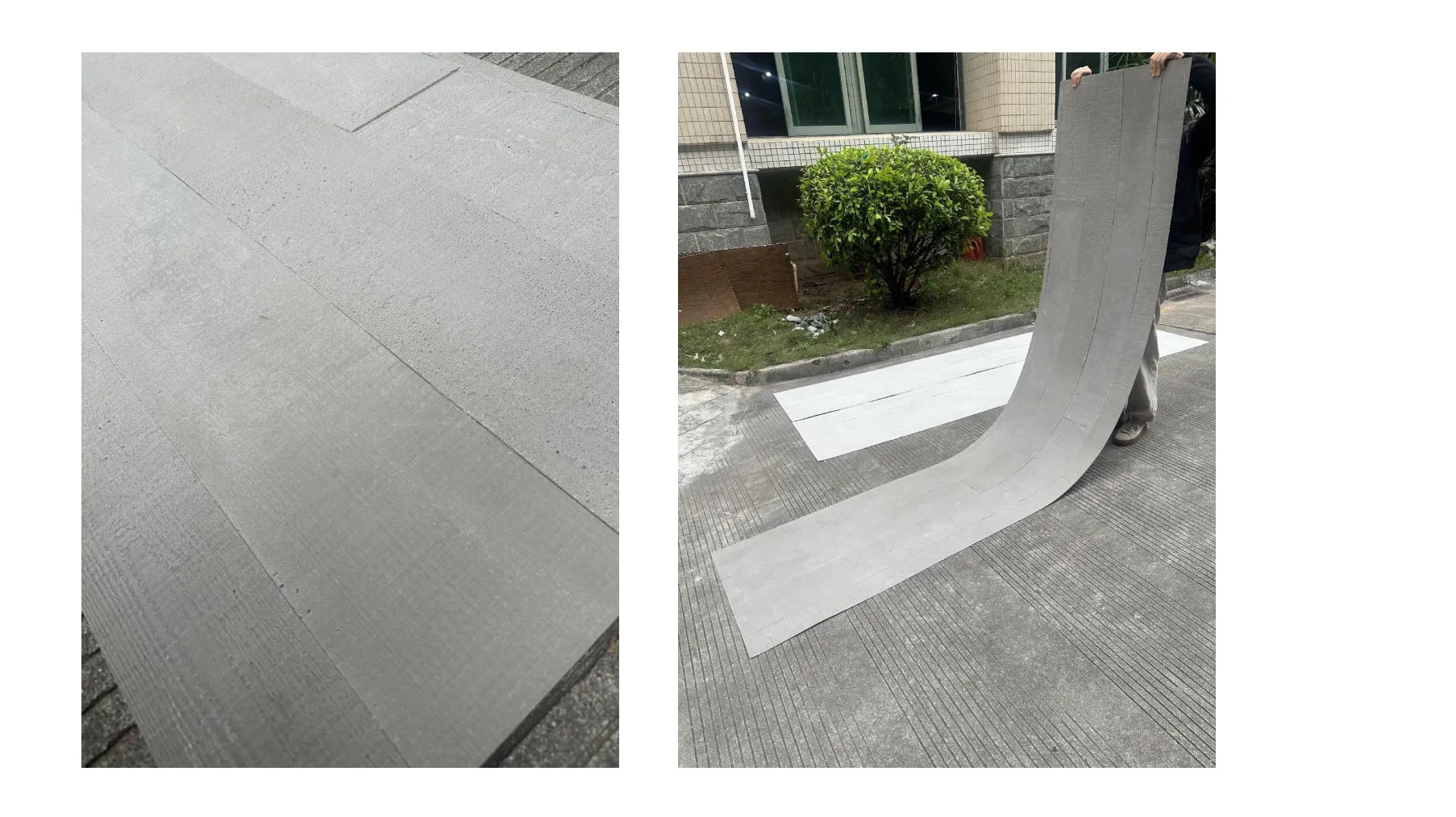
Where Material Meets Storytelling—Capturing the Soul of Architectural Design
Every architect knows the feeling: standing in front of a blank blueprint, imagining the space that will rise from it. But between the lines of the drawing and the final structure lies a critical choice—materials. They are the skin of a building, the texture that greets the eye, the touch that lingers in memory. In the sun-drenched landscapes of the Middle East, where tradition and modernity dance in every arch and minaret, this choice becomes even more profound. It's here that COLORIA's wood-cement board has emerged not just as a building material, but as a storyteller—and its real photos? They're the pages of that story.
In recent years, the Middle East has become a global hub for bold architectural innovation, from Dubai's futuristic skyline to Abu Dhabi's cultural landmarks. Yet, beneath the glass and steel, there's a growing hunger for materials that ground these structures in warmth and authenticity. Enter wood-cement board: a fusion of wood's organic charm and cement's rugged durability. And when paired with COLORIA's commitment to capturing its essence through real photos, it's no wonder the brand has walked away with awards, turning ordinary buildings into extraordinary narratives.
Walk through the streets of Riyadh or Doha today, and you'll notice a shift. While marble and granite once dominated, there's a new texture in town—one that feels less like a cold slab and more like a handshake. Wood-cement board, with its subtle grain patterns and earthy tones, has become the material of choice for architects seeking to balance modernity with warmth. "It's the best of both worlds," says Lina Hassan, a Dubai-based architect whose firm recently used COLORIA's wood-cement board in a boutique hotel project. "Clients want buildings that feel 'lived-in,' not just 'built.' Wood-cement gives that—without sacrificing the strength needed for our climate."
Middle Eastern architecture has always celebrated texture. From the intricate mosaics of ancient mosques to the rough-hewn stone of desert forts, materials have told stories of culture and place. Wood-cement board taps into this legacy, but with a contemporary twist. Its versatility—moldable into panels, slats, or custom shapes—makes it ideal for everything from facades to interior accent walls. And in a region where temperatures soar, its resistance to heat, moisture, and termites is more than a bonus; it's a necessity.
COLORIA didn't just jump on this trend—they helped shape it. By focusing on real photos that highlight the material's natural beauty, they've given architects and designers a window into what's possible. "A catalog with stock images can only tell you so much," explains Omar Khalid, COLORIA's Middle East design consultant. "But a real photo? It shows the way the light hits the grain at 3 p.m. in Jeddah. It captures the slight variations in tone that make each panel unique. That's when a material stops being a 'product' and starts being a partner in design."
Awards aren't just trophies—they're validation that a material isn't just functional, but transformative. COLORIA's wood-cement board has earned its place in the spotlight through projects that blend innovation with cultural sensitivity. Let's dive into three standout examples, each a testament to the material's power—and the magic of real photos in bringing them to life.
Tucked between modern high-rises in Doha's West Bay, the Al-Majlis Community Center was designed to be a "home away from home" for local families. Architect Amina Al-Hajri wanted a facade that felt welcoming, not imposing—a challenge given the building's size. Enter COLORIA's wood-cement board in "Desert Sand" finish. "I saw the real photos first," Al-Hajri recalls. "There was one shot of the board in direct sunlight, and the way the grain seemed to glow… it looked like the desert at sunset. I knew immediately it would connect the building to our landscape."
The result? A facade that shifts with the light: warm gold at dawn, soft amber at noon, deep copper at dusk. Inside, wood-cement slats line the main hall, diffusing harsh sunlight into a gentle glow. "Parents tell me their kids run their hands along the walls—they love the texture," Al-Hajri says. "That's the power of real materials. They invite interaction." The project took home the 2023 AIA Middle East Design Excellence Award for "Best Use of Sustainable Materials," a nod to wood-cement's low carbon footprint and recyclability.
When developer Sheikh Mohammed bin Rashid Al Maktoum envisioned a residential complex that merged Emirati heritage with eco-friendly design, he turned to COLORIA's wood-cement board—specifically the "Bamboo Mat Board" variant. The goal? To evoke the woven palm fronds of traditional Emirati majlis, but with the durability of modern materials. "The real photos were crucial here," says project manager Kareem Abbas. "We needed to show the client that the texture would be authentic—no plastic-y imitations."
The Bamboo Mat Board, with its intricate, woven-like pattern, was used for balcony railings and privacy screens. In real photos taken during construction, you can see how the boards cast dappled shadows onto the courtyard below—echoing the way sunlight filters through palm leaves. "Residents say it feels like living in a garden, even in the middle of the city," Abbas notes. The project won the 2024 International Property Award for "Best Residential High-Rise Development," with judges praising its "masterful use of texture to create a sense of community."
Museums are tasked with preserving history—but their own walls should tell a story too. The Historical Pathfinders Stone Museum, dedicated to Saudi Arabia's ancient trade routes, needed a material that felt both timeless and tactile. COLORIA's wood-cement board in "Ancient Wood" finish, paired with MCM Flexible Stone accents, proved to be the perfect match. "We wanted visitors to feel like they were walking through a desert canyon, not a sterile gallery," explains curator Dr. Fatima Al-Saud. "The wood-cement board's rough-hewn texture, combined with MCM Flexible Stone's smooth, stone-like panels, creates that contrast."
Real photos of the museum's interior showcase this dynamic: wood-cement walls in warm browns frame exhibits of ancient pottery, while MCM Flexible Stone in "Starry Blue" (a nod to the night sky that guided traders) lines the ceiling. "The photos don't just document the space—they inspire," Dr. Al-Saud says. "A teacher from Jeddah told me her students now ask to visit because they saw the photos online and wanted to 'touch the walls.' That's when you know you've succeeded." The museum earned the 2024 UNESCO Cultural Heritage Design Award for "Innovative Use of Materials in Cultural Preservation."
In an age of filters and digital enhancement, COLORIA's commitment to "real photos" is a deliberate choice. These aren't just marketing tools—they're a promise. "A real photo shows the material as it is: the slight imperfections, the way it ages, the texture you'll actually feel when you run your hand over it," says Maya Faraj, COLORIA's in-house photographer. "We don't edit out the 'flaws' because those are what make the material human."
Faraj and her team spend hours on location, shooting materials in different lights and angles. For wood-cement board, they focus on three key elements: texture (close-ups that show the grain and depth), scale (wide shots to understand how panels look on a building), and context (how the material interacts with its surroundings). "In the Al-Majlis project, we shot the facade at sunrise, noon, and sunset to show how it changes," she explains. "An architect needs to know how the material will behave in their specific climate. A real photo tells that story better than any spec sheet."
The impact of these photos is tangible. "I once had a client in Kuwait who flew to our Dubai showroom after seeing a real photo of our wood-cement board," says sales director Ali Khan. "He said, 'The photo looked so real, I had to touch it myself.' When he did, he smiled and said, 'It's exactly like the photo.' That trust is everything."
To understand wood-cement board's appeal, it helps to see how it stacks up against other popular materials in Middle East architecture. Below is a comparison of COLORIA's Wood-Cement Board with Fair-Faced Concrete and MCM Flexible Stone—three materials that often compete for a spot in the architect's toolkit.
| Material | Texture & Aesthetic | Durability in Middle East Climate | Sustainability | Best For |
|---|---|---|---|---|
| COLORIA Wood-Cement Board | Warm, organic wood grain with subtle variations; soft to the touch with a matte finish. | Heat-resistant (up to 60°C), moisture-proof, termite-proof; minimal fading over time. | Made from recycled wood fibers and low-carbon cement; 100% recyclable at end-of-life. | Residential facades, community centers, interior accent walls. |
| Fair-Faced Concrete | Industrial, raw texture with visible aggregate; cool, smooth surface. | Highly durable but prone to cracking in extreme temperature shifts; stains easily. | High carbon footprint due to cement production; limited recyclability. | Museums, commercial buildings, minimalist designs. |
| MCM Flexible Stone | Sleek, stone-like appearance with customizable patterns (e.g., starry blue, mosaic); smooth, polished finish. | Lightweight, impact-resistant, but less heat-resistant than wood-cement; may fade in direct sunlight. | Flexible composite material; some variants contain recycled content. | Accent walls, ceilings, decorative elements. |
As the table shows, wood-cement board strikes a unique balance: it offers the warmth of wood, the strength of cement, and the sustainability that modern clients demand. "It's not about replacing other materials—it's about complementing them," says Omar Khalid. "A project might use fair-faced concrete for the structure, MCM Flexible Stone for accents, and wood-cement board for the facade. Together, they create a symphony of texture."
As Middle East cities continue to grow, the demand for materials that blend beauty, durability, and sustainability will only rise. Wood-cement board, with its chameleon-like ability to adapt to any design vision, is poised to lead this charge. COLORIA is already exploring new finishes—like "Travertine (Starry Red)" and "Gradient Color Rammed Earth Board"—to push the boundaries of what's possible.
"The next frontier is customization," says Rami Ghanem, COLORIA's product development lead. "Imagine a wood-cement board that mimics the pattern of a date palm leaf, or one that changes color subtly with humidity—we're testing those now." And of course, the real photos will be there to document it all. "We'll shoot them in the desert, in the city, at different times of year. Because a material isn't just specs—it's an experience."
For architects and designers, this means more tools to tell stories. For homeowners and visitors, it means spaces that feel less like buildings and more like companions—warm, resilient, and full of character. As Lina Hassan puts it: "Wood-cement board isn't just changing how we build. It's changing how we feel about the places we build."
In the end, architecture is about connection. It connects people to place, past to present, and vision to reality. COLORIA's wood-cement board, brought to life through real photos, is a bridge in that connection. It's a material that doesn't just fill space—it enriches it. Whether it's the golden glow of the Al-Majlis Community Center at sunset or the woven texture of The Bamboo Mat Board Residences, it's clear: wood-cement board isn't just award-winning—it's heart-winning.
So the next time you walk past a building that makes you pause, that makes you want to reach out and touch the wall, take a closer look. It might just be wood-cement board—and behind it, a story waiting to be told. And if you see a real photo of it later? Remember: that's not just a picture. That's the material, speaking for itself.
Recommend Products












