
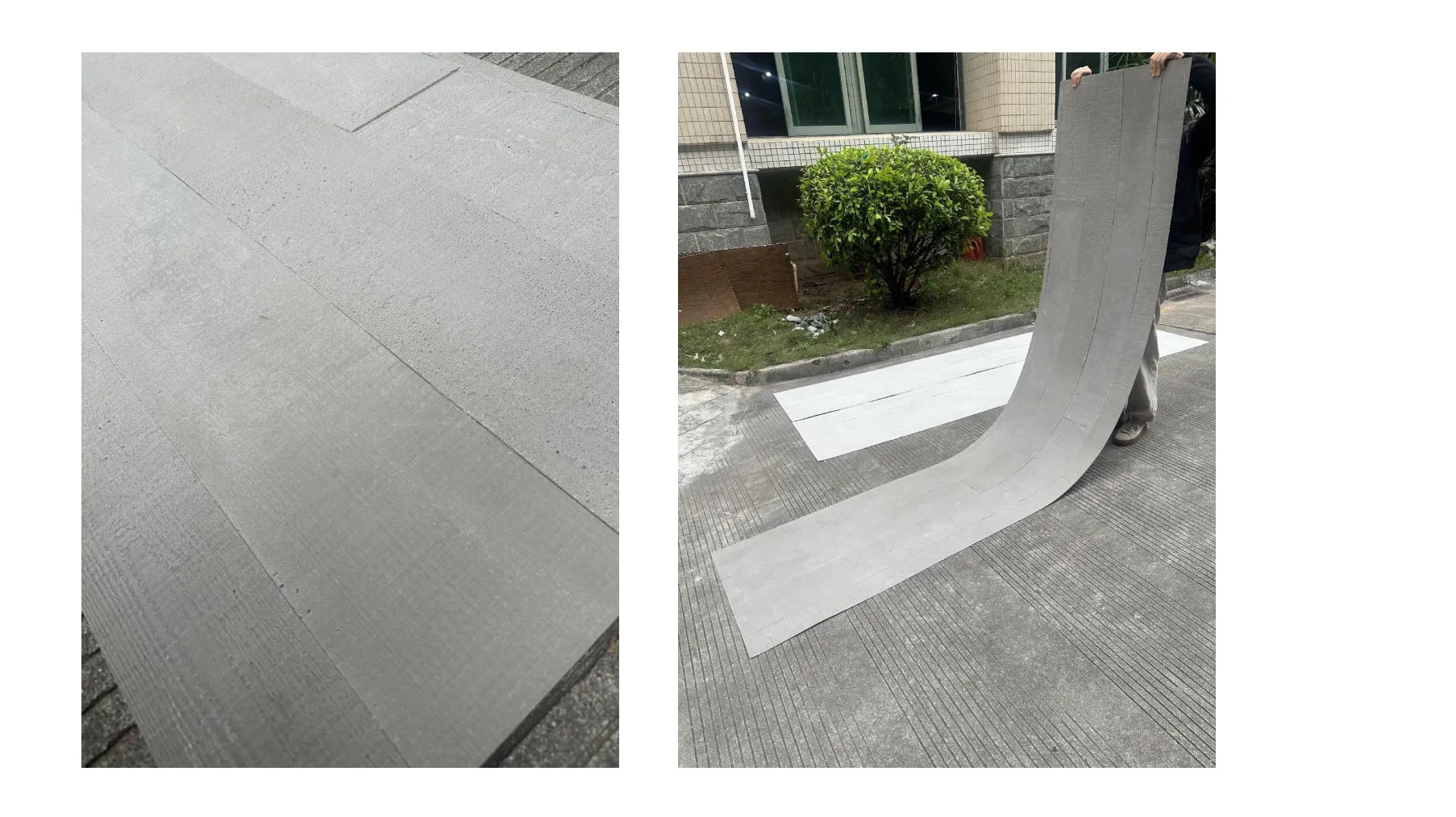
Exploring how COLORIA's innovative building materials stand tall against nature's harshest elements—one project at a time.
In the world of architecture, beauty and durability have long been seen as competing forces. A material might dazzle with texture and color, but crumble under rain, salt, or extreme temperatures. Or it might stand strong against the elements but feel cold and lifeless, lacking the warmth that makes a building feel like home. That's where COLORIA comes in. For over two decades, the brand has redefined what's possible with building materials, blending cutting-edge technology with an artist's eye for design. Today, we're diving into one of their most celebrated innovations: wood cement board . But this isn't just a story about a material—it's a journey across continents, exploring how COLORIA's projects, captured in stunning wood cement board real photos, prove that durability and beauty can coexist, even in the world's toughest climates.
From the salt-sprayed coasts of the Mediterranean to the freezing peaks of the Alps, from the scorching deserts of the Middle East to the rainy streets of Southeast Asia, COLORIA's wood cement board has become a go-to choice for architects and builders who refuse to compromise. But don't just take our word for it—let's explore the real-world projects, the challenges they faced, and how wood cement board (paired with other COLORIA innovations like fair-faced concrete and flexible stone cladding panels ) turned vision into reality.
At first glance, wood cement board might sound like a simple hybrid—wood fibers mixed with cement, right? But COLORIA's version is a masterclass in material engineering. Imagine taking the warmth and texture of wood, the strength and fire resistance of cement, and adding a dash of modern science to make it resistant to moisture, rot, pests, and even extreme temperatures. That's the magic of COLORIA's wood cement board.
The secret lies in the manufacturing process: sustainably sourced wood fibers are treated with a proprietary blend of resins and minerals, then mixed with high-grade cement and compressed under extreme pressure. The result? A board that's 30% lighter than traditional cement boards but twice as strong. It won't warp in humidity, crack in freezing temperatures, or become a feast for termites in tropical climates. And unlike solid wood, it doesn't require constant sealing or painting—making it a low-maintenance dream for busy property owners.
But durability isn't the only trick up its sleeve. COLORIA's wood cement board comes in a range of finishes, from rich wood grain board textures that mimic oak, teak, and pine to sleek, modern surfaces that pair perfectly with glass and steel. Architects rave about its versatility: use it for exterior cladding, interior accent walls, decking, or even furniture. And when you browse through COLORIA's wood cement board real photos, you'll notice something striking—these aren't just "durable" buildings. They're beautiful. Warm. Alive with character.
Let's step into the shoes of architects and builders around the world who chose COLORIA's wood cement board to tackle nature's toughest tests. These aren't just case studies—they're stories of innovation, problem-solving, and the joy of seeing a building stand strong, year after year.
Bali's beaches are paradise, but for builders, they're a nightmare. The combination of relentless humidity, salt-laden (sea breeze), and occasional monsoon rains can turn even the sturdiest materials into a rotting, peeling mess. When architect Maria Santos was tasked with designing the Coastal Haven Hotel—a boutique resort overlooking Seminyak Beach—she knew traditional wood cladding would be a disaster. "I wanted the warmth of wood to complement the natural surroundings, but I also needed something that could withstand the salt and rain," she recalls. "That's when I discovered COLORIA's wood cement board."
Santos opted for wood cement board with a wood grain board finish, paired with flexible stone cladding panels in "Bali Stone" for accent walls. Five years later, the hotel's exterior looks as fresh as the day it opened. "The wood cement board hasn't warped or faded, even in the monsoons," Santos says. "Guests often ask if it's real wood—until I tell them it's cement-based. They're shocked!" The wood cement board real photos from Coastal Haven tell the story: warm, honey-toned panels that blend seamlessly with the lush greenery, no signs of wear despite years of tropical weather.
In the Swiss Alps, temperatures can drop to -20°C in winter, with heavy snowfall and freeze-thaw cycles that crack weaker materials. For the Alpine Lodge Retreat, a luxury ski-in/ski-out hotel in Zermatt, architect Thomas Berger needed a cladding material that could handle the cold while adding rustic charm. "We wanted the lodge to feel like a traditional mountain home, but with modern durability," Berger explains. "Solid wood would shrink and expand too much in the freeze-thaw cycles, and vinyl siding felt cheap. COLORIA's wood cement board was the perfect middle ground."
Berger chose wood cement board in a dark oak finish, combined with fair-faced concrete for the structural elements. "The fair-faced concrete provides thermal mass, keeping the lodge warm in winter, while the wood cement board adds texture and insulation," he says. "Even after six harsh winters, there's not a single crack in the cladding. The wood grain finish still looks rich and deep, and the concrete has developed a beautiful patina." The wood cement board real photos from Alpine Lodge show the lodge dusted in snow, the dark wood-like panels contrasting stunningly with the white landscape—a timeless look that's built to last.
Dubai's desert climate is brutal: summer temperatures soar to 50°C, and sandstorms blast gritty particles that can erode even the toughest surfaces. When designing the Desert Mirage Mall, a sprawling shopping complex in the city's outskirts, architect Fatima Al-Mansoori needed a material that could handle the heat and sand while maintaining a sleek, modern aesthetic. "We wanted the mall to feel like an oasis—cool, inviting, and visually striking," she says. "But in Dubai, if your cladding can't handle the heat, it will fade or warp within a year."
Al-Mansoori selected COLORIA's wood cement board in a light beige finish for the exterior, paired with mcm big slab board in "Lunar Peak Silvery" for the facade's geometric accents. "The wood cement board reflects sunlight, helping to keep the building cool, and its dense structure resists sand abrasion," she explains. "During sandstorms, we worried about scratches, but the surface has held up beautifully." Today, Desert Mirage Mall is a landmark, with wood cement board panels that still gleam in the desert sun. The wood cement board real photos showcase its durability: no fading, no scratches, just a smooth, consistent finish that stands out against the arid landscape.
Seattle is famous for its rain—over 150 days a year, on average. For the Urban Loft Apartments, a mid-rise building in the Capitol Hill neighborhood, developer James Wilson needed cladding that could handle constant moisture without mold or rot. "Traditional wood siding would require constant maintenance—painting, sealing, replacing rotted boards," Wilson says. "That's not feasible for a rental property. We needed something low-maintenance but still attractive."
Wilson turned to COLORIA's wood cement board in a dark gray wood grain board finish, complemented by fair-faced concrete balconies. "The wood cement board doesn't absorb moisture, so mold isn't a problem," he notes. "And the color hasn't faded, even with all the rain. Tenants love the modern, industrial look, and we love that we don't have to repaint the exterior every few years." The wood cement board real photos from Urban Loft show the building's sleek, gray facade, looking crisp and clean despite Seattle's perpetual drizzle.
Curious how wood cement board compares to other common building materials? We've compiled data from COLORIA's lab tests and real-world projects to show just how tough these materials are.
| Material | Moisture Resistance | Temperature Resistance | Abrasion Resistance (Sand/Salt) | Lifespan (Years) |
|---|---|---|---|---|
| COLORIA Wood Cement Board | Excellent (resists rot, mold) | -40°C to 80°C | High (resists sand/salt erosion) | 50+ |
| Traditional Solid Wood | Poor (prone to rot, mold) | -20°C to 40°C (warps in extremes) | Low (easily scratched/eroded) | 10-15 (with heavy maintenance) |
| Vinyl Siding | Good (resists moisture) | -10°C to 50°C (melts in high heat) | Medium (fades, cracks in sun) | 20-25 |
| COLORIA Fair-Faced Concrete | Excellent (low porosity) | -50°C to 100°C | Excellent (high density) | 100+ |
| COLORIA Flexible Stone Cladding Panels | Excellent (waterproof coating) | -30°C to 70°C | High (flexible, resists cracking) | 40+ |
*Data based on COLORIA's internal testing and third-party certifications (ASTM, ISO). Lifespan estimates assume proper installation and minimal maintenance.
"I've used COLORIA's wood cement board on three projects now—coastal, mountain, and urban. Each time, it's exceeded my expectations. The material is easy to work with, and the finished look is stunning. Clients love the wood-like texture, and I love that I don't have to worry about callbacks for rot or warping."
— Sarah Chen, Principal Architect, Chen Design Studio (Singapore)
"In Dubai, we test materials to their limits. COLORIA's wood cement board and mcm big slab board have withstood 50°C heat and sandstorms without a scratch. The color retention is incredible—five years later, the facade still looks brand new. I wouldn't use anything else for exterior cladding here."
— Ahmed Hassan, Construction Manager, Desert Builders (Dubai)
COLORIA isn't resting on its laurels. The brand's R&D team is constantly innovating, with new materials like mcm 3d printing series panels that allow for custom, complex designs without sacrificing durability. "We're exploring how 3D printing can create even more intricate textures and shapes, all while maintaining the weather resistance our customers expect," says Dr. Elena Kim, head of materials science at COLORIA. "Imagine a facade that looks like woven stone or organic wood grain, but is printed in a factory and installed in days—all with the same durability as our wood cement board."
Sustainability is also a key focus. COLORIA's wood cement board is already made with 80% recycled materials, and the brand is working to reduce its carbon footprint further. "Durability is sustainable," Dr. Kim adds. "A building that doesn't need constant repairs or material replacements uses fewer resources in the long run. That's good for the planet and good for our customers."
At the end of the day, COLORIA's wood cement board isn't just about durable buildings. It's about creating spaces that endure—spaces that become part of communities, that tell stories, that stand as testaments to human ingenuity. When a hotel in Bali, a lodge in the Alps, or an apartment building in Seattle remains beautiful and functional for decades, it becomes more than a structure. It becomes a home, a gathering place, a source of pride.
The wood cement board real photos from COLORIA's global projects are more than marketing materials. They're proof that beauty and durability don't have to be opposites. They're proof that with the right materials, we can build structures that respect nature's power while celebrating human creativity.
So whether you're an architect dreaming of a coastal retreat, a builder tackling a desert project, or a homeowner looking for siding that will last, remember: COLORIA's wood cement board isn't just a material. It's a promise—one that's been tested by rain, snow, sand, and sun, and proven true, all over the world.
Recommend Products












