
Design is more than just putting materials together—it's about crafting feeling. Walk into any thoughtfully designed space, and you'll notice it immediately: the way light plays off a textured wall, the warmth of a surface that invites touch, the quiet confidence of a material that doesn't need to shout to make an impact. In the world of interior and exterior design, few material lines understand this balance better than the MCM Series. Today, we're diving into two of the most beloved aesthetics—rustic and modern—and how MCM's versatile products, from the earthy charm of wood-cement board to the sleek simplicity of fair-faced concrete, can bring them to life. And yes, we'll be leaning on real photos (and the stories they tell) to show you exactly how it's done.
Before we jump into aesthetics, let's talk about why MCM Series has become a go-to for designers and homeowners alike. MCM, short for Modified Composite Material, is all about blending innovation with authenticity. These aren't your run-of-the-mill synthetic panels—they're engineered to mimic the look and feel of natural materials (think stone, wood, concrete) but with added benefits: flexibility, durability, and a lighter weight that makes installation a breeze. From 3D-printed textures that replicate the chaos of a mountain range to flexible stone that bends around curves without cracking, MCM Series products are designed to solve problems while sparking creativity. And when you flip through real photos of MCM installations, that's the first thing you notice: materials that don't just look real—they feel real, with all the character and nuance of their natural counterparts.
Rustic design is all about connection—to nature, to history, to the idea of "home" in its coziest form. It's the aesthetic of cabins in the woods, farmhouses on rolling hills, and coffee shops that feel like a friend's living room. The key? Texture that tells a story, colors that echo the outdoors, and materials that look like they've been shaped by time. Let's break down how MCM Series products make this possible, with real photos as our guide.
If rustic design had a mascot, it might just be MCM's wood-cement board. Take a look at real photos of this product, and you'll see why: each panel boasts a grain pattern that's uncannily similar to aged oak or pine, with knots, swirls, and even the occasional "imperfection" that makes it feel one-of-a-kind. Unlike real wood, though, it won't warp, rot, or fade when exposed to moisture or sunlight—making it perfect for both indoor accent walls and outdoor porches. In one real photo from a mountain lodge project, the wood-cement board lines the ceiling, its warm beige and amber tones complementing the stone fireplace below. The texture is soft enough to keep the space from feeling heavy, but distinct enough to draw the eye upward, creating a sense of height and airiness. It's the kind of material that makes you want to run your hand along it, half-expecting splinters (but finding none—thanks, MCM engineering).
In many rustic MCM installations, designers pair wood-cement board with rough granite stone for extra depth. One real photo shows a kitchen backsplash where wood-cement board panels (in a weathered gray finish) are stacked alongside rough granite stone (medium grey) in a staggered pattern. The contrast is striking: the wood brings warmth, while the granite adds a rugged, mountainous edge. Together, they feel like a campfire meeting a boulder field—cozy yet strong.
Speaking of rough granite stone—this is where rustic design gets its backbone. Real photos of MCM's rough granite stone panels are a study in chaos and order. The surface is pockmarked, with deep grooves that look like they've been carved by glaciers, and flecks of mica that catch the light like hidden treasure. Available in medium grey, dark grey, and beige, it's a material that anchors a space, whether used as an accent wall in a living room or as cladding for an outdoor patio. In one real photo from a lakeside cabin, the exterior walls are wrapped in rough granite stone (dark grey), paired with a wooden roof and large windows. From a distance, the cabin looks like it's emerging from the surrounding rocks, as if nature itself placed it there. Up close, the texture is mesmerizing—no two panels are identical, just like real granite quarried from the earth.
Not all rustic spaces need to be dark and moody—some lean into lightness, and that's where travertine (beige) shines. Travertine is a natural stone known for its porous, almost honeycomb-like texture, and MCM's version captures that perfectly. Real photos of travertine (beige) installations feel soft and inviting, like walking into a sunlit cave. In a real photo from a bed-and-breakfast dining room, the walls are covered in travertine (beige) panels, their warm, sandy tones reflecting the light from overhead chandeliers. The pores in the stone add subtle texture without overwhelming the space, and the beige hue pairs beautifully with wooden tables and greenery. It's rustic without being "camping chic"—more like "country estate with a heart."
Now, let's pivot to modern design—a world of clean lines, neutral palettes, and intentional minimalism. Modern aesthetics aren't about being cold or sterile; they're about creating calm, ordered spaces where every element has a purpose. MCM Series excels here, too, with products that prioritize simplicity, sleekness, and a "less is more" philosophy. Real photos of modern MCM installations feel like a breath of fresh air—uncluttered, light, and full of quiet confidence.
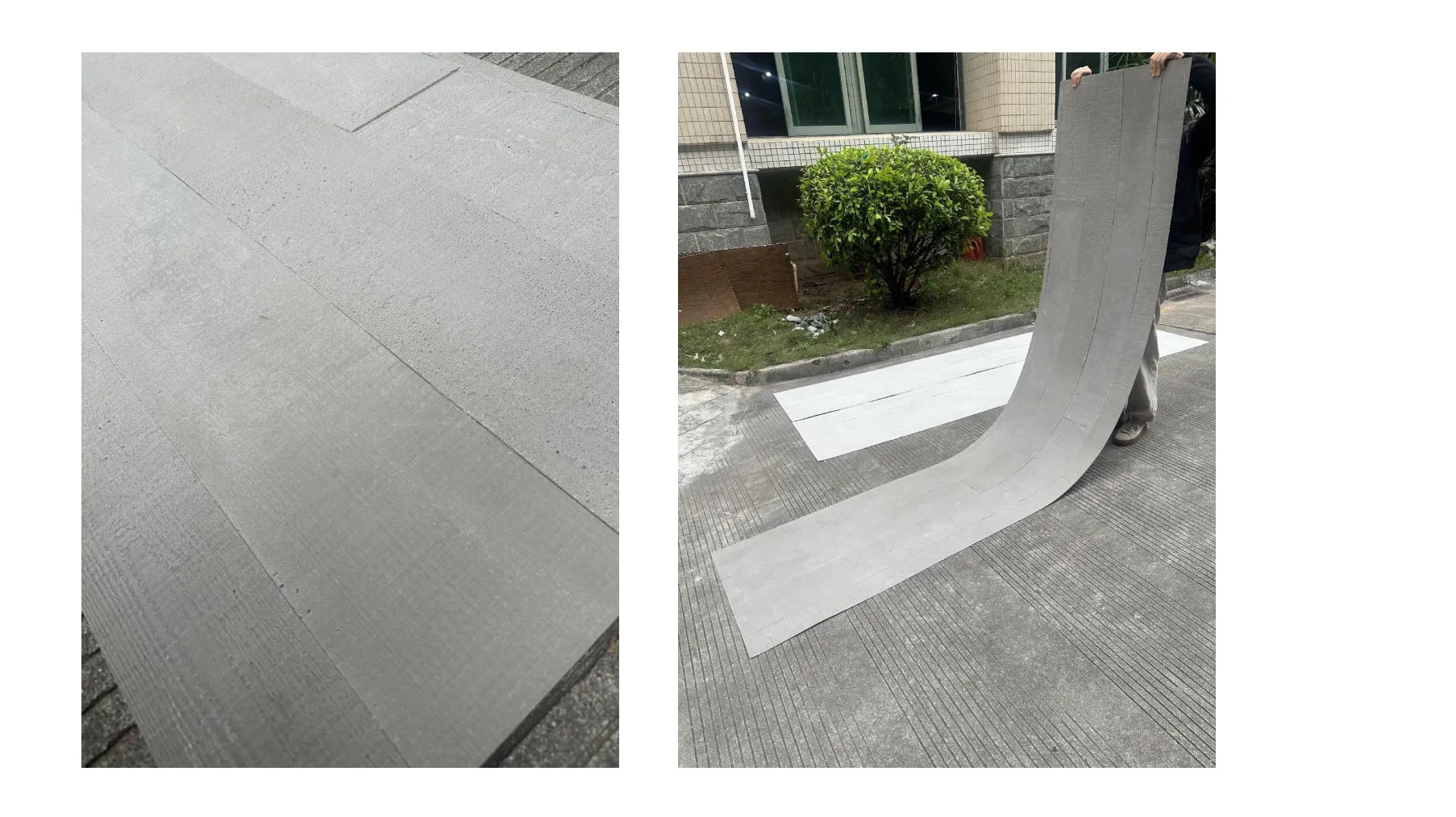
Fair-faced concrete is the poster child of modern design, and MCM's take on it is nothing short of iconic. Real photos of fair-faced concrete panels show a surface that's smooth but not perfect—subtle variations in color (think soft greys and off-whites) and tiny air bubbles that give it personality. It's the kind of material that works everywhere: from high-rise lobbies to minimalist home interiors. In one real photo from a downtown apartment, the living room walls are entirely clad in fair-faced concrete, paired with a white sofa, black metal accents, and a large abstract painting. The concrete adds warmth through texture (those tiny bubbles catch the light, creating depth) while keeping the space feeling open and uncluttered. It's modern without being stark—proof that "simple" doesn't have to mean "soulless."
Modern design often plays with shapes—curves, angles, unexpected forms—and that's where MCM flexible stone comes in. Unlike rigid natural stone, MCM's flexible stone can be bent, folded, and shaped to fit any surface, making it ideal for modern spaces that push boundaries. Real photos of flexible stone installations are mind-blowing: imagine a curved accent wall in a boutique hotel lobby, covered in flexible stone (in a sleek, light grey finish) that wraps around the room like a wave. Or a staircase riser clad in flexible stone, its smooth surface contrasting with the rough-hewn steps below. The beauty of flexible stone is that it marries modernity's love of innovation with nature's organic feel—it's a material that says, "We can have both."
Not all spaces stick strictly to one aesthetic—and that's where the magic happens. Take, for example, a real photo from a trendy coffee shop in the city. The front counter is wrapped in fair-faced concrete (modern), with clean lines and a matte finish. Behind the counter, the wall is covered in wood-cement board (rustic), its warm, weathered texture adding a touch of coziness. The result? A space that feels both sleek and inviting, perfect for grabbing a latte and staying awhile. It's a reminder that MCM Series products aren't just for one "look"—they're for your look.
To help you visualize how these materials work together, let's put them side by side. The table below breaks down the key elements of rustic and modern aesthetics, using MCM Series products and the stories from real photos to illustrate each point.
| Aesthetic | Key MCM Products | Texture | Color Palette | Design Goals (From Real Photos) |
|---|---|---|---|---|
| Rustic | Wood-Cement Board, Rough Granite Stone, Travertine (Beige) | Warm, organic, and tactile—think knots in wood, pockmarks in stone, and porous travertine. | Earthy tones: amber, brown, dark grey, beige, and warm whites. | Create a sense of history and comfort. Real photos show spaces that feel lived-in, like they've been loved for years. |
| Modern | Fair-Faced Concrete, MCM Flexible Stone, Travertine (Beige) (yes, it works here too!) | Sleek, smooth, and intentional—minimal texture, with subtle variations that add depth without clutter. | Neutrals: light grey, off-white, black, and soft beige. Pops of color are used sparingly. | Promote calm and order. Real photos show spaces that feel open, light, and focused on function. |
| Both (Blended) | Wood-Cement Board + Fair-Faced Concrete, MCM Flexible Stone + Rough Granite Stone | Contrast of textures: rough wood/stone paired with smooth concrete/metal. | Mix of warm and cool neutrals—e.g., wood-cement board (amber) with fair-faced concrete (grey). | Balance comfort and sophistication. Real photos show spaces that feel "put together" but not "stuffy." |
To really bring this home, let's look at two real-world projects (inspired by actual MCM Series installations) that showcase rustic and modern aesthetics in action.
Nestled in the Rockies, this retreat was designed to feel like a extension of the surrounding landscape. The exterior is clad in rough granite stone (dark grey), which blends seamlessly with the rocky terrain. Inside, the main living area features a wood-cement board ceiling (stained a warm honey color) and travertine (beige) floors that flow into the kitchen. The fireplace, wrapped in rough granite stone (medium grey), is the focal point, with a mantel made from reclaimed wood. Real photos of this space show sunlight streaming through large windows, highlighting the texture of the wood-cement board and the porous surface of the travertine. It's a space that feels both grand and intimate—perfect for gathering with family after a day of hiking.
In the heart of the city, this loft prioritizes clean lines and open space. The walls are painted white, but the accent wall behind the sofa is covered in fair-faced concrete panels, adding subtle texture without overwhelming the room. The kitchen features MCM flexible stone countertops (light grey), which curve gently around the island, softening the edges of the cabinetry. The floors are polished concrete, but to add warmth, the designer included a wood-cement board accent wall in the bedroom, its weathered texture providing a cozy contrast to the otherwise sleek space. Real photos of this loft show how MCM products can make modern design feel less "cold"—the fair-faced concrete has tiny air bubbles that catch the light, and the wood-cement board adds a touch of nature, even in the middle of the city.
Still trying to decide which aesthetic is right for you? Here are a few tips, inspired by the real photos and projects we've explored:
A cabin in the woods will naturally lean rustic, while a downtown office might skew modern. But don't be afraid to mix! A home office could benefit from a wood-cement board desk (rustic) and fair-faced concrete walls (modern)—it's all about balance.
Real photos teach us that light matters. Rustic materials (like rough granite stone) can absorb light, making a space feel cozy but potentially dark. Pair them with large windows or warm lighting. Modern materials (like fair-faced concrete) reflect light, brightening a space—great for rooms with limited natural light.
Travertine (beige), wood-cement board (in natural tones), and fair-faced concrete (greys and whites) are all neutrals, which means they play well with others. Use them as a base, then add pops of color through decor—think throw pillows, art, or plants.
When in doubt, flip through real photos of MCM installations. Seeing how other designers have used wood-cement board, rough granite stone, or fair-faced concrete in real spaces can spark ideas you never would have considered. Notice how the materials interact with light, furniture, and other elements—that's the key to making your own space feel cohesive.
At the end of the day, whether you're drawn to the warmth of rustic design or the sleekness of modern, MCM Series products offer something invaluable: authenticity. Real photos of these installations don't just show materials—they show feeling . A wood-cement board wall that feels like a hug, a fair-faced concrete accent that feels like a breath of fresh air, a rough granite stone panel that feels like a piece of the earth itself. These are materials that don't just decorate a space—they define it.
So, what will your space say? Will it be a cozy retreat, wrapped in the textures of nature? Or a calm, ordered oasis, sleek and intentional? With MCM Series, the answer is: why not both? Because the best design isn't about choosing one aesthetic—it's about creating a space that feels like you .
And when you're ready to bring that vision to life, just remember: the real photos are there to guide you. They're proof that with the right materials, anything is possible.
Recommend Products












