
Standing tall amid Riyadh's bustling skyline, the newly completed Al-Majd Commercial Tower isn't just a feat of engineering—it's a love letter to thoughtful materiality. As you crane your neck to take in its 42-story facade, your eyes are drawn to a dance of textures: warm, earthy grains that echo traditional Saudi craftsmanship, sleek surfaces that whisper modernity, and subtle metallic accents that catch the harsh desert sun like scattered coins. Today, we're peeling back the curtain on the star of this show: wood-cement board. But we won't stop there—we'll also explore the complementary materials that make this tower's exterior a masterclass in balanced design. Let's dive in.
If you've ever walked through a traditional Saudi souk, you know the comfort of wood—its warmth, its ability to soften harsh edges. But wood, as beautiful as it is, doesn't play well with Riyadh's climate: 50°C summer days, sandstorms that grind like sandpaper, and humidity that creeps in during winter. Enter wood-cement board: the material that lets architects have their cake and eat it too.
Here's the thing about wood-cement board: it looks exactly like reclaimed wood, but it's built to outlast the desert. Run your hand over the panels (go on, imagine it), and you'll feel the faint ridges of wood grain, the slight variations in tone that make each board unique—no two are identical. The design team opted for a claybank finish, which shifts from honey-gold at noon to soft amber at dusk, mirroring the desert's own color palette. "We wanted something that felt rooted in Saudi heritage but wouldn't warp or fade after a single summer," says lead architect Lama Al-Saud. "Wood-cement board checked every box."
But it's not just about looks. These panels are tough. Each 1.2m x 2.4m sheet is reinforced with fiberglass, making them resistant to fire, termites, and the kind of thermal expansion that would crack lesser materials. During installation, the crew noted how lightweight they were compared to solid wood—cutting down on crane time and labor costs. And maintenance? Minimal. A quick hose-down after a sandstorm, and they're good as new. "In a city where upkeep can eat into a building's budget, that's a game-changer," adds project engineer Khalid Omar.
If wood-cement board is the tower's warm embrace, fair-faced concrete is its quiet backbone. Look closely at the lower three floors, and you'll notice the smooth, unadorned surfaces that form the building's podium. This isn't your average gray concrete—it's a custom mix with a hint of limestone (beige) aggregate, giving it a soft, almost sandy texture that bridges the gap between the wood-cement panels above and the desert below.
"Fair-faced concrete was non-negotiable for us," explains Al-Saud. "It's honest. It doesn't hide behind finishes. And when paired with the wood-cement board, it creates this beautiful tension—organic vs. industrial, warm vs. cool." The team spent weeks testing mixes to get the color just right: not too stark, not too dull. The result? A surface that absorbs the morning light, casting soft shadows that play across the entrance plaza, and glows subtly at night when lit from below.
Durability? Again, it's a standout. Fair-faced concrete can withstand Riyadh's temperature swings without cracking, and its porosity is low enough to resist water damage during rare rainstorms. Plus, it's a sustainability win: the concrete used here contains 20% recycled aggregate, aligning with the tower's LEED Gold certification goals.
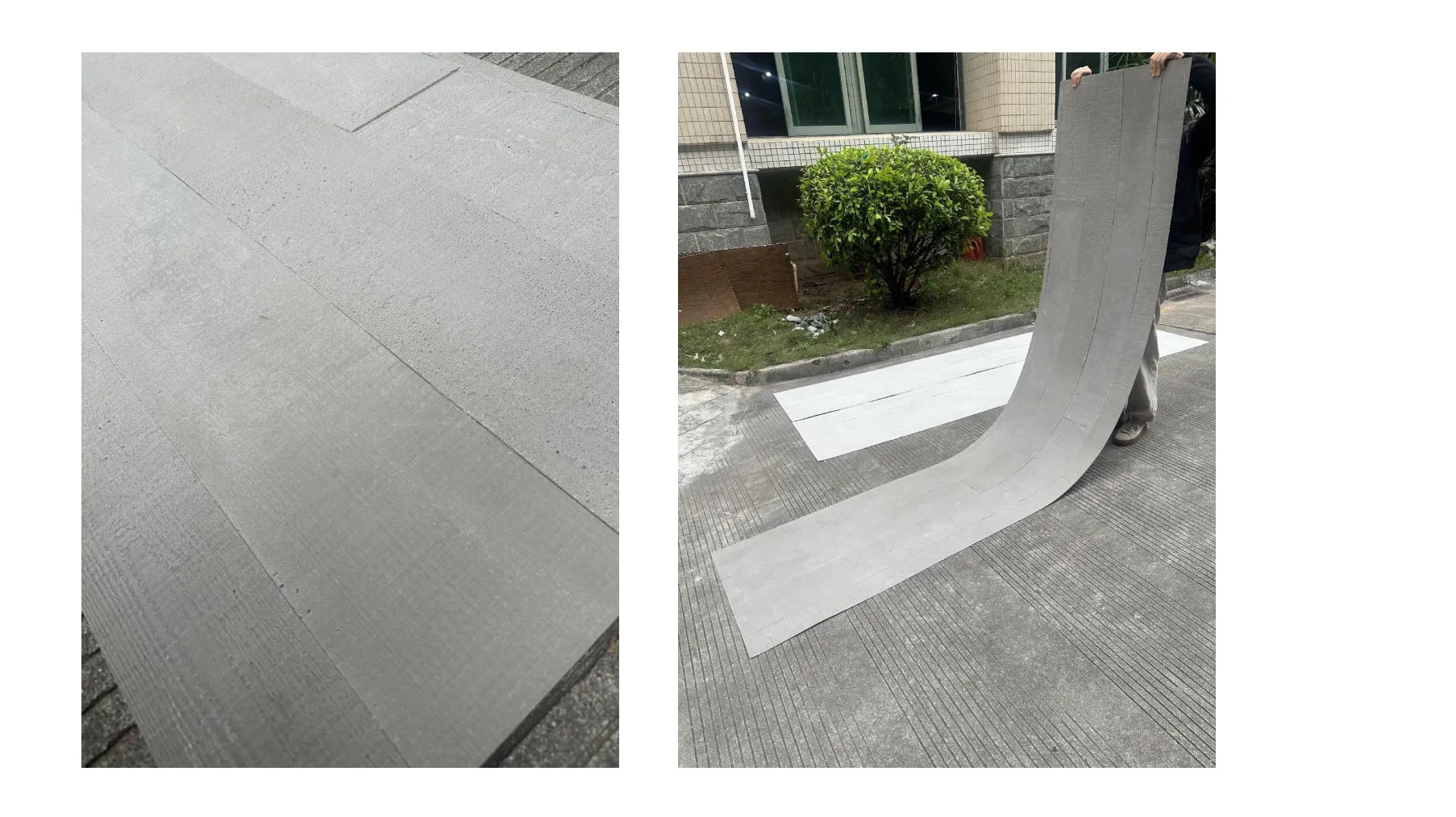
Now, let's talk about the "wow" factor. As the tower rises from its concrete podium, the wood-cement panels take center stage—but every 10 floors, you'll spot vertical strips that shimmer like liquid gold. That's MCM flexible stone in Lunar Peak Golden, and it's the secret sauce that elevates the facade from "nice" to "unforgettable."
MCM (Modified Composite Material) flexible stone is a marvel of modern manufacturing. It's thin—just 4mm thick—yet stronger than natural stone, and flexible enough to wrap around the tower's curved corners without cracking. The Lunar Peak Golden finish mimics the look of polished brass that's been aged to perfection, with warm undertones that complement the wood-cement board's honey hues. "We wanted a material that would catch the light differently throughout the day," says Omar. "At sunrise, it's almost pink; at midday, it's a bright gold; at sunset, it fades to a soft amber. It's like the tower is wearing a different outfit every hour."
Practicality-wise, MCM flexible stone is a dream. It's lightweight, so it doesn't add extra load to the structure, and it's UV-resistant—critical in a city where the sun beats down 300 days a year. Plus, it's easy to install: the panels are cut to size off-site and glued directly to the concrete substrate, reducing on-site waste and installation time.
To truly appreciate the Al-Majd Tower's exterior, you need to see how these materials work in concert. Let's break it down with a closer look at their roles, features, and how they interact:
| Material | Key Features | Application on Tower | Aesthetic Role |
|---|---|---|---|
| Wood-Cement Board | Claybank finish, wood grain texture, fire-resistant, low maintenance | Floors 4–42 (primary facade material) | Adds warmth and organic texture; ties to Saudi heritage |
| Fair-Faced Concrete | Limestone (beige) aggregate, smooth finish, high durability | Floors 1–3 (podium and entrance) | Provides a solid, grounded base; balances organic elements |
| MCM Flexible Stone (Lunar Peak Golden) | 4mm thickness, metallic golden finish, UV-resistant, flexible | Vertical strips at floors 10, 20, 30, and 40 | Adds visual rhythm and sparkle; highlights tower's height |
Walk around the tower, and you'll notice how these materials guide your eye. Start at the base: the fair-faced concrete feels solid, inviting you to step closer. As you look up, the wood-cement board wraps the tower in a cozy blanket, making the massive structure feel approachable. Then, the Lunar Peak Golden strips catch your gaze, drawing you upward to the skyline. It's a deliberate journey—one that the design team spent months refining.
Designing for Riyadh isn't for the faint of heart. The city's climate is a merciless test: scorching heat, sandstorms that can strip paint, and occasional flash floods. So how did the team ensure these materials would stand the test of time?
"We started with rigorous testing," says Omar. "The wood-cement board went through 1,000 hours of UV exposure testing—simulating five years of Riyadh sun—and showed zero fading. The MCM flexible stone was blast-tested with sand at 100km/h to mimic sandstorms, and it didn't scratch. Even the fair-faced concrete mix was tested for thermal expansion; we needed to make sure it wouldn't crack when temperatures swing from 50°C to 15°C in a single day."
Another challenge? Installation during summer. "We had to work early mornings and late afternoons to avoid the heat," Omar recalls. "The wood-cement boards expand slightly in high temperatures, so we left 2mm gaps between panels to account for that. The MCM stone, being flexible, was easier—we could install it even on hot days without worrying about warping."
At the end of the day, the Al-Majd Commercial Tower isn't just a building—it's a narrative. It tells the story of Saudi Arabia's past and future: honoring traditional materials while embracing innovation. The wood-cement board nods to the country's heritage of woodworking, the fair-faced concrete speaks to its industrial growth, and the MCM flexible stone shines a light on its ambitious future.
"We wanted people to look at this tower and think, 'That's Saudi Arabia,'" says Al-Saud. "Not just the skyline, but the culture, the resilience, the beauty. These materials—wood-cement, fair-faced concrete, MCM stone—they're more than just building blocks. They're storytellers."
So the next time you're in Riyadh, take a moment to stand in front of the Al-Majd Tower. Let your eyes trace the wood grain, feel the cool concrete, and watch the golden strips catch the sun. You'll see more than a building—you'll see a masterpiece of material harmony, built to weather the desert and inspire for decades to come.
*All wood-cement board real photos and material samples are available upon request for architectural professionals interested in replicating this facade system.*
Recommend Products












