
There's something inherently comforting about a wood fence. Maybe it's the way sunlight filters through its slats at dawn, casting dappled patterns on the grass. Or the soft creak it makes when a breeze nudges the boards, like an old friend murmuring hello. For many, a wood fence isn't just a boundary—it's a backdrop to life's small moments: a child's first bike ride, a neighbor stopping to chat over the rails, a garden bursting with blooms that spill over the top. But here's the thing: not all wood fences are created equal. And in 2025, "wood" might not even mean what you think it does.
Walk through a neighborhood today, and you'll notice fences that look like they were hewn from ancient oak but resist rot for decades. Or fences with the warm grain of cedar but zero splinters, zero staining, zero hassle. That's where material selection comes in. Choosing the right material isn't just about picking a color or a texture—it's about crafting a fence that fits your life: how much time you want to spend maintaining it, what stories you want your home to tell, even how it feels to run your hand along its surface on a quiet evening.
Let's start with the obvious: a fence is an investment. You don't want to replace it every five years because the wood warped in the rain or termites turned it into lunch. But beyond durability, the material shapes the entire vibe of your outdoor space. A rough-sawn cedar fence feels cozy and rustic, perfect for a cottage-style home with a white picket gate. A sleek, smooth fence? It might clash with that charm—or elevate it, if done right. Then there's climate: a fence that thrives in dry Arizona might rot in rainy Oregon. And let's not forget budget—some materials save you money upfront but cost more in upkeep, while others are pricier to install but pay off in the long run.
At COLORIA, we've spent years helping homeowners navigate this maze. And here's the secret we always share: the best fence material isn't the "best" on paper—it's the one that aligns with how you live, what you love, and where you call home . To prove it, we're breaking down our top material picks, complete with insights from our design team and a peek at how they look in real life (because let's be honest—wood fence real photos tell a better story than any spec sheet).
Let's start with the elephant in the room: traditional wood. Pine, cedar, redwood—these are the names that come to mind when we think of wood fences. They're warm, they're organic, and yes, they're beautiful. But they're also high-maintenance. Cedar needs staining every 2-3 years to keep its rich color. Pine warps in humidity. And even the toughest redwood can fall prey to carpenter ants if you live in a bug-prone area. That's why we're seeing a shift toward wood grain board —a composite material that gives you the look of real wood with none of the hassle.
Wood grain board is made by blending wood fibers with polymers, creating a material that's dense, durable, and surprisingly realistic. Run your hand over it, and you'll feel the subtle texture of grain—no splinters, no rough patches, just a smooth, consistent surface. And when you look at wood fence real photos? You'd swear it's solid cedar. Our design team loves it for clients who want that classic wood feel but hate maintenance. "I had a customer in Seattle who refused to believe it wasn't real wood until I showed her the sample," laughs Maria, one of our lead designers. "She'd spent years sanding and staining her old pine fence, and now she just sprays it with a hose once a year. Her wood fence real photos? They look better than the day it was installed, even after two rainy winters."
The best part? Wood grain board comes in a range of colors and finishes, from soft "driftwood" grays to deep "mahogany" browns. Want a fence that looks like it's been weathered by the ocean? Go for a light, washed-out finish. Prefer something bold? Opt for a rich, dark stain. And because it's a composite, it won't fade unevenly or develop that "patchy" look real wood gets over time. It's the classic wood fence, reimagined for the 21st century.
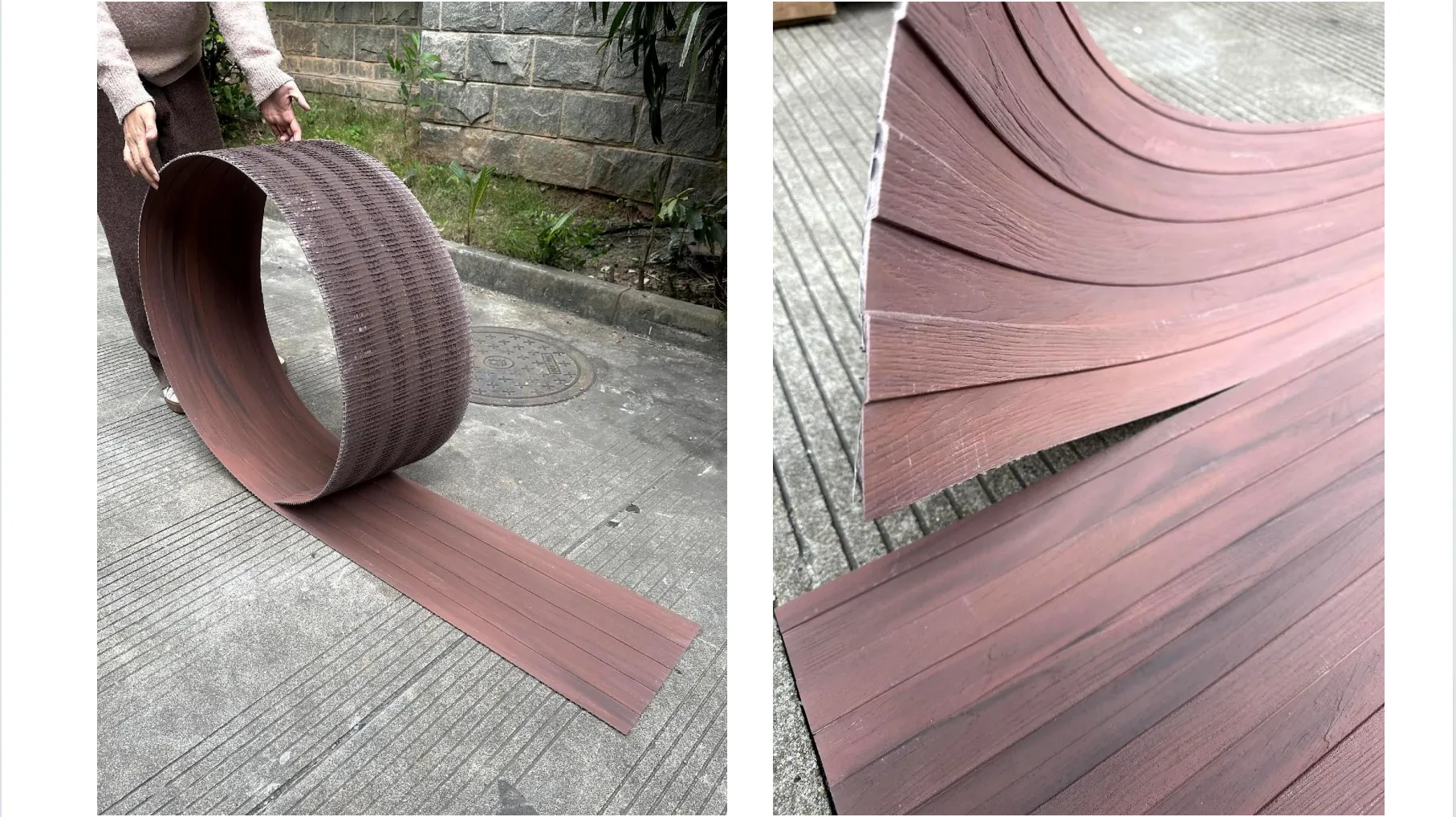
Okay, hear us out: stone fences? They sound heavy, right? Like something you'd find around a medieval castle, not a suburban backyard. But flexible stone is changing the game. It's not stone in the traditional sense—think thin, lightweight panels that bend and flex, making them easy to install on fences of all shapes and sizes. And while "stone fence" might conjure images of gray, rigid walls, flexible stone can mimic everything from weathered limestone to, yes, even wood.
"We had a client in Colorado who wanted a fence that felt 'rooted in the mountains' but didn't block her view of the Rockies," says James, our senior architect. "Flexible stone was the answer. We used panels with a wood-like grain pattern—warm, earthy tones that blended with her cabin's exterior, but thin enough that wind passes through, so the fence doesn't act like a sail in storms. When she sent us wood fence real photos, the stone panels looked like they'd been carved from the mountains themselves. It's unexpected, but that's the point—fences don't have to be one-note."
Flexible stone is also surprisingly durable. It's resistant to moisture, pests, and UV rays, so it won't crack, fade, or warp. And because it's lightweight, it puts less stress on fence posts, extending the life of the entire structure. It's perfect for homeowners who want a fence that makes a statement—something unique, something that says, "This isn't just a fence; it's part of my home's story."
If you're all about clean lines, industrial chic, or modern architecture, fair-faced concrete might be your new favorite material. Unlike traditional concrete fences, which are often gray and utilitarian, fair-faced concrete is left "exposed"—no paint, no stucco, just the natural texture of the concrete itself. It has a raw, almost sculptural quality that feels both bold and understated. Think of it as the "less is more" approach to fencing.
"Fair-faced concrete is for the homeowner who wants their fence to feel like a piece of art," says Lila, our in-house designer. "We recently used it for a home in Austin with a mid-century modern vibe. The fence runs along the front yard, its smooth, gray surface contrasting beautifully with the home's warm wood siding. In wood fence real photos, it looks sleek and timeless—not cold, but intentional. The client told us it's become a conversation starter: 'People stop and touch it, like they can't believe it's concrete,' she said. 'It feels alive, somehow.'"
Durability-wise, fair-faced concrete is a rockstar. It's fire-resistant, pest-proof, and impervious to rot. It won't fade in the sun or warp in humidity. And while it might seem like a high-maintenance material, it's actually low-effort: just hose it down occasionally to keep dust at bay. The only catch? It's heavier than wood or composite, so you'll need sturdy posts. But for the right home, the payoff is worth it. As Lila puts it: "A fair-faced concrete fence doesn't just separate your yard from the street—it frames it, turning your outdoor space into a gallery."
If fair-faced concrete is modern minimalism, rammed earth board is its earthy cousin. Made by compressing layers of soil, clay, sand, and natural pigments, rammed earth has been used for centuries—think ancient adobe walls in the American Southwest or traditional Chinese courtyard homes. Today's rammed earth boards are a modern take on this classic material: lightweight, prefabricated panels that capture that same warm, organic texture without the hassle of onsite construction.
The color range is stunning: soft beiges, terracottas, even subtle gradients (like our popular "gradient B" and "gradient C" options) that mimic the look of layered soil. When installed, the panels lock together to create a fence that feels like it grew out of the ground, not built on top of it. "We used rammed earth board for a client in Santa Fe who wanted a fence that blended with the desert landscape," says James. "In their wood fence real photos, the fence looks like it's been there for decades—warm, weathered, and full of character. The client loves that it changes with the light: golden at sunrise, soft pink at sunset, deepening to terracotta at dusk. It's not just a fence; it's part of the landscape."
Rammed earth board is also eco-friendly—made from natural materials, it's breathable and energy-efficient, helping to regulate temperature in your yard. And while it's not as water-resistant as concrete, it holds up well in dry climates (think Arizona, New Mexico, or parts of California). For wetter areas, we recommend sealing it every 3-5 years to protect against moisture. But for homeowners who want a fence with soul—one that feels connected to the earth—rammed earth board is hard to beat.
We already touched on flexible stone, but we'd be remiss not to dive deeper—because this material is a chameleon. While it can mimic wood grain, it also shines when it's allowed to be stone. Imagine a fence with panels that look like weathered sandstone, their surface pitted with tiny holes and crevices, or smooth, polished marble with veins of gray and white. Flexible stone lets you bring the beauty of natural stone to your fence without the weight or cost of traditional stone walls.
"We used flexible stone with a 'starry blue' travertine pattern for a coastal home in Charleston," says Maria. "The fence runs along the beachside yard, and in wood fence real photos, it looks like it's made of real travertine—shimmering in the sun, with that subtle, iridescent quality of stone. But unlike real travertine, it's lightweight, so we didn't need heavy machinery to install it. And it's salt-resistant, which is a must near the ocean. The client told us it feels like having a piece of the cliffs in their backyard."
Flexible stone panels are thin (usually 2-3mm thick) and bendable, making them easy to install on curved or uneven surfaces. Want a fence that follows the natural slope of your yard? No problem. Want to add a decorative archway? Flexible stone can curve to fit. It's also surprisingly affordable compared to real stone, making it accessible for homeowners who want a high-end look without the high-end price tag.
| Material | Key Features | Best For | Maintenance Level |
|---|---|---|---|
| Wood Grain Board | Mimics wood grain; durable; splinter-free; weather-resistant | Classic homes, low-maintenance lovers | Low (hose down occasionally) |
| Fair-Faced Concrete | Raw, minimalist texture; fire/pest-resistant; modern aesthetic | Contemporary/industrial homes | Low (hose down; seal every 5-7 years) |
| Rammed Earth Board | Warm, earthy tones; natural texture; eco-friendly | Rustic, desert, or organic-style homes | Medium (seal every 3-5 years in wet climates) |
| Flexible Stone | Lightweight; customizable textures (stone, wood, etc.); weather-resistant | Coastal homes, unique design visions | Low (hose down; avoid harsh cleaners) |
At the end of the day, choosing a fence material is about more than durability or cost—it's about choosing a material that tells your story. Do you want a fence that whispers "cozy and familiar," like wood grain board? Or one that shouts "bold and modern," like fair-faced concrete? Maybe you want something that feels rooted in the earth, like rammed earth board, or something that surprises and delights, like flexible stone.
And remember: wood fence real photos are your best friend. They'll show you how the material looks in different light, how it complements your home's architecture, and how it ages over time. At COLORIA, we always send clients home with samples and a portfolio of real installations—because seeing is believing. As Maria likes to say: "A fence isn't just a line in the dirt. It's the first chapter of your home's story. Make sure it's one you'll love reading for years to come."
So go ahead—dream a little. Imagine your morning coffee on the porch, looking out at a fence that feels like yours . Whether it's wood grain, concrete, rammed earth, or stone, the right material is out there. And when you find it? You'll know. Because it won't just be a fence—it'll be a part of your life.
Recommend Products












