
There's something about a wood fence that tugs at the heart. Maybe it's the way sunlight filters through the slats at dawn, casting striped shadows on the grass. Or the soft creak it makes when you lean against it, like an old friend sighing. Flip through wood fence real photos online, and you'll see that same story repeated: backyards where kids chase fireflies, dogs nap in the shade, and weekends feel slower. But here's the thing no one tells you about those photos: they're often taken on day one. What happens when the years stack up, and that "perfect" wood fence starts to show its age?
Let's start with the numbers—because for most of us, the budget is where any home project begins. A standard wood fence, say 150 square feet, might cost $3,000 to $5,000 upfront. That includes materials (cedar, pine, maybe redwood) and labor. You nod, sign the contract, and watch the crew build your dream. But then year two hits. The rain soaks the boards, and by summer, there's a faint green tinge of mildew. You power-wash it, spend $150 on stain, and spend a weekend reapplying it. Year three: a storm bends a post, and you shell out $200 for repairs. Year five: some boards start to rot at the base; replacing them costs $400. By year ten? You're looking at a total bill that could hit $8,000 or more—double the initial cost. And that's if you're lucky. In humid climates, rot sets in faster. Near the coast? Salt air turns wood into Swiss cheese in half the time.
The Emotional Cost: It's not just money. It's the Saturday mornings you lose to sanding instead of hiking with your family. The guilt when you notice a loose board and keep putting off fixing it. The slow fade of that warm, honeyed color into a gray, weathered mess—until the fence you once loved starts to feel like a chore.
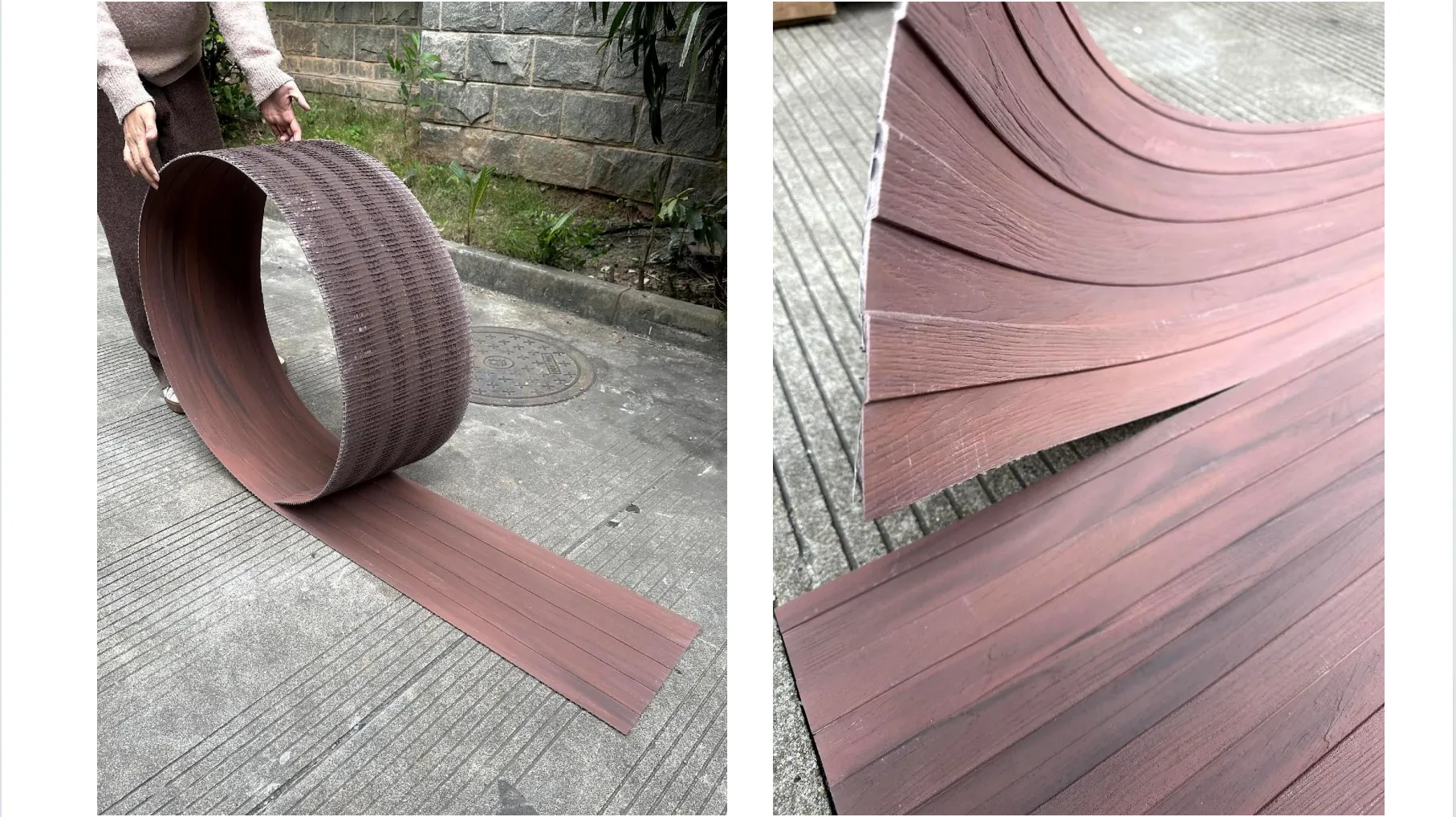
Enter the MCM Project Board Series—a line of cladding and fencing materials that doesn't just cover space, but redefines it. I first heard about MCM (Modified Composite Material) from a friend who'd swapped her rotting wood fence for something she called "flexible stone." Skeptical, I visited her house expecting something cold or fake. Instead, I ran my hand over the surface and froze. It felt like stone—rough, textured, with the same organic variation as the travertine in my kitchen. But it was light, almost when she lifted a panel. "MCM flexible stone," she said, grinning. "No rot, no staining, no weekends spent on a ladder."
MCM isn't a single material; it's a family. There's the MCM 3D Printing Series, which lets you custom-design patterns—think geometric shapes, or even replicas of your favorite tree bark. There's fair-faced concrete, with its raw, industrial charm that ages like fine wine. And for those who still crave that woody warmth? Wood grain board, which mimics the look of oak or teak so closely, even my dog did a double-take when he sniffed it.
But what really sold me wasn't the aesthetics—it was the story behind the materials. MCM is engineered to handle the worst Mother Nature throws at it. Rain? It repels water like a duck's back. Salt? No problem. UV rays? The color stays vibrant, no fading. And because it's lightweight, installation is faster (which means lower labor costs) and safer—no heavy lifting or cracked foundations from overweight posts.
Let's get back to the budget—because even the prettiest fence won't matter if it breaks the bank. Below is a side-by-side cost analysis of a 150 sq. ft. wood fence vs. an MCM Project Board fence over a decade. Spoiler: The "cheaper" upfront option might not be cheaper in the long run.
| Cost Category | Wood Fence | MCM Project Board Fence |
|---|---|---|
| Initial Installation | $3,000 – $5,000 | $4,500 – $6,000 |
| Annual Maintenance | $200 – $400 (staining, repairs, power washing) | $0 – $50 (occasional cleaning with soap and water) |
| Replacement Costs (Year 7-10) | $2,000 – $3,000 (partial or full replacement) | $0 (MCM has a 20+ year lifespan) |
| 10-Year Total | $7,000 – $12,000 | $4,500 – $6,500 |
Why the Gap? Wood's Achilles' heel is maintenance. Those annual $200-$400 costs add up, and by year seven, you're not just repairing—you're replacing. MCM, on the other hand, is built to last. Its core is often a blend of natural minerals and polymers, making it resistant to rot, pests, and warping. No termites, no splinters, no repainting. Just a fence that looks like the day it was installed, year after year.
Cost is critical, but home projects are also about how a space makes you feel. Let's say you love the look of a white picket fence—classic, cheerful, straight out of a storybook. With MCM, you can have that, but in a material that won't yellow or splinter. Or maybe you're drawn to the rugged vibe of a stone wall, but cringe at the weight and cost of real stone. MCM flexible stone gives you that texture without the hassle. Want something bold? The MCM 3D Printing Series lets you create patterns that reflect your personality—geometric lines, organic waves, even custom logos for a home business. The options feel endless, and none of them require you to sacrifice durability for style.
And let's talk about time—your time. With a wood fence, you're signing up for weekends spent sanding, staining, and fixing. With MCM? You're signing up for weekends spent living . That's time with your kids, time gardening, time just sitting and enjoying the view—no ladder required. I visited that friend with the MCM fence again last month, and she laughed when I asked about upkeep. "I hose it down once a season," she said. "That's it. The rest of the time? I'm too busy watching my grandkids climb it." (Spoiler: The fence didn't budge. Not even a scratch.)
Wood fence real photos will always hold a special place in our hearts. They're a nod to simpler times, to craftsmanship that feels human. But here's the truth: tradition doesn't have to mean sacrifice. MCM Project Board Series isn't here to replace wood—it's here to reimagine what "durable beauty" looks like. It's for the homeowner who wants the warmth of wood, the texture of stone, or the sleekness of concrete, but without the endless upkeep and hidden costs.
Final Thought: When you invest in a fence or cladding, you're not just buying materials—you're buying peace of mind. You're buying years of memories, not years of maintenance. So flip through those wood fence real photos, soak in the nostalgia, but then ask yourself: What story do I want my fence to tell in 10 years? Will it be a story of regret (warped boards, wasted weekends) or a story of joy (vibrant, sturdy, and still turning heads)?
For me? I'm leaning into the new story. Because the best home projects aren't just about what looks good today—they're about what feels good forever .
Recommend Products












