
Because your fence shouldn't just mark a boundary—it should reflect the values you stand for.
I was strolling through my childhood neighborhood last month when something hit me: fences. Not the ones I remembered—those weathered wooden pickets that smelled like pine and creaked in the wind—but new ones. Sleeker, more vibrant, and somehow… alive with texture. A few houses down, Mrs. Henderson's old cedar fence was gone, replaced by a warm, grainy panel that looked like it had been carved from driftwood, but when I reached out to touch it, it felt cool and solid, not splintery. "It's called wood concrete board," she said, noticing my curiosity. "No more painting every year, and I didn't have to cut down a single tree for it."
That moment stuck with me. Fences aren't just barriers—they're the first chapter of a home's story. But for too long, that story has been written in wood: beautiful, yes, but often at the cost of our forests, our time (hello, annual staining!), and our wallets. What if there was a way to keep the beauty, the character, and the warmth… without the compromise? Enter MCM materials: modified composite materials that are rewriting the rules of what a fence can be—sustainable, stunning, and surprisingly human.
Let's get real: I've loved wooden fences. There's something about the way sunlight filters through slats, or how they soften a yard into a cozy retreat. But after helping my dad replace our family fence three times in 15 years, I started to see the cracks—literally and figuratively.
But what if there was a material that could mimic wood's warmth, stone's durability, or metal's edge—without the environmental toll? That's where MCM comes in.
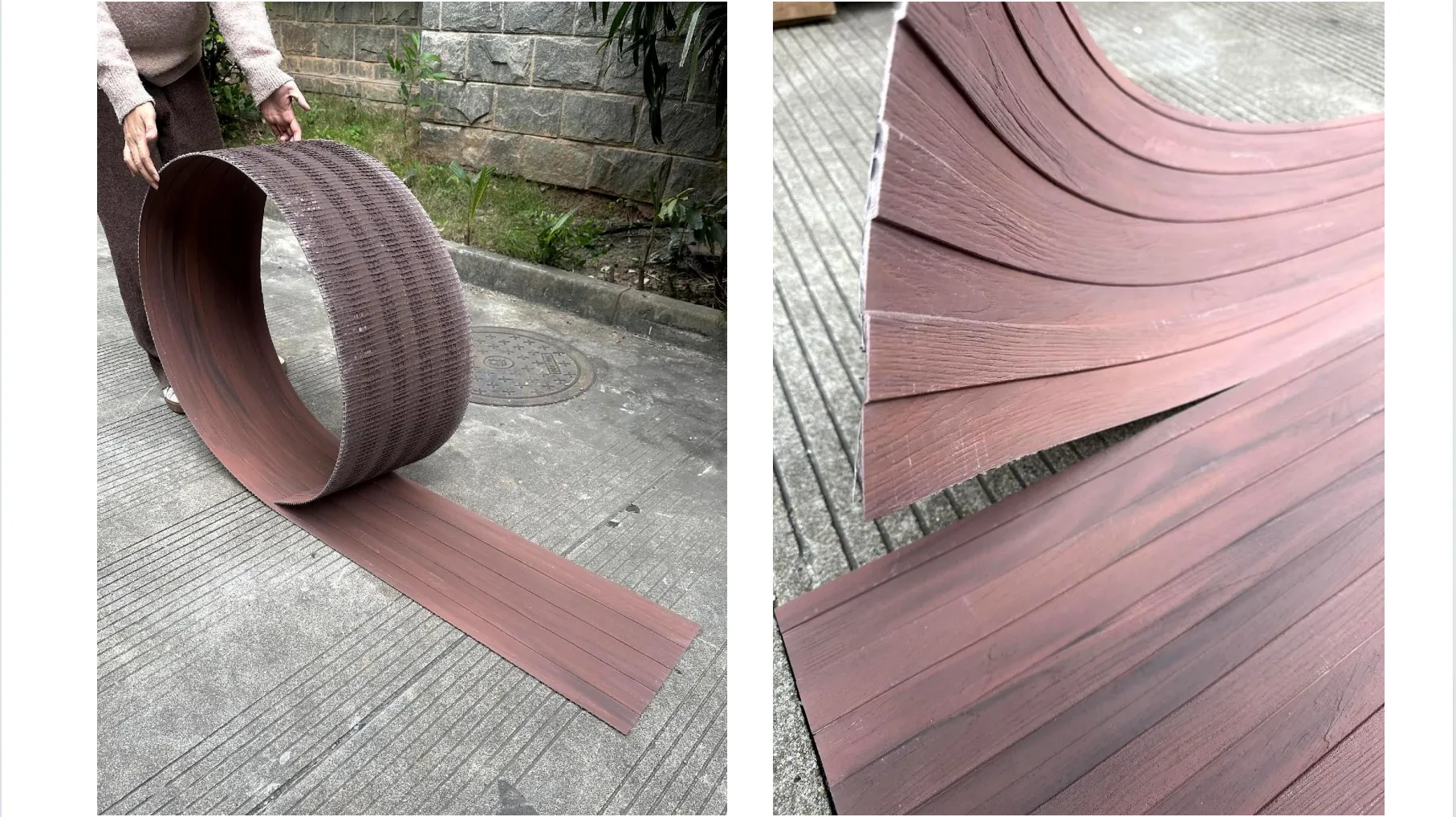
MCM stands for Modified Composite Material, but don't let the technical name scare you. Think of it as nature's best qualities—wood's grain, stone's texture, metal's strength—reimagined with science. These materials blend recycled fibers (like wood pulp, stone dust, or even aluminum), polymers, and natural pigments to create panels that are lightweight, flexible, and built to last. And here's the kicker: most MCM products use 70-90% recycled content, and they're 100% recyclable at the end of their 50+ year lifespan. That's not just sustainable—that's regenerative .
But MCM isn't just about being "green." It's about solving real problems for real people. Hate how heavy stone is to install? MCM flexible stone weighs 70% less than natural stone, so you can hang it with basic tools. Tired of metal fences rusting? Foamed aluminium alloy boards (vintage silver, gold, or metal finish) are treated to resist corrosion, even in coastal areas. Want the look of travertine but can't afford the price tag? MCM travertine series (starry green, vintage silver, or classic beige) captures that marble-like veining at a fraction of the cost and weight.
At their core, MCM materials are about choice . You don't have to pick between "eco-friendly" and "beautiful"—you can have both. And the best part? They're designed to age gracefully, developing a patina that tells a story, not a story of decay.
Let's dive into the stars of the MCM lineup—the ones that are turning fences from "necessary evil" to "home highlight." These aren't just products; they're design partners, each with a personality that can match your home's vibe.
Remember Mrs. Henderson's fence? That was wood concrete board, and it's my personal favorite for its ability to capture wood's nostalgia without the upkeep. Imagine running your hand over a surface that feels like oak—warm, with visible grain that swells and dips like real wood—but it's actually made from recycled wood fibers and low-carbon concrete. The result? A fence that looks like it's been part of the neighborhood for decades, but will outlive your kids' childhoods.
One of my clients, a carpenter who was skeptical of "fake wood," installed it last year. "I was sure it would look cheap," he told me. "But when the sun hits it at dawn, the grain pops like it's glowing. My neighbors think I milled it myself from reclaimed barn wood." And since it's resistant to moisture and pests, he hasn't touched a paintbrush in 12 months. Win-win.
For homes that crave a touch of luxury, travertine (starry green) is a showstopper. Natural travertine is stunning but heavy—so heavy that installing a fence requires cranes and reinforced foundations. MCM's version? It's 80% lighter, with the same creamy base and flecks of emerald and gold that catch the light like a sky full of stars. I saw it on a modern home in the hills last summer, and it turned the fence into a piece of art. "We wanted something that felt organic but bold," the homeowner said. "Now when friends come over, they don't talk about the house—they talk about the fence."
And sustainability? The starry green hue comes from natural pigments, and the base is recycled stone dust. No quarrying, no heavy transport—just beauty with a conscience.
If your style is more "cozy cabin" than "modern mansion," weaving (khaki) is for you. These panels mimic the look of hand-woven bamboo or rattan, with soft, overlapping strands that create depth and movement. I installed it on my sister's garden fence last spring, and now her morning coffee spot feels like a tropical retreat. "The texture makes the yard feel enclosed but not closed off," she says. "And when it rains, it sounds like a gentle drumroll—way better than the old wooden fence that just groaned."
Made from recycled polyester fibers woven over a lightweight frame, it's mold-resistant and easy to clean. Plus, the khaki color softens over time, like a favorite sweater—only it won't pill or fade.
For urban homes or modern lofts, foamed aluminium alloy board (vintage silver) brings that cool, weathered metal look—without the rust. Traditional metal fences corrode, especially in rainy climates, but this stuff? It's made from recycled aluminum (95% recycled content!) treated with a vintage finish that looks like it's been through a few winters, but will never actually degrade. I saw it on a warehouse-turned-home in the city, and it paired perfectly with the exposed brick. "We wanted something that felt tough but not cold," the owner said. "This silver has a warmth to it, like an old toolbox you've had for years."
And since it's lightweight, two people can install a 20-foot section in an afternoon. No heavy lifting, no rust stains on the sidewalk—just sleek, sustainable style.
Rammed earth has been around for centuries—think ancient Chinese walls or Southwestern adobe homes. But traditional rammed earth is heavy and prone to cracking. MCM's rammed earth board (matcha green) takes that earthy, textured look and gives it modern durability. The color is a soft, muted green that feels like spring grass at dawn, and the surface has that signature "layered" texture of hand-packed earth. I visited a yoga studio with this fence, and it instantly calmed me down. "We wanted the studio to feel connected to nature," the owner explained. "Now when clients walk up, they already start breathing deeper."
Made from recycled clay and natural binders, it's also breathable, so it won't trap moisture or warp. It's like bringing a piece of the countryside to the suburbs—without the maintenance.
Still on the fence (pun intended)? Let's break it down. Here's how traditional wood stacks up against our MCM favorites:
| Feature | Traditional Wood Fence | MCM Wood Concrete Board | MCM Travertine (Starry Green) | MCM Weaving (Khaki) |
|---|---|---|---|---|
| Lifespan | 10-15 years | 50+ years | 60+ years | 40+ years |
| Maintenance | Annual staining/sealing; repairs every 2-3 years | None—just hose off dirt | None—resistant to scratches and stains | Occasional dusting; no sealing needed |
| Eco Impact | High: Deforestation, chemical treatments, landfill waste | Low: 85% recycled content; 100% recyclable | Low: Recycled stone dust; natural pigments | Low: Recycled polyester; minimal energy to produce |
| Aesthetic Vibe | Warm, classic, but fades/warps over time | Rustic, timeless grain; ages gracefully | Luxurious, starry texture; bold and elegant | Soft, bohemian; adds depth and movement |
| Installation | Heavy; requires 2-3 people and power tools | Lightweight; DIY-friendly with basic tools | Lightweight; no need for reinforced posts | Flexible; bends to curves easily |
I get it—change is hard. When I first heard about MCM, I thought, "There's no way this can look as good as real wood/stone/metal." But then I met people like Mark and Lisa, who turned their backyard from "meh" to "magical" with MCM.
Mark is a retired contractor who prides himself on "doing things right." When his old wooden fence started rotting, he was dead set on replacing it with cedar—until his daughter showed him wood concrete board. "I told her, 'That's plastic. It'll look cheap.'" But he agreed to a small section as a test. Six months later, he replaced the entire fence. "The grain looks so real, I've had three neighbors ask where I got the reclaimed wood. And when a storm came through last month, my fence didn't budge. The cedar next door? It's leaning like a drunk sailor."
Lisa, a single mom in a busy suburb, wanted a fence that was safe for her kids and low-maintenance. She chose weaving (khaki) for its soft texture—no splinters!—and hasn't regretted it. "The kids climb on it, the dog scratches it, and it still looks brand new. I used to spend $200 a year on stain and weekends fixing loose boards. Now I spend that money on ice cream and bike rides. Best decision ever."
Let's be honest—change comes with questions. Here are the ones I hear most, and the real answers:
Yes—about 20-30% more than budget wood. But let's do the math: A wooden fence costs $3,000 upfront, plus $500/year in maintenance, and needs replacement every 15 years. Over 50 years, that's $3,000 + ($500 x 50) + ($3,000 x 3 replacements) = $31,000. An MCM fence costs $4,000 upfront, $0 maintenance, and lasts 50+ years. Total cost: $4,000. It's an investment that pays for itself in 10 years.
Not anymore. Early composite materials looked plastic, but MCM uses 3D printing and advanced texturing to mimic natural materials. Run your hand over wood concrete board, and you'll feel the same knots and grain as real wood. Travertine (starry green) has the same pitted surface and color variation as natural stone. I've had designers mistake MCM panels for the real thing—until they lifted one (and realized it weighs 5 pounds instead of 50).
Far easier than wood or stone. Most MCM panels are lightweight (10-15 pounds each) and snap together like Legos. You don't need special tools or contractors—just a drill, a level, and a friend. I helped my brother install his wood concrete board fence in a Saturday. He's not exactly handy (he once tried to hang a picture and hit a pipe), but we finished by lunch.
Fences are more than just borders—they're a reflection of what we care about. Do we care about beauty? Absolutely. But we also care about the planet we leave for our kids, the time we spend with our families, and the stories our homes tell. MCM materials don't just offer a "sustainable alternative"—they offer a better way to live: with less stress, more joy, and the confidence that our choices are making a difference.
So the next time you walk through your neighborhood, take a closer look at the fences. Some are still telling the old story—of trees cut down, weekends wasted, and money thrown away. But others? They're writing a new story: one of innovation, responsibility, and beauty that lasts. Which story do you want your fence to tell?
P.S. If you're ready to rewrite your fence story, start small. Order a sample of wood concrete board or travertine (starry green) and hold it in your hands. Feel the texture, imagine it in your yard. I think you'll be surprised by how quickly "I'm not sure" turns into "Why didn't I do this sooner?"
Recommend Products












