
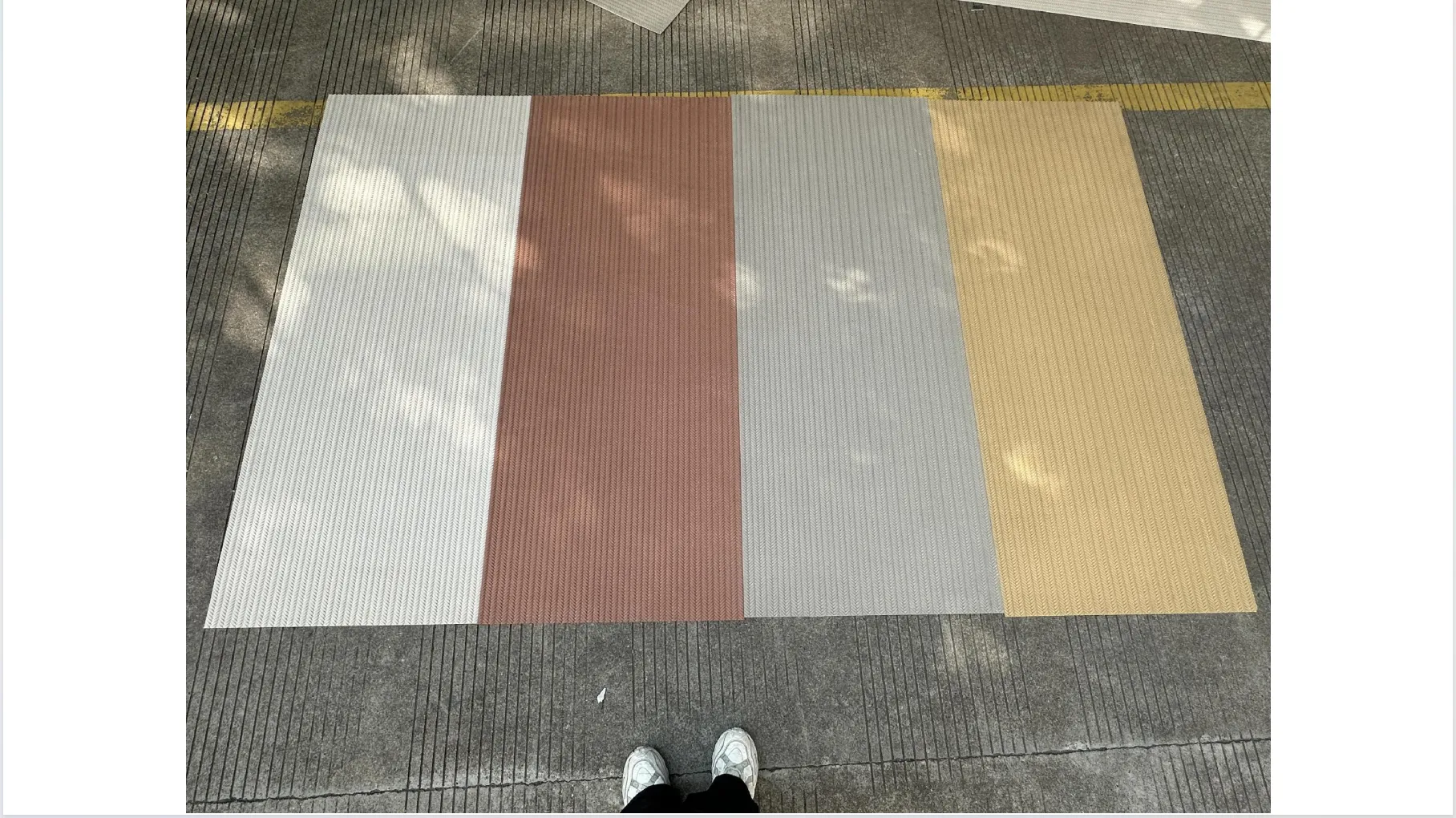
Design is more than just aesthetics—it's about telling a story. Every texture, color, and material choice whispers something about the space it inhabits, whether it's the warmth of a cozy café or the sleek professionalism of a modern office. In recent years, two materials have emerged as front-runners in the race to blend beauty with functionality: MCM Big Slab Board and Quartz Surfaces. But how do you choose between them? Is it the organic charm of woven real photos or the polished uniformity of quartz that will bring your vision to life? Let's dive in, exploring their nuances, strengths, and the unique stories they help tell.
First, let's set the stage. Imagine walking into a space where the walls seem to breathe—textures that mimic woven textiles (think woven real photos come to life), surfaces that catch the light like a starlit sky (hello, travertine (starry green)), and colors that shift from soft beige (lime stone(beige)) to deep, moody grays. That's the world of MCM Big Slab Board. On the other hand, quartz surfaces greet you with cool precision: consistent patterns, smooth finishes, and a reliability that feels almost reassuring. Both have their place, but understanding their personalities is key to making the right choice for your project.
Before we compare, let's get to know each material. MCM Big Slab Board (short for Modified Composite Material) is a game-changer in the construction world. It's a lightweight, flexible material made by bonding natural stone aggregates, minerals, and polymers into large, thin slabs. What makes it special? Its versatility. MCM can mimic the look of almost any natural material—travertine, limestone, even woven textures (hence, woven real photos as a design inspiration)—while being far lighter and more durable than traditional stone. It's the chameleon of the design world, adapting to whatever story you want to tell.
Quartz Surfaces , on the other hand, are engineered stones. They're made by combining 90-95% ground quartz (one of the hardest minerals on Earth) with resins, polymers, and pigments. The result? A non-porous, ultra-durable surface with a consistent appearance. Quartz is the perfectionist's dream—no two slabs are exactly alike, but variations are minimal compared to natural stone. It's popular in kitchens and bathrooms for its sleek, low-maintenance appeal.
Design is subjective, but some materials just "feel" different. Let's start with MCM Big Slab Board and its knack for organic storytelling. One of the most exciting things about MCM is its ability to replicate the uniqueness of natural materials without the drawbacks. Take travertine (starry green) , for example. MCM versions of this stone capture the same honeycomb-like pores and soft, earthy green tones, but with a uniformity that makes large-scale installations a breeze. It's like having a piece of the Italian countryside on your wall, but tailored to fit your space.
Then there's the texture play. Woven real photos aren't just a trend—they're a way to add warmth and tactility to a room. MCM big slab boards can be embossed or printed to mimic the look of woven fabrics, from jute to linen, creating surfaces that invite touch. Imagine a restaurant wall clad in MCM panels with woven textures, paired with lime stone(beige) accents. The effect is cozy yet sophisticated, like dining in a sunlit barn with a modern twist.
Quartz surfaces, by contrast, excel in polished precision. If you're drawn to clean lines and a seamless look, quartz delivers. Its engineered nature means you can get bold colors, subtle veining, or even marble-like patterns without the inconsistency of natural stone. However, this precision can sometimes feel "cold" in spaces where warmth is key. That said, modern quartz designs are getting more creative—some even mimic the look of concrete or terrazzo, bridging the gap between industrial and elegant.
Designer's Dilemma: Sarah, an interior designer, was tasked with creating a lobby for a boutique hotel that felt "timeless yet fresh." She wanted walls that told a story of nature and craftsmanship. After debating between MCM and quartz, she chose MCM big slab boards in travertine (starry green) with woven texture inserts (inspired by woven real photos). "Quartz was beautiful, but it felt too perfect," she said. "The MCM panels have these tiny variations in the starry green pattern—like real stone—and the woven textures add depth. Guests run their hands over the walls; that's the connection I wanted."
Beauty means nothing if a material can't stand the test of time. Let's talk durability. MCM Big Slab Board has a trick up its sleeve: flexibility. Unlike rigid natural stone or even quartz, MCM is designed to be bendable, making it resistant to cracking from impact or structural movement. This is a huge advantage for exterior applications or high-traffic areas. For example, fair-faced concrete MCM panels are used on building exteriors because they can withstand harsh weather without chipping or fading.
MCM is also lightweight—about 1/5 the weight of natural stone. This reduces stress on walls and structures, making it ideal for renovations where weight is a concern. But don't let its lightness fool you: MCM is scratch and stain-resistant, especially when sealed properly. The polymers in its composition act as a barrier, protecting the surface from spills and daily wear.
Quartz Surfaces , meanwhile, are known for their hardness. Quartz is the second hardest mineral on Earth (after diamonds), so it's highly resistant to scratches, dents, and heat. This makes it a top choice for kitchen countertops, where knives, hot pans, and spills are daily occurrences. However, quartz is not indestructible. It can chip if hit with a heavy object, and while it's heat-resistant, prolonged exposure to extreme temperatures (like a hot pan left directly on the surface) can damage the resin binding.
Another key difference: flexibility. Quartz is rigid, which means it can crack if the subfloor isn't perfectly level or if there's structural movement. MCM's flexibility makes it more forgiving in these scenarios—a valuable trait for older buildings or outdoor projects.
Installing materials can make or break a project timeline and budget. Let's start with MCM Big Slab Board and its reputation for ease. Thanks to its lightweight design (typically 4-6 lbs per square foot), MCM panels are easier to transport and install than natural stone or even quartz (which can weigh 15-20 lbs per square foot). This reduces labor costs and makes it possible to install on walls, ceilings, and even curved surfaces without extensive structural support.
Maintenance for MCM is straightforward but not entirely hands-off. Most MCM panels come pre-sealed, but they may need re-sealing every 3-5 years, depending on the finish and usage. For example, a travertine (starry green) MCM wall in a high-humidity area like a pool house might need annual sealing to prevent moisture absorption. Woven texture MCM panels require gentle cleaning—avoid abrasive sponges, as they can damage the embossed surface.
Quartz Surfaces are heavier, which can complicate installation. Countertops often require professional installers to ensure proper support, and walls clad in quartz may need reinforced framing. On the flip side, quartz is incredibly low-maintenance. It's non-porous, so it doesn't need sealing. Spills can be wiped up with soap and water, and stains are rare. This makes it a favorite for busy households or commercial spaces where time is money.
However, quartz's rigidity can be a downside during installation. Cutting quartz requires specialized tools (diamond blades), and mistakes are costly—once a slab is cut, there's no going back. MCM, being more flexible, is easier to trim and adjust on-site, reducing waste and installation stress.
In today's design world, sustainability isn't just a buzzword—it's a priority. Let's see how MCM and quartz stack up. MCM Big Slab Board has a strong eco-friendly story. MCM is made from a blend of natural minerals, recycled materials, and polymers, reducing the need for quarrying natural stone. Traditional stone mining can be destructive to ecosystems, but MCM production uses less water and energy by comparison. Additionally, MCM's lightweight nature reduces transportation emissions—a big plus for large projects.
Many MCM manufacturers also prioritize recyclability. For example, fair-faced concrete MCM panels often contain recycled concrete aggregates, giving new life to construction waste. Woven real photos-inspired MCM panels may use water-based inks and low-VOC adhesives, making them safer for indoor air quality.
Quartz Surfaces have a more complex sustainability profile. While quartz itself is abundant, the manufacturing process involves mining quartz, crushing it, and binding it with resins (often petroleum-based). The energy required to produce quartz can be high, and the resins may off-gas VOCs (volatile organic compounds) during installation. That said, some quartz brands are making strides—using recycled quartz content or bio-based resins to reduce their footprint.
At the end of the day, MCM's use of recycled materials and lower transportation impact gives it a slight edge for eco-conscious designers. But it's worth noting that both materials are durable, which means they need to be replaced less often—a key factor in long-term sustainability.
Let's talk numbers. MCM Big Slab Board is generally more budget-friendly than quartz, especially for large-scale projects. Prices vary by finish and manufacturer, but MCM panels typically range from $20-$50 per square foot, including installation. For example, cladding a 500-square-foot wall with lime stone(beige) MCM panels would cost around $10,000-$25,000, which is significantly less than natural stone or high-end quartz.
Quartz Surfaces are a higher investment, with prices ranging from $50-$150 per square foot installed. The cost depends on the brand, color, and thickness—exotic quartz designs or large slabs can push the price even higher. A standard kitchen countertop (30 square feet) might cost $1,500-$4,500 in quartz, compared to $600-$1,500 for MCM (though MCM is less common for countertops).
It's important to consider the total cost of ownership, though. Quartz's low maintenance and durability can save money over time, especially in high-use areas. MCM, while cheaper upfront, may require periodic sealing, which adds to long-term costs. For commercial projects with tight budgets, MCM is often the smarter choice; for luxury residential spaces where longevity and low upkeep are priorities, quartz may be worth the splurge.
To truly understand these materials, let's look at how they're used in the wild. MCM Big Slab Board is a star in commercial and exterior design. Imagine a retail store with a facade clad in travertine (starry green) MCM panels. The lightweight material reduces the building's load, and the starry pattern draws customers in. Inside, woven real photos-inspired MCM walls create a warm, inviting shopping experience—perfect for a brand that values craftsmanship.
MCM is also popular in hospitality. A beach resort might use MCM big slab boards in lime stone(beige) for outdoor cabanas, as they're resistant to saltwater and UV rays. The material's flexibility allows for curved walls that mimic the shape of waves, tying the design to its coastal location.
Quartz Surfaces dominate in residential kitchens and bathrooms. Homeowners love quartz countertops for their durability and easy cleaning—no more worrying about wine stains or knife scratches. In a modern kitchen with white cabinetry and brass fixtures, a quartz countertop in a marble-like pattern adds elegance without the upkeep of real marble. Quartz is also making inroads in commercial settings, like hotel bathrooms, where hygiene and durability are top priorities.
So, which material is right for you? It depends on the story you want to tell. If you crave organic textures, flexibility, and budget-friendliness, MCM Big Slab Board is your material. It's the storyteller that brings nature, craftsmanship, and sustainability to life—whether through travertine (starry green) walls, woven real photos textures, or lime stone(beige) accents. It's ideal for large projects, exterior spaces, and designs that celebrate imperfection and warmth.
If you prioritize polished precision, low maintenance, and durability in high-moisture areas, Quartz Surfaces will shine. It's the reliable workhorse that delivers sleek, consistent beauty—perfect for kitchens, bathrooms, and spaces where "perfection" is the goal.
At the end of the day, both materials have their place. The magic happens when you pair them thoughtfully—like a kitchen with MCM woven texture backsplash and quartz countertops, or a lobby with travertine (starry green) MCM walls and quartz reception desk. Design is about balance, and with MCM and quartz, you have two powerful tools to create spaces that not only look good but feel alive.
| Feature | MCM Big Slab Board | Quartz Surfaces |
|---|---|---|
| Material Composition | Modified composite: natural minerals, recycled materials, polymers | Engineered: 90-95% quartz, resins, pigments |
| Aesthetic Range | Organic, varied: mimics stone, woven textures (woven real photos), concrete; e.g., travertine (starry green), lime stone(beige) | Polished, consistent: solid colors, subtle veining, marble-like patterns |
| Durability | Flexible, impact-resistant; good for exteriors and high-traffic areas (e.g., fair-faced concrete MCM) | Hard, scratch-resistant; prone to chipping if stressed |
| Weight | Lightweight (4-6 lbs/sq ft) | Heavy (15-20 lbs/sq ft) |
| Installation Difficulty | Easy: lightweight, flexible, trimmable on-site | Moderate: requires professional installation, specialized cutting tools |
| Maintenance | Requires sealing every 3-5 years; gentle cleaning for textured surfaces | Low maintenance: no sealing, soap and water cleaning |
| Sustainability | High: uses recycled materials, low transportation emissions | Moderate: some brands use recycled content; resin production has environmental impact |
| Price Point | Budget-friendly: $20-$50/sq ft installed | Premium: $50-$150/sq ft installed |
In the end, the best material is the one that aligns with your vision, budget, and values. Whether you choose MCM's organic charm or quartz's polished precision, remember: great design isn't just about what you see—it's about how it makes you feel. And with the right material, every space can tell a story worth remembering.
Recommend Products












