
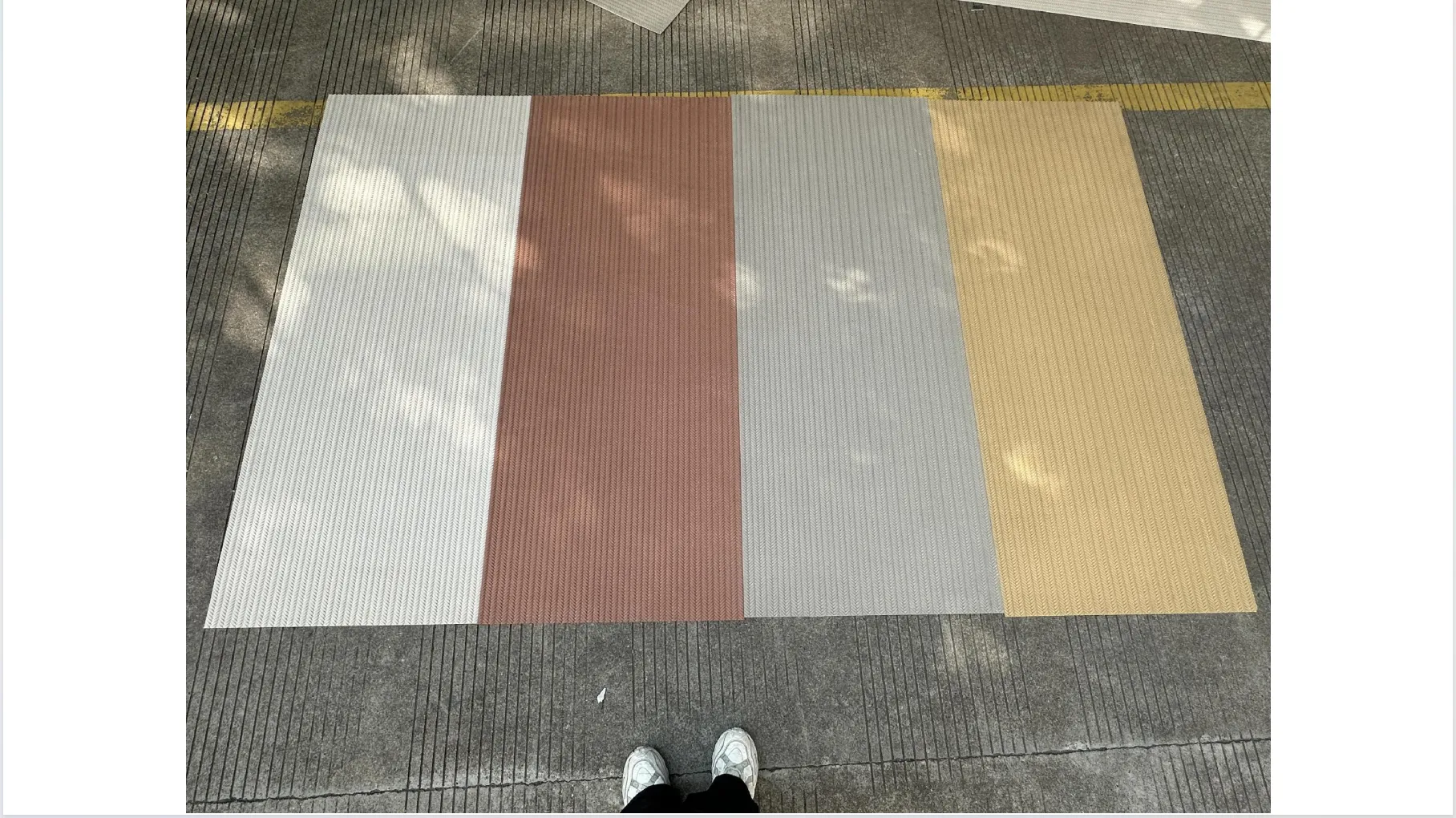
Walk into any space—a cozy café, a sleek office lobby, or even a friend's living room—and chances are, the first thing that quietly wraps around you isn't the furniture or the lighting. It's the walls. They're more than just dividers; they're storytellers. A rough-hewn stone wall might whisper of mountain cabins, while a smooth, painted surface feels like a blank canvas. For decades, we've relied on tried-and-true materials to tell these stories: the raw industrialism of fair-faced concrete, the timeless elegance of travertine, the earthy warmth of wood. But in recent years, a new player has stepped onto the stage: MCM flexible stone. Light, versatile, and brimming with design possibilities, it's challenging what we thought walls could be. Today, let's pull back the curtain on this material revolution—comparing the old and the new, the heavy and the light, the familiar and the groundbreaking. Along the way, we'll peek at woven real photos that showcase texture, color, and the kind of warmth that turns a "wall" into a "welcome."
Traditional wall materials have earned their keep for a reason. They're reliable, they've stood the test of time, and they carry a certain gravitas. Let's start with fair-faced concrete —the poster child of industrial chic. With its raw, unpolished finish, it's the material of warehouses-turned-lofts and minimalist museums. There's something honest about it: no frills, just the quiet strength of cement, aggregate, and water. But honesty comes with trade-offs. Fair-faced concrete is heavy—so heavy that installing it often requires reinforced structures and a team of laborers. Over time, its porous surface can absorb moisture, leading to cracks or discoloration. And while its "less is more" aesthetic works in some spaces, in others, it can feel cold, like a blank slate that never quite warms up.
Then there's travertine —nature's artwork. Quarried from ancient limestone deposits, each slab boasts unique veins, pits, and earthy tones, from soft beiges to rich golds. Walk into a space with travertine walls, and you can almost feel the weight of history—like standing in a Roman ruin, but with better lighting. But this natural beauty is high-maintenance. Travertine is porous, so spills (coffee, wine, even rain) seep in quickly, leaving stains that are tough to erase. It's also fragile; a sharp knock can chip its edges, and over time, foot traffic or harsh cleaning chemicals can wear down its surface. For all its charm, travertine demands attention—constant sealing, careful cleaning, and a willingness to embrace imperfection (or pay to fix it).
And let's not forget wood. Whether it's rough-sawn planks or smooth veneers, wood walls feel like a hug. They add warmth, texture, and a connection to the outdoors. But wood is a living material. It swells in humidity, shrinks in dry air, and over time, it fades in sunlight or succumbs to pests like termites. Even treated wood needs regular staining or sealing to stay looking its best. In high-moisture areas—like bathrooms or coastal homes—it's often more trouble than it's worth.
Enter MCM flexible stone —short for Modified Composite Material. At first glance, you might mistake it for traditional stone or concrete. Run your hand over it, though, and you'll notice the difference: it's lighter, more flexible, almost… bendable. That's because MCM isn't quarried or mined; it's engineered. Made from a blend of natural minerals, polymers, and fibers, it's designed to mimic the look and feel of traditional materials—travertine, concrete, even wood—without the weight or weaknesses. Think of it as nature's beauty, reimagined with modern science.
What makes MCM stand out? Let's start with design. Traditional materials are limited by what nature (or concrete) provides. MCM, on the other hand, is a designer's playground. Want travertine with a twist? How about travertine (starry blue) —a pattern that mimics the night sky, with tiny flecks of blue and silver scattered across a creamy base. Or maybe you're drawn to texture: woven (khaki) MCM panels that look and feel like a thick, cozy fabric, but with the durability of stone. These aren't just "prints"; they're 3D textures that you can run your fingers over, feeling the weave of the "fabric" or the depth of the "starry" pits. And because MCM is flexible, it can curve around corners, wrap columns, or even be used on ceilings—something traditional stone, with its rigidity, could never do.
Then there's weight. A standard MCM panel weighs about 3-5 kg per square meter, compared to travertine's 25-30 kg or fair-faced concrete's 20-25 kg. That lightness is a game-changer. Installing traditional stone often requires cranes, scaffolding, and a crew of 4-5 people. MCM? Two workers can carry a stack of panels up a flight of stairs. No need for reinforced walls or structural overhauls. This cuts installation time by half (or more) and slashes labor costs. For a small business owner renovating a shop, or a homeowner updating their living room, that's not just convenient—it's transformative.
Durability is another win. MCM is water-resistant, scratch-resistant, and fade-resistant. Spill coffee on a travertine (starry blue) MCM panel, and a quick wipe with a damp cloth is all it takes—no stains, no sealing required. Hang it in a bathroom, and it won't warp or mildew. Expose it to harsh sunlight, and its colors stay vibrant for years. Unlike wood, it's pest-proof; unlike travertine, it won't chip at the edges. It's built to handle the chaos of real life—kids, pets, busy offices—without losing its charm.
To really see the difference, let's put MCM flexible stone head-to-head with two traditional favorites: fair-faced concrete and travertine. The table below breaks down key factors—from weight to design options—to help you decide which material tells your space's story best.
| Feature | MCM Flexible Stone (e.g., Travertine Starry Blue, Woven Khaki) | Fair-Faced Concrete | Natural Travertine |
|---|---|---|---|
| Weight (per sqm) | 3-5 kg | 20-25 kg | 25-30 kg |
| Installation Time | 1-2 days for a 50 sqm wall (2 workers) | 3-4 days for a 50 sqm wall (4-5 workers) | 4-5 days for a 50 sqm wall (3-4 workers) |
| Durability | Water-resistant, scratch-resistant, fade-resistant; lasts 20+ years | Strong but porous; prone to cracks/moisture damage over time | Porous; stains easily; chips at edges; requires sealing every 1-2 years |
| Design Options | Unlimited: Starry patterns (blue, red, orange), woven textures (khaki, grey), metallic finishes, gradients, and more | Limited: Raw, uniform gray; can be stamped for texture, but options are few | Natural variation in veins/tones, but limited to earthy hues (beige, gold, cream) |
| Maintenance | Low: Wipe clean with water; no sealing or special treatments | Moderate: Seal every 2-3 years to prevent moisture damage | High: Seal every 6-12 months; avoid harsh cleaners; repair chips/stains promptly |
| Sustainability | Eco-friendly: Made with recycled minerals; low carbon footprint (no quarrying) | High carbon footprint (cement production emits CO2); heavy transportation impact | Quarrying disrupts ecosystems; high transportation emissions due to weight |
Numbers and tables tell part of the story, but nothing beats seeing materials in action. Let's walk through two spaces—one using traditional materials, one using MCM flexible stone—to see how they feel, function, and fit into daily life.
The difference? MCM flexible stone doesn't just cover walls—it transforms them into experiences. Traditional materials can feel like they're "just doing a job"; MCM feels like it's part of the space, enhancing it rather than just occupying it.
In a world where "green" isn't just a trend but a responsibility, materials matter. Traditional stone quarrying—for travertine, marble, or granite—rips into landscapes, disrupting ecosystems and releasing carbon emissions from heavy machinery. Fair-faced concrete relies on cement, which is responsible for about 8% of global CO2 emissions. Wood? Even sustainably sourced, it requires logging, which can deplete forests if not managed carefully.
MCM flexible stone takes a different approach. It's made from modified composite materials—often including recycled stone dust, polymers, and natural fibers—reducing the need for quarrying. Its lightweight design cuts transportation emissions (fewer trucks, less fuel). And because it's durable, it lasts longer, reducing the need for replacements (and the waste that comes with them). For architects, builders, or homeowners who want their spaces to look good and do good, MCM is a step toward a more sustainable future.
Traditional materials have their place. If you're restoring a historic building and need authentic travertine to match its original architecture, nothing else will do. If you crave the raw, unapologetic industrialism of fair-faced concrete, and don't mind the upkeep, go for it. But for most of us—homeowners, small business owners, designers—MCM flexible stone offers something traditional materials can't: the best of both worlds. It has the beauty of natural stone, the warmth of wood, and the durability of concrete—all in a lightweight, low-maintenance package.
Whether you're dreaming of a living room with woven (khaki) walls that feel like a hug, a home office with travertine (starry blue) that sparks creativity, or a shop front that stands out with bold, fade-resistant color, MCM delivers. It's not just a material—it's a new way to tell your space's story: one that's light, bright, and built to last.
At the end of the day, walls are more than just surfaces. They're the backdrop to our lives—the quiet witnesses to morning coffees, late-night conversations, and everything in between. MCM flexible stone doesn't just cover those walls; it elevates them, turning "ordinary" into "extraordinary" with texture, color, and a little bit of magic. Traditional materials have served us well, but it's time to write a new chapter—one where beauty, durability, and sustainability walk hand in hand. And if woven real photos are any indication, that chapter is going to be stunning.
Recommend Products












