
Remember the offices of the 90s? Think beige cubicles, fluorescent lighting, and walls so plain they might as well have been painted with indifference. Fast forward to 2025, and the script has flipped. Today's offices borrow from hospitality, retail, and even residential design, prioritizing comfort, flexibility, and personality. Why? Because research tells us what we've always intuitively known: environment affects mood, and mood affects performance . A 2023 study by the International Facility Management Association found that 77% of employees report higher productivity in offices with "tactile, nature-inspired design elements." Another survey by Gensler revealed that 82% of workers feel more engaged when their workspace reflects their company's values—whether that's sustainability, creativity, or innovation.
This is where the MCM Project Board Series steps in. Unlike generic building materials that feel sterile or one-note, MCM's offerings are designed with human connection in mind. They blend the durability needed for high-traffic areas with the emotional resonance that makes a space feel like more than just a workplace. Take Woven Real Photos, for example: these aren't just printed images on a board. They're tactile, three-dimensional weaves that mimic the look and feel of handwoven textiles—think the soft crinkle of linen or the tight knit of a cable sweater. When used in a breakout area, they turn a corner into a cozy nook where employees actually want to linger, brainstorm, or just take a breather. It's design that acknowledges a simple truth: we're not robots. We crave texture. We respond to warmth. And we thrive in spaces that feel human .
At its core, the MCM Project Board Series is a celebration of versatility. It's a toolkit for designers and architects to mix, match, and create spaces that are as unique as the companies they serve. But what truly sets these materials apart is their ability to balance form and function. Let's break down why they're becoming the go-to choice for office projects:
But enough about specs—let's talk about feel . The MCM Project Board Series isn't just about what the materials do ; it's about what they evoke . Let's take a closer look at some standout stars, and how they're elevating office design around the globe.
| Material Name | Key Features | Best Office Area | Design Vibe |
|---|---|---|---|
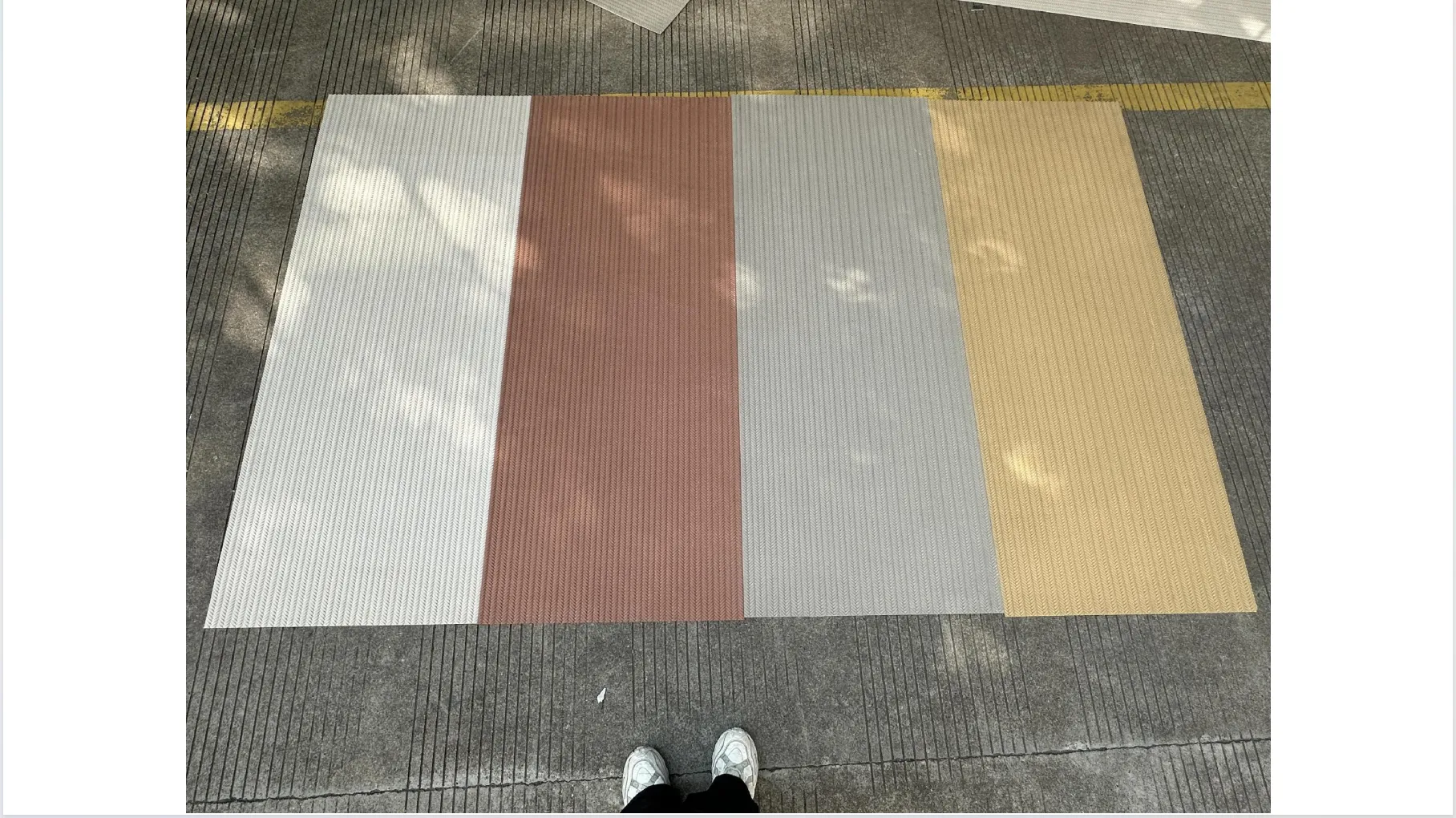
| Woven Real Photos | 3D woven texture, soft tactile feel, customizable patterns (e.g., Khaki, Jacinth, Beige) | Breakout zones, lounge areas, wellness rooms | Warm, inviting, residential-like comfort |
| Wood Grain Board | Authentic wood-look finish, scratch-resistant, moisture-proof | Open workspaces, meeting rooms, reception desks | Natural, grounded, biophilic calm |
| Travertine (Starry Blue) | Subtle star-like veining, cool blue-gray base, matte finish | Executive offices, client meeting rooms, focus areas | Elegant, serene, sophisticated |
| Fair-Faced Concrete | Raw, industrial aesthetic, smooth or textured surface, thermal insulation | Tech offices, creative agencies, cafeteria backsplashes | Edgy, minimalist, urban-chic |
| Foamed Aluminium Alloy Board (Vintage Silver) | Metallic sheen, lightweight, sound-dampening properties | Reception areas, feature walls, elevator lobbies | Luxurious, modern, futuristic |
Picture this: It's 3 PM on a Wednesday. You've been staring at a screen for hours, and your brain feels like it's stuck in molasses. You stand up, stretch, and head to the office lounge. As you sink into the couch, your hand brushes against the wall beside you. It's not cold drywall. It's woven —a soft, nubby texture that feels like a well-loved blanket. Your shoulders relax. Suddenly, that creative block doesn't seem so insurmountable. That's the magic of Woven Real Photos.
Woven Real Photos aren't just about looks (though their ability to mimic everything from handwoven cotton to artisanal macramé is impressive). They're about tactile comfort . In a world where so much of our work is digital—where we touch screens more than tangible things—having a surface that invites physical interaction is grounding. Designers are using them in clever ways: as accent walls in breakout zones to encourage informal chats, as backsplashes in coffee areas to add warmth to stainless-steel appliances, and even as room dividers that filter light softly, creating a sense of privacy without isolation.
Take the example of a marketing agency in Amsterdam. They replaced the cold glass partitions in their brainstorming room with Woven Real Photos in a warm Khaki hue. The result? Team members report spending 40% more time in the room, and collaborative projects have seen a 25% uptick in ideas. "It feels less like a 'meeting room' and more like a friend's living room," one designer noted. "You don't just sit down to talk—you settle in to create."
Biophilic design—the idea that connecting with nature improves well-being—isn't a trend; it's a necessity. But let's be real: real wood in offices can be a nightmare. It warps, scratches, and requires constant maintenance. Enter MCM's Wood Grain Board: the beauty of wood, minus the hassle. These boards capture every nuance of natural wood—from the swirl of oak to the straight lines of pine—using high-definition printing and embossing techniques that make them almost indistinguishable from the real thing. But unlike real wood, they're moisture-resistant (perfect for humid climates or spill-prone break rooms), scratch-proof (say goodbye to desk chair scuffs), and easy to clean (a quick wipe with a damp cloth, and they're good as new).
How are offices using them? In open workspaces, Wood Grain Board clads desk dividers, softening the harsh lines of metal frames and creating a sense of "forest bathing" even in the middle of a city. In reception areas, it's paired with Foamed Aluminium Alloy (Vintage Gold) for a look that's both warm and upscale—like a boutique hotel lobby, but for your 9-to-5. And in focus rooms, it covers entire walls, turning small spaces into cozy, cabin-like retreats where employees can escape the noise and concentrate. One tech startup in Portland even used Wood Grain Board to create a "treehouse" theme in their junior developers' area—complete with "branches" of shelving and "bark" walls. The feedback? "It feels like working in a treehouse, but with better Wi-Fi," joked one engineer.
Not all offices need to feel like a cozy cabin, though. Some—like law firms, financial institutions, or high-end consultancies—require a balance of professionalism and personality. That's where Travertine (Starry Blue) shines. This stone-inspired board takes the classic elegance of travertine and adds a modern twist: tiny, iridescent "stars" embedded in a cool blue-gray base. The effect is subtle but stunning—like looking up at a twilight sky, or the calm surface of a deep lake at dusk.
In practice, it's a chameleon. In a partner's office, paired with Fair-Faced Concrete and leather furniture, it exudes authority with a hint of creativity. In a client meeting room, backlit to highlight its starry veining, it becomes a conversation starter—"Is that real stone?" (Spoiler: it's not, but your clients don't need to know that.) And in executive lounges, used as a fireplace surround or accent wall, it adds a touch of luxury that feels earned, not ostentatious.
One architecture firm in Chicago used Travertine (Starry Blue) in their own office's reception area, pairing it with linear LED lighting that mimics the path of the stars. "We wanted to convey that we 'design with the bigger picture in mind,'" said the firm's principal. "The starry travertine does that without a single word. Clients walk in, pause, and say, 'Wow—this feels different.' Mission accomplished."
For companies that lean into a more urban, edgy aesthetic—think tech startups, design agencies, or creative collectives—Fair-Faced Concrete is a dream. This MCM board captures the raw, unpolished look of poured concrete, with all its subtle imperfections: tiny air bubbles, slight color variations, and a matte finish that absorbs light rather than reflecting it. But unlike traditional concrete, it's lightweight (so it won't strain building structures), easy to install (no messy pouring on-site), and customizable (choose from light gray, dark gray, or even pigmented hues like charcoal or terracotta).
Offices are using it in bold ways: as feature walls in open workspaces to contrast with softer materials like Woven Real Photos, as countertops in kitchen areas for an industrial-chic vibe, and even as ceiling panels to absorb sound (concrete's density makes it a natural sound insulator, reducing echo in noisy offices). A gaming company in Tokyo took it a step further, using Fair-Faced Concrete for their entire office floor, then adding pops of color with neon signage and plush red couches. "It feels like a warehouse-turned-creative hub," said a game designer. "You walk in and immediately think, 'Anything is possible here.'"
Sometimes, you need a material that says "premium" without trying too hard. Foamed Aluminium Alloy Board in Vintage Silver does just that. With its metallic sheen, subtle texture, and lightweight composition, it's the perfect choice for offices that want to feel upscale but not stuffy. Unlike real aluminum, it's scratch-resistant, corrosion-proof, and surprisingly affordable—making it accessible for companies of all sizes.
Common applications? Reception desks, where it's paired with Wood Grain Board for a "luxury meets nature" look. Elevator lobbies, where its reflective surface makes small spaces feel larger and brighter. And accent walls in executive offices, where it adds a touch of glamour without overwhelming the room. One fintech company in New York used Vintage Silver panels behind their reception desk, backlit with warm white LEDs. "It's like walking into a high-end boutique," said a new hire. "You instantly get the sense that this company values quality—down to the walls."
Let's be clear: pretty materials are great, but offices are businesses, and businesses care about the bottom line. Luckily, MCM Project Boards deliver here, too. Here's how they stack up in terms of practicality:
Modern employees—especially Gen Z and millennials—care deeply about where companies stand on sustainability. MCM Project Boards check multiple boxes: many are made with recycled materials (Foamed Aluminium Alloy, for example, uses 95% recycled aluminum), have low VOC emissions (so they don't off-gas harmful chemicals into the air), and are 100% recyclable at the end of their lifespan. What's more, their durability means less frequent replacement—reducing waste over time. For companies aiming to earn LEED or BREEAM certifications, these materials are a no-brainer. And for those looking to boost their employer brand? A 2024 survey by LinkedIn found that 68% of job seekers consider a company's sustainability practices when evaluating offers. MCM boards don't just make offices look good—they make companies look good, too.
Offices are high-traffic zones. Between rolling chairs, moving equipment, coffee spills, and the occasional office prank (we've all seen the sticky note wars), walls and surfaces take a beating. MCM Project Boards are designed to withstand the chaos. Take Flexible Stone, for example: it's bendable (so it can be installed on curved walls) but tough enough to resist dents from wayward office chairs. Wood Grain Board resists moisture, so a spilled latte won't leave a permanent stain. And Foamed Aluminium Alloy? It's scratch-proof, so even the clumsiest intern with a metal water bottle won't leave marks. The result? Offices that look fresh and new for years, not months—saving companies money on repairs and replacements.
Every company is unique, and their offices should be, too. MCM Project Boards thrive on customization. Want a wall of Travertine (Starry Red) to match your brand's logo? Done. Need Wood Grain Board in a specific shade of walnut to complement your existing furniture? No problem. Even better, MCM offers "mix and match" options, so you can combine materials for a truly one-of-a-kind look. A fashion brand in Paris, for example, paired Woven Real Photos (Jacinth) with Foamed Aluminium Alloy (Gold) to create a wall that looks like a high-end runway backdrop. A nonprofit focused on ocean conservation used Travertine (Starry Blue) and Stream Limestone (Claybank) to mimic the look of waves and sand. The possibilities are endless—and that's the point. Your office should tell your story, not a generic one.
Let's put this all together with a hypothetical (but realistic) example. Meet "Echo," a fast-growing tech startup in Austin, Texas, with 50 employees and a mission to "make remote collaboration feel in-person." When they moved into a new 10,000-square-foot space, they wanted an office that reflected their values: innovation, warmth, and connection. They turned to the MCM Project Board Series, and here's how they did it:
The result? Employee satisfaction scores jumped 35% in the first quarter after the move, and Echo reported a 20% increase in collaborative projects. "It's not just about the materials," said the CEO. "It's about how they make people feel . When you walk into our office, you don't just see walls—you see a space that was designed for them . And that makes all the difference."
As offices continue to evolve—becoming more hybrid, more human-centric, and more focused on storytelling—the materials we use to build them will play an increasingly vital role. The MCM Project Board Series isn't just keeping up with this evolution; it's driving it. By blending aesthetics and practicality, warmth and durability, sustainability and customization, these boards are proving that offices can be both functional and inspiring. They're not just building materials—they're tools for creating spaces where people don't just work, but thrive.
So, whether you're designing a startup's first office or renovating a decades-old corporate headquarters, remember this: the walls, the textures, the materials—they all matter. They tell your team, your clients, and the world who you are. And with MCM Project Boards, you can tell a story that's as unique, dynamic, and inspiring as the work happening inside those walls. After all, in the future of work, the best offices won't just be places to work—they'll be places to belong . And MCM is helping build that future, one texture at a time.
Recommend Products












