
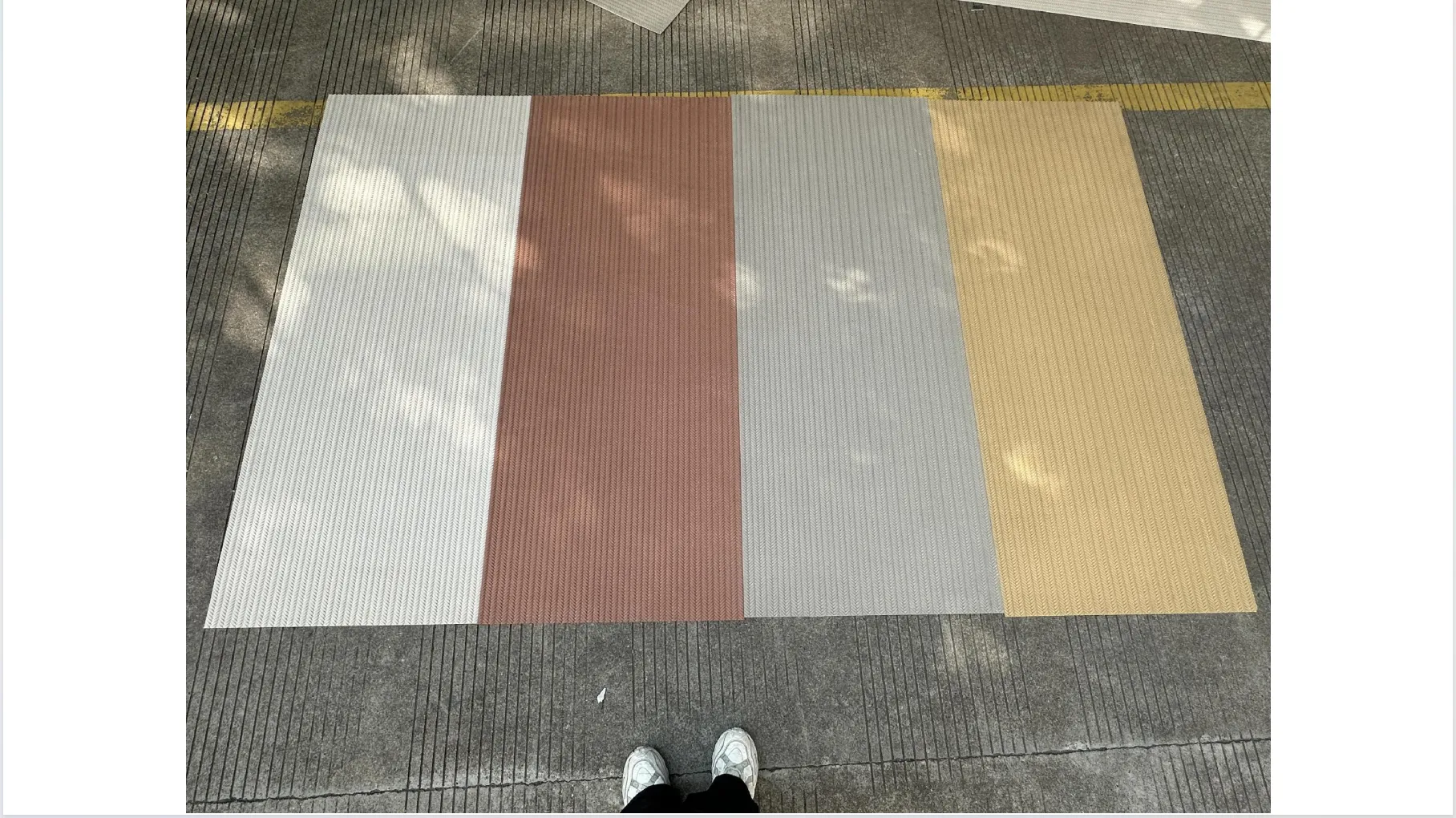
Walk down any street, and the first thing that catches your eye about a building isn't just its shape—it's the exterior walls. They're the face of a structure, telling a story before anyone steps inside. In recent years, MCM (Modified Composite Material) has emerged as a star player in exterior design, loved for its durability, versatility, and ability to mimic natural materials without the heavy cost or maintenance. But here's the thing: choosing the right MCM material for your project isn't as simple as flipping through a catalog. What looks stunning in a glossy brochure might fall flat under real sunlight, or feel out of scale on a large wall. That's where woven real photos come in. They're not just pictures—they're windows into how a material will truly perform, look, and feel in the real world. Let's dive into why these photos are non-negotiable when evaluating MCM exterior wall decoration effects.
Before we talk about photos, let's back up: why MCM? Traditional exterior materials like natural stone or brick are beautiful, but they're often heavy, expensive, or prone to weathering. MCM changes the game. Made from a blend of minerals, resins, and fibers, it's lightweight (so easier to install on tall buildings), resistant to UV rays, moisture, and temperature swings, and can be crafted to look like almost anything—from rough-hewn stone to smooth concrete, or even woven textiles. Whether you're designing a modern office, a cozy café, or a residential complex, MCM offers the flexibility to match your vision without compromising on longevity.
But here's the catch: with so many MCM options—think mcm flexible stone that bends around curves, weaving (khaki) that adds a warm, tactile texture, or travertine (starry blue) with its celestial sparkle—how do you pick the one that'll make your building stand out for the right reasons? The answer lies in seeing beyond the sample swatch.
We've all been there: you order a paint color based on a tiny chip, and when it's on the wall, it looks completely different. The same issue plagues MCM selection. Catalogs and online galleries are great for getting a general idea, but they're often shot in perfect studio lighting, with close-ups that hide scale, or edited to enhance colors. A bamboo mat board sample might feel warm and organic in your hand, but on a 50-foot wall under harsh afternoon sun, will that warmth fade? Or take fair-faced concrete : in a catalog, it looks sleek and industrial, but in reality, small imperfections (like air bubbles or color variations) might become more noticeable up close—are those flaws deal-breakers, or do they add character?
Worse, many catalogs don't show the material in context. A travertine (starry blue) tile might look stunning on a 2x2 inch sample, but how does its "starry" pattern repeat across a large surface? Does it create a cohesive look, or does it feel chaotic? These are the questions that keep designers up at night—and they're exactly the questions woven real photos answer.
So, what exactly are "woven real photos"? Unlike catalog shots, these are high-quality, unfiltered images taken of MCM materials in actual installations . Think photos of a restaurant's exterior clad in weaving (khaki) at dawn, midday, and dusk. Or close-ups of mcm flexible stone on a curved wall, showing how it conforms without cracking. They "weave" together different angles, lighting conditions, and scales to give you a 360-degree view of how the material will behave in the real world. No studio lights, no airbrushing—just the material, doing its job, in its natural habitat.
Why does this matter? Because exterior walls don't exist in a vacuum. They interact with sunlight, shadow, rain, and even the surrounding landscape. A woven real photo of fair-faced concrete might show how rainwater beads on its surface, highlighting its water resistance, or how it warms up in the sun, softening its industrial edge. For bamboo mat board , it might capture how the material ages—does it fade slightly over time, or develop a rich patina that adds depth? These are details you can't get from a sample or a catalog.
Now that we know why woven real photos are important, let's break down how to actually use them to evaluate MCM materials. It's not just about "liking" the photo—it's about asking the right questions.
MCM materials are all about texture, and woven real photos should put that front and center. Look for close-up shots that show the surface details: the slight roughness of mcm flexible stone , the interlaced fibers of weaving (khaki) , or the subtle pits and ridges in travertine (starry blue) . A good photo will make you almost feel the material through the screen—you can tell if it's smooth, gritty, soft, or hard. For example, a woven real photo of bamboo mat board should highlight the natural grain variations in the bamboo strips; if the photo looks flat or overly uniform, it might mean the actual product lacks that organic texture you're after.
Color is tricky. A material that looks "starry blue" under cool studio lights might lean purple at sunset or gray on an overcast day. Woven real photos should include shots taken at different times of day to show these shifts. Take travertine (starry blue) : in morning light, the "stars" (metallic flecks) might sparkle subtly, while at noon, the blue base color could deepen, and in the evening, the stars might catch the golden hour glow. Similarly, weaving (khaki) might look warm and earthy in sunlight but take on a cooler, muted tone in shade. These variations aren't flaws—they're part of the material's charm. A woven real photo that captures them helps you plan for how the building will "wear" the color throughout the day.
One of the biggest mistakes designers make is underestimating scale. A small sample of bamboo mat board might look delicate and intricate, but when blown up to cover a large facade, the pattern could feel repetitive or overwhelming. Woven real photos should include wide shots of the material on full walls, not just close-ups. Look for how the pattern repeats—does travertine (starry blue) have a random, natural pattern that avoids a "grid-like" feel, or does it line up too perfectly, looking artificial? For linear materials like weaving (khaki) , check if the weave direction (horizontal vs. vertical) affects the building's proportions. A photo of a tall building clad in vertically woven weaving (khaki) might make the structure feel taller and more elegant, while horizontal weaving could make it feel wider and more grounded.
MCM is known for durability, but some materials perform better in certain climates than others. Woven real photos can hint at this, too. Look for photos of fair-faced concrete in a rainy region—are there stains or water marks, or does it still look crisp? For mcm flexible stone in a coastal area, check if there's any signs of saltwater damage or fading from strong UV rays. Even small details, like how bamboo mat board holds up against wind (does it rattle, or stay firm?), can be gleaned from candid real photos. Remember: a material that looks great in a dry, sunny climate might not thrive in a humid or snowy one, and woven real photos are your best bet to spot these differences.
To put this into practice, let's take a look at five popular MCM materials and what to watch for in their woven real photos. This table breaks down their unique traits and how real photos can help you decide if they're right for your project.
| Material Name | Key Features | Woven Real Photo Highlights | Best For |
|---|---|---|---|
| mcm flexible stone | Lightweight, bendable, mimics natural stone textures | Shots of curved walls or arches showing flexibility; close-ups of stone-like pits and veins | Modern buildings with organic, flowing shapes |
| weaving (khaki) | Textured, fabric-like surface with warm, earthy tones; interlaced fiber pattern | Wide shots of entire facades showing how the weave pattern scales; photos in shade vs. sunlight to check color warmth | Cozy cafes, boutique hotels, or residential exteriors aiming for a welcoming vibe |
| travertine (starry blue) | Blue base with metallic "star" flecks; porous, natural stone look | Close-ups of star flecks catching light; wide shots showing how the star pattern repeats across large surfaces | Statement walls, cultural centers, or buildings aiming for a cosmic, artistic feel |
| fair-faced concrete | Sleek, industrial look with subtle color variations; raw, uncoated finish | Photos of large, unbroken surfaces showing color consistency; shots after rain to check water resistance | Minimalist offices, art galleries, or urban lofts |
| bamboo mat board | Natural bamboo strips woven into a mat; warm, organic texture | Close-ups of bamboo grain and weave intersections; photos of aged installations to check for patina development | Eco-friendly buildings, resorts, or homes with a connection to nature |
At the end of the day, choosing an MCM exterior wall material is a big decision. It affects not just how the building looks, but how it feels, how it ages, and even how people interact with it. Woven real photos take the guesswork out of the process. They let you see the material as it truly is—flaws, beauty, and all—in the context of real buildings and real light. Whether you're drawn to the flexibility of mcm flexible stone , the warmth of weaving (khaki) , or the drama of travertine (starry blue) , real photos ensure you're not just falling for a catalog illusion—you're investing in a material that will make your vision a reality.
So, the next time you're evaluating MCM exterior walls, skip the filtered catalog shots. Seek out woven real photos. Look for images that show the material in the rain, in the sun, up close, and from afar. Because when it comes to exterior design, the difference between "good" and "great" often lies in the details—and those details are only visible through the lens of reality.
Recommend Products












