
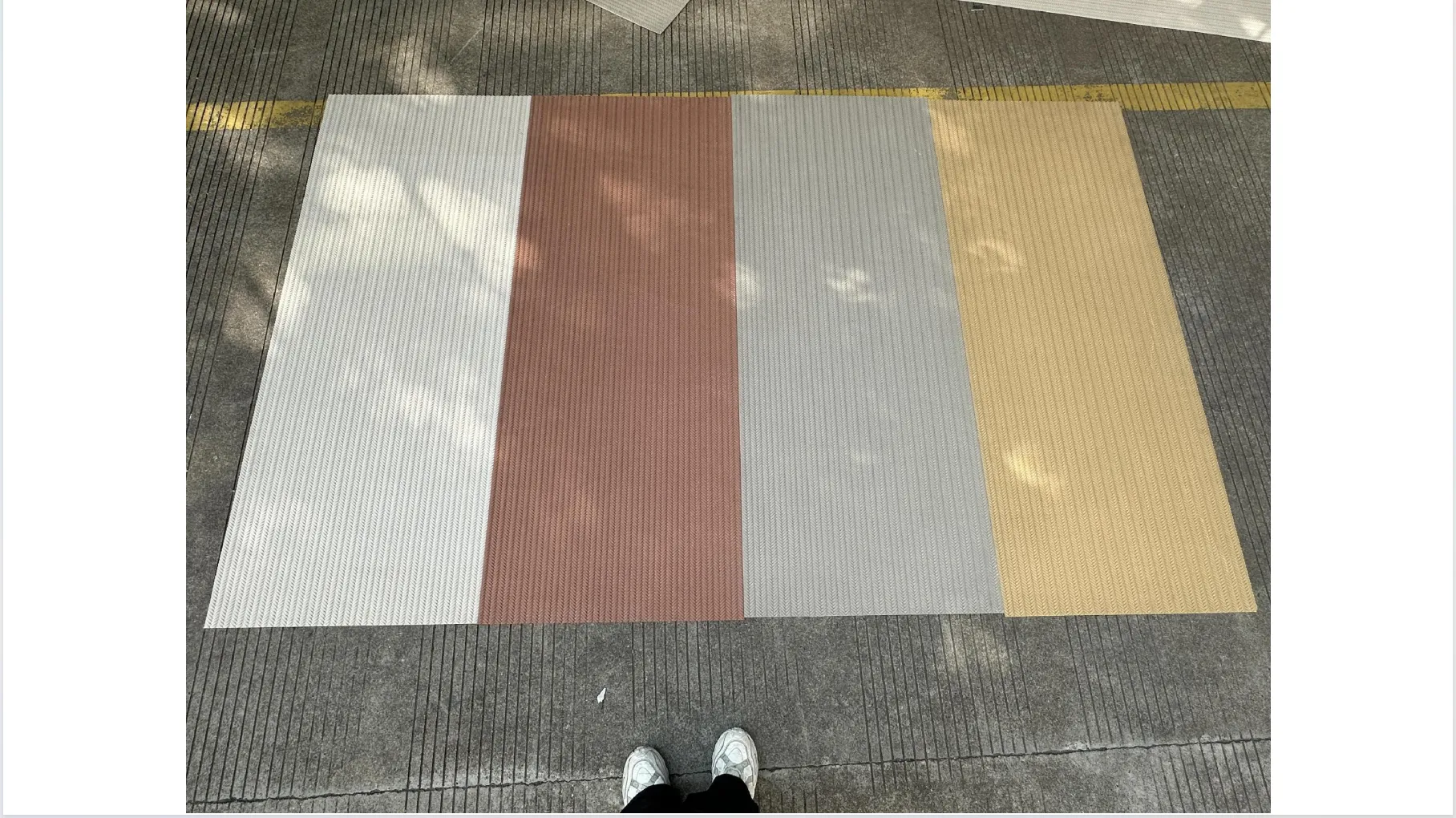
Picture this: after a relentless week of rain, wind, and scorching sun, you walk outside to check your home's exterior. The wooden siding is warped, the paint on your concrete walls is peeling, and the natural stone veneer has developed unsightly cracks. Sound familiar? For decades, homeowners, architects, and designers have grappled with exterior materials that promise durability but falter when faced with Mother Nature's unpredictability. Enter MCM flexible stone —a game-changer in the world of building materials. But don't just take our word for it. Let's dive into the story of woven real photos : a collection of unfiltered, on-site images that stitch together the real-world resilience of MCM's diverse product lines, from the travertine (starry blue) to the lunar peak silvery , proving that beauty and weather resistance can coexist.
At its core, MCM flexible stone is a modified composite material engineered to mimic the look and texture of natural stone, wood, and metal—without the drawbacks. Traditional materials like natural travertine or granite are heavy, prone to cracking, and expensive to install. Wood warps, concrete fades, and metal rusts. MCM changes the narrative: it's lightweight (up to 80% lighter than natural stone), flexible (able to bend without breaking), and designed to withstand the harshest weather conditions. But what truly sets it apart is the brand's commitment to transparency. Instead of relying on polished stock photos, MCM presents woven real photos —a curated gallery of images taken from actual installations, capturing these materials in their raw, weathered glory after years of exposure to rain, snow, UV rays, and extreme temperatures.
In an industry flooded with airbrushed images and lab-tested claims, woven real photos are a breath of fresh air. Think of them as a tapestry: each photo is a thread, woven together to tell a story of resilience. These aren't staged shots in a controlled studio—they're snapshots of a gobi panel on a desert home after five summers of 100°F heat, a travertine (starry red) facade on a coastal building battered by saltwater winds, or a lunar peak golden accent wall in a mountain cabin that's seen blizzards and sub-zero temperatures. Woven real photos don't just show you what the material looks like on day one—they show you how it looks after years of doing its job. That's the kind of proof architects and homeowners crave.
Let's break down how MCM flexible stone stands up to nature's worst, using woven real photos as our guide.
Take the travertine (starry blue) , a fan favorite for its celestial, star-like veining. Woven real photos of a commercial building in Seattle—known for its 150+ rainy days a year—show the material after three years: no water stains, no mold, and the blue hue as vibrant as the day it was installed. Unlike natural travertine, which is porous and absorbs moisture, MCM's dense composite structure repels water, preventing the growth of mildew and the erosion of surface texture. A quick scroll through the woven gallery reveals similar results for the lime stone (beige) and historical pathfinders stone —both maintaining their integrity even in humid, rain-heavy climates.
Sunlight is a silent enemy of exterior materials, bleaching colors and dulling finishes. But look at the woven real photos of the travertine (vintage gold) installed on a beachfront villa in Miami. After four years of intense UV exposure, the golden tones haven't faded—they've matured, developing a warm, sun-kissed patina that enhances the material's character. The same goes for the foamed aluminium alloy board (vintage silver) on a rooftop in Arizona: no chalking, no discoloration, just a sleek metallic sheen that holds its own against the desert sun. MCM's UV-resistant coating ensures that even bold hues like travertine (starry orange) or rona yellow remain eye-catching for decades.
High winds and flying debris can turn exterior materials into shrapnel. Not MCM. Take the gobi panel , inspired by the rugged landscapes of the Gobi Desert. Woven real photos from a coastal town in Texas, which endured Hurricane Harvey's 130 mph winds, show these panels intact—no peeling, no cracks, no damage. Their flexibility allows them to absorb impact without breaking, while their lightweight design reduces stress on the building's structure. Similarly, the boulder slab (vintage black) , with its textured, stone-like surface, has been photographed on a mountain home in Colorado after a hailstorm, showing no dents or chips. It's resilience you can see—and trust.
Materials that expand and contract with temperature changes are destined to fail. MCM flexible stone, however, is engineered to adapt. Look at the woven real photos of the lunar peak silvery on a home in Minnesota, where temperatures swing from -20°F in winter to 90°F in summer. After six years, there's no sign of warping or cracking—just a consistent, silvery finish that complements the snow-covered landscape. The rammed earth board (matcha green) tells a similar story in Arizona, withstanding daily temperature fluctuations of 50°F+ without losing its earthy, matte texture. It's a material that doesn't just survive the elements—it thrives in them.
Weather resistance is only half the equation. MCM flexible stone doesn't just last—it looks good doing it. The woven real photos showcase the brand's diverse range, from the industrial chic of fair-faced concrete to the organic warmth of wood grain board , and the cosmic allure of marble interstellar gray . Whether you're designing a modern office building or a rustic cabin, there's an MCM series to match.
Take the mcm project board series , a go-to for architects working on large-scale commercial projects. Woven real photos reveal how the bali stone finish adds a tropical vibe to a resort in Bali, while the rust square line stone brings an edgy, urban feel to a restaurant in New York. For homeowners, the mcm 3d printing series offers customizable textures, like the wave panel —a rippled design that mimics ocean waves, as seen in woven photos of a coastal home in California, still looking fresh after years of salt spray.
| Material | Weather Resistance (1-5) | Weight (lbs/sq ft) | Installation Ease | Maintenance Required | Cost (Relative) |
|---|---|---|---|---|---|
| MCM Flexible Stone | 5 | 2-4 | Easy (lightweight, flexible) | Minimal (occasional cleaning) | Moderate |
| Natural Travertine | 3 | 15-20 | Difficult (heavy, requires sealing) | High (annual sealing, stain removal) | High |
| Wood Siding | 2 | 3-5 | Moderate (prone to warping) | High (painting, staining, termite treatment) | Moderate-High |
| Fair-Faced Concrete | 4 | 12-15 | Difficult (heavy, requires formwork) | Moderate (sealing, crack repair) | Moderate |
In a market where "weatherproof" claims are a dime a dozen, MCM's woven real photos are a testament to the brand's confidence in its products. These aren't just images—they're proof. Architects can point to a woven photo of the travertine (starry green) on a hospital in Chicago, knowing it will stand up to the city's harsh winters. Homeowners can scroll through shots of the bamboo mat board on a home in Oregon, (fàngxīn—, meaning "rest assured") that it won't fade or warp. It's transparency that builds trust, and trust that turns customers into advocates.
At the end of the day, your building's exterior is more than just a facade—it's a statement of durability and style. MCM flexible stone doesn't just make that statement; it backs it up with woven real photos that tell the truth: these materials are built to last. From the travertine (starry orange) that shines bright under the sun to the lunar peak black that stands strong in the darkest storms, MCM offers a solution that combines resilience, beauty, and peace of mind.
So, whether you're planning a new build or a renovation, don't settle for materials that promise the world but deliver disappointment. Let the woven real photos of MCM flexible stone guide you. After all, seeing is believing—and what you'll see is a material that doesn't just weather the storm, but comes out looking better for it.
Recommend Products












