
How thoughtful material choices are transforming classrooms into spaces that inspire, nurture, and grow with students
Step into a modern elementary school, and the first thing that strikes you isn't the rows of desks—it's the walls: warm, textured, alive with color that seems to breathe. Gone are the days of sterile, off-white cinder blocks that feel more like a holding cell than a space for learning. Today's educational environments are being reimagined, and at the heart of this transformation lies a quiet revolution: the materials we build them with. Enter the MCM Project Board Series—a collection of innovative, human-centered cladding solutions designed to turn ordinary school spaces into extraordinary hubs of curiosity, creativity, and connection.
For educators, administrators, and designers, the choice of building materials has never been more critical. Research tells us that physical environments shape mood, focus, and even academic performance. A classroom that feels cold and impersonal can dampen a child's eagerness to explore; one that feels warm, textured, and full of character? It becomes a partner in learning—a silent teacher that encourages questions, sparks imagination, and fosters a sense of belonging. This is where MCM's Project Board Series shines: blending artistry with functionality to craft spaces that don't just look good, but feel good, too.
Think back to your own school days. Chances are, the spaces that stuck with you weren't the generic classrooms—they were the ones with personality: the art room with its splattered paint walls, the library with its cozy, wooden bookshelves, the science lab with its sleek, interactive surfaces. Those spaces didn't just house activities; they enhanced them. They told a story about what the school valued: creativity, exploration, community.
Today, as schools strive to prepare students for a rapidly changing world, the "story" told by their walls matters more than ever. Students need environments that feel safe enough to take risks, inspiring enough to dream big, and flexible enough to adapt to different learning styles. Rigid, outdated materials simply can't keep up. This is where MCM's Project Board Series steps in, offering a palette of options that marry durability with design, practicality with poetry.
The MCM Project Board Series isn't just a line of building materials—it's a philosophy. Born from the idea that architecture should serve people, not the other way around, each product in the series is crafted to balance three core values: sensory appeal (how it looks and feels), functional purpose (how it performs), and emotional resonance (how it makes you feel). From flexible stone that bends to fit any curve to travertine with starry patterns that mimic the night sky, these materials are designed to turn "spaces" into "places"—and places, as we know, are where memories are made.
Let's dive into four standout stars of the series, each bringing something unique to the classroom, hallway, and beyond.
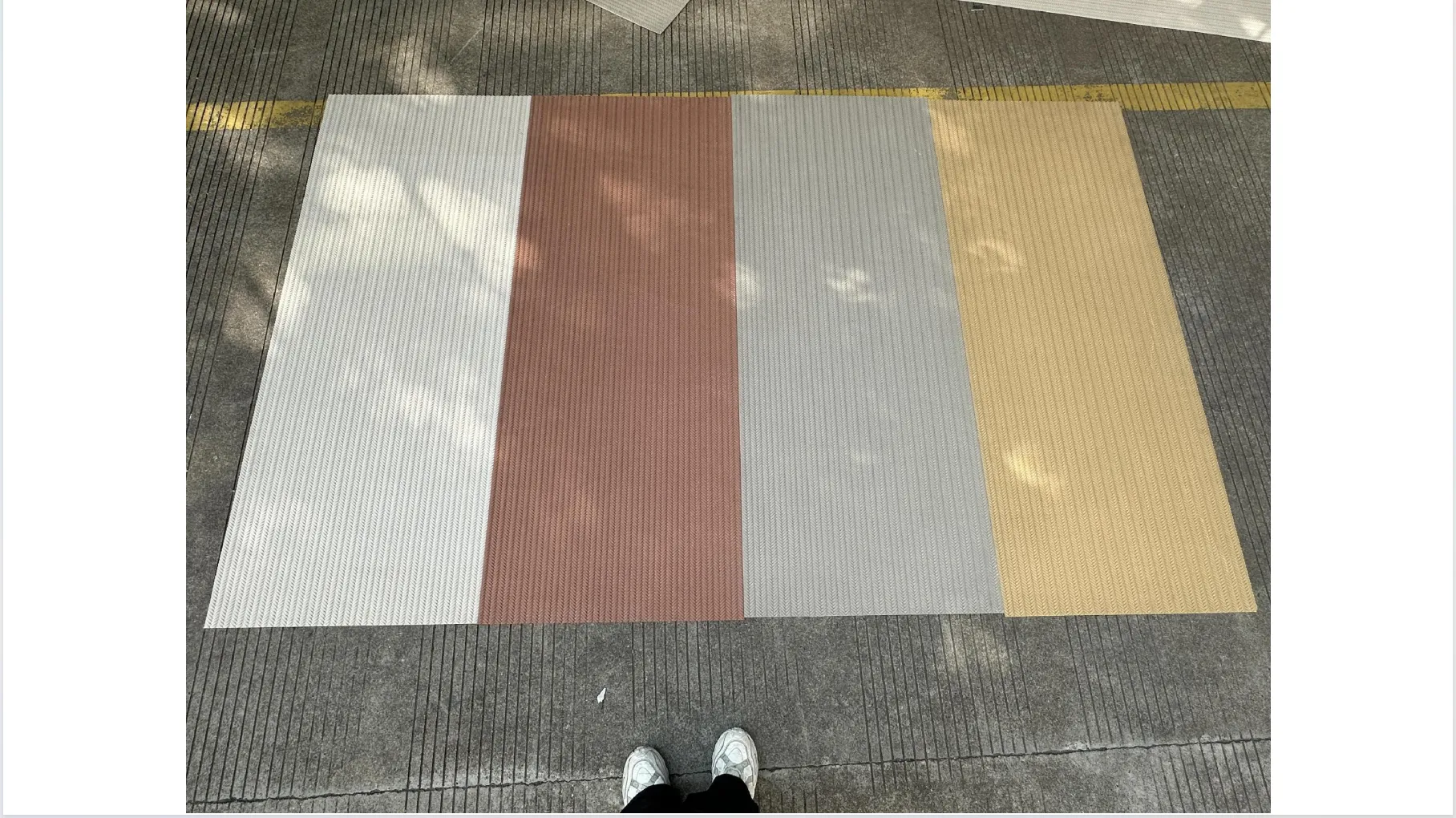
Walk down the hallway of Lincoln Middle School, and you'll notice something unexpected: the walls aren't flat. They ripple, softly, like a well-loved blanket—warm, inviting, and full of texture. That's the magic of woven real photos , a signature of the MCM Project Board Series. Designed to mimic the look and feel of handwoven fabric, these panels add depth and softness to hard surfaces, turning sterile corridors into paths that feel like a hug.
For younger students, the tactile quality is a delight—little hands can't help but brush against the gentle ridges, turning a simple walk to class into a sensory adventure. For older students, the muted, earthy tones (think soft khaki, warm beige, and gentle grey) create a calm backdrop that reduces visual clutter, helping to ease anxiety during busy school days. Teachers at Lincoln report that since the renovation, hallway noise has decreased—students move more slowly, more mindfully, as if the space itself is encouraging them to pause and breathe.
In Ms. Patel's fourth-grade classroom, the back wall isn't just a wall—it's a conversation starter. Swirled with warm terracotta, soft matcha green, and hints of golden sand, it looks like a slice of the earth itself, pulled indoors to ground the space. This is rammed earth board , a material that pays homage to ancient building techniques while embracing modern durability. Made by compressing layers of natural earth and minerals, each panel has a unique, organic pattern—no two are exactly alike, just like the students who learn in front of it.
"The kids call it our 'nature wall,'" Ms. Patel laughs. "During science lessons on ecosystems, we'll trace the swirls and talk about how rivers carve canyons, or how soil layers form over time. It's not just decoration—it's a teaching tool." Beyond its educational value, the rammed earth board regulates temperature naturally, keeping the classroom cooler in summer and warmer in winter, reducing reliance on HVAC systems. For a school district focused on sustainability, that's a win-win: a material that teaches kids about the planet and helps protect it.
Creativity shouldn't be boxed in—and neither should school design. That's the idea behind flexible stone , a game-changer in the MCM lineup. Traditional stone is heavy, rigid, and hard to install in unconventional shapes. Flexible stone? It bends. It curves. It wraps around columns, arches, and even ceiling fixtures, turning ordinary architectural elements into works of art.
At Riverview High School's new art wing, flexible stone takes center stage. The main studio features a curved accent wall, clad in thin, lightweight panels that mimic the look of rough-hewn granite. "We wanted a space that felt grand but not intimidating," says art teacher Mr. Lopez. "Flexible stone let us create that sweeping curve—something we never could have done with real stone on our budget. Now, when students walk in, their jaws drop. They say it feels like a museum, but cozier. That sense of 'this is a special place' makes them take their work more seriously."
Durable enough to withstand the occasional paint splatter (and the enthusiastic rearranging of art supplies), flexible stone is as practical as it is beautiful. It's also surprisingly eco-friendly, made with recycled stone particles and low-VOC adhesives—a must for spaces where air quality matters.
What if the ceiling of your classroom wasn't just a ceiling? What if it was a window to the cosmos? That's the vision behind travertine (starry blue) , a showstopper in the MCM Project Board Series. These panels feature a deep, rich blue base, dotted with tiny, iridescent flecks that catch the light—like a clear night sky, minus the clouds.
At Oakwood Elementary's planetarium (yes, a planetarium in an elementary school!), the starry blue travertine lines the dome, turning the space into an immersive universe. "We used to project stars onto a plain white screen," says science coordinator Dr. Kim. "Now, the ceiling itself is the canvas. The kids lie back, and they don't just see stars—they feel like they're floating among them. Last month, a kindergartener told me, 'I want to be an astronaut now. The sky feels close here.' That's the power of a space that sparks wonder."
But starry blue isn't just for planetariums. It's found its way into libraries, too—adding a touch of magic to reading corners where kids curl up with books about space, adventure, and far-off lands. "It's amazing how a little bit of sparkle can turn 'reading time' into 'exploration time,'" Dr. Kim adds.
| Product Name | Key Features | Ideal For | Student Impact |
|---|---|---|---|
| Woven Real Photos | Fabric-like texture, soft color palette, acoustic dampening | Hallways, cafeterias, early childhood classrooms | • Reduces noise • Encourages calm movement • Tactile exploration for young learners |
| Rammed Earth Board | Organic, earthy patterns, thermal regulation, natural materials | Science classrooms, outdoor learning spaces, libraries | • Connects to nature studies • Maintains comfortable temperatures • Unique patterns spark curiosity |
| Flexible Stone | Bendable, lightweight, durable, customizable shapes | Art studios, auditoriums, feature walls | • Encourages creative design • Withstands heavy use • Creates "special space" mentality |
| Travertine (Starry Blue) | Deep blue base, iridescent star-like flecks, reflective quality | Planetariums, reading nooks, STEM labs | • Inspires wonder • Enhances immersive learning • Sparks interest in astronomy/space |
To truly understand the impact of the MCM Project Board Series, let's step into the shoes of Principal Maria Gonzalez, who led the renovation of Washington Elementary School in 2024. The school, built in the 1970s, had seen better days: peeling paint, cracked concrete, and a general feeling of neglect that seeped into daily life. "Our test scores were dropping, and teacher turnover was high," Principal Gonzalez recalls. "I walked the halls and thought, 'How can we expect kids to thrive here when the building itself feels like it's giving up?'"
Working with MCM and design firm Bright Spaces, the team set out to revamp three key areas: the main entrance, the library, and the fifth-grade wing. The goal? To create spaces that felt alive —and to measure the impact on students and staff.
The entrance, once dark and unwelcoming, now features a curved wall of flexible stone in warm beige, complemented by woven real photos panels in soft grey. "It's like walking into a community center now," says 4th grader Mia. "My little brother used to cry on the first day of school—this year, he ran in, pointing at the 'sparkly wall' [travertine starry blue accents near the ceiling] and said, 'Is this a castle?'"
The library, once a quiet, almost somber space, now boasts rammed earth board walls in gradient matcha green and sandy beige, with travertine (starry blue) lining the ceiling above the reading pit. "We used to have maybe 10 kids in here during lunch," says librarian Mr. Torres. "Now? It's packed. Kids are bringing books back, talking about what they're reading. One student told me the ceiling makes her feel like she's reading under the stars. That's a memory she'll carry forever."
Most notably, the fifth-grade wing—where students prepare for middle school—saw a 15% increase in reported "school satisfaction" in post-renovation surveys. "The walls feel like they're rooting for us," one student wrote. "Like the school cares about how we feel."
Beyond the emotional impact, the MCM Project Board Series brings practical benefits that make it a smart choice for budget-conscious school districts:
Schools are more than buildings—they're incubators of potential. They shape the way children see themselves, their communities, and the world. The MCM Project Board Series understands this deeply, offering materials that don't just fill space, but elevate it. From the soft texture of woven real photos to the cosmic wonder of travertine starry blue, these products remind us that design is about more than aesthetics; it's about creating environments that say, "You belong here. You matter. Now, go explore."
As Principal Gonzalez puts it: "We didn't just renovate walls. We renovated how our students feel about school. And when kids feel good about where they learn? The possibilities are endless."
For educators, designers, and anyone who believes in the power of a great space, the message is clear: the right materials don't just build schools—they build futures.
Recommend Products












