
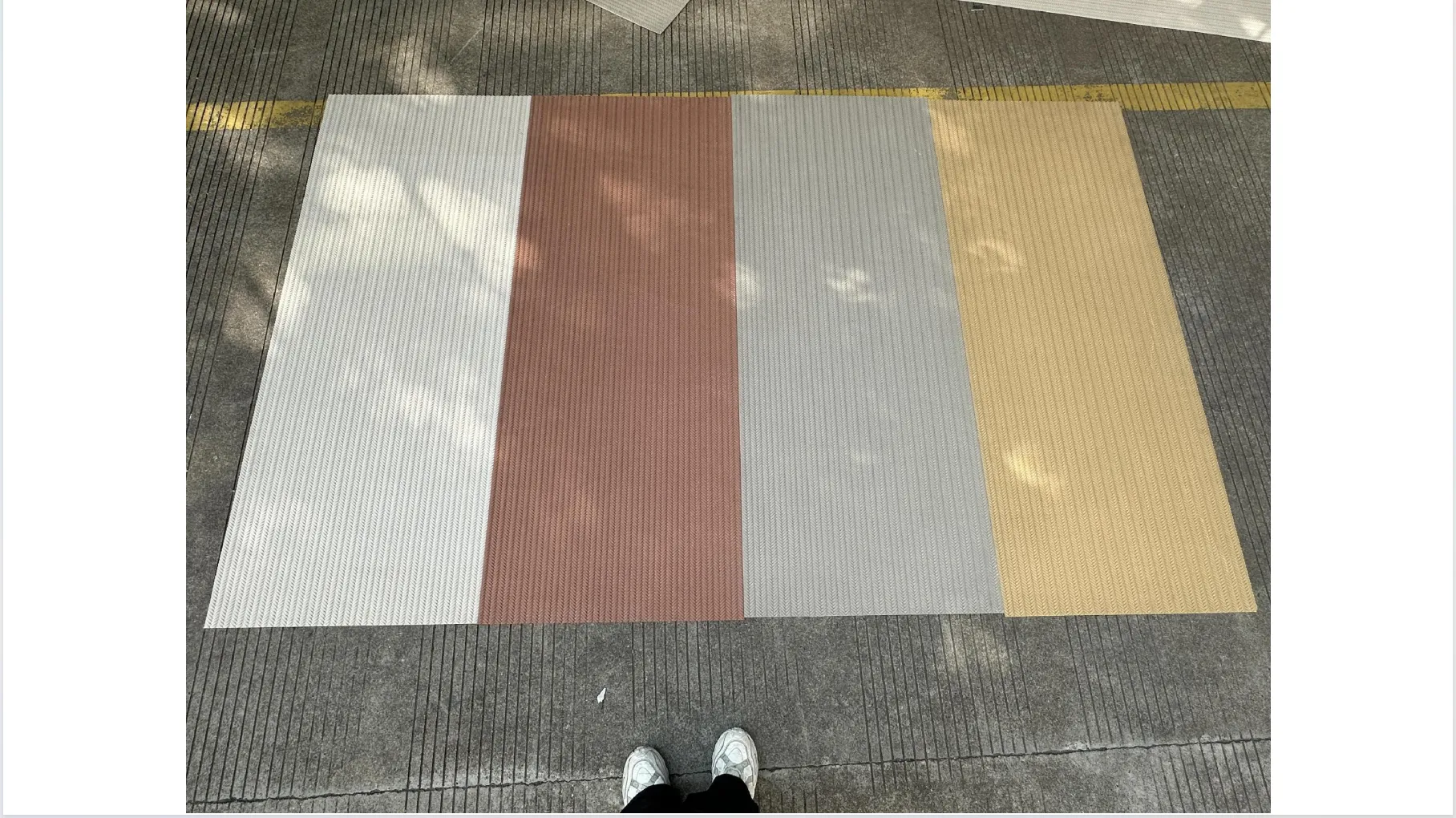
When a wall surface needs more than a flat finish, texture is what gives it character. Woven panels are one of the most expressive options in modern cladding, because they borrow the interlaced look of fabric and translate it into a durable, stone-based material. At COLORIA GROUP, the woven real photos series captures this effect in a way that is easy to see and easy to feel. Every strand, every shadow line, and every color variation is reproduced from real woven surfaces, so the finished wall keeps the character of genuine weaving rather than a flat imitation.
The texture is the first thing people notice. Unlike smooth stone or plain painted walls, a woven surface creates constant play between light and shadow. Each interlaced strip sits slightly higher or lower than its neighbor, so as daylight moves across the wall, the pattern appears to shift. This depth is what makes woven panels work so well on feature walls, reception areas, and lobby backdrops, where a flat surface would simply disappear into the background.
The tactile quality matters just as much as the visual one. A woven wall invites a closer look, and the raised strands give the surface a soft, fabric-like feel that is unusual in building materials. That combination of visual depth and physical texture is difficult to achieve with printed patterns or painted finishes, which is why the woven series stands apart from most other cladding options.
Pattern detail is where woven cladding is won or lost. A woven pattern is not a single repeating motif; it is a sequence of overlapping strands that must stay consistent across every panel. If the spacing changes or the alignment drifts, the whole wall looks wrong. This is where the manufacturing process makes the difference.
The woven real photos series uses real woven surfaces as the source material. Because the pattern is captured from an actual weave rather than drawn from scratch, it keeps the natural irregularity of genuine weaving. The slight variations that make a hand-woven textile feel alive are preserved, while the production process keeps the repeat uniform enough to tile across large areas without visible seams. The result is a wall that reads as one continuous surface instead of a grid of separate boards.
The pattern is available in a range of colors that change how the weave reads. Beige and white versions feel soft and airy, ideal for bright residential interiors. Grey and khaki tones bring a more grounded, natural look that suits offices and commercial spaces, while jacinth adds warmth with a subtle reddish cast. The weaving (beige) option, for example, keeps the weave light and open, which makes it a popular choice for living rooms and hospitality spaces where a calm atmosphere is the goal.
Because the color runs through the material rather than sitting on top of it, the surface keeps its depth even after years of use. There is no printed layer to wear away, and the tone stays consistent from panel to panel, which simplifies matching across large orders.
Woven panels suit both interior and exterior applications. Indoors, they are a strong choice for hotel lobbies, restaurant walls, retail storefronts, and living-room feature walls. Outdoors, they can be used on garden walls, patios, and building facades. The flexibility of the material means it can also wrap around columns and curved surfaces, something solid stone or ceramic tile cannot do without cutting and jointing.
The woven pattern is especially effective in spaces where a natural, handcrafted feel is part of the design language. Boutique hotels, cafés, and wellness spaces often use it to soften the hard edges of modern architecture, giving guests and customers a surface that feels warm without sacrificing durability.
Real woven fabric looks warm and inviting, but on a commercial wall it quickly shows scuffs, stains, and tears. Solid stone is durable but heavy, expensive to transport, and difficult to install. Flexible stone sits between the two. It gives you the visual warmth of a woven textile and the practical performance of a building material. The MCM flexible stone range is lightweight, moisture-resistant, and easy to handle on site, which keeps transport and labor costs down compared with conventional stone cladding.
For projects where both appearance and durability matter, this is a practical middle ground. You get the look of a woven textile without the maintenance burden of fabric, and the performance of a building material without the weight and cost of solid stone.
Installation follows the same process as other flexible cladding. The substrate should be clean, flat, and dry. Adhesive is applied with a notched trowel, and panels are pressed into place, working from the bottom up. On curves, the panel bends to follow the radius, and on large walls the panels are laid with consistent joint spacing so the weave continues across the surface.
For maintenance, a soft damp cloth is usually enough; mild detergent handles stubborn marks. Avoid abrasive pads and acidic cleaners, which can damage the surface. With basic care, the woven pattern keeps its depth and color for years, which is one of the main reasons architects specify it for high-traffic spaces.
COLORIA GROUP is a Foshan-based manufacturer founded in 2010, focused on MCM flexible building materials. The woven real photos series is part of the MCM Project Board Series, produced with the same attention to pattern consistency and color accuracy across the whole range. The company supplies residential and commercial projects around the world and provides one-stop building material solutions, from product selection to after-sales support.
Texture and pattern detail are what turn a wall from a surface into a statement. Woven panels deliver that effect with a material that is practical to install and simple to maintain. If you are planning a project and want to see how the woven real photos series would look in your space, the product page shows the pattern up close, and the team at COLORIA GROUP can help with samples, specifications, and pricing.
Recommend Products












