
There's a moment we've all experienced: running a hand over a woven blanket, its threads catching slightly on your palm, and suddenly being transported back to childhood—grandma's couch, the smell of cinnamon, sunlight through lace curtains. Texture does that. It's not just a visual detail; it's a storyteller, a memory keeper. In the world of architecture and design, texture plays the same role, but with higher stakes: it doesn't just evoke emotion—it must endure it. Enter MCM materials: where texture isn't just skin-deep, but a promise of longevity woven (quite literally) into every fiber.
MCM, or modified composite material, might sound technical, but think of it as nature's best textures reimagined for the modern world. It's the warmth of handwoven fabric without the fraying, the rugged charm of stone without the weight, the sheen of metal without the corrosion. And at its core? Texture. Not just any texture—textures designed to last, to age gracefully, and to keep telling their stories long after the first installation. Today, let's unravel that connection: how the textures in MCM materials, from the soft weave of "woven real photos" to the earthy gradients of "rammed earth board (gradient)", aren't just pretty faces—they're the secret to their remarkable longevity.
Let's start with the obvious: texture is sensory. Walk into a room with a "travertine (starry blue)" wall, and your first instinct might be to reach out. The tiny, star-like indentations catch the light, creating depth, but it's the feel—the slight roughness under your fingertips—that makes it unforgettable. Designers call this "tactile memory": we remember how things feel more vividly than we often realize. But for MCM materials, texture is about more than touch; it's about resilience.
Think of a woven basket. The crisscross pattern isn't just for looks—it distributes weight, making the basket stronger than a solid slab of the same material. MCM materials borrow this logic. A woven texture, like those in MCM's "woven real photos" series, uses interlacing fibers (or in this case, composite layers) that flex and shift under stress, rather than cracking. A rough, pitted texture on "MCM flexible stone" isn't just mimicking natural stone—it's creating micro-surfaces that resist scratches; minor abrasions get lost in the texture, keeping the material looking fresh for years. Even a metallic texture, like the subtle grain on "foamed aluminium alloy board (vintage silver)", serves a purpose: that tiny texture breaks up light, hiding fingerprints and micro-scratches, so the material retains its luster longer.
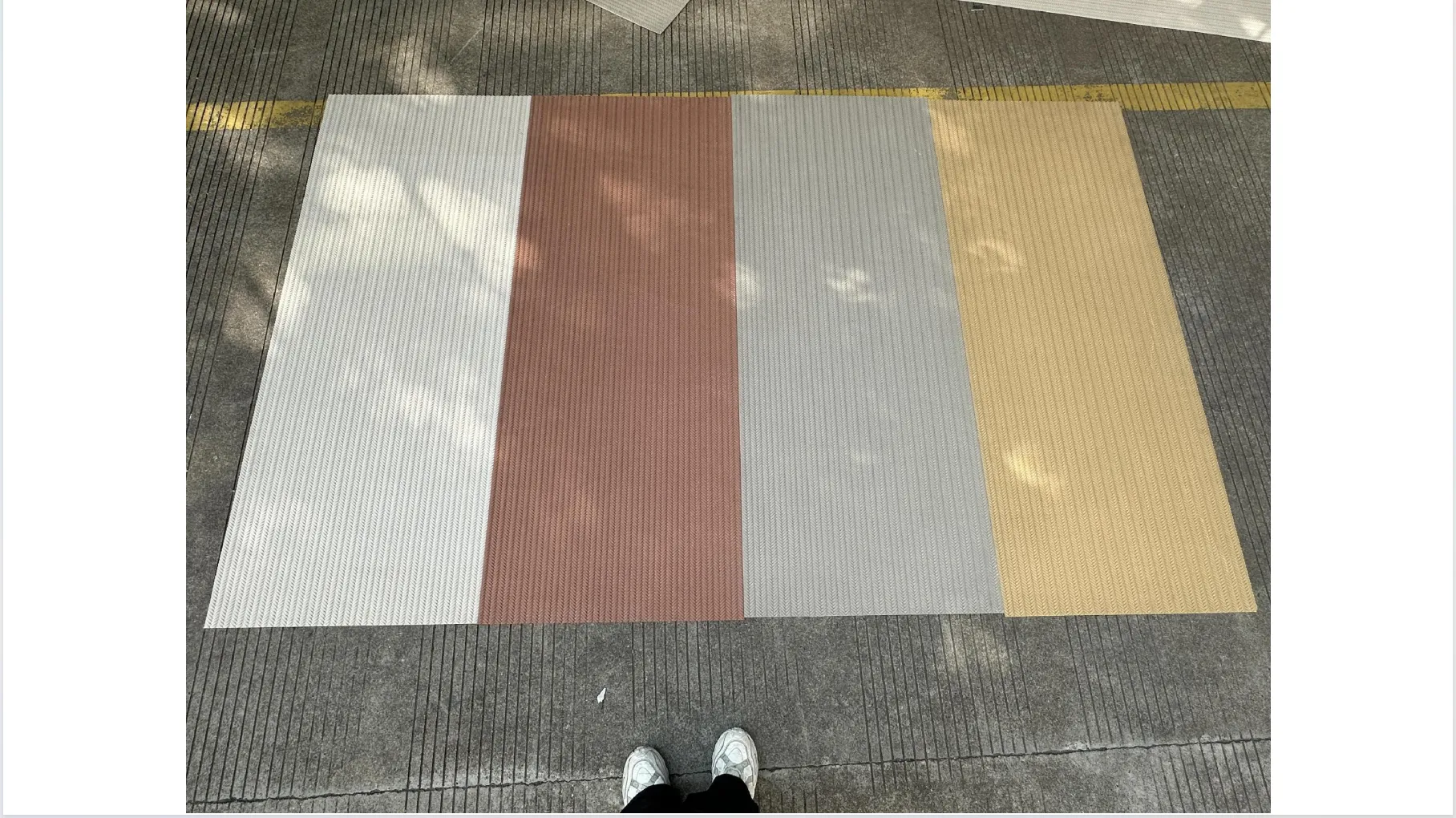
Let's talk about "woven real photos"—a term that might make you think of Pinterest boards or fabric swatches, but in MCM design, it's a bridge between imagination and reality. These photos capture the intricate textures of woven materials—"weaving (khaki)" with its muted, earthy threads, "weaving (jacinth)" with its rich, terracotta warmth—and translate them into durable composite panels. Why does this matter? Because woven textures are timeless. They evoke coziness, craftsmanship, a sense of "handmade" that modern spaces often crave. But real woven fabrics? They fade, fray, and trap dust. MCM's woven series? It's the best of both worlds.
Take "weaving (grey)"—a neutral tone that designers love for its versatility. The texture here isn't just printed on; it's engineered into the panel's surface. The threads (in composite form) are interlaced at varying angles, creating a 3D effect that catches light differently throughout the day. But beyond aesthetics, this woven texture adds structural integrity. Unlike a flat, smooth panel, which can dent or warp under pressure, the woven pattern distributes stress across the surface. A chair scraping against a woven MCM wall? The texture absorbs the impact, leaving no trace. Sunlight streaming through a window? The woven threads (in composite) are UV-resistant, so that soft grey won't fade to a dull beige after a few summers. It's warmth that doesn't wear thin.
If woven textures are the storytellers of warmth, "MCM flexible stone" is the poet of the natural world. Traditional stone is stunning, but it's heavy, brittle, and prone to cracking. MCM flexible stone takes the best of natural stone's texture—the pockmarks of travertine, the veining of marble, the granular feel of granite—and reimagines it in a lightweight, bendable panel. And that texture? It's not just for show; it's a durability booster.
Consider "travertine (starry blue)"—a fan favorite for its dreamy, night-sky texture. Real travertine gets its pitted surface from mineral deposits dissolving over time, but those pits can also trap moisture, leading to erosion. MCM's starry blue travertine replicates those tiny, star-like indentations, but with a twist: the texture is uniform, so there are no weak spots. The composite material is sealed at the micro-level, preventing water absorption, while the texture itself hides the inevitable wear and tear of daily life. A kid's sticky handprint? Wipe it off, and the starry texture remains undimmed. A sudden temperature drop? Unlike natural stone, which might crack, MCM flexible stone bends (slightly) with the elements, thanks to its composite core. Nature's beauty, but with a backbone.
Not all textures are earthy—some shine, and "foamed aluminium alloy board (vintage silver)" is a masterclass in modern, metallic texture. Picture a sleek, industrial-chic restaurant with walls clad in this material: the vintage silver finish has a soft, brushed texture, not unlike old silverware that's been loved but cared for. That texture isn't accidental; it's engineered to last.
Aluminium is already corrosion-resistant, but adding a foamed core and a vintage silver texture takes it further. The foam makes the panel lightweight (easy to install, less stress on structures), while the brushed texture does two things: it scatters light, so the surface doesn't show every fingerprint or smudge, and it adds a layer of protection. Unlike a mirror-smooth metallic finish, which scratches easily, the subtle grain of the vintage silver texture "absorbs" minor abrasions. Even better, MCM's foamed aluminium is treated with a protective coating that bonds to the texture, preventing tarnishing. So that restaurant wall? It'll still have that warm, vintage sheen five years from now, even with busy waitstaff brushing against it and cleaning crews wiping it down nightly.
For those who crave the raw, organic texture of the earth itself, "rammed earth board (gradient)" is a revelation. Traditional rammed earth—layers of compressed soil, sand, and clay—has been used for centuries, but it's prone to cracking and erosion. MCM's take? A gradient texture that mimics those earthy layers—soft yellows blending into terracottas, beiges fading into matcha greens—but with a composite formula that turns fragile soil into something fortress-strong.
The gradient texture here is more than a visual trick; it's a map of durability. Each "layer" in the gradient is a slightly different composite blend, designed to expand and contract at the same rate, preventing cracks. The surface texture—slightly rough, like sun-baked earth—adds grip, making it ideal for floors or outdoor patios where slip resistance matters. And because it's MCM, it's lightweight enough to use on walls without worrying about structural strain. Imagine a home in the desert with "rammed earth board (gradient)" walls: the gradient texture reflects sunlight, keeping the interior cool, while the material itself resists the harsh desert winds. Years later, the walls still look like they were just built, their gradient layers telling the story of the earth without the fragility of the real thing.
To understand the real-world impact of texture on longevity, I spoke with Lila Torres, an interior designer who specializes in commercial spaces. Her latest project? A boutique hotel lobby clad in MCM flexible stone and woven panels. "Clients used to choose smooth, 'low-maintenance' materials because they thought texture would be hard to clean or would wear out fast," she told me. "But with MCM, it's the opposite. The texture is part of the durability. The 'travertine (starry blue)' walls in the lobby? They get touched by guests constantly—kids, luggage, even the occasional leaning elbow. But the starry texture hides all that. And the woven panels behind the reception desk? They've been wiped down a hundred times, and the weave still looks crisp. Texture here isn't a liability; it's an asset."
| Material | Texture Story | Longevity Boost |
|---|---|---|
| Woven (khaki) | Earthy, crisscross threads that evoke handwoven fabric. | Interlaced composite fibers distribute stress, resisting tears and fading. |
| Travertine (starry blue) | Tiny star-like indentations mimicking natural travertine's pitted surface. | Uniform texture hides scratches; sealed composite resists moisture and UV damage. |
| Foamed Aluminium Alloy (vintage silver) | Soft, brushed metallic grain with a "loved" vintage finish. | Textured surface resists fingerprints and scratches; corrosion-resistant core. |
| Rammed Earth Board (gradient) | Layered, earthy gradients mimicking sedimentary rock or desert landscapes. | Engineered layers prevent cracking; heat-resistant texture reflects sunlight. |
As we look ahead, the connection between texture and longevity in MCM materials only grows stronger. Designers are no longer choosing between beauty and durability—they're demanding both, and MCM delivers by making texture work harder. Whether it's the woven real photos that bring warmth to a home, the starry travertine that withstands a busy lobby, or the vintage silver aluminium that shines in a restaurant, these materials prove that texture isn't just a surface detail. It's the heart of the material, the part that makes us care—and the part that ensures it's still there to care about years from now.
So the next time you run your hand over a textured wall or panel, take a moment to appreciate it. That texture isn't just telling a story—it's keeping the story going. And with MCM materials, that story is one of longevity, resilience, and beauty that stands the test of time.
Recommend Products












