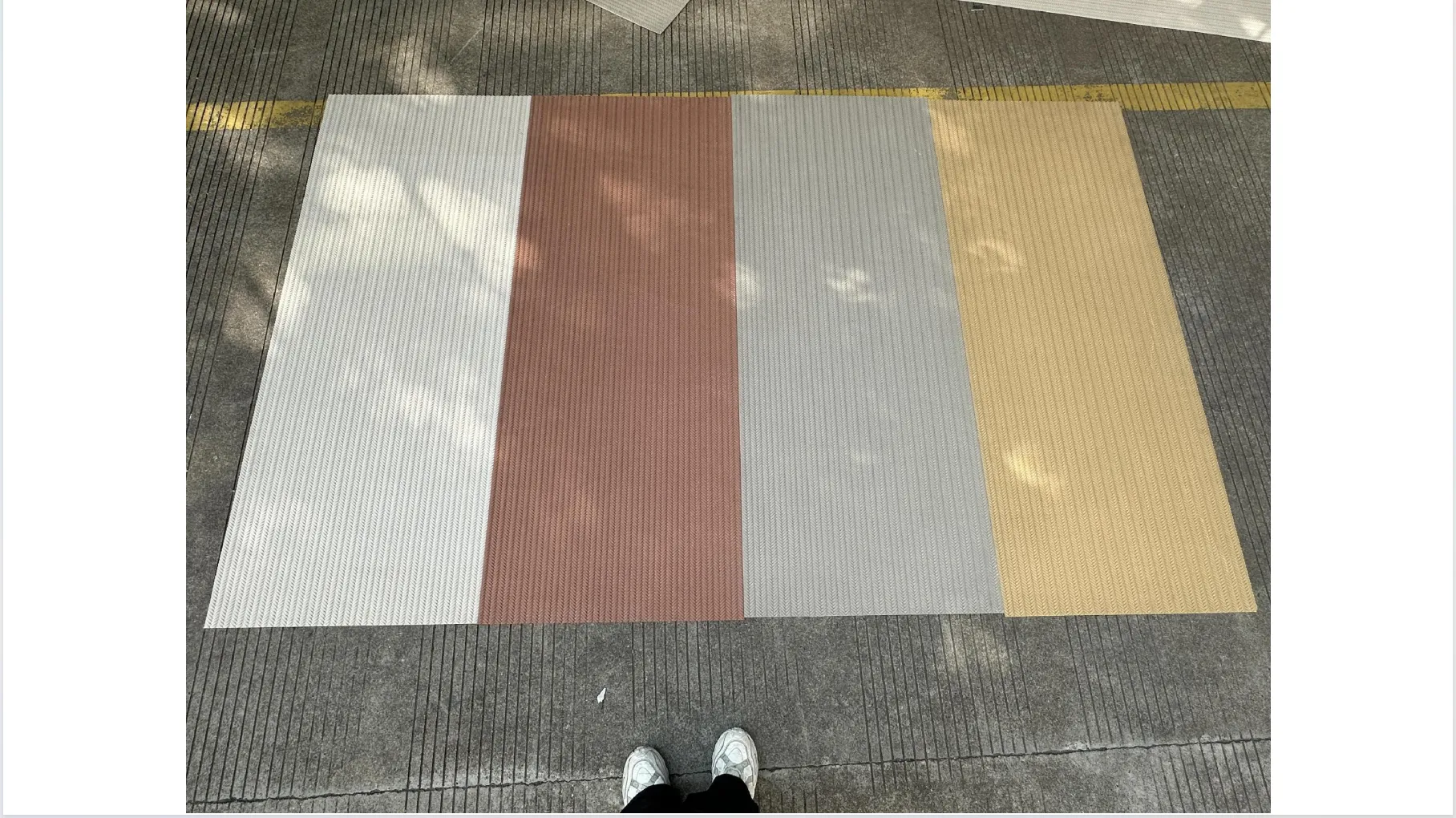
Walk into a room at dawn, and that stone wall might feel cool, almost muted—its texture a quiet secret. Come back at golden hour, and suddenly it's alive: veins glow, pores catch the light, and what was once a flat surface now has depth, like a story waiting to be read. That's the thing about texture: it's not static. It dances with light, shifting, breathing, and revealing new sides of itself depending on the hour, the bulb, or the angle of the sun. For anyone working with MCM (Modified Composite Material) products—architects, designers, even homeowners—this dance isn't just interesting; it's everything. Because how a material feels, looks, and makes us *feel* in a space? A lot of that magic lies in how light plays with its texture. Today, let's pull back the curtain on this silent partnership, focusing on some of the most captivating MCM materials and how light transforms their story—starting with the soft, woven-like nuances that make "
woven real photos" such a powerful tool for capturing their essence.
Why Texture Perception Matters in MCM Design
Texture is the unsung hero of design. It's what makes a wall feel cozy instead of cold, a countertop inviting rather than sterile. In MCM, where materials are engineered to mimic natural textures (think stone, wood, even woven fabrics) with added durability and flexibility, getting that texture "right" is key. But here's the catch: "right" is subjective—*and* light-dependent. A material that reads as warm and earthy under a incandescent bulb might feel stark and industrial under cool LED. For designers, this means more than just picking a pretty pattern; it means predicting how that pattern will behave in the space it's meant for. Will the morning light streaming through a north-facing window bring out the best in that
travertine? Will the warm overhead lights in a restaurant make the rammed earth board feel like a hug or a harsh contrast? These are the questions that turn good design into unforgettable design.
Case Studies: MCM Materials Under the Light
Let's dive into specific MCM materials to see this dance in action. We'll take five distinct options, each with its own personality, and imagine them in different lighting scenarios. No lab coats here—just real-world observations, like you're standing in the room, watching the light shift.
MCM flexible stone is a wonder of modern engineering—thin, lightweight, and surprisingly bendable, yet with the authentic texture of natural stone. Let's say we're using it as a backsplash in a kitchen. In the morning, with soft, diffused natural light (think east-facing windows), its surface is calm: the fine cracks and mineral deposits in the stone are subtle, almost blurred, giving it a smooth, approachable vibe. It feels like a gentle backdrop to your morning coffee. By afternoon, when the sun is higher and brighter (west-facing), those same cracks become more defined. The light rakes across the surface, casting tiny shadows in the pores, and suddenly you notice layers—like the stone has been telling a quiet story all along. Now, flip on the under-cabinet lights: warm LED bulbs (2700K) bring out the stone's earthy undertones, making the flexible stone feel cozy, like it's wrapping the kitchen in warmth. Switch to cool LED (5000K), and the mood shifts: the texture tightens, the stone reads as crisper, more modern. It's the same material, but light has rewritten its character.
2.
Travertine (Starry Blue): When Light Unlocks the Stars
Travertine (starry blue) is a showstopper—imagine a deep blue base dotted with tiny, iridescent "stars" that catch the light. In low light, like a dimly lit hallway with recessed lighting, those stars are subtle: you might mistake the stone for a solid, moody blue, rich but understated. But bring in natural light—say, a sunny day through a frosted window—and magic happens. The stars wake up. Each tiny fleck reflects the light, twinkling like a night sky, turning the surface into something almost alive. Warm artificial light (think a table lamp with a soft shade) amplifies this effect: the blue deepens, and the stars take on a golden hue, like fireflies dancing on water. Cool light, though, shifts the narrative: the blue becomes crisper, more electric, and the stars glint with a silvery edge, feeling more contemporary. It's a reminder that even "starry" textures need the right light to truly shine.
Lunar Peak Silvery is all about that silvery, almost metallic sheen—think the surface of the moon, smooth but with a subtle, crater-like texture. In direct sunlight, it's bold: the silvery finish reflects strongly, making the material feel sleek, modern, almost futuristic. The texture here is more about reflection than depth; it's like a mirror that's been gently sanded, soft enough to avoid harsh glares but shiny enough to catch the eye. Now, move to indirect light—say, a room lit by north-facing windows on a cloudy day. The sheen softens, and suddenly those tiny "craters" become more visible. The texture shifts from sleek to slightly weathered, like a lunar landscape at dusk. Warm artificial light (incandescent bulbs) adds a surprising twist: the silver takes on a warm, champagne-like tone, and the texture feels less "cold" and more inviting, like a high-end finish with a heart. Cool LED, on the other hand, leans into the futurism, making the silvery surface feel sharp, precise, and undeniably modern.
Fair-faced concrete (also called "exposed concrete") is loved for its raw, industrial charm—the kind of material that makes a space feel grounded, authentic. But here's the thing: its texture is all in the details. In harsh, overhead artificial light (like fluorescent tubes), those details can flatten. The concrete might read as gray, uniform, even a little dull. But let natural light in—soft, angled morning light—and suddenly you see it: the tiny air bubbles, the subtle variations in the mix, the way the surface swells and dips ever so slightly. It's no longer "just concrete"; it's a living, breathing material with a history. Warm light enhances this effect, making the concrete feel rustic, like it belongs in a cozy loft. Cool light, though, leans into the industrial vibe: the gray hardens, the texture feels more intentional, like a deliberate nod to modernity.
Fair-faced concrete proves that even the "simplest" textures need the right light to reveal their complexity.
5. Rammed Earth Board (Gradient): Light as a Paintbrush
Rammed earth board (gradient) is a celebration of color transition—think soft pinks blending into terracottas, then into warm oranges, all swirled together like a watercolor painting. But gradients are tricky: under flat, even light, the transition can feel muddy, the colors bleeding into each other without definition. Enter directional light. Let's say you install this board on a wall with a skylight above. As the sun moves, the light rakes down the gradient, and suddenly each color band pops. The pinks glow where the light hits them directly, the oranges deepen in the shadows, and the whole board feels like a sunset frozen in time. Warm artificial light (like a string of fairy lights behind the board) amplifies the gradient's warmth, making the room feel like a desert at dusk. Cool light? It cools the pinks to soft lavenders and the oranges to peaches, creating a gradient that feels fresh, almost spring-like. Light isn't just illuminating here—it's painting.
If you've ever scrolled through "
woven real photos" of MCM materials, you've probably noticed something: they feel *alive*. That's not an accident. Photographers who specialize in capturing these textures know that light is their most important tool. For woven-like MCM surfaces (think materials with a soft, interlaced texture), they'll often use side lighting—light coming from the side—to cast tiny shadows between the "weaves," emphasizing depth. For smooth materials like
lunar peak silvery, they might use diffused light to highlight the sheen without harsh reflections. The goal? To mimic how the material would look in a real space, under real light. These photos aren't just snapshots; they're promises of how the material will behave once installed. They remind us that when we choose an MCM product, we're not just choosing a texture—we're choosing a partner for the light in our spaces.
A Comparative Glimpse: Materials Under the Light
|
Material
|
Natural Morning Light (Soft, Diffused)
|
Warm Artificial Light (2700K LED)
|
Cool LED Light (5000K)
|
Key Texture Change
|
|
MCM Flexible Stone
|
Subtle veining, smooth appearance
|
Earthy undertones glow, pores soften
|
Crisp edges, defined cracks
|
From calm to cozy to modern
|
|
Travertine (Starry Blue)
|
Stars twinkle gently, blue deepens
|
Stars take golden hue, blue warms
|
Stars glint silver, blue sharpens
|
Starry effect amplifies with warmth
|
|
Lunar Peak Silvery
|
Soft sheen, subtle crater texture
|
Champagne warmth, reduced reflectivity
|
Bright silvery glow, sleek finish
|
From lunar mystery to futuristic shine
|
|
Rammed Earth Board (Gradient)
|
Color bands blend softly
|
Oranges/reds dominate, warm and rich
|
Pinks cool to lavender, fresh palette
|
Gradient shifts from sunset to spring
|
Practical Tips for Harnessing Light in MCM Applications
So, how do you make sure your MCM material shines (literally) in its space? Here are a few grounded tips:
Know your light sources:
North-facing rooms get cool, indirect light; south-facing gets warm, direct light. East-facing is soft morning light, west-facing is golden (but sometimes harsh) afternoon light. Pick MCM materials that complement your room's natural light. For example,
travertine (starry blue) loves south-facing light to make those stars pop.
Layer your lighting:
Mix natural light with artificial. In a kitchen with
mcm flexible stone backsplash, pair under-cabinet warm LEDs (to cozy up the texture) with a pendant light for overall brightness. This way, the texture shines at night too.
Test before you commit:
Grab a sample of the MCM material and place it in your space at different times of day. Take photos (channel those "
woven real photos" vibes!) to see how it changes. You might be surprised—what looked great in the store under fluorescent lights might feel different at home.
Conclusion: Lighting as the Unseen Designer
At the end of the day, MCM materials are incredible—durable, versatile, and packed with texture. But they're only half the equation. The other half? Light. It's the unseen designer, the storyteller, the one that turns a flat surface into a journey. Whether it's the twinkle of
travertine (starry blue) under golden hour, the warmth of rammed earth in a dimly lit room, or the sleekness of
lunar peak silvery under cool LED, light reminds us that texture isn't just about touch—it's about *experience*. So the next time you're choosing an MCM material, take a moment to imagine it in the light of its future home. Because when you pair the right texture with the right light? That's when spaces become unforgettable.