
Step into the lobby of the newly renovated Azure Hotel, and your gaze is immediately drawn to the walls. They don't just exist —they breathe . A soft, undulating pattern runs across their surface, catching the morning light in a dance of shadows that mimics the rustle of a wheat field at dusk. Run a hand along them, and you'll feel a gentle resistance, a texture that's both rough and refined, like the weave of a well-loved blanket. These are not ordinary walls; they're clad in weaving (khaki) panels, and in that moment, you realize: texture is not just a design choice. It's a language.
In the world of architecture and interior design, we often fixate on color, shape, and space. But texture? Texture is the unsung hero, the element that turns a room from a collection of surfaces into an experience. And among the many textures that have emerged as game-changers in recent years, woven textures stand out. Derived from MCM's innovative modified composite materials, these textures—from the earthy warmth of weaving (khaki) to the vibrant energy of weaving (jacinth)—are redefining how we perceive and interact with built environments. More than that, they're proving to be powerful drivers of both aesthetic appeal and tangible value.
Imagine walking into two rooms. Both are painted the same soft beige, with identical furniture and lighting. But one has smooth, flat walls, and the other has walls clad in weaving (grey) panels. Which one feels more inviting? Which one lingers in your memory? Chances are, it's the latter. Woven textures engage us on a primal level, tapping into senses we often overlook.
First, there's the visual allure. Woven patterns—whether subtle herringbones, loose weaves, or tight crisscrosses—create depth. Unlike flat surfaces, which reflect light uniformly, woven textures scatter light, creating shadows that shift with the time of day. A weaving (beige) wall at dawn might glow warmly, while by afternoon, it could take on a cool, muted tone, making the space feel dynamic and alive. This play of light and shadow adds layers to a room, turning even the simplest design into something that feels rich and complex.
Then there's touch. Humans are tactile creatures; we crave connection with the world around us. A smooth concrete wall (fair-faced concrete, perhaps) might feel industrial and distant, but a wall with weaving (jacinth) texture invites interaction. It's the difference between shaking hands with a stranger and hugging a friend. That tactile quality fosters a sense of comfort, making spaces feel more "human." In a study by the Design Council, 78% of participants reported feeling more relaxed in rooms with textured walls, citing "a sense of warmth and craftsmanship" as key factors.
Even sound plays a role. Woven textures, with their porous, layered structures, act as natural sound absorbers. In a bustling restaurant or a busy office, walls clad in weaving (khaki) can reduce echo and background noise, creating a more peaceful atmosphere. It's a subtle effect, but one that significantlys the quality of experience. Think of it as texture not just for the eyes and hands, but for the ears, too.
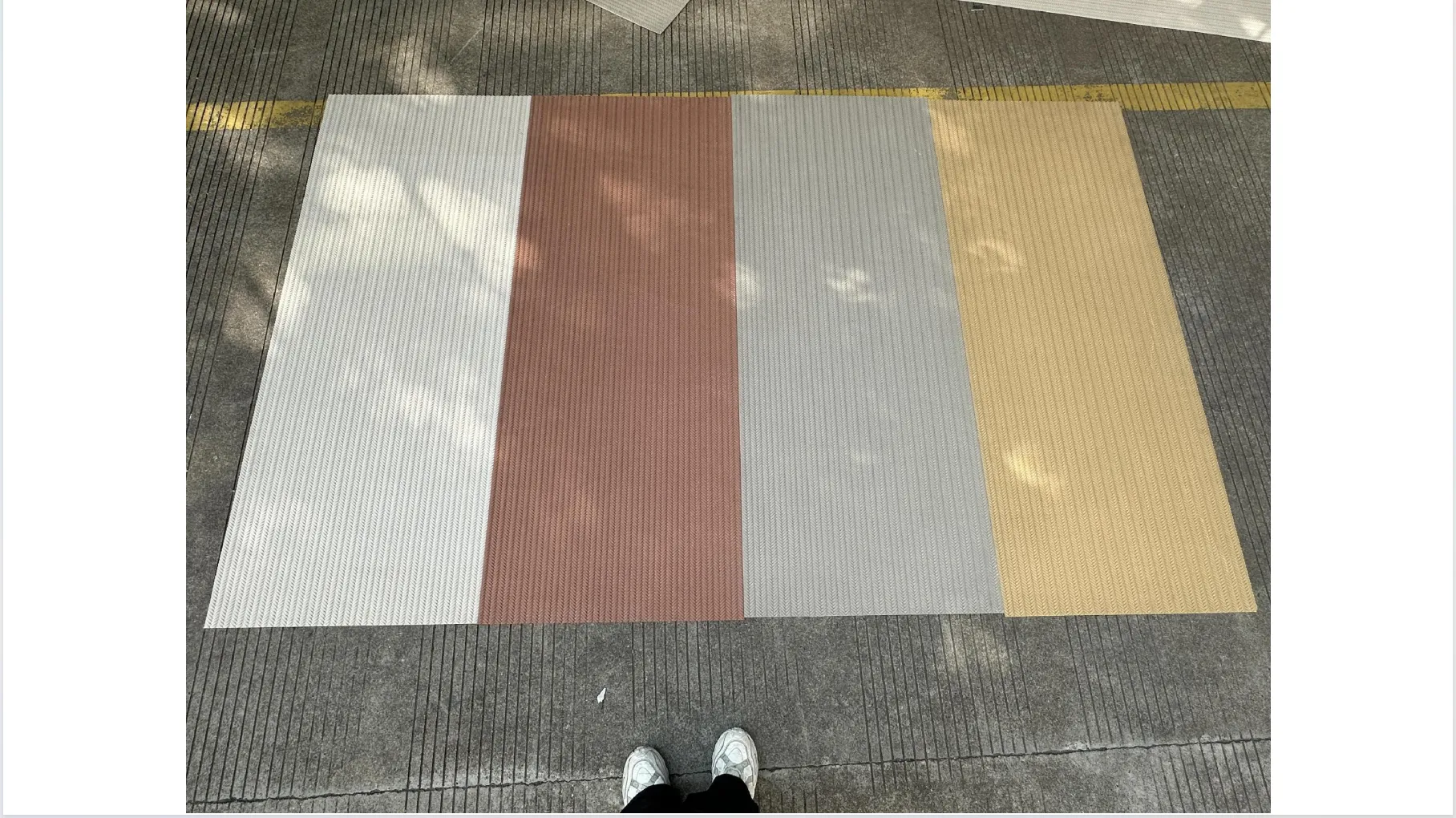
Woven textures don't exist in a vacuum; their impact is amplified by color. MCM's weaving series offers a spectrum of hues, each with its own personality and story to tell. Let's take a closer look at four of the most popular: weaving (khaki), weaving (jacinth), weaving (grey), and weaving (beige).
Khaki is the color of roots. It's the hue of sun-baked soil, of dried grass in late summer, of the woven baskets carried by farmers in rural villages. When used in weaving textures, it evokes a sense of groundedness, of connection to the earth. A café in Portland, Oregon, recently renovated its interior with weaving (khaki) panels, and owners reported a noticeable shift in customer behavior: patrons stayed longer, ordered second cups of coffee, and spoke of feeling "at home." The texture, paired with the earthy color, created a space that felt safe and nurturing, like a retreat from the chaos of the city.
Jacinth—a rich, warm orange-red, like the glow of a sunset or the hue of terracotta tiles in a Mediterranean village—is bold. It doesn't whisper; it sings. Woven (jacinth) panels are perfect for spaces that need to make a statement: boutique storefronts, hotel lobbies, or restaurant accent walls. A luxury fashion brand in Milan recently used weaving (jacinth) on its display walls, and sales associates noted that customers were drawn to the section like moths to a flame. "It's not just the color," one associate said. "It's the way the texture makes the color feel alive. You want to touch it, stand next to it—it makes the clothes look more vibrant by comparison."
Grey often gets a bad rap as "boring," but weaving (grey) proves otherwise. This shade is sophisticated, versatile, and surprisingly dynamic. It's the color of storm clouds before rain, of wet stone, of aged steel. When woven into a texture, it bridges the gap between industrial and organic, making it ideal for modern spaces that want to feel both sleek and welcoming. A tech startup in Berlin chose weaving (grey) for its office walls, pairing it with wood grain board desks. The result? A space that feels innovative yet approachable, where employees report feeling "focused but not confined."
Beige is the ultimate team player. It doesn't demand attention, but it elevates everything around it. Weaving (beige) panels are like a blank canvas that lets other design elements shine—whether it's bold artwork, vibrant furniture, or contrasting textures like fair-faced concrete. A residential developer in Sydney used weaving (beige) in the common areas of a new apartment complex, and feedback from tenants was unanimous: "It makes the space feel bigger, brighter, and more flexible. I can change my decor, but the walls always work with it." In a world where trends come and go, weaving (beige) is a safe bet for longevity.
Woven textures rarely exist in isolation. Their true magic shines when they're paired with other materials, creating harmonies (or intentional contrasts) that elevate the overall design. Take, for example, the combination of weaving (khaki) and wood grain board. Both are rooted in nature, but while woven textures add softness, wood grain adds warmth and structure. A restaurant in Tokyo recently used this pairing: weaving (khaki) on the walls, wood grain board on the ceilings and tables. The result is a space that feels like a cozy forest retreat, where the textures complement each other to create a sense of balance.
Then there's the bold contrast of woven textures with fair-faced concrete. Concrete is raw, industrial, and cool; woven textures are organic, warm, and tactile. Together, they create a tension that's visually striking. A boutique hotel in Barcelona used weaving (jacinth) panels as accents against fair-faced concrete walls, and the effect is dramatic: the bright, woven texture pops against the neutral concrete, drawing the eye and creating focal points that guide guests through the space. It's a reminder that texture isn't just about adding—it's about balancing.
Even with other MCM materials, woven textures hold their own. Pair weaving (grey) with linear travertine (claybank), and you get a blend of modern and rustic. Mix weaving (beige) with marble interstellar gray, and you achieve understated luxury. The key is to let each texture speak its language, then find a common rhythm.
Aesthetic appeal is important, but in the world of architecture and real estate, value often comes down to the bottom line. Can woven textures actually make a property more valuable? The answer, according to industry experts, is a resounding yes.
First, there's durability. MCM's woven panels are made from modified composite materials, which are engineered to withstand the elements. They're resistant to fading, scratching, and moisture, making them ideal for both interior and exterior use. A commercial building in Miami, clad in weaving (khaki) panels, has seen no signs of wear after five years of harsh sun and salt air—unlike traditional wood or fabric textures, which would have required frequent replacement. This durability translates to lower maintenance costs over time, a major selling point for property owners.
Then there's sustainability. In an era where eco-conscious design is no longer a trend but a requirement, MCM's woven textures deliver. Many are made from recycled materials, and their production process emits fewer VOCs (volatile organic compounds) than traditional building materials. A LEED-certified office building in Seattle used weaving (grey) panels and saw a 15% increase in tenant interest, with many citing the building's sustainability features as a key factor in their decision. As more consumers and businesses prioritize green living, sustainable textures like these are becoming valuable differentiators.
Finally, there's market appeal. In a competitive real estate market, unique selling points matter. A property with woven textures stands out from the crowd, creating a "wow factor" that can command higher rental rates or resale prices. A study by the National Association of Realtors found that properties with distinctive textures in key areas (like lobbies or living rooms) sold for 10-12% more than comparable properties with standard finishes. "People remember how a space makes them feel," says one real estate agent. "And woven textures make them feel something."
| Texture Type | Aesthetic Effect | Mood Evoked | Ideal Spaces | Value Contribution |
|---|---|---|---|---|
| Weaving (Khaki) | Earthy, organic, with soft, natural light reflection | Relaxed, grounded, connected to nature | Cafés, spas, residential living rooms | Low maintenance, eco-friendly appeal, timeless design |
| Weaving (Jacinth) | Vibrant, energetic, with bold light absorption | Dynamic, creative, invigorating | Boutiques, restaurants, hotel lobbies | High visual impact, attracts foot traffic, memorable brand identity |
| Weaving (Grey) | Sleek, modern, with subtle light play | Focused, sophisticated, balanced | Offices, tech spaces, modern homes | Versatile design, appeals to professional tenants, high durability |
| Weaving (Beige) | Neutral, soft, with warm light diffusion | Calm, flexible, welcoming | Common areas, bedrooms, retail fitting rooms | Timeless appeal, complements any decor, broad market appeal |
Back to the Azure Hotel lobby. As you stand there, surrounded by weaving (khaki) walls, you realize that texture is more than just a surface—it's a story. It's the story of craftsmanship, of innovation, of how we've learned to blend nature and technology to create spaces that feel less like buildings and more like extensions of ourselves. Woven textures, with their ability to engage our senses, elevate our moods, and add tangible value, are at the forefront of this story.
Whether it's the earthy calm of weaving (khaki), the vibrant energy of weaving (jacinth), the modern balance of weaving (grey), or the timeless versatility of weaving (beige), these textures are proving that when it comes to design, the details matter. They're not just materials—they're memories in the making. And in a world that often feels cold and disconnected, that's a value that can't be measured in dollars alone.
So the next time you walk into a space, take a moment to feel the walls. Are they speaking to you? If not, maybe it's time to weave a new story.
Recommend Products












