
Walk into any modern construction site or home renovation project these days, and you're likely to hear the term "MCM" thrown around. Short for Modified Composite Material, MCM has revolutionized the way we build—offering the beauty of natural stone, wood, or metal without the weight, cost, or maintenance headaches. But here's the catch: not all MCM is created equal. I've seen it firsthand: contractors excited about a "great deal" on MCM panels, only to watch them fade, crack, or warp within a year. Homeowners who fell in love with a sample in the showroom, only to find the installed product looks nothing like what they saw. It's frustrating, and it's avoidable. That's why I'm breaking down how to spot the difference between high-quality MCM that stands the test of time and low-quality imitations that'll leave you disappointed. Whether you're an architect, a DIY enthusiast, or someone just trying to pick the right materials for your space, this guide is for you. Let's dive in.
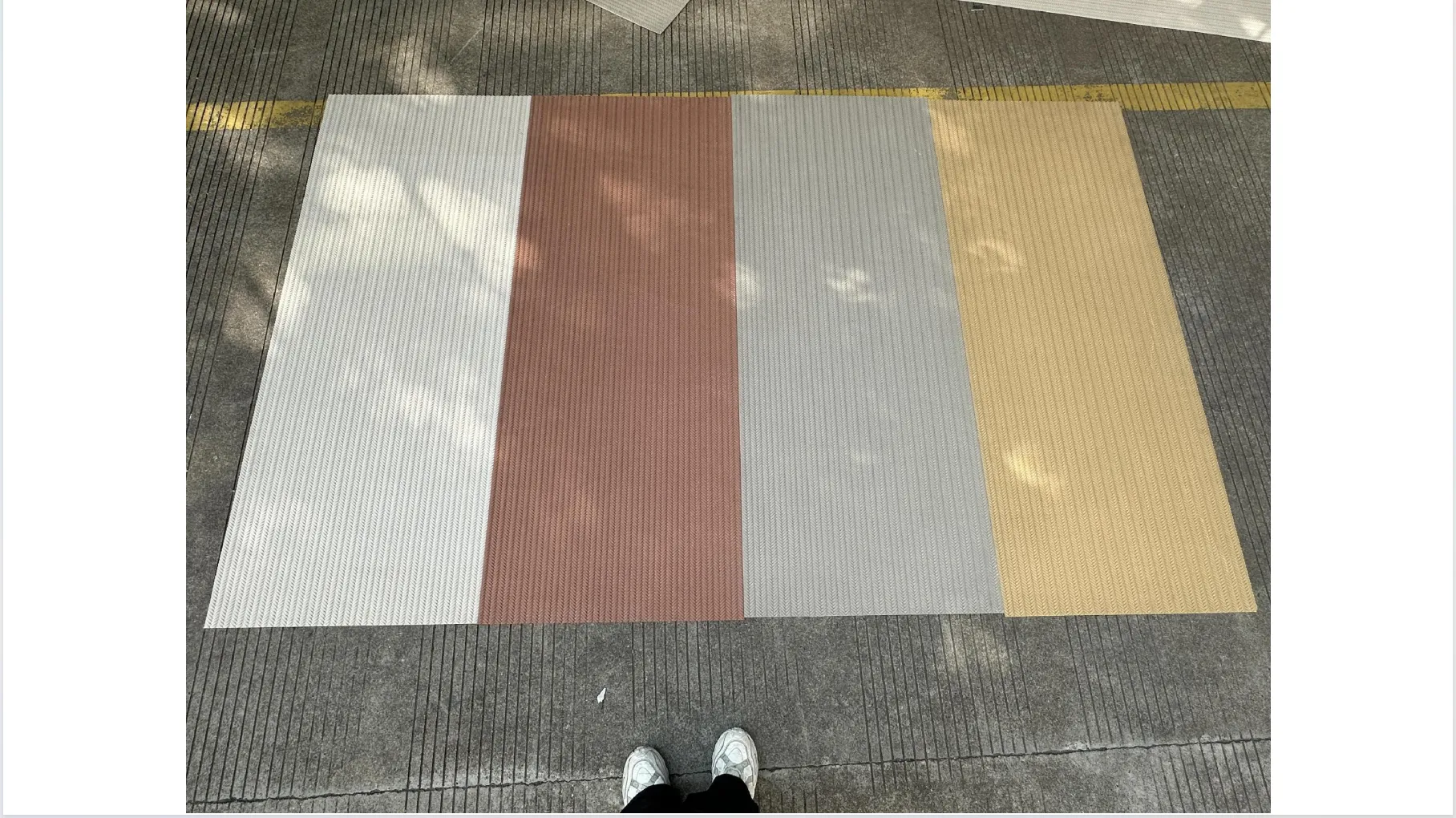
They say a picture is worth a thousand words, and when it comes to MCM, that couldn't be truer—especially with woven textures. Take woven (khaki) MCM panels, for example. I recently visited a supplier's warehouse where two samples sat side by side: both labeled "woven khaki," but night and day in quality. The first, a high-quality piece from an MCM flexible stone line, had a tight, consistent weave pattern. The khaki hue was rich but uniform, with no splotchy lighter or darker patches. The threads ran straight, no fraying at the edges, and even under harsh light, the color didn't shift or look washed out. The second sample? A low-quality knockoff. The weave was uneven—some threads bunched together, others pulled too tight, creating gaps. The color looked dull, almost grayish in spots, and when I tilted it, I noticed faint streaks where the dye hadn't taken properly.
This is where woven real photos become your first line of defense. Reputable manufacturers will provide high-resolution images of their products in real-world settings—not just staged studio shots. When you look at these photos, zoom in. High-quality woven MCM will show crisp details: individual threads that are distinct, patterns that repeat evenly, and colors that pop without looking artificial. Low-quality MCM photos, on the other hand, often look blurry or pixelated up close. You might notice fuzzy edges on the weave, or colors that seem to bleed into each other. One architect I worked with calls this the "grain test": if the photo looks like it was taken with a smartphone from across the room, that's a red flag. If it looks like you could reach out and touch the texture, that's a good sign.
Beyond photos, always ask to see physical samples. Hold them up to natural light. High-quality MCM, whether it's woven (khaki), woven (jacinth), or another texture, should have color consistency from edge to edge. No random dark spots, no areas where the pattern suddenly skips a beat. Low-quality MCM often has "ghosting"—faint outlines where the mold wasn't filled properly—or "bleeding," where colors seep into each other. I once had a client show me a woven (grey) panel they'd installed; sunlight streaming through the window revealed splotches of white peeking through the grey, like the dye had been applied too thin. That's a classic sign of cutting corners.
MCM is meant to mimic natural materials, and natural materials have texture—subtle, intentional, and consistent. High-quality MCM flexible stone, for instance, should feel like stone: cool to the touch, with a slight grit that's smooth but not slippery. Run your fingers across the surface. Does it feel uniform, or are there rough patches? Sharp edges? Bumps that don't belong? Low-quality MCM often feels plasticky or waxy, like a cheap vinyl sticker. I remember a contractor once handed me a sample of what he claimed was "premium" MCM wood grain board. It looked okay from a distance, but when I ran my hand over it, the "wood grain" felt raised and artificial, like it had been stamped on with a heavy hand. High-quality wood grain board, by contrast, has a texture that mimics real wood—subtle, with variations that feel organic, not forced.
Let's circle back to woven textures. Woven (beige) MCM panels should feel soft but sturdy, like a well-made fabric that's been reinforced for durability. High-quality woven MCM will have threads that are tightly interlaced, with no loose ends or snags. When you rub your thumb across the surface, it should resist pilling or fraying. Low-quality woven MCM, though? I've felt samples where the threads started to pull loose just from a light touch. One even left a faint residue on my finger—a sign of cheap dyes or adhesives.
Edge finish matters too. High-quality MCM panels, especially from lines like the MCM big slab board series, have clean, smooth edges. No rough spots, no cracks, no uneven thickness. Run your finger along the edge of a big slab sample: it should feel consistent, like it was cut with precision. Low-quality big slabs often have jagged edges or areas where the material is thinner than advertised—little shortcuts that add up to big problems down the line, like difficulty installing or water seeping in through gaps.
MCM's claim to fame is its flexibility. Unlike solid stone or concrete, MCM panels can bend slightly, making them ideal for curved walls, ceilings, or intricate designs. But flexibility isn't just about being bendy—it's about being strong enough to bend without breaking. This is where low-quality MCM often fails spectacularly.
Here's a simple test I do with every MCM sample: hold it by both ends and gently bend it. High-quality MCM flexible stone or MCM 3D printing series panels will give a little—you'll feel them flex—but they won't crack, creak, or leave a permanent bend. I tested an MCM 3D printing series panel once that bent 15 degrees and popped right back into shape, no damage. That's the mark of good engineering: the composite layers are bonded tightly, with fibers that distribute stress evenly.
Low-quality MCM? Not so much. I've had samples crack immediately when bent, or develop white stress marks (a sign the material is weakening). One even snapped in half when I applied light pressure—definitely not what you want for a wall panel that needs to withstand wind, rain, or temperature changes.
And don't think this only applies to small panels. The MCM big slab board series is designed to be large (some up to 4x8 feet) but still flexible. A high-quality big slab should have some give when you lift it—you'll notice it's lightweight but not flimsy. Low-quality big slabs feel heavy and rigid, like they're made from cheap concrete mix with little reinforcement. Trust me, you don't want to install those; they'll crack during transport or installation, or worse, after they're on the wall.
Let's put this all together with a real example. Last month, a friend who's renovating her kitchen asked me to help pick MCM backsplash panels. She'd fallen in love with woven (khaki) panels—loved the warm, textured look that would complement her wooden cabinets. We visited two suppliers:
Supplier A showed us a sample from their premium line. The woven (khaki) texture was crisp: tight, even threads, no loose ends. The color was rich, with subtle variations that looked natural, not dyed. When I bent it, it flexed smoothly, no cracking. The edges were clean, and it felt substantial but not heavy. They provided woven real photos of the panels installed in a restaurant—same color, same texture, no fading even after two years in a sunny spot.
Supplier B had a "budget" option—$20 cheaper per panel. At first glance, it looked similar. But up close? The weave was messy, with threads crossing unevenly. The khaki color was blotchy, almost greenish in some spots. When I bent it, it creaked, and a small crack formed at the edge. The real photos they showed were blurry, and when I asked for a sample of the actual product, it looked nothing like the photo—duller, thinner, and the weave pattern was off. My friend almost went with the cheaper option to save money, but after seeing the difference, she opted for quality. Six months later, her backsplash still looks brand new. The moral? Those $20 savings would have cost her hundreds in repairs down the line.
To make it easier, I've put together a quick comparison of key features to check. Keep this in mind next time you're evaluating samples:
| Feature | High-Quality MCM | Low-Quality MCM |
|---|---|---|
| Color Consistency | Uniform hue with natural, subtle variations (e.g., woven (khaki) has consistent tone, no splotches) | Blotchy, uneven color; fades or shifts under light |
| Texture | Smooth, intentional texture (e.g., woven threads are tight, no fraying; stone textures feel natural) | Rough, plasticky, or artificial; loose threads, sharp edges, or uneven patterns |
| Flexibility | Bends slightly without cracking or permanent damage (passes the "bend test") | Cracks, creaks, or bends permanently when flexed |
| Edge Finish | Clean, smooth, and even thickness | Jagged, rough, or inconsistent thickness |
| Weight | Lightweight but substantial (feels sturdy, not flimsy) | Either too heavy (poor composite blend) or too light (cheap materials, thin layers) |
| Real Photos & Samples | High-res photos match physical samples exactly; no discrepancies in color or texture | Blurry photos; physical samples look duller, thinner, or pattern-mismatched vs. photos |
At this point, you might be thinking, "Okay, I can check the visuals, texture, and flexibility—but what about the stuff I can't see?" Great question. High-quality MCM manufacturers stand behind their products with certifications and warranties. Look for certifications like ISO 9001 (quality management) or CE marking (for European standards). These aren't just pieces of paper—they mean the manufacturer has undergone third-party testing to ensure their MCM meets strict quality criteria.
Warranties are another clue. Reputable brands will offer 10+ year warranties against fading, cracking, or delamination. Low-quality manufacturers might offer vague warranties ("lifetime warranty!") with so many loopholes they're practically useless, or no warranty at all. Ask to see the warranty in writing, and read the fine print. If a supplier hesitates to provide certifications or a clear warranty, that's a red flag.
Finally, don't just take the manufacturer's word for it—see how their MCM performs in real life. Ask for references: projects where their MCM has been installed for 3+ years. Drive by if you can, or ask for photos of the installed product over time. I once recommended an MCM flexible stone to a hotel chain, and two years later, I visited one of their properties—the panels still looked as vibrant as the day they were installed, even with heavy foot traffic and exposure to sunlight. That's the proof you need.
And remember those woven real photos I mentioned earlier? High-quality manufacturers will have a portfolio of real installations, not just stock images. Look for photos of woven (jacinth) panels in a restaurant, or woven (grey) in a retail store—you'll see how the texture holds up, how the color looks in different lighting, and how well the panels integrate with the space. Low-quality MCM's real photos often look staged or outdated, with no context about how long the product has been installed.
At the end of the day, choosing MCM isn't just about picking a color or pattern—it's about investing in a material that will make your space look beautiful for years to come. High-quality MCM, whether it's MCM flexible stone, MCM big slab board series, or woven textures like woven (khaki), isn't cheap—but it's worth every penny. It saves you from costly repairs, maintains its beauty, and adds value to your project. Low-quality MCM might seem like a deal upfront, but it's a shortcut that will cost you time, money, and peace of mind. So take your time, test the samples, ask questions, and trust your eyes and hands. You've got this—and your space will thank you for it.
Recommend Products












