
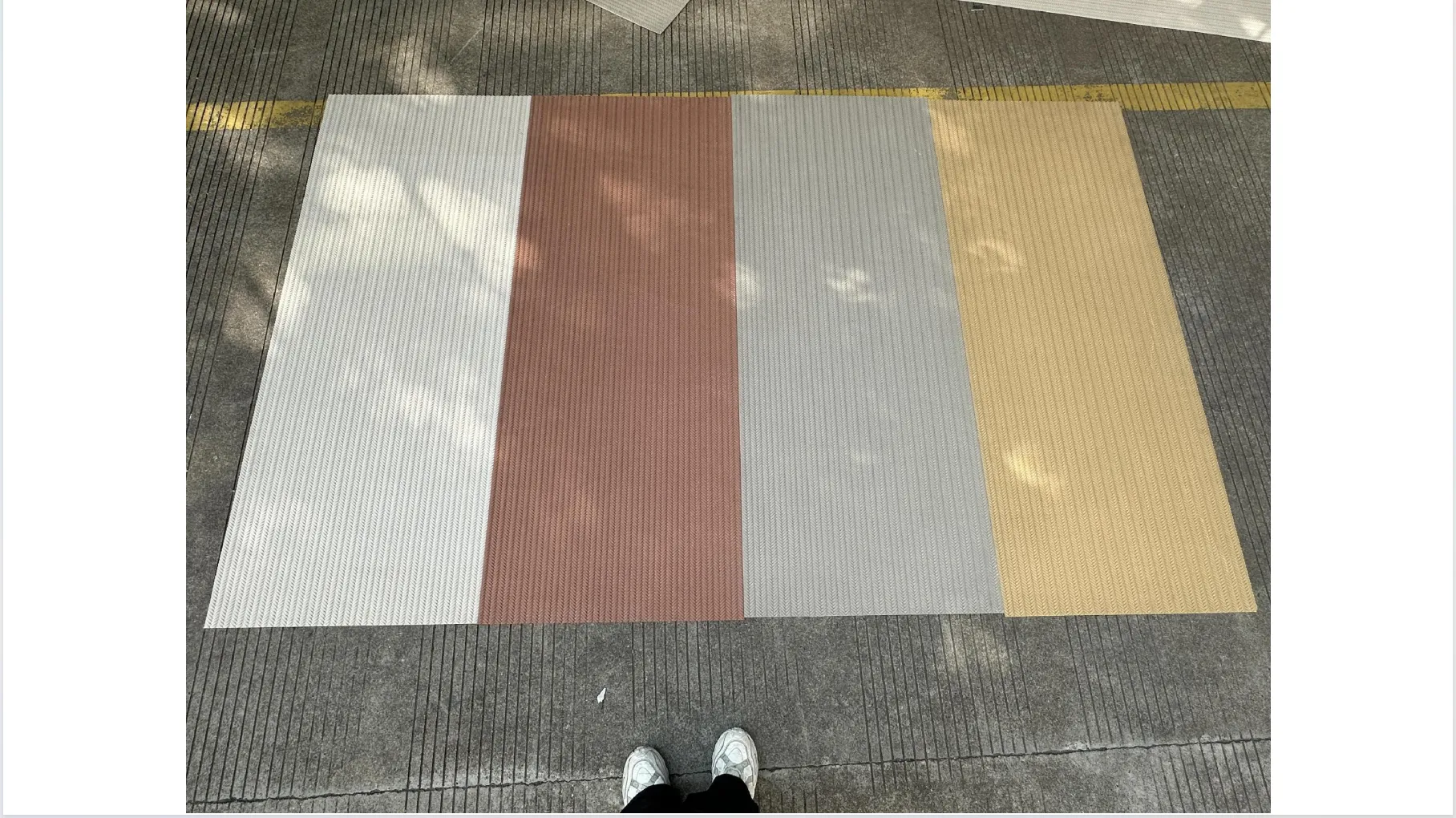
Choosing the right materials for a project is like selecting the perfect brushstroke for a masterpiece—every texture, color, and pattern contributes to the final story a space tells. For architects, designers, and builders working with MCM (Modified Composite Material) products, this decision carries even more weight. With lines as diverse as the mcm project board series , mcm 3d printing series , and tactile options like mcm flexible stone , the array of choices can feel both exciting and overwhelming. But here's the million-dollar question: When narrowing down options, should you trust the woven real photos on your screen, or rely on physical samples? Let's dive into this debate, exploring the strengths, weaknesses, and real-world implications of each approach.
In an era where we shop for furniture, clothes, and even homes through screens, it's no surprise that woven real photos have become a go-to for initial MCM material scouting. These high-resolution images—showcasing everything from the intricate threads of weaving (khaki) to the cosmic swirls of travertine (starry green) —offer a first glimpse into the possibilities of MCM lines. Let's break down why they're so appealing.
Accessibility Without Boundaries : Imagine you're an architect based in New York, collaborating with a client in Dubai on a luxury hotel lobby. Instead of waiting weeks for physical samples of foamed aluminium alloy board (vintage gold) or lunar peak silvery to ship across continents, you can pull up a gallery of woven real photos in seconds. These images often come with context too—some show the material installed on a full wall, others zoom in on texture, and a few even pair products like wood grain board with complementary stream limestone (claybank) to mimic real-world. For busy professionals, this accessibility is a game-changer, allowing for quick iterations and client presentations without logistical delays.
Variety at a Glance : MCM's product lineup is staggering—think boulder slab (vintage black) for industrial chic, masonry stone for rustic charm, or zen wood panel real photos for organic warmth. Woven real photo galleries compile these options into categorized folders, making it easy to compare, say, the earthy tones of historical pathfinders stone against the sleekness of fair-faced concrete . This breadth helps designers cast a wide net early in the process, identifying trends or unique outliers (like the iridescent lunar peak golden or the weathered rust mosaic stone ) that might otherwise go unnoticed.
Visual Storytelling : A single woven real photo can tell a richer story than a swatch alone. Take gobi panel , for example: A well-lit image might show it installed on a desert-inspired facade, with sunlight catching its undulating texture to evoke sand dunes at dawn. Or consider thread —photos often pair it with soft lighting to highlight how its subtle ridges catch shadows, transforming a flat surface into something dynamic. For clients who struggle to visualize materials in context, these images bridge the gap between "this is a sample" and "this is your building, brought to life."
But Here's the Catch : For all their convenience, woven real photos have blind spots. Screens lie—literally. The travertine (starry red) that looks vibrant on your laptop might appear muted on your phone, thanks to differences in display calibration. Textures, too, get flattened: The rough, pebbled surface of star gravel reads as a static pattern in a photo, but in person, it's a tactile experience that changes when you run your hand over it. And scale? A photo of wave panel close-up might make its ripples look delicate, but when installed 20 feet high, those ripples could dominate the space in ways the image never conveyed.
If woven real photos are the "first date" of material selection, physical samples are the "long-term relationship"—they reveal the unfiltered truth. Holding a sample of mcm flexible stone in your hand, or running your fingers over pine bark board , connects you to the material in a way no screen can. Let's explore why they're irreplaceable.
Color: What You See Is What You Get : Lighting is the arch-nemesis of digital color accuracy. A sample of lime stone (beige) viewed under natural daylight in your office will show its true undertones—maybe a hint of pink that gets lost in a photo's cool LED lighting. Similarly, rust square line stone might appear brownish online, but in person, its orange-red hues (a result of MCM's unique oxidation process) become impossible to ignore. For projects where color harmony is critical—like a boutique hotel using rona yellow to complement linear travertine (claybank) —samples eliminate the guesswork of "will this match?"
Texture: Beyond the Visual : MCM materials are designed to be felt, not just seen. Take rough granite stone (medium grey) : Its pockmarked surface tells a story of durability, but that story only unfolds when you press your palm against it. Or bamboo mat board , whose woven pattern has a subtle give that a photo can't capture—important for projects where tactile interaction (like a restaurant wall guests might brush against) is part of the design. Even seemingly smooth materials, like polish concrete , reveal micro-irregularities in samples that affect how light reflects, changing the mood of a space from sterile to warm.
Durability Clues : Physical samples offer sneak peeks into performance. Bending a sample of mcm flexible stone shows just how malleable it is—key for curved facades. Tapping foamed aluminium alloy board (vintage silver) reveals its lightweight yet sturdy core, reassuring you it can withstand harsh weather. These small interactions build confidence in a material's suitability, something a photo of epoch stone or century stone (marketed as "timeless") can't replicate.
The Downside? Practical Headaches : Samples aren't without their flaws. For one, they're costly—shipping multiple samples (say, boulder slab (vintage gold) , marble interstellar gray , and slate portoro ) internationally adds up, and storing them requires space (ask any designer about their overflowing sample closet!). They're also limited in scope: A sample of gobi panel might be 6x6 inches, but how does that texture scale to a 50-foot wall? And let's not forget variety—while MCM offers hundreds of options, suppliers can't stock samples of every single travertine (starry orange) or weaving (jacinth) variant, leaving gaps in your selection process.
| Factor | Woven Real Photos | Physical Samples |
|---|---|---|
| Color Accuracy | Prone to screen calibration issues; may shift with lighting (e.g., travertine (starry blue) looks deeper on OLED vs. LCD screens). | True-to-life under natural light; reveals undertones (e.g., lime stone (beige) 's subtle green tinge). |
| Texture Perception | Flat and 2D; misses tactile details (e.g., star gravel 's gritty surface appears smooth). | Tactile; allows feeling of ridges, pores, and grain (e.g., wood grain board 's directional texture). |
| Convenience | Instant access; no shipping delays (great for global teams). | Requires shipping/storage; limited by supplier stock. |
| Scale Representation | Can show full installations (e.g., wave panel on a facade) but may distort proportions. | Small size makes scaling hard; requires imagination for large applications. |
| Cost | Free or low-cost (most MCM suppliers offer online galleries). | Shipping and handling fees; bulk orders add up. |
The answer to "photos vs. samples" isn't black and white—it depends on where you are in the project lifecycle. Let's map out common scenarios:
Early Conceptualization: Photos Lead the Way : When you're just brainstorming—say, exploring mcm 3d printing series for a futuristic retail space—photos are ideal. They let you quickly filter options: "Does lunar peak black fit the mood, or is ethereal shadow travertine too muted?" You can create mood boards with bali stone , wood line , and fair-faced concrete photos to align with clients before investing in samples.
Mid-Design: Samples Validate the Vision : Once you've shortlisted 3-5 options—maybe weaving (grey) , rust board granite , and linear travertine (claybank) —order samples. This is when you'll catch issues a photo missed: Maybe the "warm" travertine (vintage gold) sample is actually brassy under your office lights, or the stream limestone (dark grey) has a glossier finish than expected. Samples turn vague ideas into concrete decisions.
Final Approval: Combine Both : For high-stakes projects—like a luxury condo using marble veil white or granite portoro —pair samples with woven real photos of the material in similar installations. Show the client the sample's texture, then pull up a photo of it on a 20-story building to confirm scale. This hybrid approach builds trust and minimizes last-minute surprises.
At the end of the day, woven real photos and physical samples aren't rivals—they're teammates. Photos spark inspiration and streamline initial selection, while samples ground those ideas in reality, ensuring that the mcm flexible stone you fell for online feels just as luxurious in person, or that the foamed aluminium alloy board (gold) you chose doesn't clash with the project's color palette under natural light.
For MCM's most innovative lines—like the mcm 3d printing series , where texture and depth are make-or-break—samples are non-negotiable. For trend-driven options, like lunar peak silvery or gobi panel , photos help gauge how they'll fit into broader design movements. And for classics like travertine (beige) or wood concrete board , combining both ensures you're not just choosing a material—you're choosing a story that will stand the test of time.
So, the next time you're scrolling through woven real photos of travertine (starry red) or unboxing a sample of boulder slab , remember: The best MCM selections come from balancing what you see with what you feel. After all, great design isn't just about aesthetics—it's about ensuring that every thread, every texture, and every color lives up to the vision in your mind.
Recommend Products












