
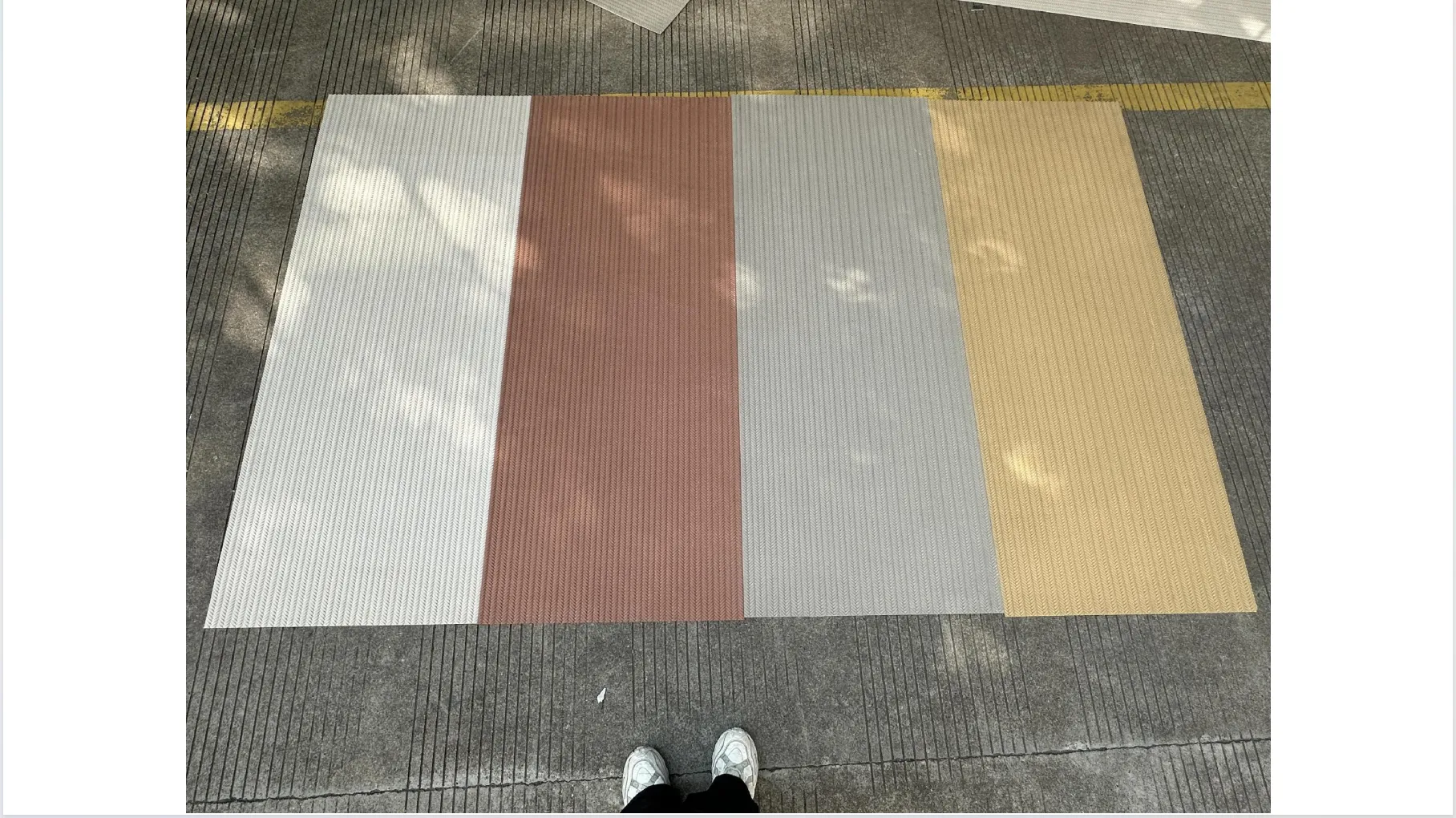
In the world of modern construction and design, MCM (Modified Composite Material) projects stand out for their innovation, flexibility, and stunning aesthetic versatility. From the sleek lines of mcm big slab board series to the intricate patterns of travertine (starry blue) , these materials don't just build spaces—they tell stories. But here's the thing: how do we best capture those stories? When clients, architects, or design enthusiasts want to experience an MCM project before it's built (or even after), two tools often take center stage: woven real photos and virtual tours. Today, we're diving into both to figure out which one truly does justice to the artistry of MCM.
Let's start with the basics. Woven real photos aren't just any snapshots—they're carefully crafted images that highlight the texture, color, and character of MCM materials. Think of them as a love letter to the material itself. Photographers who specialize in MCM projects don't just point and shoot; they collaborate with the materials, chasing the perfect light, angle, and moment to showcase what makes each product unique. Take mcm flexible stone , for example. This material is celebrated for its ability to bend and conform to curved surfaces, but how do you capture that flexibility in a photo? A woven real photo might zoom in on a corner where the stone gently wraps around a column, showing the way its fibers (yes, flexible stone has a subtle woven-like texture) shift and catch the light. It's not just about the stone—it's about the story of its adaptability.
The "woven" part often refers to the way these photos layer details: the rough-hewn edge of a mcm big slab board series slab, the tiny specks of sparkle in travertine (starry blue), the soft fade of color in a gradient material. These photos are tactile, even through a screen. You can almost feel the coolness of the stone or the warmth of the finish. And unlike stock images, woven real photos are unapologetically authentic. They don't hide flaws—they embrace them. A slight imperfection in the grain of a wood-like MCM panel? That's not a mistake; that's character. It's a reminder that these materials are made for real spaces, lived in by real people.
Now, let's talk about virtual tours. If woven real photos are postcards from an MCM project, virtual tours are like teleportation devices. Using 3D modeling, VR technology, and sometimes even 3d printing series data to ensure accuracy, virtual tours let you "walk through" a space before a single slab is laid. Imagine (oops, scratch that— think about ) putting on a VR headset and strolling through a lobby clad in mcm big slab board series, or using your mouse to rotate a room and examine the way travertine (starry blue) panels reflect light from different windows. It's immersive, interactive, and undeniably cool.
The magic of virtual tours lies in their ability to convey scale and context. A woven real photo of a single slab of mcm flexible stone is beautiful, but a virtual tour lets you see how that stone would look on an entire wall, next to a door, or under a skylight. Designers love this because it helps clients visualize the end result—no more squinting at swatches and trying to imagine "what if." And with advancements in technology, virtual tours can now integrate real material data, like the exact color variation of travertine (starry blue) or the flexibility limits of mcm flexible stone, making them surprisingly accurate.
Okay, so both sound great—but which one is better? Let's break it down. We'll compare them on five key factors: authenticity, detail, accessibility, emotional impact, and cost.
| Factor | Woven Real Photos | Virtual Tours |
|---|---|---|
| Authenticity | Captures real light, texture, and imperfections. What you see is exactly what the material looks like in person. | Can be hyper-accurate but is still a digital rendering. May smooth out minor flaws for a "perfect" look. |
| Detail Capture | Excels at close-ups: shows the weave of mcm flexible stone, the sparkle of travertine (starry blue), and tiny color variations. | Great for scale and context: lets you zoom out to see the big picture (literally) of mcm big slab board series in a room. |
| Accessibility | No tech needed—viewable on phones, laptops, print materials. Easy to share via email or social media. | May require VR headsets or high-speed internet. Some clients might find the tech intimidating. |
| Emotional Impact | Evokes warmth and connection—real photos feel "lived in," making viewers imagine themselves in the space. | Creates excitement through interactivity—users feel involved in the design process. |
| Cost | Lower upfront cost: hiring a photographer is often cheaper than 3D modeling and virtual tour software. | Higher initial investment: requires 3D artists, software, and sometimes 3d printing series data integration. |
Let's talk about a real-world example. Last year, a design firm in Dubai was pitching a hotel lobby project using travertine (starry blue) from MCM's collection. They had two options for their client presentation: a virtual tour of the lobby or a series of woven real photos. The team chose the latter, and here's why: the starry blue travertine has these tiny, almost imperceptible flecks of blue and silver that catch the light at certain angles. A virtual tour could replicate the color, but it couldn't capture the way those flecks seem to "dance" when the sun hits them just right. The woven real photos, taken at dawn and dusk, showcased that magic. The client fell in love—not just with the material, but with the feeling of standing in that lobby at sunrise, watching the stone glow. That's the power of authenticity.
Another win for woven real photos? They're timeless. A virtual tour created today might look dated in five years as technology advances, but a beautifully shot photo of mcm flexible stone will always convey the material's essence. Plus, they're versatile. You can use them in brochures, social media posts, website banners—even print them as large-scale art for your office. They're not just marketing tools; they're pieces of visual storytelling.
Now, let's flip the script. A commercial developer in New York was working on a retail complex using mcm big slab board series for the exterior cladding. The slabs are massive—10 feet tall and 4 feet wide—and the client was worried about how they'd look from the street, from the sidewalk, and even from the nearby subway platform. A woven real photo of a single slab didn't cut it; the client needed to experience the scale. Enter the virtual tour. Using 3D modeling and data from MCM's 3d printing series , the developer created a virtual replica of the entire building, letting the client "walk" around it at different times of day. They could zoom in to check the alignment of the slabs, zoom out to see how the building fit into the cityscape, and even adjust the lighting to simulate sunrise, noon, and sunset. The client was sold—because they didn't just see the slabs; they understood how they'd transform the space.
Virtual tours also shine when collaboration is key. Architects and contractors can mark up the tour with notes: "Adjust the mcm flexible stone curve here" or "Make the travertine (starry blue) panels wider." It's a dynamic tool that turns static ideas into conversations.
The short answer? It depends. If you're trying to sell the feeling of a material—its texture, its interaction with light, its soul—woven real photos are your best bet. They're perfect for marketing materials, social media, and any scenario where you want to evoke an emotional response. Think of them as the "heart" of your MCM story.
If you're trying to sell the vision —how the material fits into a larger space, how it scales, how it interacts with other elements—virtual tours are unbeatable. They're ideal for client presentations, design reviews, and projects where scale or collaboration is critical. Think of them as the "brain" of your MCM story.
But here's a secret: you don't have to choose. The best MCM projects often use both. A developer might use woven real photos to showcase the beauty of mcm flexible stone in their marketing campaign, then use a virtual tour to let clients "explore" the building once they're interested. It's the perfect one-two punch: emotion first, then immersion.
At the end of the day, MCM materials like flexible stone, big slab boards, and starry blue travertine are more than just building products—they're works of art. Woven real photos capture their authenticity, their "human" side, while virtual tours showcase their potential, their "future" side. Both have a place in telling the story of MCM projects.
So, the next time you're tasked with representing an MCM material, ask yourself: What story do I want to tell? If it's about the material itself—the way it feels, the way it shines, the way it makes you stop and say "wow"—grab a camera and start shooting woven real photos. If it's about the space it will create—the way it transforms a room, the way people will experience it—fire up the 3D modeling software and build a virtual tour. Either way, you're not just showing a product—you're inviting people to imagine, dream, and build something extraordinary.
Because in the world of MCM, the best stories aren't just told—they're felt .
Recommend Products












