
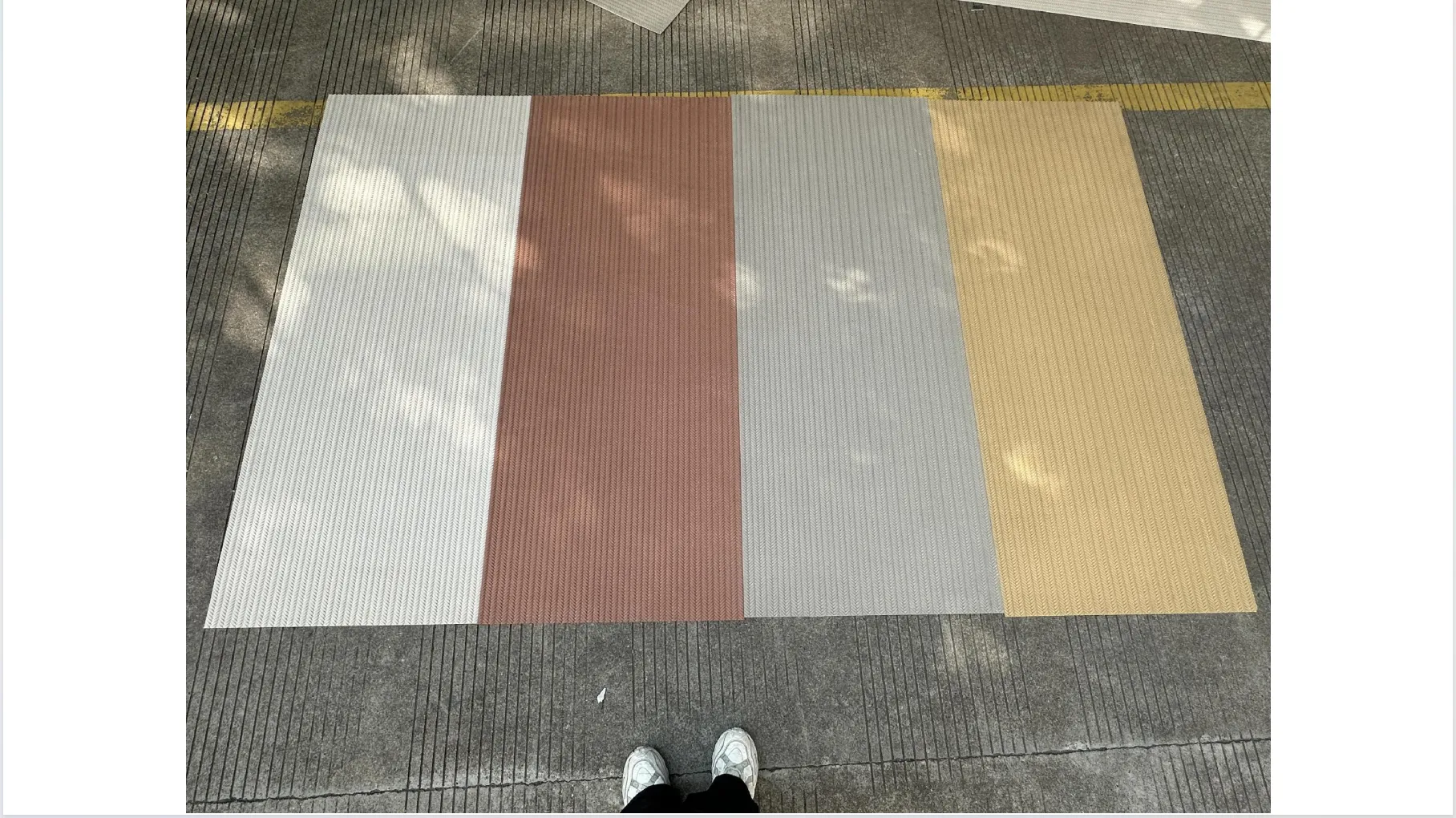
In the quiet moments of a busy day, it's the little things that make a space feel like home—the way light filters through a window, the softness of a rug underfoot, or the subtle texture of a wall that invites you to reach out and touch it. Woven textures, with their timeless warmth and organic flow, have long been a favorite for adding that "lived-in" charm to walls. But what if you could capture that cozy, artisanal feel without the hassle of traditional materials? Enter MCM, the game-changer in wall decor that's redefining how we think about texture, durability, and design freedom.
There's something inherently human about our love for woven patterns. From the hand-knit blankets of our childhood to the wicker baskets that hold our favorite books, woven textures speak to a primal desire for connection—to nature, to craftsmanship, to the stories behind the things we surround ourselves with. On walls, they do more than just look good: they add depth, soften harsh lines, and turn flat, empty spaces into canvases that tell a story.
But for years, bringing woven textures into our walls meant choosing between beauty and practicality. Traditional options like woven wood panels, fabric tapestries, or natural fiber wall hangings often came with trade-offs: wood warps in humidity, fabric fades in sunlight, and many materials are tricky to clean or install. As a designer friend once sighed, "I love the look of woven walls, but I don't love explaining to clients why their 'rustic' accent wall is peeling after a rainy season."
That's where MCM—Modified Composite Material—steps in. Born from a blend of innovation and artistry, MCM isn't just a material; it's a solution. Engineered to mimic the look and feel of natural textures while outperforming them in durability, flexibility, and ease of use, MCM has quickly become the go-to for designers and homeowners who refuse to compromise on style or substance.
Let's start with the basics: MCM is a lightweight, high-performance composite that combines the best of natural materials (think the warmth of wood, the earthiness of stone) with the resilience of modern engineering. It's flexible enough to be molded into intricate patterns—like the delicate, over-under weave of a basket—and strong enough to stand up to moisture, heat, and the chaos of everyday life. But what really sets it apart when it comes to woven textures?
First, it's a chameleon. MCM can replicate the look of almost any woven texture, from the tight, uniform stitch of a linen weave to the loose, organic drape of a macramé wall hanging. And unlike natural materials, which can vary in color or pattern batch to batch, MCM offers consistency—so that "weaving (khaki)" accent wall you fell in love with in a catalog will look exactly the same when it's installed in your home.
Second, it's built to last. Traditional woven wall materials often have a "shelf life": fabric fades, wood cracks, rope frays. MCM, on the other hand, is resistant to water, mold, and UV rays. That means you can install it in a bathroom with steamy showers, a sunlit kitchen, or even a commercial space like a café where spills and scuffs are par for the course—without worrying about it losing its luster.
Third, it's surprisingly easy to love. Lightweight and easy to install, MCM panels save time (and backaches) during renovation. And when it comes to maintenance? A quick wipe with a damp cloth is usually all it takes to keep them looking fresh. No special cleaners, no refinishing, no stress.
Walk through any design showroom today, and you'll find MCM woven panels stealing the spotlight. Among the most beloved are the "weaving (khaki)" and "weaving (beige)" variants—subtle, versatile, and brimming with that understated elegance that makes a space feel curated, not cluttered.
Imagine the soft, muted tone of dried wheat fields at sunset—that's the essence of "weaving (khaki)". Its threads (another MCM texture detail that adds depth) are woven in a classic over-under pattern, mimicking the look of handwoven jute but with a smoother, more refined finish. It's neutral enough to pair with bold accent colors (think burnt orange cushions or navy blue furniture) but has enough texture to stand on its own as a focal point.
Designers adore it for bedrooms and home offices, where its calming energy helps create a sense of focus and relaxation. One client described it best: "It's like bringing a piece of the outdoors in, but without the pollen or the mess."
If "weaving (khaki)" is the cozy cabin in the woods, "weaving (beige)" is the sleek, sunlit studio in the city. Lighter in tone, with threads that catch the light to create subtle shadows, it's a master of versatility. Whether paired with minimalist white furniture in a Scandi-inspired living room or with warm wood tones in a bohemian bedroom, it adds just the right amount of texture without overwhelming the space.
What really sells it? The way it ages. Unlike fabric or paper-based wall coverings, which can yellow or fray over time, "weaving (beige)" retains its soft, creamy hue for years—so that accent wall you install in your 30s will still look fresh when you're hosting your kid's graduation party.
Still on the fence? Let's break it down. Here's how MCM woven panels stack up against traditional woven wall materials:
| Material | Durability | Maintenance | Aesthetic Flexibility | Best For |
|---|---|---|---|---|
| Woven Fabric Tapestry | Low (fades, stains, tears easily) | High (dry clean only, avoid moisture) | High (wide range of patterns/colors) | Temporary accent walls, low-traffic rooms |
| Natural Woven Wood Panels | Medium (warps in humidity, scratches easily) | Medium (requires sealing, dusts frequently) | Medium (limited to wood tones/textures) | Dry, low-humidity spaces (e.g., living rooms) |
| MCM Woven Panels (e.g., Weaving Khaki/Beige) | High (water-resistant, UV-stable, scratch-resistant) | Low (wipe clean with a damp cloth, no sealing needed) | High (mimics any weave; consistent color/pattern) | Any space: bathrooms, kitchens, commercial areas, high-traffic zones |
The beauty of MCM woven panels lies in their adaptability. They're not just for "one look"—they fit seamlessly into almost any design style, from industrial lofts to coastal cottages. Here are a few ways designers are using them:
In a world of filtered Instagram posts and over-edited catalog images, there's something powerful about "woven real photos"—unretouched, honest snapshots that show MCM woven panels exactly as they are. These photos aren't just marketing tools; they're a promise. They let you see the way light plays off the threads, the subtle variations in texture that make each panel feel unique, and how the colors shift in different lighting (morning sun vs. evening lamplight).
A designer once told me, "I always show clients the real photos before they commit. There's a difference between 'this looks nice in a picture' and 'this feels right in my space.'" MCM's commitment to transparency—through clear, unfiltered imagery—builds trust. It says, "This is what you're getting, and it's even better in person."
As we spend more time at home, our walls have become more than just boundaries—they're partners in our daily lives. They witness our mornings, our evenings, our celebrations, and our quiet moments. Woven textures, with their ability to comfort, inspire, and connect, will always have a place in that story. But with MCM, that story no longer has to include frustration, compromise, or regret.
Whether you're drawn to the earthy charm of "weaving (khaki)" or the timeless simplicity of "weaving (beige)", MCM woven panels offer something rare: the freedom to love your walls as much as you love the life you live in front of them. They're not just a trend; they're a new standard—one that proves beauty and practicality can, in fact, weave a perfect story together.
Recommend Products












