
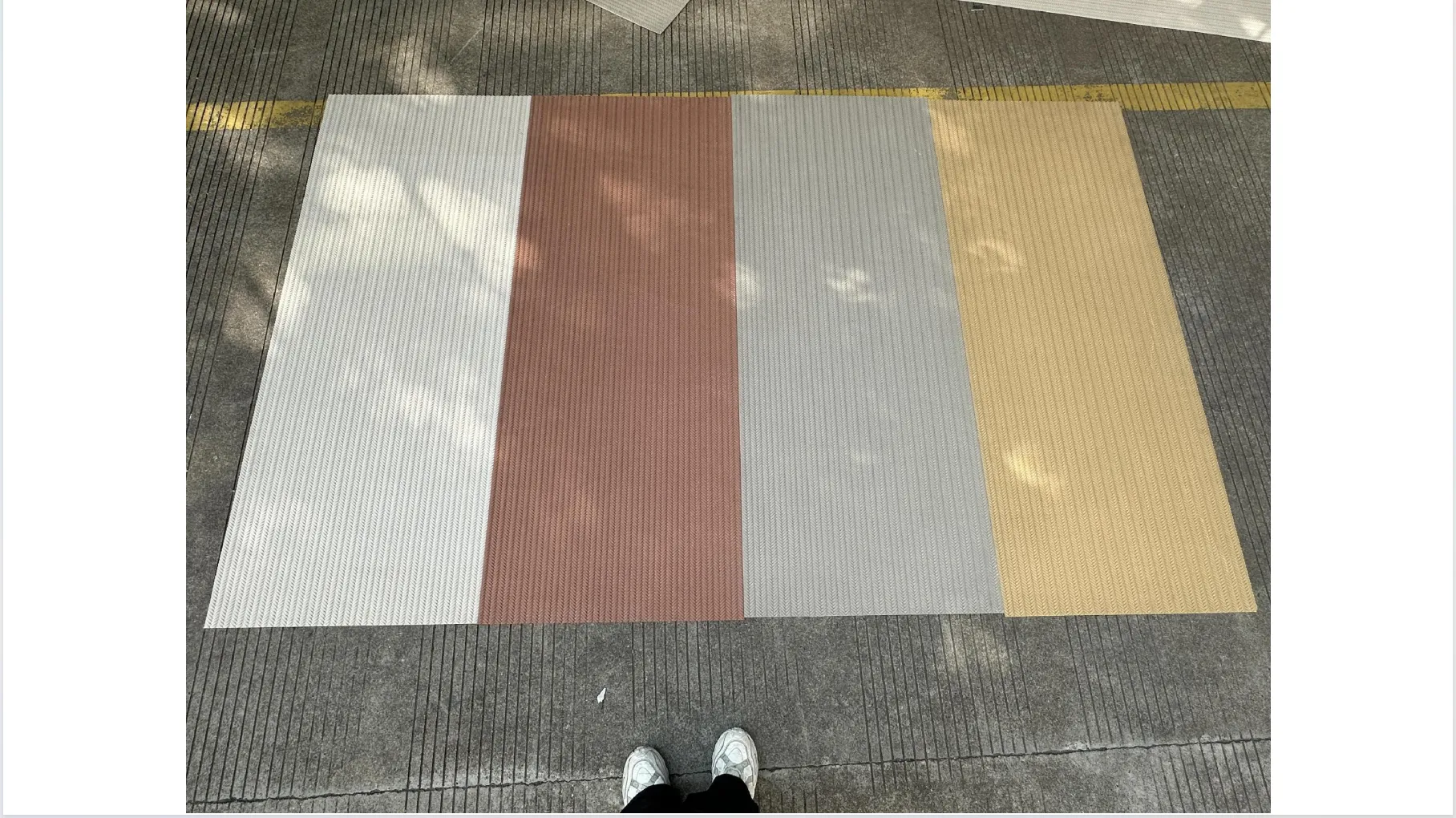
I was sitting across from a designer friend last month, flipping through photos of her latest project—a boutique hotel in the coastal town of Cape May. "Look at this lobby wall," she said, tapping her phone screen. The image showed a stunning feature wall with what looked like handwoven rattan, its texture so tactile I could almost feel the rough weave under my fingertips. "Client wanted 'organic warmth with staying power,'" she added. "Two years ago, I would've suggested reclaimed wood or natural rattan. But now? I went with MCM."
I leaned in. The "woven" texture in the photo was crisp, uniform, and impossibly consistent—no frayed edges, no loose strands, just that perfect blend of rustic charm and polished precision. "Wood would've warped in the salt air by now," she laughed. "Rattan would've mildewed. But this MCM material? It's been up six months, through summer humidity and winter storms, and the texture looks exactly like the day we installed it. That's the game-changer with MCM—texture stability isn't just a bonus; it's the point."
If you've ever loved the look of natural materials but been let down by how quickly their texture fades, warps, or wears, you're not alone. Wood, stone, and textiles are beautiful, but their organic nature makes them inherently unstable. MCM—short for Modified Composite Materials—changes that. Blending natural minerals, polymers, and advanced engineering, MCM materials capture the essence of texture—whether it's the grain of wood, the weave of rattan, or the sparkle of stone—while adding a level of stability that natural materials simply can't match. Today, let's dive into why MCM is becoming the go-to for designers who refuse to choose between beauty and longevity, with a focus on the textures that make spaces feel alive.
Wood has been a design staple for centuries, and it's easy to see why. Its texture—whether smooth as silk or rough with knots—feels like a hug from nature. But here's the hard truth: wood is a living material, even after it's cut. It expands in humidity, contracts in dry air, fades under sunlight, and scratches with the slightest impact. I once renovated a cabin in the Adirondacks where we used pine planks for the ceiling. The first winter, the planks shrank so much they left gaps between them; by summer, they swelled and buckled. The "cozy rustic texture" we loved? It turned into a patchwork of warped, discolored wood within two years.
And it's not just structural issues. The texture itself suffers. A client once showed me her dining room after five years of using a reclaimed wood table: the once-deep grain had worn smooth from daily use, the edges were rounded, and the "character" marks—those little dents and knots that made it unique—had faded into indistinct smudges. "It looks like a completely different table," she said, disappointed. "I thought the texture would get better with age, but it just… disappeared."
That's the crux of the issue: wood's texture is fragile. It's at the mercy of its environment, and even with meticulous care—sealers, polishes, UV blockers—it's fighting a losing battle. But what if there was a way to keep that wood-like texture, but without the fragility? Enter MCM's first win over wood: engineered texture stability.
Let's clear something up: MCM isn't "fake" anything. It's a reinvention of texture. Most MCM products start with a base of natural minerals—think marble dust, limestone, or volcanic ash—mixed with high-performance polymers. This blend is then molded, pressed, or 3D-printed into textures that mimic everything from woven rattan to rough-hewn stone, but with a molecular structure that resists the forces that break down natural materials. The result? A material that's lightweight, flexible, and—most importantly— texture-stable .
Take wood grain board , one of the most popular MCM variants. Run your hand over it, and you'll feel the same peaks and valleys as real wood grain—no two planks look identical, thanks to advanced molding techniques. But unlike real wood, it won't absorb moisture, so it won't warp in a bathroom or kitchen. Sunlight? It's treated with UV inhibitors, so the grain won't fade to a washed-out gray. Scratches? The polymer binding agent keeps the texture intact, even with daily wear. A restaurant in Chicago installed wood grain board on their bar front three years ago; I visited last month, and the texture still has that "just-unboxed" crispness. The bartender grinned when I asked: "We've had glasses slide, chairs bump, and even a patron spill red wine—you'd never know it by looking at the grain."
But MCM doesn't stop at wood. Walk through a modern design expo, and you'll find textures that push the boundaries of what's possible. There's travertine (starry blue) , which captures the porous, pitted texture of natural travertine but embeds tiny, iridescent particles that catch light like a night sky—no fading, no etching from acidic spills. Or foamed aluminium alloy board (vintage silver) , with a brushed metallic texture that mimics aged aluminum but resists tarnishing, even in coastal environments. And yes, there are even woven textures—like the ones my designer friend used in Cape May—crafted from MCM composites that look like rattan or bamboo but won't fray, mildew, or lose their weave pattern over time.
To understand why MCM outperforms wood in texture stability, let's break down the enemies of texture: moisture, temperature, UV light, and physical wear. Wood loses texture because it reacts to these elements. MCM? It's engineered to resist them.
Wood is hygroscopic—it absorbs water like a sponge. When it does, it swells; when it dries, it shrinks. Over time, this cycle warps planks, cracks joints, and blurs texture. MCM, by contrast, is non-porous. Its polymer matrix repels water, so even in humid bathrooms or rainy climates, the texture remains crisp. I saw this firsthand in a beach house renovation where the homeowners had previously used cedar siding. The cedar warped so badly in the salt air that the once-tight grain became wavy and uneven. They replaced it with fair-faced concrete MCM panels, which have a smooth, matte texture that looks like poured concrete. Two hurricane seasons later, the texture is still as flat and uniform as the day it was installed. "We hose it down to clean off salt spray," the homeowner told me. "No swelling, no warping—just that same clean texture."
Sunlight doesn't just fade color—it breaks down the surface of wood, turning sharp grain into a fuzzy, worn mess. MCM includes UV-stabilizing additives that lock in both color and texture. A boutique in Arizona used travertine (starry blue) for their storefront awning, which bakes in the sun for 10 hours a day. When I visited, the starry particles still sparkled, and the pitted travertine texture hadn't dulled one bit. "We were worried the sun would bleach it," the owner said, "but it looks exactly like the samples we saw. The texture's so consistent, customers think we just installed it last week."
Wood's texture is on the surface—scrape it with a chair leg or a pet's claw, and you're left with a permanent mark. MCM's texture is integral to its structure. The minerals and polymers are fused at the molecular level, so scratches or dents don't remove texture—they barely show. A family in Portland installed bamboo mat board (an MCM variant with a woven bamboo-like texture) in their mudroom. Kids, dogs, backpacks, and muddy boots have battered that floor for two years, but the weave pattern remains sharp. "I thought we'd have to replace it by now," the mom laughed. "But you can't even tell where the dog's nails have scraped. The texture just… stays."
Texture stability is MCM's superpower, but it's not the only one. Wood is limited by nature—you can stain it, but you can't make it sparkle like stone or shimmer like metal. MCM? It's a playground for texture innovation. Let's take a look at how designers are using this versatility to create spaces that feel both organic and enduring.
Want a cozy cabin feel? Rough granite stone (medium grey) MCM has the same craggy, uneven texture as natural granite but weighs a fraction of the real thing, making it easy to install on walls or fireplaces. Craving something sleek and modern? Foamed aluminium alloy board (vintage gold) offers a smooth, metallic texture with a soft, brushed finish that adds warmth without looking industrial. For a touch of whimsy, travertine (starry orange) combines the earthy pockmarks of travertine with flecks of orange "stars" that glow under light—perfect for a kid's room or a playful café wall.
I visited a coworking space in Denver last month that used three MCM textures in one room: weaving (khaki) on the accent wall (mimicking a handwoven textile), wood grain board on the desks (for warmth), and fair-faced concrete on the floors (for durability). The result? A space that felt cohesive but layered, with each texture holding its own without clashing. "Wood alone would've made it feel too heavy," the designer explained. "MCM let us mix textures without worrying about maintenance or wear. The weaving texture still looks fresh, even with people leaning against it all day."
Let's talk about the elephant in the room: sustainability. Wood can be renewable, but old-growth forests are still being logged for "premium" textures, and even reclaimed wood often requires harsh chemicals to stabilize. MCM, by contrast, is often made with recycled materials—like fly ash from power plants or recycled polymers—and its durability means less frequent replacement, reducing waste. Foamed aluminium alloy boards , for example, are 100% recyclable, and their lightweight design cuts down on transportation emissions. A hotel chain in California switched to MCM for their lobby walls and saw their carbon footprint drop by 30% compared to using natural stone. "We didn't have to sacrifice texture for sustainability," the sustainability director told me. "MCM gave us both."
| Feature | Natural Wood | MCM Materials (e.g., Wood Grain Board, Travertine Starry Blue) |
|---|---|---|
| Texture Retention | Fades/wears in 2–5 years; warps with moisture, fades with UV light. | Maintains texture for 15–20+ years; resists warping, fading, and wear. |
| Maintenance | Requires annual sealing, sanding, or staining to preserve texture. | Wipe clean with water; no sealing or special treatments needed. |
| Environmental Impact | Often requires deforestation or harsh chemicals for treatment. | Made with recycled materials; lightweight design reduces transportation emissions. |
| Texture Versatility | Limited to natural wood grains; cannot mimic stone, metal, or woven textures. | Mimics wood, stone, metal, textiles, and more—with custom textures possible via 3D printing. |
Numbers and tables tell part of the story, but real projects show MCM's texture stability in action. Let's look at two examples where MCM outperformed wood—and left clients (and designers) thrilled.
The owners of "Tide & Table," a seafood restaurant in Charleston, SC, wanted their dining room to feel like a "beach house with backbone." Their first choice? Reclaimed teak paneling for the walls. But after six months, the teak had warped in the coastal humidity, creating gaps between planks and blurring the wood grain texture. "It looked sad," the owner told me. "We loved the texture, but it just couldn't handle the moisture."
They replaced the teak with travertine (starry blue) MCM panels. Two years later, the restaurant's walls still feature that same pitted, starry texture, with no warping, fading, or water damage. "We get rain, salt spray, and even the occasional flood from storms," the owner said. "The MCM just laughs it off. And guests still comment on how 'cozy' and 'organic' the walls feel—they can't believe it's not real stone."
A elementary school in Portland wanted to transform their art room into a "creative playground" with textures that would inspire kids but hold up to crayons, glue, and the occasional sticky snack. The initial plan was to use corkboard and wood panels, but the art teacher worried about texture wear. "Kids rub against walls, lean on them, even draw on them," she said. "Wood would get scratched, cork would crumble—we needed something that could take a beating."
The solution? Weaving (jacinth) MCM panels for the accent wall (mimicking a vibrant woven rug) and fair-faced concrete MCM for the lower half (for easy cleaning). Three years later, the weaving texture is still bright and intact, with no fraying or fading, and the concrete texture has resisted crayon marks and glue spills. "The kids love running their hands over the woven wall—it's like a tactile inspiration board," the teacher said. "And I love that I don't have to stress about replacing it every year. MCM didn't just save us money; it saved our creativity."
Wood is beautiful, there's no denying it. But beauty that fades isn't really beauty—it's a tease. MCM materials don't just replicate the texture of natural materials; they improve on it, offering the warmth and organic feel we crave with the stability to keep looking stunning for years. Whether you're designing a home, a restaurant, or a school, MCM lets you choose texture without compromise—no more warped planks, faded grain, or frayed edges. Just texture that stays true, even when life gets messy.
As my designer friend in Cape May put it: "MCM isn't about replacing natural materials—it's about honoring their beauty by making it last. The woven photos on our mood boards used to be just that—photos. Now, they're a promise. A promise that the texture you fall in love with today will still make you smile ten years from now."
And really, isn't that what great design is all about? Texture that doesn't just look good—but stays good.
Recommend Products












